The Difference Between Normal Dust and Desert Sand Dust
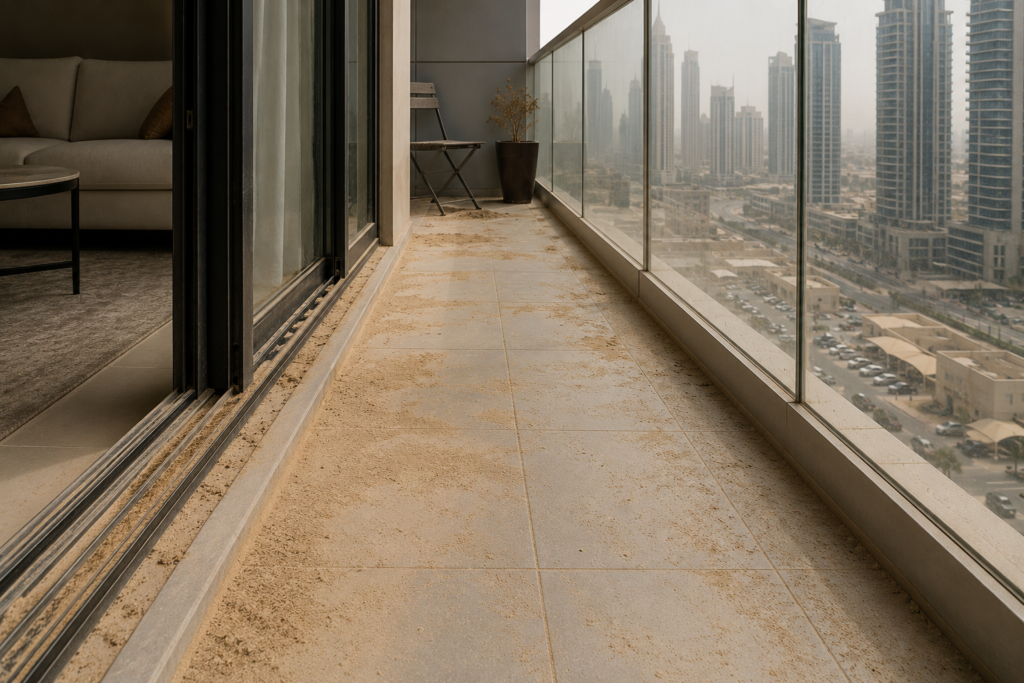
Not all dust behaves the same way. UAE desert dust has distinct physical properties that affect how it settles, how it interacts with surfaces, and how it must be cleaned.
| Type | Texture | Source | Cleaning Difficulty | Health Impact |
|---|---|---|---|---|
| Desert Sand Dust (PM10) | Coarse to medium | Open desert, wind | Moderate – visible and removable | Irritation, sinus discomfort |
| Fine Desert Particles (PM2.5) | Very fine, powdery | Sandstorms, disturbed desert | High – penetrates surfaces and settles widely | Respiratory and allergy risks |
| Indoor Household Dust | Fluffy, light | Skin cells, fabric fibres | Low to moderate | Dust mite habitat |
| AC-Circulated Dust | Mixed fine particles | Clogged filters, dirty vents | High – deposits evenly across surfaces | Ongoing allergen exposure |
| Coastal Humid Dust | Sticky, adhesive | Desert particles and sea humidity | Very high – bonds to surfaces | Surface staining, mould risk |
| Construction Dust | Powdery, gritty | Nearby building sites | High – fine and silica-based | Respiratory irritation if prolonged |
PM2.5 refers to airborne particles smaller than 2.5 micrometers in diameter. These particles are small enough to pass through standard fabric filters and can remain suspended in air for extended periods. UAE sandstorms are associated with elevated PM2.5 readings in affected cities. HEPA-grade filtration is commonly recommended for capturing these particles in both vacuums and air purifiers.
Common Areas Where Dust Builds Up in UAE Homes
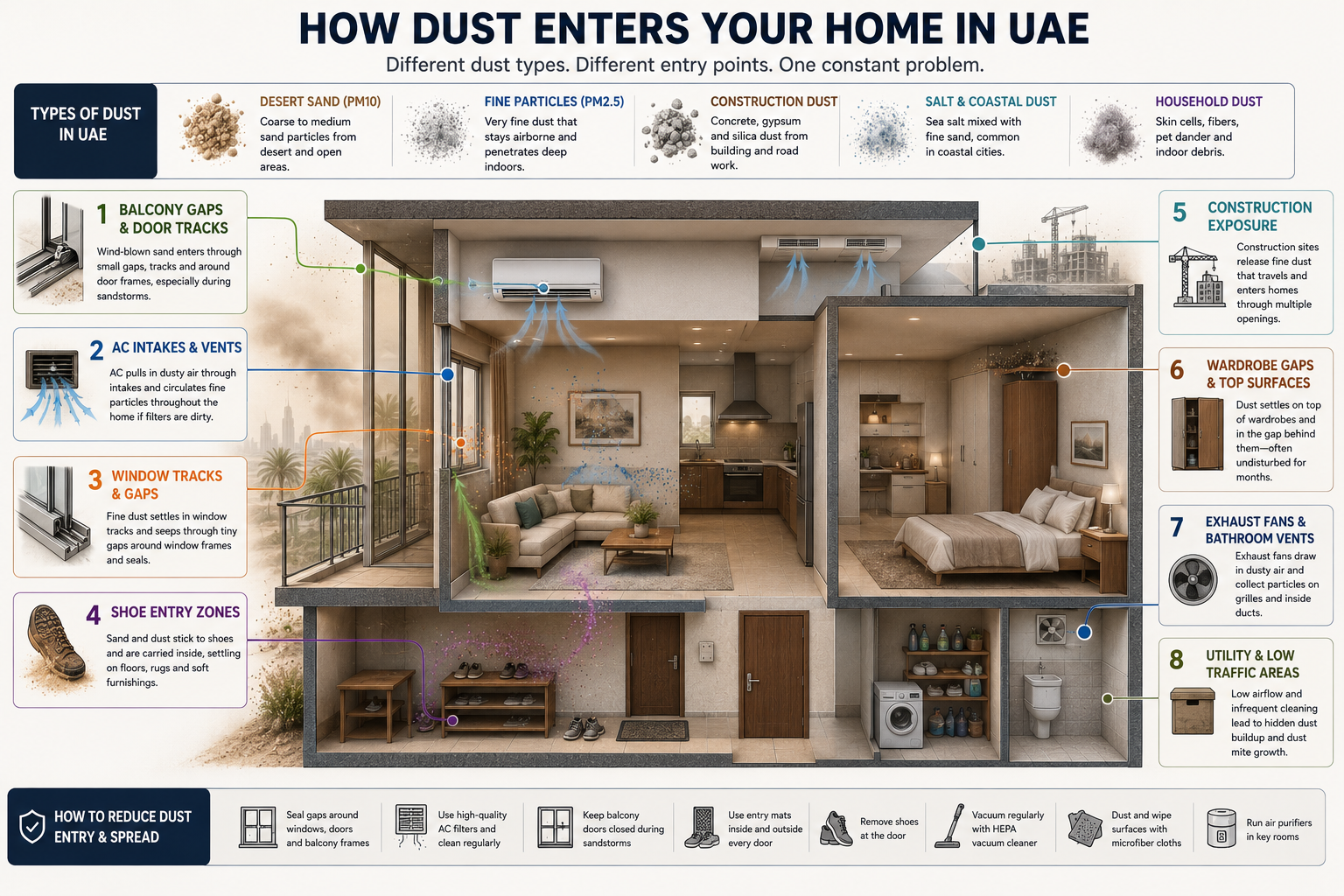
Knowing where dust accumulates allows for more targeted dust sand cleaning rather than time-consuming full cleans that miss the highest-impact zones.
Living Room and Common Areas
Soft furnishings including sofas and curtains trap fine particles and release them back into the air when disturbed. The space beneath sofas, behind television units, and along skirting boards accumulates layered dust quickly in UAE apartments. Electronics attract and hold fine particles due to static charge.
Bedrooms
Under-bed areas are among the highest-accumulation zones in any UAE home. Mattresses collect dust, skin cells, and fine particles. Wardrobe tops and the gap between wardrobe backs and walls build up thick layers that often go unnoticed for months.
Balcony Entry Zones
The transition between balcony and interior is the primary dust entry point in most UAE apartments. Balcony tracks, door frames, and the first metre of interior flooring past the balcony door accumulate sand rapidly. Shoe cabinets positioned near entry points also harbour significant debris.
AC Vents and Filters
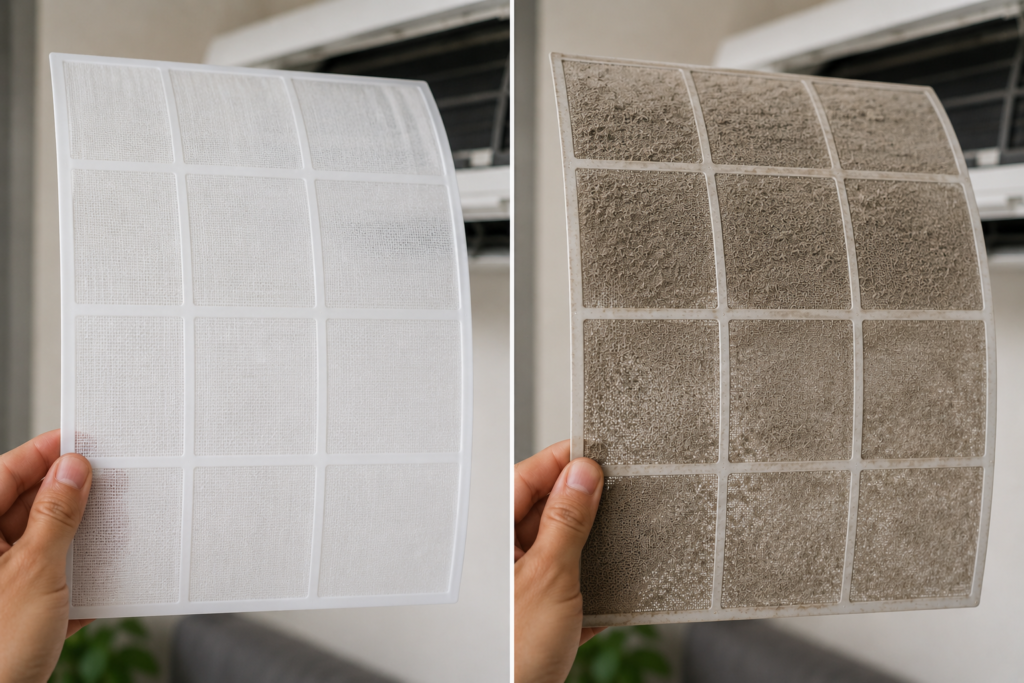
Split AC units draw air from the room through a filter positioned at the top or front of the unit. In UAE conditions, this filter can become heavily loaded within two to four weeks during periods of high dust. Dirty filters reduce cooling efficiency and allow finer particles to pass through. Ceiling vents in ducted systems accumulate dust on the louvres and inside the duct mouth.
Kitchen Areas
The combination of airborne cooking grease and fine dust particles creates a sticky surface residue on kitchen cabinets, range hoods, and wall tiles above cooking surfaces. This compound residue requires different cleaning methods than standard dry dust removal.
Bathroom and Utility Areas
Bathroom exhaust fans draw indoor air and accumulate dust on their grilles. Utility and storage areas with low foot traffic develop undisturbed dust layers that can become habitats for dust mites over time.
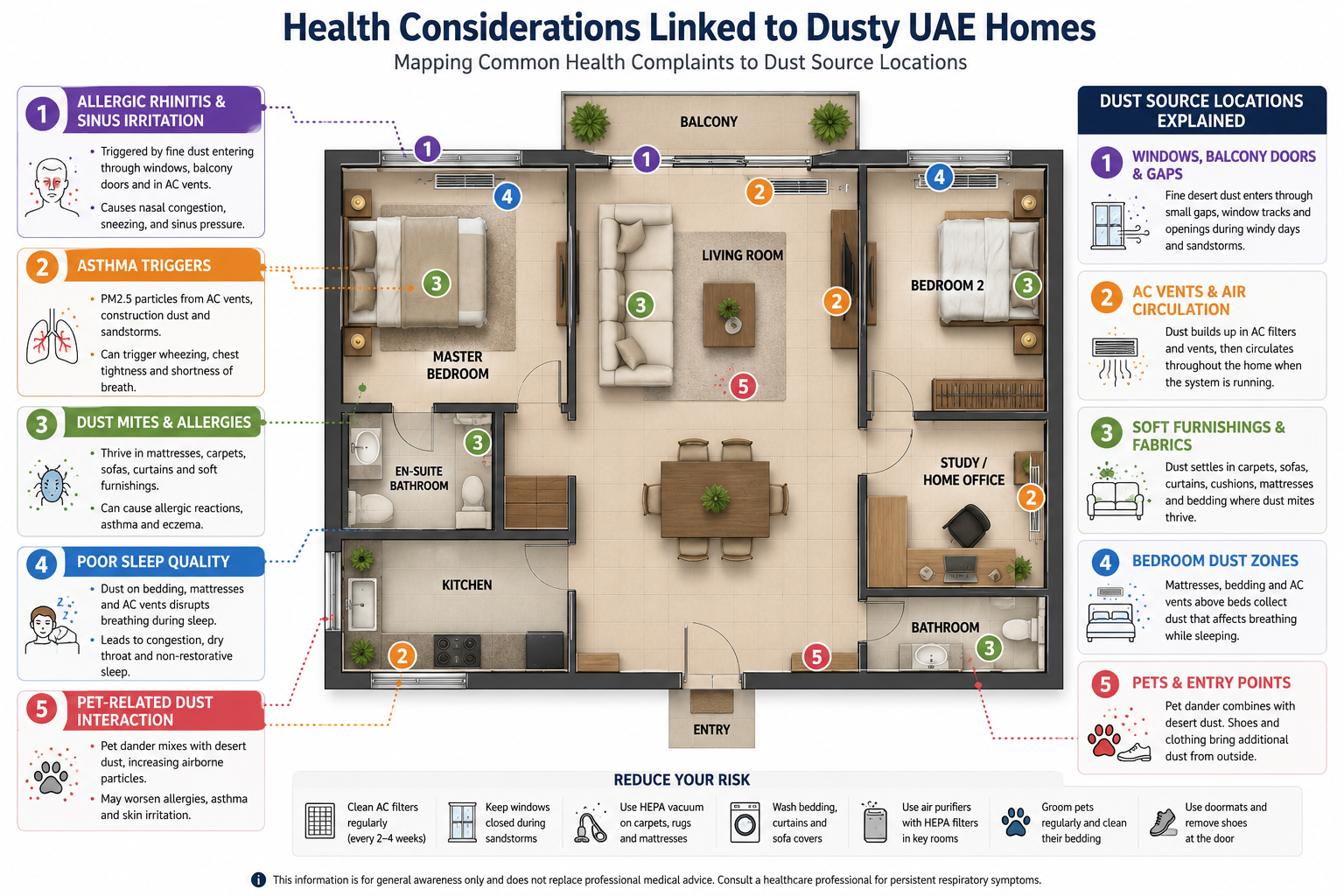
Health Considerations Linked to Dusty UAE Homes
This section is provided for general informational purposes only and does not constitute medical advice. Anyone experiencing persistent respiratory symptoms should consult a qualified healthcare professional.
Dust accumulation in UAE homes is associated with several health concerns documented by respiratory health organizations operating in the Gulf region.
Essential Tools for Dust Sand Cleaning in UAE Homes
Dust and sand cleaning UAE apartments and villas require tools that go beyond a standard mop and cloth approach.
Some product mentions in this section may include affiliate links.
UAE dust conditions require tools that go beyond a standard mop and cloth approach. The following tools are commonly recommended for effective dust sand cleaning in UAE homes.
Microfiber Cloths for
Fine Dust Removal
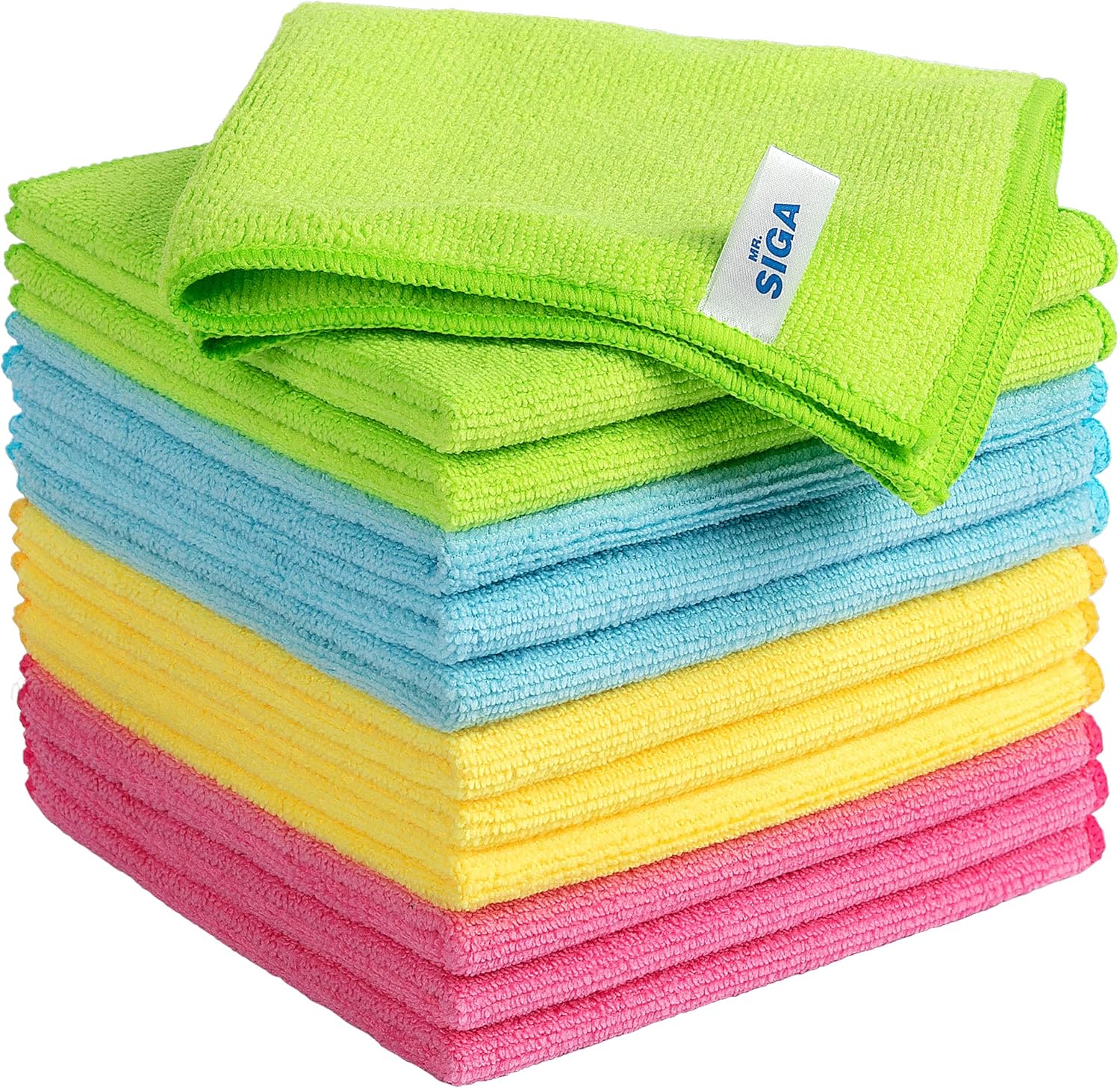
Microfiber cloths help trap fine UAE dust instead of spreading it across surfaces. Separate cloths for dry dusting and wet cleaning improve cleaning efficiency.
HEPA Vacuum Cleaners for
UAE Dust Control
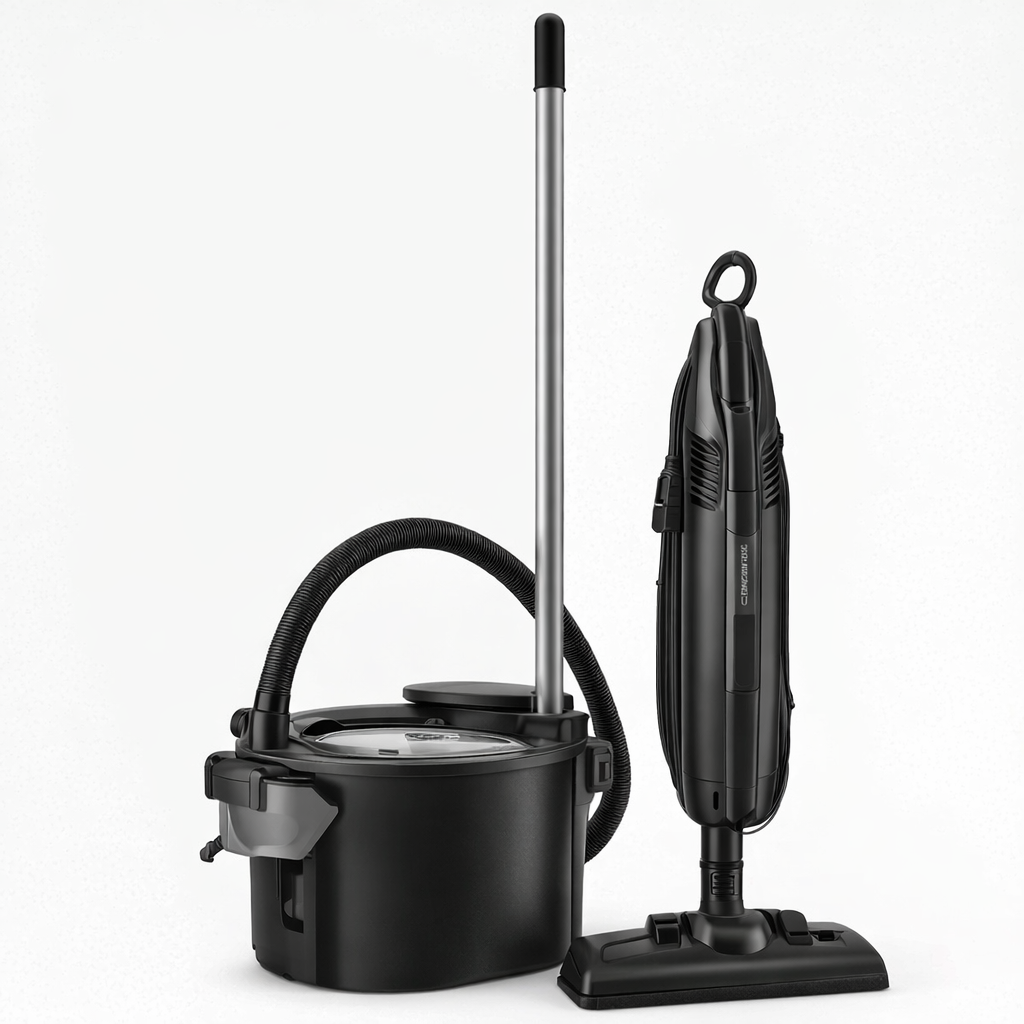
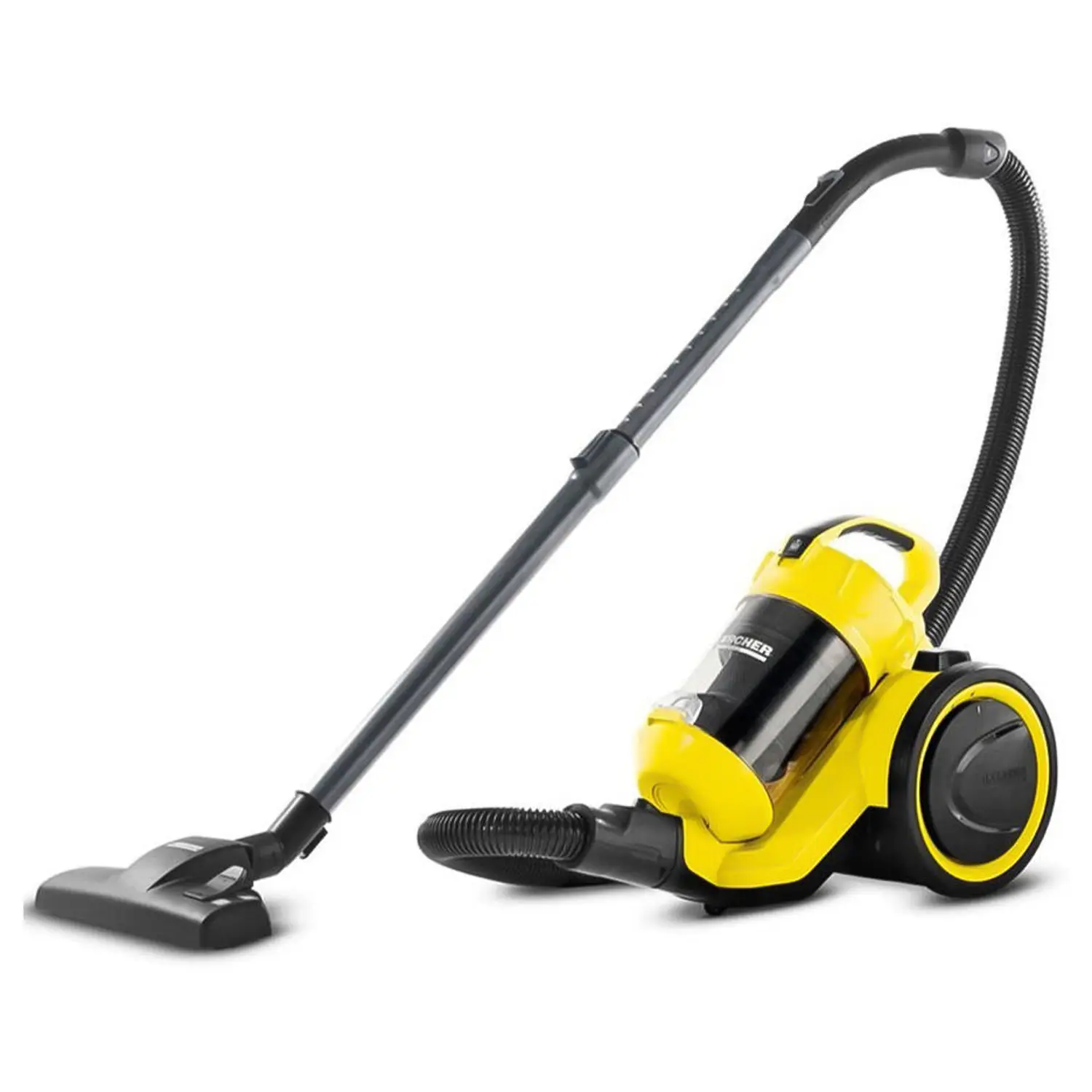
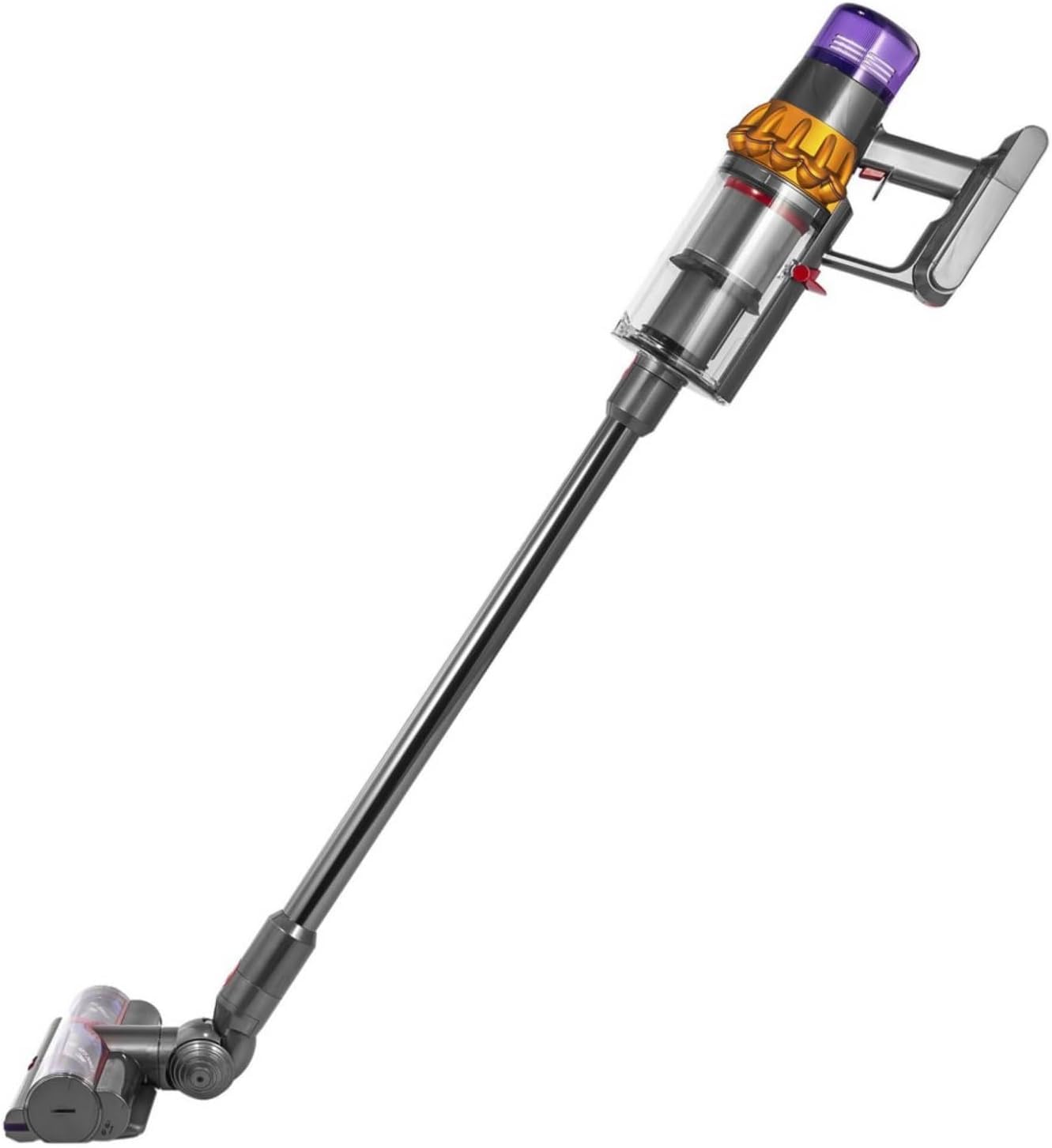
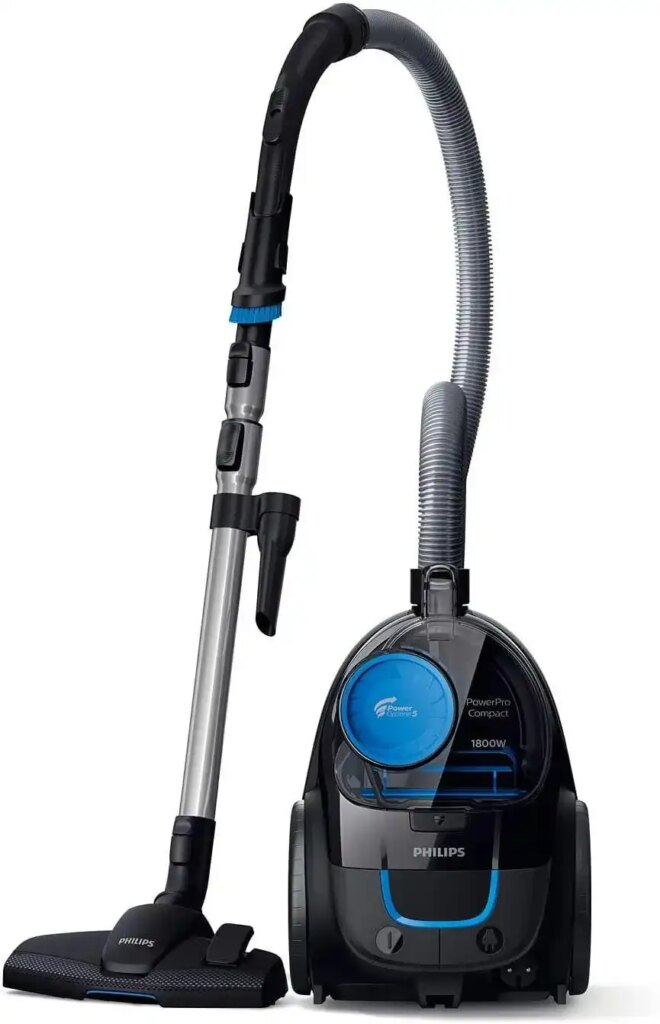
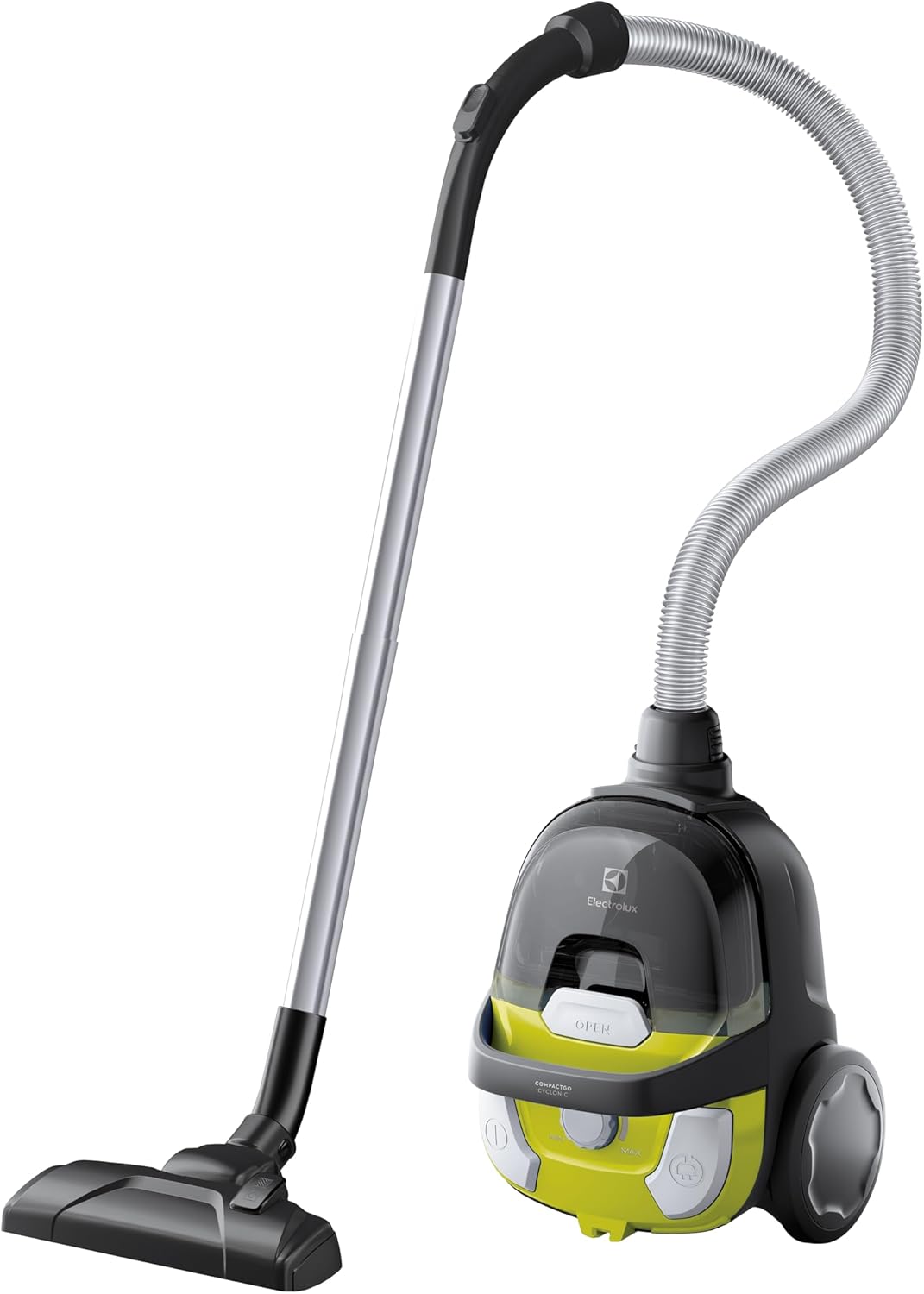
HEPA vacuum cleaners capture fine dust and sand particles commonly found in UAE homes. They are effective for tile, marble, rugs, and upholstery.
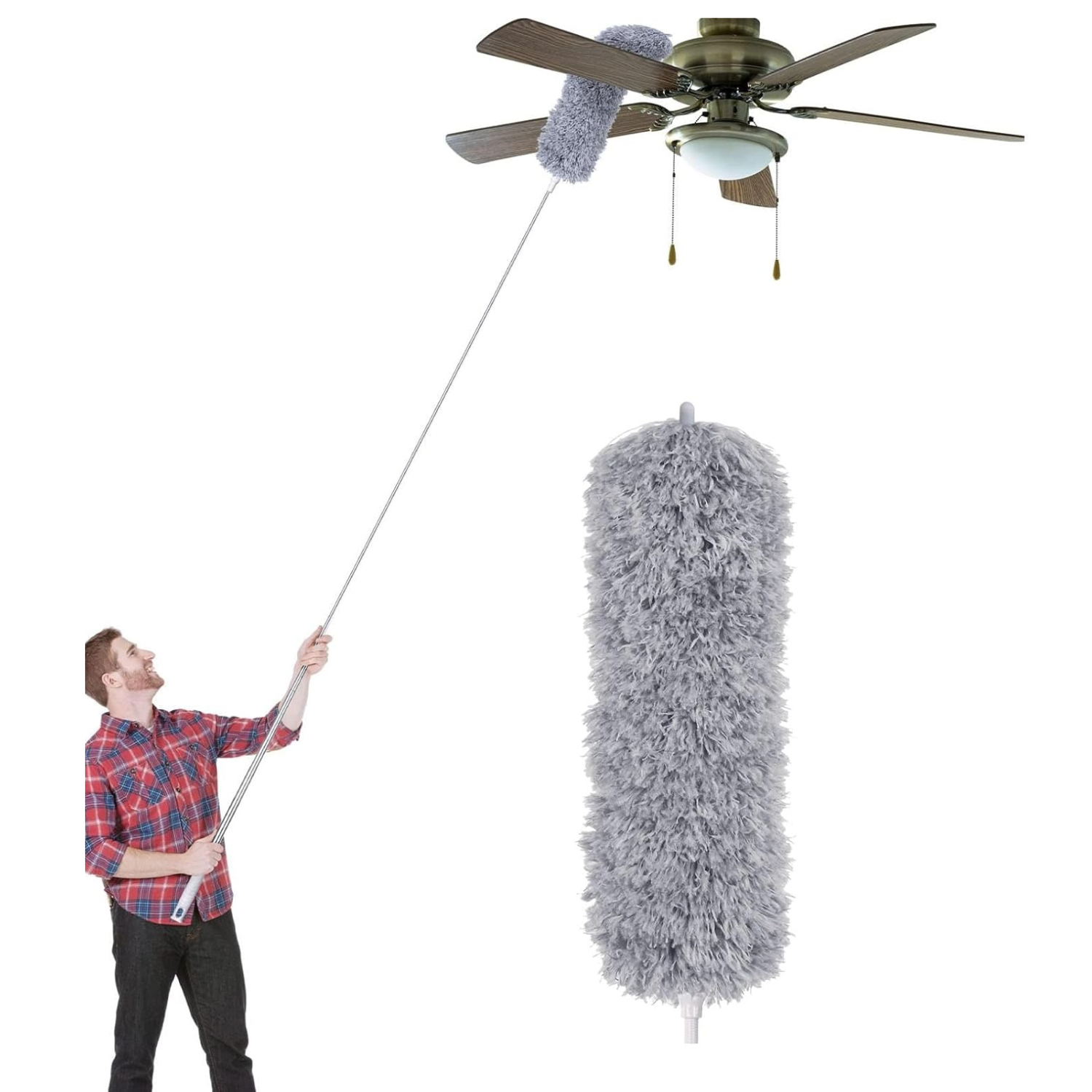
Dusting Tools for
Dust Removal
Electrostatic extendable dusters trap fine particles without spreading them, making them well suited to UAE homes with tall ceilings and hard-to-reach surfaces.
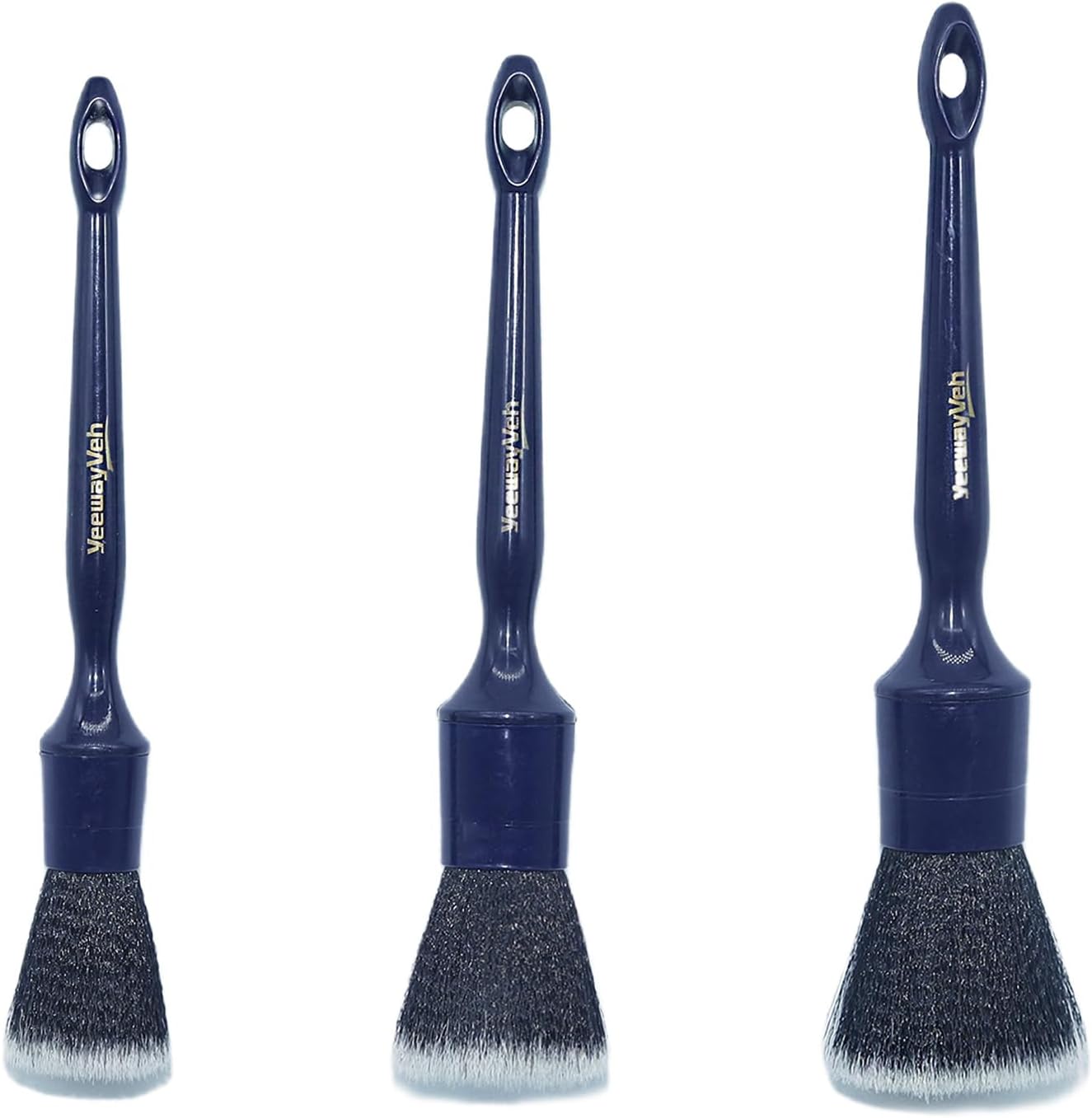
AC Vent Brushes for
Dust Accumulation
Narrow-profile brushes fit between AC louvre slats to remove dust buildup between professional filter services, without damaging the unit.
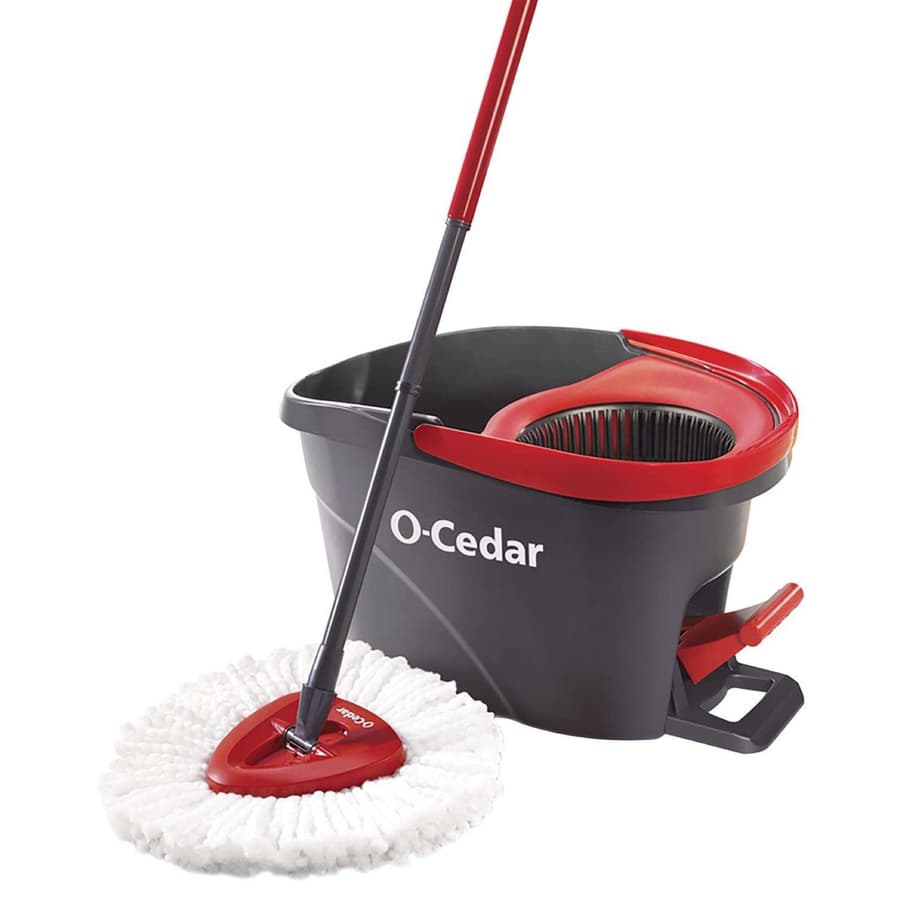
Spin Mops and Floor Mops
for post-cleaning
Spin mops with microfiber heads capture residual fine particles on hard floors when used after vacuuming that it may have missed.
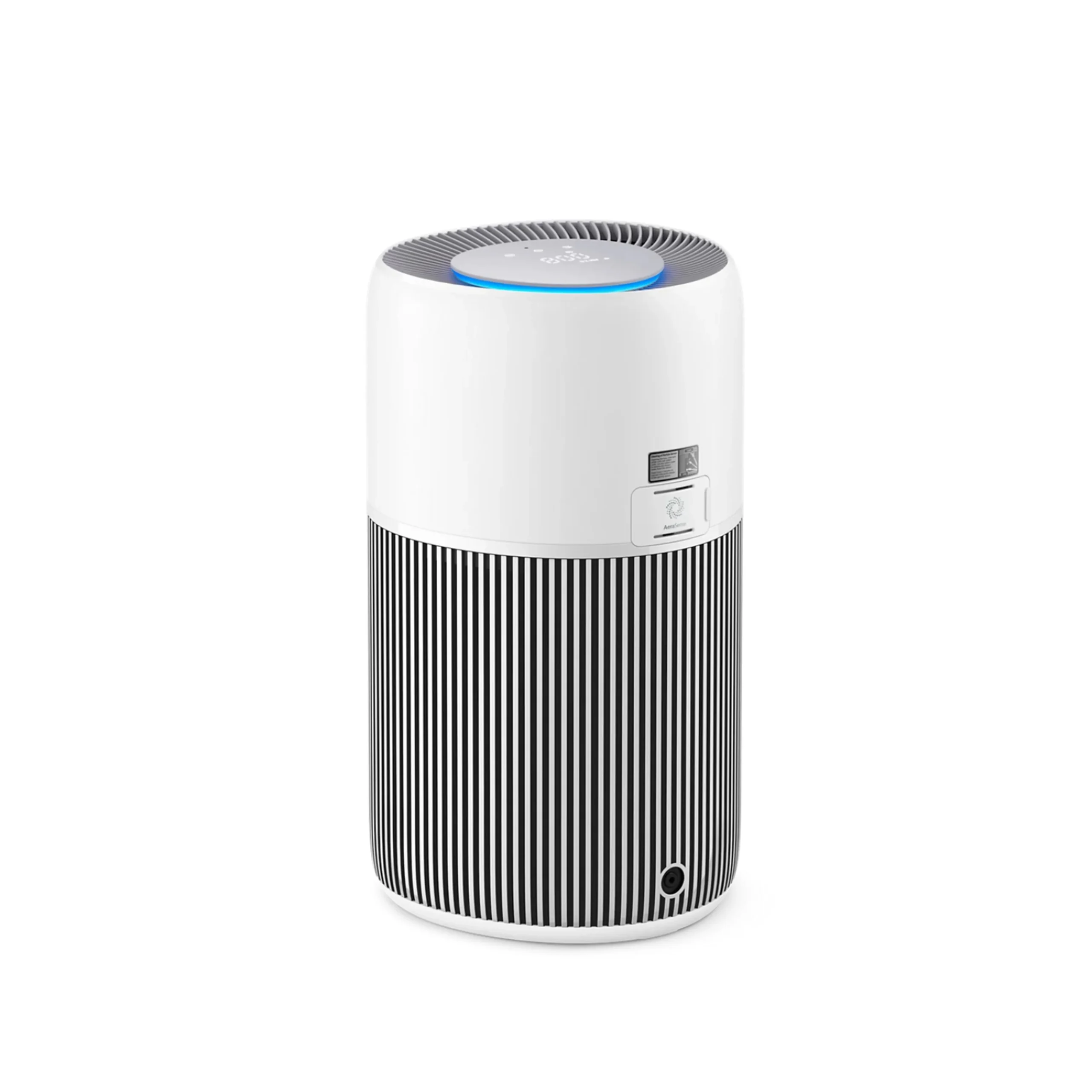
Air Purifiers for Managing
Fine Indoor Dust
HEPA air purifiers help reduce airborne dust and fine sand during dusty periods. Bedrooms and living rooms are the most common placement areas in UAE homes.
HEPA Vacuums
HEPA (High Efficiency Particulate Air) vacuums are designed to capture fine particles that standard vacuums recirculate back into the air. In UAE conditions, a HEPA vacuum is considered by many cleaning guides as the single most important investment for dust control. Corded models typically offer stronger suction for deep cleaning tile and marble floors. Cordless models offer flexibility for quick daily cleaning.
For a detailed product comparison, see the full guide to the best HEPA vacuums for UAE homes.
Microfiber Cloths
Microfiber cloths trap particles through electrostatic attraction rather than pushing them around. Standard cotton cloths spread fine particles across surfaces and redeposit them. Damp microfiber cloths are particularly effective for UAE humid dust that has bonded to surfaces. Multiple cloths should be available so that heavily loaded cloths can be replaced mid-clean rather than redistributing captured material.
For product options, see the guide to the best microfiber cloths for UAE dust.
Air Purifiers
Air purifiers with HEPA filters draw airborne particles from the room continuously. In UAE apartments, positioning an air purifier in the bedroom or main living area provides ongoing filtration between cleaning sessions. Models with activated carbon filters also address odours that can develop in closed, dusty environments.
See the full comparison of the best air purifiers for dust in UAE apartments.
Dusting Tools
Long-handled dusting tools allow ceiling corners, fan blades, and high shelving to be reached without relocating furniture. Electrostatic dusters attract and hold fine particles rather than dislodging them into the air. For high-reach applications in UAE villas with tall ceilings, extendable dusters are commonly recommended.
See the best dusting tools UAE guide for a full product breakdown.
AC Vent Brushes
Specialist brushes with narrow profiles fit between AC louvre slats to remove accumulated dust without damaging the unit. These tools are useful for monthly maintenance between professional filter services.
Spin Mops and Floor Mops
UAE homes predominantly feature tile or marble flooring. Spin mops with microfiber heads are widely used for post-dust cleaning on hard floors. Damp mopping after vacuuming captures residual fine particles that the vacuum may have missed.
See the best spin mops for UAE tile floors for specific product recommendations.
| Tool | Best For | Apartment / Villa | Recommended Frequency |
|---|---|---|---|
| HEPA Vacuum | All floors, furniture, and mattresses | Both | 2-3 times per week |
| Microfiber Cloth (damp) | Hard surfaces, electronics, and shelving | Both | 2-3 times per week |
| Air Purifier | Ongoing airborne particle removal | Both (especially apartments) | Continuous operation |
| Electrostatic Duster | High surfaces, fan blades, and ceilings | Both | Weekly |
| AC Vent Brush | Louvre slats and vent grilles | Both | Monthly |
| Spin Mop (microfiber) | Tile and marble floors | Both | 2-3 times per week |
| Crevice Vacuum Tool | Balcony tracks and skirting gaps | Both | Weekly |
| Robot Vacuum | Daily floor maintenance between full cleans | Apartments primarily | Daily |
Recommended Dust Sand Cleaning Setup by Home Type
Some product mentions in this section may include affiliate links.
Different living situations in the UAE call for different approaches. The table below outlines a practical starting setup for each common home type, based on surface area, dust exposure, and household needs.
| Home Type | Recommended Setup | Priority Tool |
|---|---|---|
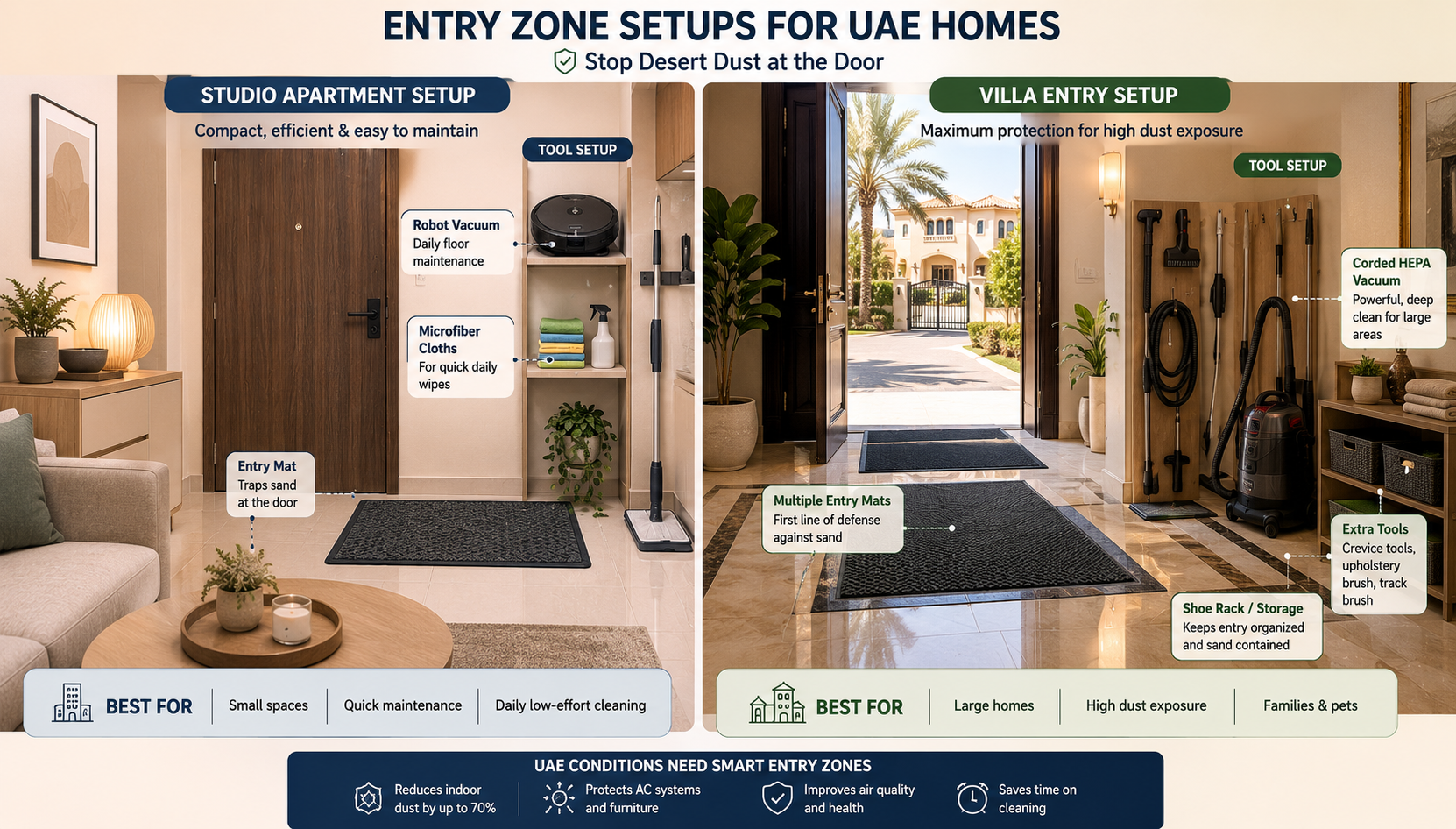
| Studio Apartment | Robot vacuum and microfiber cloths | Robot vacuum for daily floor maintenance |
| Family Apartment | HEPA vacuum and air purifier | HEPA vacuum for thorough weekly cleaning |
| Villa | Corded HEPA vacuum and multiple entry mats | Corded HEPA vacuum for larger floor area coverage |
| Pet Household | HEPA vacuum and washable sofa covers | HEPA vacuum with upholstery attachment |
| Balcony-Heavy Apartment | Crevice tools and balcony track brush | Track brush to reduce sand ingress |
| High-Dust Zone (near construction) | Continuously running air purifier and HEPA vacuum | Air purifier for ongoing airborne filtration |
Step-by-Step Dust Sand Cleaning Routine for UAE Homes
A dust and sand cleaning UAE home routine reduces the time spent on reactive deep cleans and keeps indoor dust at manageable levels year-round.
A structured routine adapted to UAE conditions reduces the time spent on reactive deep cleans and keeps indoor dust at manageable levels year-round. The schedule below is designed to work for working professionals and families in both apartments and villas.
Daily Tasks
- Wipe down high-touch surfaces including countertops, dining table, and bedside tables with a damp microfiber cloth
- Run robot vacuum or carry out a quick floor sweep of high-traffic areas
- Check balcony entry zone and wipe any visible sand from the interior floor near the balcony door
- Empty vacuum bin if it was used
- Run air purifier in the main living area or bedroom throughout the day
Weekly Tasks
- Vacuum all floors thoroughly using HEPA vacuum with appropriate attachments
- Damp mop tile and marble floors after vacuuming
- Dust high surfaces including ceiling fan blades, top of wardrobes, and shelving
- Check AC filter outer grille and wipe visible dust
- Vacuum sofa surfaces and cushion gaps
- Clean balcony tracks using crevice tool and brush
- Wipe down electronics, television, and charging surfaces
- Wash bedding
Monthly Tasks
- Remove and wash AC filter panels according to manufacturer instructions
- Vacuum mattress surface and rotate if applicable
- Clean inside wardrobe bases and under furniture
- Wipe down all window ledges and sills thoroughly
- Clean ceiling corners and light fittings
- Inspect balcony drainage channels and clear blockages
- Wipe shoe cabinet interior and exterior
Seasonal Deep Cleaning
- Full deep clean of all AC unit components including filter, louvres, and drainage tray – recommended every 3 months during peak use
- Wash all curtains and soft furnishings
- Clean behind and under all large furniture
- Deep vacuum all mattresses and sofa bases
- Wipe ceiling and wall surfaces where applicable
- Clean inside kitchen cabinets and pantry
- Address any humidity staining in bathrooms and under-sink areas
| Frequency | Task | Priority |
|---|---|---|
| Daily | Damp wipe surfaces, floor sweep, balcony entry check | High |
| 2-3x Weekly | HEPA vacuum all floors, damp mop, sofa wipe | High |
| Weekly | High dusting, balcony tracks, AC grille wipe, bedding wash | Medium-High |
| Monthly | AC filter wash, mattress vacuum, window sills, inside wardrobe | Medium |
| Seasonal (every 3 months) | Full AC service, curtain wash, behind furniture, ceiling wipe | High – especially pre-summer |
Pro Tip: Consistent low-effort daily maintenance is generally more effective in UAE conditions than occasional intensive deep cleans. Five minutes of damp wiping each morning reduces the surface area that dust can accumulate on before weekly cleaning sessions.
How to Clean After a Sandstorm in the UAE
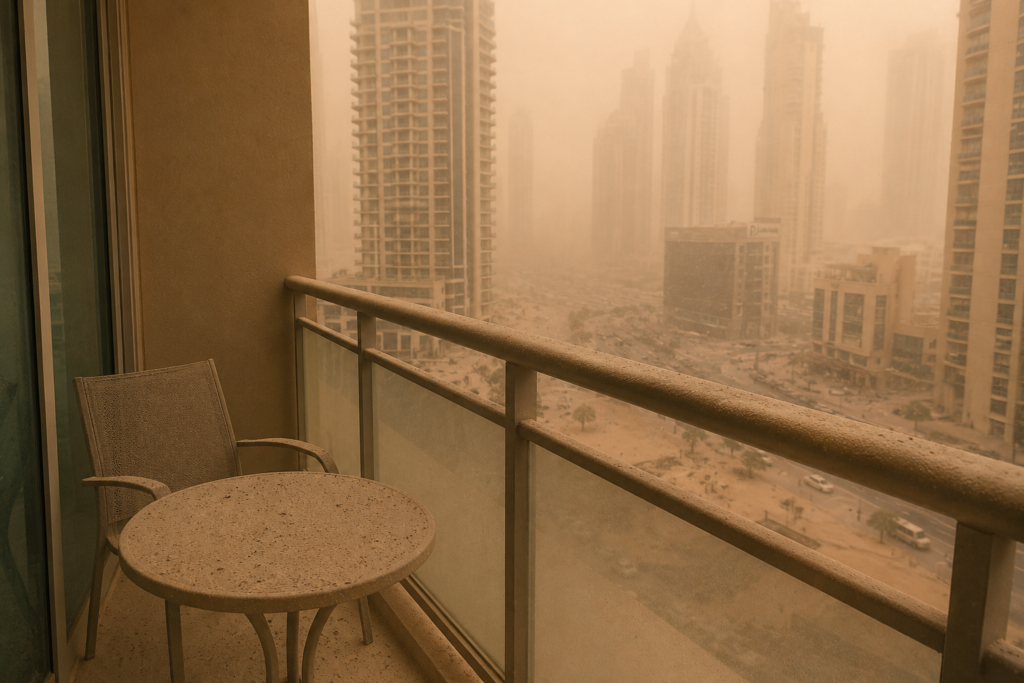
Sandstorm recovery is the most time-critical dust sand cleaning scenario in any UAE home. The sequence below is designed to avoid pushing fine particles deeper into surfaces or overloading AC systems with excessive particle loads.
During the Storm
- Close all windows and balcony doors fully
- Switch AC from fresh air intake mode to recirculation mode if the unit offers this setting
- Place rolled towels or draught excluders at the base of balcony doors to reduce particle infiltration
- Turn on air purifier if available
Within 1-2 Hours After the Storm Passes
- Wait for outdoor air to settle before opening any windows
- Begin dry sweep of the balcony to remove the heaviest sand deposits before they are tracked indoors
- Use a dustpan and brush rather than a mop at this stage on balcony surfaces
Within 3-6 Hours
- Vacuum all indoor floors using a HEPA vacuum before mopping
- Do not mop first – wet mopping over dry fine sand pushes particles into grout lines
- Use crevice attachments on balcony tracks, window sills, and skirting boards
- After vacuuming, damp mop all hard floors with a microfiber mop head
- Wipe all hard surfaces with a damp microfiber cloth, working from high surfaces downward
Within 24 Hours
- Remove and clean AC filters – sandstorms significantly increase filter loading
- Wash any soft furnishings that were exposed, including throw cushion covers and curtains near windows
- Run air purifier on its highest setting for several hours
- Check drainage on balcony to ensure gullies are not blocked by sand deposits
| Time After Storm | Recommended Action |
|---|---|
| During storm | Seal entry points, recirculate AC, and activate the air purifier |
| 0-2 hours after | Wait for outdoor air to settle, then dry sweep the balcony only |
| 3-6 hours after | HEPA vacuum all rooms, damp mop floors, and wipe surfaces from top to bottom |
| Within 24 hours | Clean AC filters, wash exposed soft furnishings, and run the air purifier on high |
| 48-72 hours | Complete a second full vacuum and mop pass, check balcony drainage, and inspect the AC drainage tray |
Pro Tip: If balcony tracks remain sandy after vacuuming, use a slightly damp microfiber cloth wrapped around a flat plastic scraper to lift compacted fine particles without scratching aluminium track surfaces.
Best Cleaning Methods for UAE Apartments vs Villas
Apartments and villas present different dust sand cleaning challenges. Understanding the differences helps prioritize effort and choose the right tools for each home type.
| Factor | Apartments | Villas |
|---|---|---|
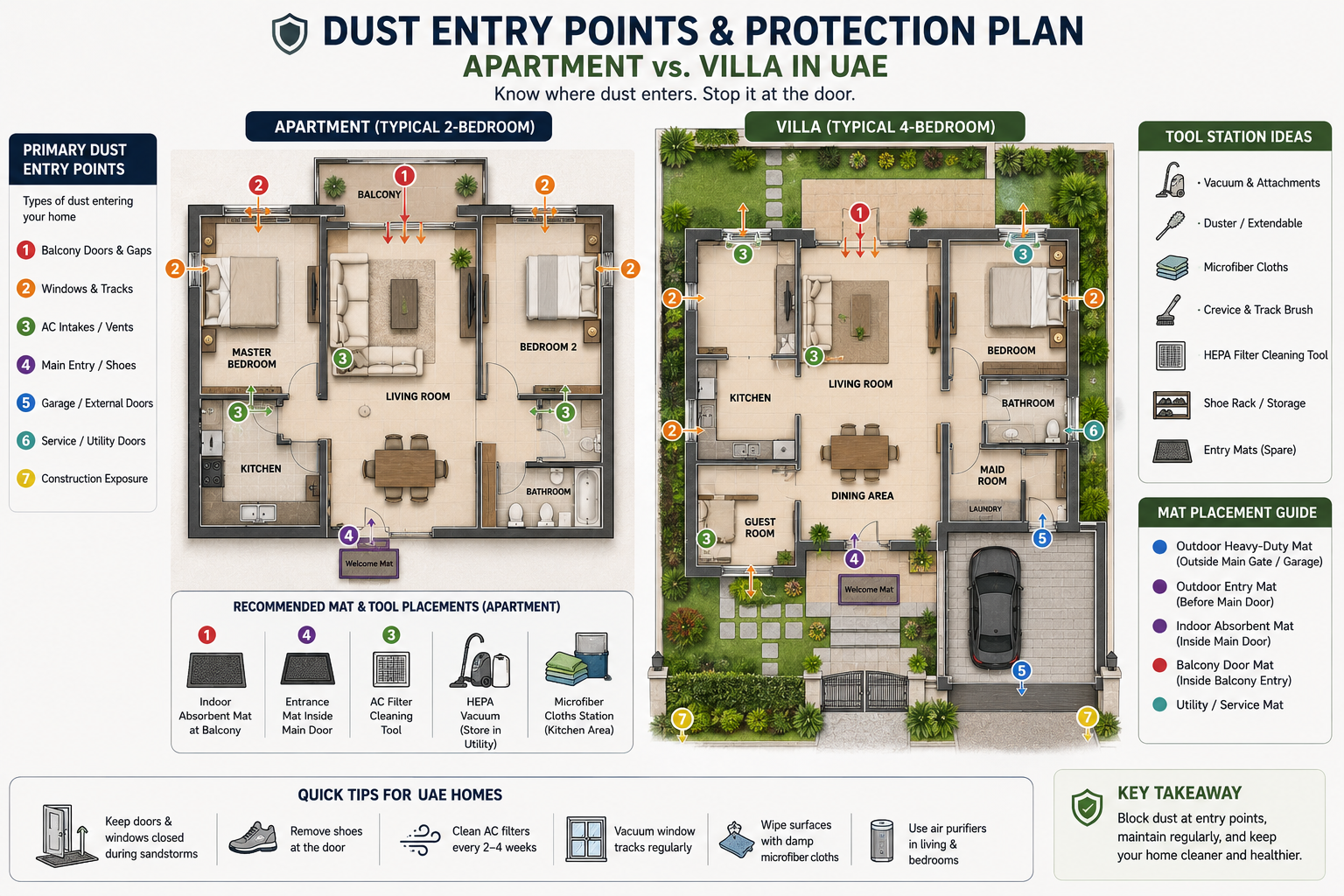
| Primary dust entry points | Balcony door, AC intake, and window gaps | Main entrance, garden, garage, and multiple windows |
| AC system type | Typically split units per room | Often ducted central system |
| Outdoor exposure | Balcony only | Garden, driveway, and multiple terraces |
| Dust accumulation speed | Moderate to high depending on floor level | High – greater surface area and more entry points |
| Recommended vacuum type | Cordless HEPA or robot vacuum for daily use | Corded HEPA vacuum for larger floor areas |
| Entry mat strategy | Single mat at front door and balcony threshold | Multiple mats at each entrance, with a dedicated shoe removal zone |
| Deep clean frequency | Every 3 months | Every 2-3 months due to higher surface area |
| Garage dust | Not applicable | Significant – garage-to-interior tracking is a common entry route |
High-floor apartments in towers above the 20th floor often experience reduced balcony sand entry compared to lower floors, but AC and internal dust generation remains consistent regardless of floor level. Ground-floor apartments in low-rise buildings near landscaped areas face higher dust from irrigation, soil disturbance, and foot traffic.
AC Systems and Indoor Dust Problems in the UAE
Air conditioning systems are the most frequently overlooked source of indoor dust in UAE homes. Understanding how they contribute to dust buildup allows for a more targeted maintenance approach.
How AC Systems Spread Dust
Split AC units pull room air through a filter panel, cool it across the evaporator coil, and push it back into the room. When the filter becomes loaded with particles, the system continues to run but with reduced filtration efficiency. Fine particles that would have been captured by a clean filter instead pass through and are deposited on surfaces in the cooled airstream.
In ducted villa systems, dust that enters the return air grille travels through the duct network and can deposit along duct walls. Over time, these deposits become difficult to remove without professional duct cleaning.
Cleaning AC Filters in UAE Apartments
Split AC filters in UAE apartments are commonly recommended for cleaning every two to four weeks during heavy use periods such as summer. The general process for most split units involves switching the unit off fully, opening the front panel, removing the mesh filter panels, rinsing with cool water, allowing filters to dry fully before reinserting, wiping the interior louvres with a dry microfiber cloth, and checking the drainage outlet is clear.
During sandstorm recovery periods, filters should be checked and cleaned immediately after the event regardless of when they were last serviced.
Humidity and AC Interaction
UAE coastal areas experience high ambient humidity, particularly in summer. AC units extract moisture from the air as part of the cooling process. When filters are dirty, this moisture can combine with accumulated dust on the filter and evaporator coil to create a damp layer. This environment can support mould growth on the filter and internal components, which then circulates with cooled air. Regular filter cleaning prevents this cycle.
See the full step-by-step AC filter cleaning guide UAE for a complete maintenance walkthrough.
The table below outlines a practical maintenance schedule for AC units in UAE homes across different seasonal use patterns.
| Interval | Task |
|---|---|
| Every 2 weeks (summer) | Wipe exterior louvres and check filter loading |
| Every 4 weeks (year-round) | Remove and rinse the filter, then dry fully before reinserting |
| Every 3 months | Complete a full internal wipe, including evaporator face and drainage tray |
| Every 12 months | Arrange professional servicing, including coil cleaning and refrigerant check |
Pro Tip: After a sandstorm event, always clean AC filters within 24 hours regardless of the standard maintenance schedule. A single sandstorm can load a filter to the same degree as several weeks of normal operation.
How to Reduce Dust in UAE Homes Long-Term
Reactive cleaning addresses existing dust. Long-term reduction requires structural adjustments to how the home is managed on a daily basis.
Entry Mats and Shoe Removal
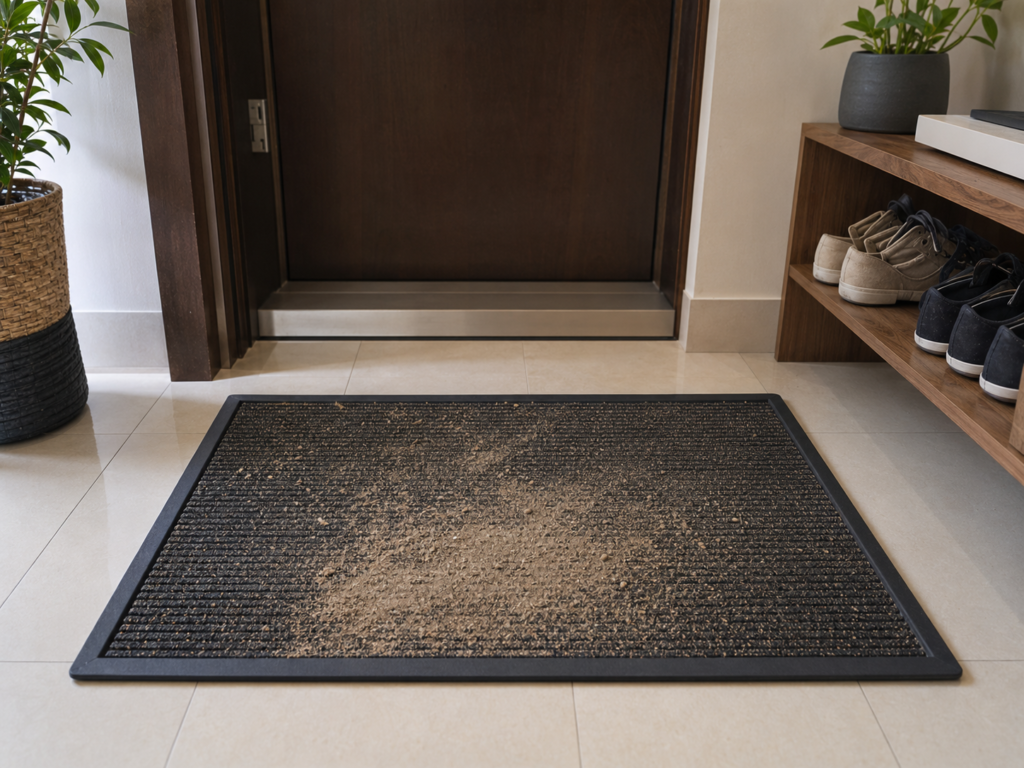
Entry mats positioned at all external access points capture sand and debris before it is tracked onto indoor floors. High-quality mats with coarse fibre surfaces are more effective than thin decorative mats for UAE conditions. Removing shoes at the entry and storing them in a covered shoe cabinet prevents outdoor sand from being redistributed indoors with every step.
See the full guide to the best entry mats for dust in UAE homes.
Window and Door Sealing
Gaps around balcony door frames and window seals are common entry routes for fine particles. Self-adhesive weatherstripping foam is available at hardware stores across Dubai and Abu Dhabi and can significantly reduce particle infiltration through these gaps. Balcony doors with worn seals should be reported to building management or replaced.
Humidity Control
Maintaining indoor humidity between 40 and 60 percent reduces the stickiness of dust on surfaces and makes removal easier. Portable dehumidifiers are useful in UAE apartments during summer months when humidity can climb significantly even in air-conditioned spaces.
Curtain and Blind Choices
Heavy fabric curtains trap large quantities of dust and release it into the air when opened. Roller blinds or wooden venetian blinds accumulate less material and are easier to wipe clean. If fabric curtains are preferred, washing them every four to six weeks during peak dust periods is commonly recommended.
Air Purifier Placement
Air purifiers are most effective when positioned in rooms where the most time is spent, typically the bedroom and main living area. They should not be placed in corners or directly against walls, as this restricts airflow. Running an air purifier continuously at a low setting is generally more effective than running it on maximum for short periods.
Storage and Decluttering
Open shelving and surface clutter create additional landing zones for dust particles. Enclosed storage reduces the surface area available for dust settlement. Regular decluttering also reduces the number of items that must be individually cleaned during each session.
Laundry and Bedding Management
Bedding should be washed weekly in UAE conditions rather than the fortnightly schedule common in cooler climates. Pillowcases and duvet covers pick up fine particles quickly in dusty sleeping environments. Washing at a minimum of 60 degrees is commonly recommended for dust mite control.
Pet Grooming
In pet-owning households, regular grooming outside the home reduces the quantity of hair and dander entering the indoor environment. Dedicated pet blankets or bed covers that are washed frequently reduce the spread of pet material across other soft furnishings.
What Most UAE Residents Overlook
Many residents focus on the obvious surfaces during dust sand cleaning while missing several high-accumulation zones that contribute significantly to overall indoor particle levels.
- AC remote controls collect fine desert dust rapidly because they sit stationary on surfaces for long periods and are rarely included in standard cleaning routines
- Balcony furniture traps fine particles in fabric weaves, seat gaps, and frame joints – sand deposits on outdoor chairs and tables are tracked indoors every time furniture is used
- Wardrobes positioned against exterior walls trap humid dust in the gap between the wardrobe back and the wall, creating a dense layer that is rarely disturbed and can develop into a dust mite environment over time
- Decorative cushions accumulate PM2.5 particles faster than most residents expect, particularly in open-plan living areas where AC airflow carries fine particles continuously across soft furnishings
- Under kitchen appliances including the base of refrigerators, microwaves, and toasters accumulate a compound layer of grease and fine dust that becomes increasingly difficult to remove the longer it is left
- Ceiling fan pull-chains and light fittings collect fine particles that fall directly onto surfaces below when the fan is switched on or off
- Inside shoe cabinets transfer outdoor sand directly to the cabinet interior with every use, redistributing particles every time the door is opened
Including these zones in the regular dust sand cleaning routine prevents the slow accumulation that makes periodic deep cleans significantly harder.
Recommended Cleaning Frequency for UAE Homes
The table below summarizes a practical dust sand cleaning frequency schedule suitable for most UAE apartments and villas exposed to regular dust buildup.
| Area | Recommended Frequency | Notes |
|---|---|---|
| Hard floors (tile, marble) | Vacuum 2-3x weekly, mop after each vacuum | After a sandstorm, clean immediately |
| Hard surfaces (tables, shelves) | Damp wipe daily or every 2 days | Use damp microfiber only, not a dry cloth |
| Sofas and upholstered furniture | Vacuum weekly | Use an upholstery attachment |
| Mattress | Vacuum monthly | Use a HEPA vacuum with flat head |
| Curtains and soft furnishings | Wash every 4-6 weeks | Wash more frequently during sandstorm season |
| Bedding | Weekly | 60 degrees wash for dust mite control |
| AC filter panels | Every 2-4 weeks during summer, monthly otherwise | Clean immediately after any sandstorm |
| AC vent louvres | Monthly wipe | Use a dry or lightly damp cloth only |
| Balcony | Sweep weekly, wash monthly | Check drainage monthly |
| Balcony door tracks | Weekly vacuum and brush | Prevents interior sand tracking |
| Window sills and ledges | Weekly | Sand accumulates rapidly on external sills |
| Ceiling corners and fan blades | Monthly | Use an extendable electrostatic duster |
| Kitchen cabinets (exterior) | Weekly | Grease and dust combination requires an appropriate cleaner |
| Electronics | Weekly | Use dry microfiber only around screens |
| AC remote controls | Weekly | Often overlooked high-accumulation surface |
| Balcony furniture | Weekly wipe, monthly deep clean | Track and frame gaps accumulate compacted sand |
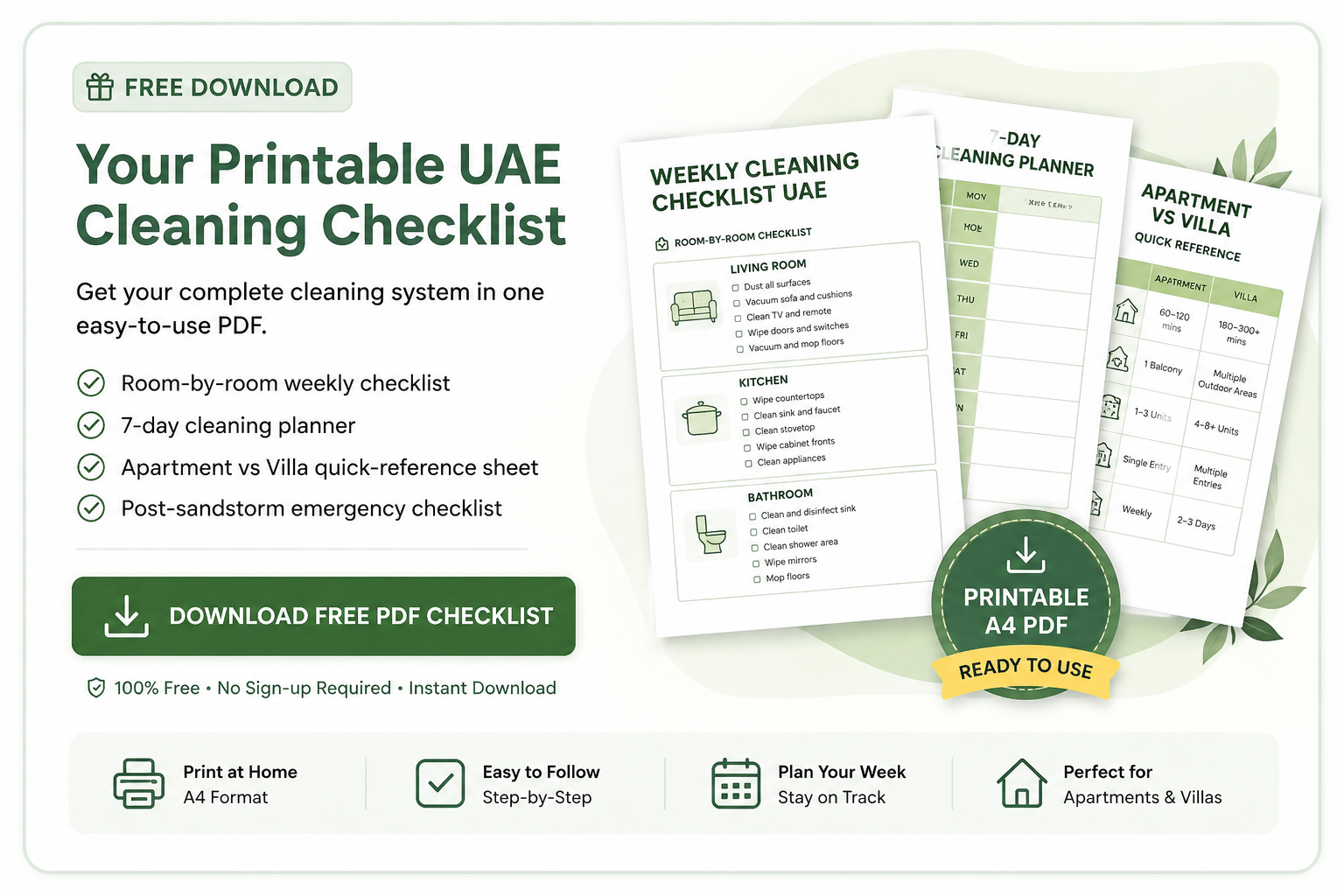
UAE Dust Sand Cleaning Checklist
Daily Checklist
- Damp wipe main surface areas including tables, kitchen counters, and bathroom surfaces
- Quick floor sweep or robot vacuum run in high-traffic areas
- Check balcony entry floor for sand ingress
- Run air purifier
Weekly Checklist
- Full HEPA vacuum of all rooms
- Damp mop all hard floors after vacuuming
- Vacuum sofa and upholstered furniture
- Dust high surfaces and fan blades
- Clean balcony tracks
- Wipe window sills
- Wipe AC grilles and remote controls
- Launder bedding
Monthly Checklist
- Remove and wash AC filter panels
- Vacuum mattress
- Clean inside wardrobe bases and gap behind wardrobes on exterior walls
- Deep clean balcony including washing tiles and furniture
- Inspect balcony drainage
- Clean ceiling corners and light fittings
- Wipe shoe cabinet interior
Sandstorm Recovery Checklist
- During storm: seal entry points, switch AC to recirculation, activate air purifier
- After storm passes: wait for outdoor air to settle before opening anything
- Dry sweep balcony and remove bulk sand deposits
- HEPA vacuum all indoor rooms
- Damp mop all floors
- Wipe all hard surfaces from top to bottom
- Clean AC filters within 24 hours
- Wash exposed soft furnishings
- Run air purifier on high for several hours
Final Thoughts
Dust and sand cleaning UAE homes require a year-round commitment rather than a seasonal approach.
The combination of desert geography, active construction, frequent sandstorms, and continuous AC use creates conditions that require more frequent and more targeted cleaning habits than residents from temperate countries typically expect when they arrive.
Consistent low-effort maintenance is generally more effective in UAE conditions than occasional intensive deep cleans. Entry mat systems, shoe removal habits, sealed window gaps, and regular AC filter maintenance collectively reduce the rate at which indoor dust builds up. When combined with a structured weekly routine using HEPA vacuums and damp microfiber methods, UAE apartments and villas can be maintained at a significantly cleaner baseline without excessive time investment.
Post-sandstorm recovery is the most critical scenario. Sealing the home during the storm, sweeping dry debris first, vacuuming before mopping, and cleaning AC filters within 24 hours are the steps that make the greatest difference to recovery speed and indoor air quality.
Prevention built into daily habits outperforms reactive cleaning every time. Residents who establish a consistent routine adapted to UAE conditions consistently report better indoor air quality, less surface accumulation between cleans, and a more manageable overall cleaning workload.
Frequently Asked Questions
How often should UAE residents clean their AC filters?
In UAE conditions, split AC filters are commonly recommended for cleaning every two to four weeks during summer months when AC runs continuously. During lower-use periods, monthly cleaning is generally considered sufficient. After any sandstorm event, filters should be checked and cleaned immediately regardless of the standard schedule.
What is the best type of vacuum for dust sand cleaning in UAE homes?
HEPA-filtered vacuums are widely recommended for UAE conditions because they capture fine particles without exhausting them back into the room. Corded HEPA vacuums offer stronger sustained suction for thorough floor cleaning, while cordless models are useful for daily quick passes. Robot vacuums can help maintain floors between full vacuum sessions. See the guide to the best HEPA vacuums for UAE homes for full product comparisons.
How do I clean my home after a sandstorm in Dubai?
The recommended sequence is to wait for outdoor particle levels to settle, dry sweep the balcony first, then HEPA vacuum all indoor floors before damp mopping. Surfaces should be wiped with damp microfiber cloths working from high to low. AC filters should be cleaned within 24 hours. Soft furnishings near windows should be washed if they show visible dust loading.
Does humidity make dust harder to remove in UAE homes?
Humid dust, particularly in coastal areas such as Dubai Marina, JBR, and Abu Dhabi Corniche zones, adheres more firmly to surfaces than dry desert sand. Damp microfiber cloths are significantly more effective than dry cloths or standard dusters in these conditions. Maintaining indoor humidity between 40 and 60 percent also makes particle removal easier during regular cleaning sessions.
Is a HEPA vacuum worth the investment in the UAE?
Based on UAE dust conditions, HEPA filtration is considered a practical necessity rather than a premium upgrade. Standard vacuums without sealed HEPA filtration exhaust fine particles through their motors back into room air, which can worsen indoor air quality during cleaning. In a high-dust environment, a HEPA vacuum delivers measurably better results for both surface cleanliness and airborne particle reduction.
What causes dust to come out of AC vents in a UAE apartment?
Dust emitted from AC vents is typically caused by a loaded filter that no longer captures incoming particles, or by dust that has accumulated on the internal louvres and evaporator face. In some cases, particularly in older buildings, duct deposits in ducted systems can also contribute. Regular filter cleaning and annual professional servicing addresses the most common causes.
How can I reduce dust in my UAE apartment without cleaning every day?
Long-term reduction strategies include placing quality entry mats at all access points, establishing a shoe removal routine, sealing balcony door gaps with weatherstripping, running an air purifier continuously, and keeping AC filters clean. These prevention measures reduce the rate of dust accumulation and lower the frequency of full cleaning sessions required to maintain a clean baseline.
What is the difference between PM2.5 and PM10 dust in UAE conditions?
PM10 refers to particles up to 10 micrometers in diameter. These are visible as gritty residue and are generally associated with coarser desert sand and construction debris. PM2.5 particles are smaller, below 2.5 micrometers, and are the fine powdery component of desert dust that settles on all surfaces and remains airborne for longer periods. PM2.5 particles are more difficult to capture without HEPA-grade filtration and are associated with greater respiratory impact than coarser particles.
How do I stop sand from coming into my UAE apartment through the balcony?
Key measures include using a quality entry mat at the balcony threshold, checking and replacing worn balcony door seals, keeping balcony tracks clear to allow the door to close fully, and sweeping the balcony weekly to prevent sand buildup from being pushed indoors when the door opens. During sandstorm periods, placing a draught excluder at the base of the balcony door reduces infiltration further.
How do microfiber cloths compare to standard cloths for UAE dust sand cleaning?
Microfiber cloths capture particles through electrostatic attraction and hold them within the cloth fibres during wiping. Standard cotton cloths push particles across surfaces and redeposit them elsewhere. In UAE conditions where fine desert particles settle on all surfaces, the difference in performance is significant. Damp microfiber cloths are particularly effective for removing humid sticky dust common in coastal UAE locations. See the best microfiber cloths for UAE dust for specific product comparisons.
Sources
Information on UAE dust and sandstorm conditions referenced in this article draws from publicly available guidance and reporting by the UAE Ministry of Climate Change and Environment, which publishes data on air quality and environmental conditions across the Emirates.
Indoor air quality guidance and PM2.5 classification referenced here align with frameworks published by the World Health Organization. UAE residential dust accumulation patterns and AC maintenance context are informed by reporting from Saniservice UAE, a Dubai-based air quality and AC cleaning company that publishes technical guidance on filter maintenance in Gulf climate conditions.
Property and apartment living context draws from publicly available articles by Bayut and Property Finder, both of which cover UAE residential living conditions including dust, humidity, and home maintenance. Dubai Municipality publishes environmental standards and air quality monitoring data relevant to UAE residents at Dubai Municipality.