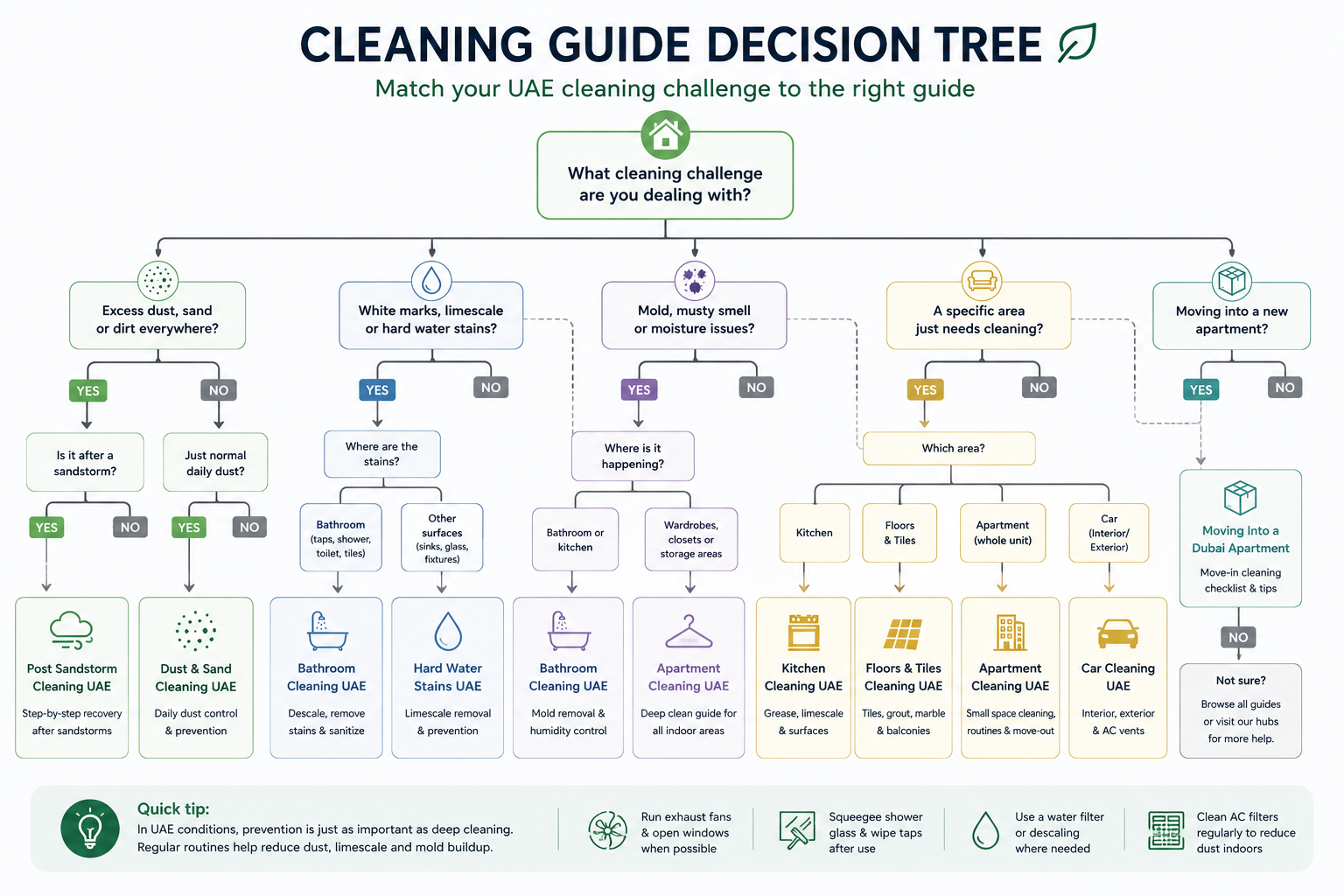
Browse practical cleaning guides UAE residents use for kitchens, bathrooms, floors, dust, hard water, and post-sandstorm cleanup – built for UAE apartment and villa conditions.
Research-Based
UAE Focused
Amazon Verified
Community Rated
Apartment vs Villa Cleaning Comparison
Cleaning requirements across UAE residential property types differ considerably. The comparison below helps residents identify which guides are most relevant to their property type.
Factor
UAE Apartment
UAE Villa
Floor Area
600 – 2,000 sq ft
2,500 – 6,000+ sq ft
Full Clean Time
1.5 – 3 hours
3 – 6+ hours
Dust Exposure
Moderate – balcony & AC entry
High – garden & multiple entry points
Outdoor Areas
Balcony only
Garden, driveway, courtyard
AC Systems
1 – 2 units
4 – 10+ units
Bathrooms
1 – 2
2 – 5
Mold Risk
Bathroom, kitchen, wardrobes
Bathrooms, laundry, storerooms
Post-Sandstorm Cleaning
Moderate
High complexity
Deep Cleaning
Every 3 – 4 months
Every 2 – 3 months
Move-In Cleaning
4 – 8 hours
1 – 3 days
Outdoor and Vehicle Guides
Car Cleaning UAE
What it covers: Removing desert sand and dust from car interiors and exteriors, cleaning AC vents inside vehicles, treating hard water spots on paintwork and glass, and maintaining upholstery in UAE climate conditions.
Who it helps: UAE residents who drive regularly and find desert dust, sand, and hard water deposits affecting vehicle interiors, windows, and paintwork.
Key UAE challenge: Desert sand is abrasive and accumulates rapidly inside and outside vehicles. Hard water from outdoor washing leaves mineral spots on glass and paintwork. High temperatures accelerate interior dust settlement and upholstery deterioration.
The guides on this page focus on how to clean specific rooms, surfaces, and situations. The four related hubs on CleanLivingUAE.com cover the broader cleaning ecosystem for UAE homes.
Manage indoor air quality, AC maintenance, and dust infiltration
Frequently Asked Questions
How often should UAE apartments be deep cleaned?
Based on UAE dust accumulation rates, most apartments benefit from a full deep clean every three to four months. Ground-floor units, properties near construction sites, and apartments with frequently used balconies may require more frequent cleaning.
Why does shower glass in UAE properties stain so quickly?
UAE tap water contains elevated levels of dissolved calcium and magnesium carbonates due to desalination and distribution processes. These minerals deposit on glass when water evaporates. Heat accelerates the drying process, meaning deposits form and harden more rapidly than in countries with softer water.
Can hard water stains be removed from shower glass at home?
Many UAE residents remove hard water deposits using diluted white vinegar or purpose-formulated descaling products available on Amazon.ae. Heavily etched glass – where mineral deposits have penetrated the surface over months without treatment – is harder to restore and may require professional polishing.
What is the correct sequence for cleaning after a UAE sandstorm?
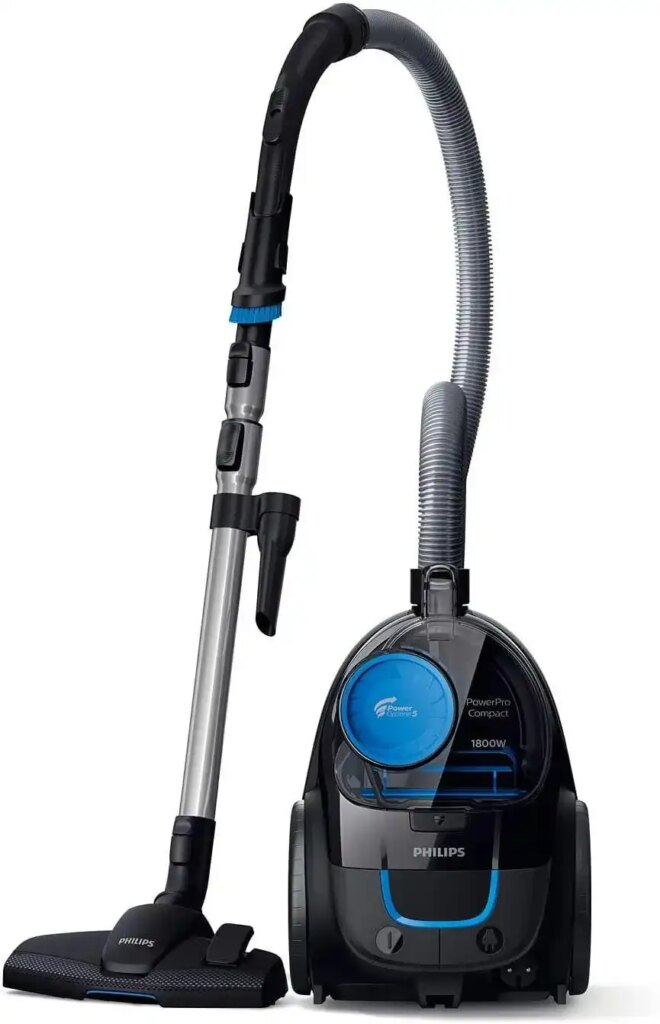
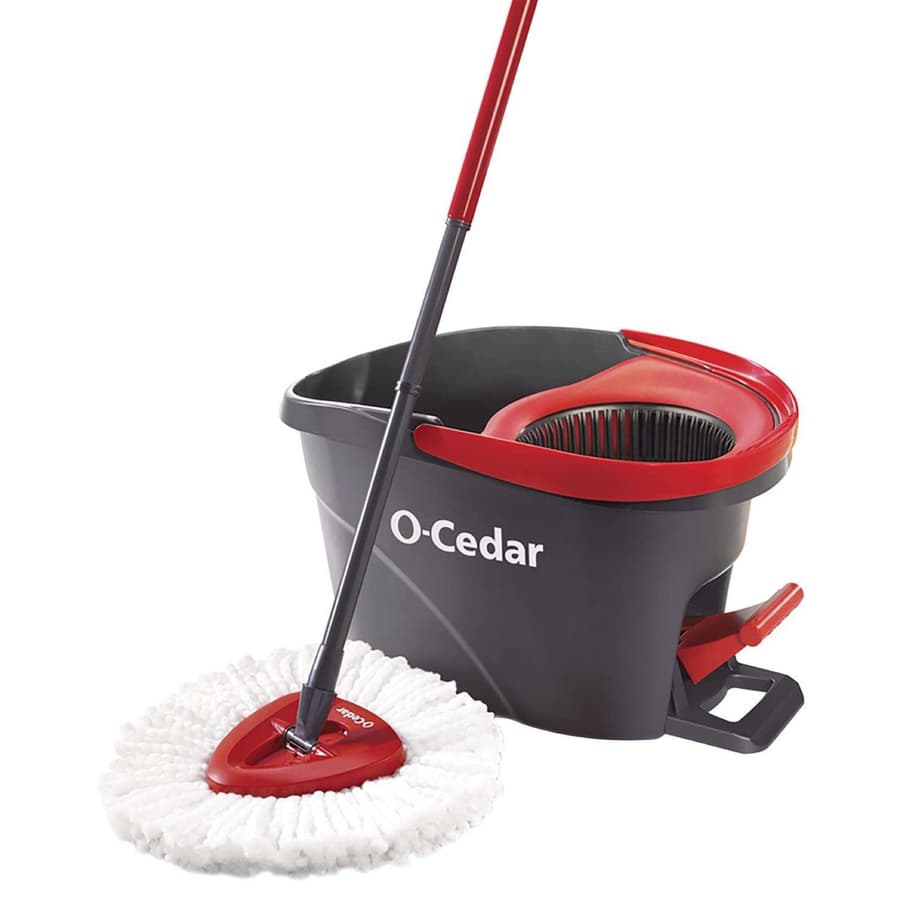
Outdoor areas should be addressed before indoor surfaces. Vacuum cleaning should precede wet mopping on floors. Soft furnishings including cushions, curtains, and bedding should be shaken or washed before the indoor floor clean begins. AC filters should be checked after significant sandstorm events.
What cleaning products should be avoided on marble floors common in UAE villas?
Acidic products including vinegar, lemon juice, and bleach-based sprays should not be used on marble, travertine, or limestone. These acids etch the calcite structure, causing dull patches and surface damage. pH-neutral cleaning solutions formulated for natural stone are recommended.
Is villa cleaning significantly more time-consuming than apartment cleaning?
Yes. The surface area of a typical UAE villa is often three to four times greater than an apartment. Villa cleaning also involves multiple AC units, larger bathroom counts, outdoor areas, and additional rooms such as laundry spaces and storage areas. A full villa clean commonly takes a full day or longer.
What areas are most commonly missed when cleaning a UAE apartment?
Areas commonly overlooked include: tops of interior door frames, inside AC grille slats, wardrobe shelf edges and back walls, window frame drainage channels, and the area beneath and behind kitchen appliances. These areas accumulate UAE-specific dust and hard water residue rapidly.
Is it worth cleaning before a sandstorm or only after?
Pre-sandstorm preparation – sealing balcony gaps, closing all windows, and ensuring AC filters are clean before the storm – reduces the volume of particulate entering the property and makes post-storm cleaning more manageable. Cleaning during a sandstorm is not recommended as surfaces reaccumulate sand immediately.
Are these cleaning guides suitable for both furnished and unfurnished UAE properties?
Yes. Move-in guides specifically address unfurnished or newly handed-over properties. Room-specific guides address cleaning around standard UAE apartment furnishings. Surface-specific guides for hard water and dust apply regardless of furnishing status.
Who is responsible for cleaning in UAE rental apartments – tenant or landlord?
In UAE rental properties, tenants are typically responsible for routine cleaning, filter maintenance, and minor upkeep. Building management or landlords are generally responsible for structural matters, AC duct cleaning, and common area maintenance. Residents should check their tenancy agreement for specific maintenance clauses.
Conclusion
Cleaning guides UAE residents use most often are those designed specifically for local conditions. Desert dust, hard water, humidity, and sandstorms create cleaning challenges that require different methods than those used in other regions.
Information in this guide draws on published research and documentation from the following sources: the UAE Ministry of Climate Change and Environment on regional dust and air quality conditions; Dubai Municipality on water quality standards and mineral content in UAE supply networks; the Dubai Health Authority on indoor air quality guidance for UAE residents; Abu Dhabi Department of Energy on AC maintenance standards; and established reference documentation from RERA (Real Estate Regulatory Agency) on tenant and landlord maintenance responsibilities in UAE rental properties.
Suggested Future Articles
Window and Glass Cleaning UAE
Balcony Cleaning UAE
Marble Floor Cleaning UAE
Wardrobe Mold UAE
Tile Grout Cleaning UAE
Construction Dust UAE Apartments
Specialty Cleaning Guides
Dust and Sand Cleaning UAE
What it covers: The specific properties of UAE desert dust, settlement patterns, re-entry routes, and cleaning methods that reduce reaccumulation between sessions.
Use this guide when dust reappears within hours of cleaning, sand grains are visible on floors after sweeping, balcony surfaces accumulate visible grit, or AC vents appear dusty despite regular use.
What it covers: Removal methods and prevention strategies for mineral deposits on shower glass, taps, toilet bowls, and tile surfaces in UAE hard water conditions.
Use this guide when shower glass appears cloudy or white-streaked, tap bases have mineral buildup, toilet bowls have ring staining, or tile surfaces near water outlets appear chalky.
What it covers: A structured recovery sequence for UAE sandstorm events, including outdoor surfaces, indoor infiltration points, soft furnishings, and AC filter checks.
Use this guide when a sandstorm has passed and dust is visible across surfaces, balcony furniture is coated in sand, or indoor surfaces near windows and doors have accumulated significant dust.
What it covers: A complete move-in cleaning sequence addressing areas building cleaning staff commonly miss – inside wardrobes, underneath appliances, AC grille covers, and bathroom silicone sealants.
Use this guide when moving into a newly handed-over or previously occupied UAE apartment, preparing a unit before furniture is installed, or completing a deep clean before a move-out inspection.
Cleaning requirements across UAE residential property types differ considerably. The comparison below helps residents identify which guides are most relevant to their property type.
Factor
UAE Apartment
UAE Villa
Floor Area
600 – 2,000 sq ft
2,500 – 6,000+ sq ft
Full Clean Time
1.5 – 3 hours
3 – 6+ hours
Dust Exposure
Moderate – balcony & AC entry
High – garden & multiple entry points
Outdoor Areas
Balcony only
Garden, driveway, courtyard
AC Systems
1 – 2 units
4 – 10+ units
Bathrooms
1 – 2
2 – 5
Mold Risk
Bathroom, kitchen, wardrobes
Bathrooms, laundry, storerooms
Post-Sandstorm Cleaning
Moderate
High complexity
Deep Cleaning
Every 3 – 4 months
Every 2 – 3 months
Move-In Cleaning
4 – 8 hours
1 – 3 days
Outdoor and Vehicle Guides
Car Cleaning UAE
What it covers: Removing desert sand and dust from car interiors and exteriors, cleaning AC vents inside vehicles, treating hard water spots on paintwork and glass, and maintaining upholstery in UAE climate conditions.
Who it helps: UAE residents who drive regularly and find desert dust, sand, and hard water deposits affecting vehicle interiors, windows, and paintwork.
Key UAE challenge: Desert sand is abrasive and accumulates rapidly inside and outside vehicles. Hard water from outdoor washing leaves mineral spots on glass and paintwork. High temperatures accelerate interior dust settlement and upholstery deterioration.
The guides on this page focus on how to clean specific rooms, surfaces, and situations. The four related hubs on CleanLivingUAE.com cover the broader cleaning ecosystem for UAE homes.
Manage indoor air quality, AC maintenance, and dust infiltration
Frequently Asked Questions
How often should UAE apartments be deep cleaned?
Based on UAE dust accumulation rates, most apartments benefit from a full deep clean every three to four months. Ground-floor units, properties near construction sites, and apartments with frequently used balconies may require more frequent cleaning.
Why does shower glass in UAE properties stain so quickly?
UAE tap water contains elevated levels of dissolved calcium and magnesium carbonates due to desalination and distribution processes. These minerals deposit on glass when water evaporates. Heat accelerates the drying process, meaning deposits form and harden more rapidly than in countries with softer water.
Can hard water stains be removed from shower glass at home?
Many UAE residents remove hard water deposits using diluted white vinegar or purpose-formulated descaling products available on Amazon.ae. Heavily etched glass – where mineral deposits have penetrated the surface over months without treatment – is harder to restore and may require professional polishing.
What is the correct sequence for cleaning after a UAE sandstorm?
Outdoor areas should be addressed before indoor surfaces. Vacuum cleaning should precede wet mopping on floors. Soft furnishings including cushions, curtains, and bedding should be shaken or washed before the indoor floor clean begins. AC filters should be checked after significant sandstorm events.
What cleaning products should be avoided on marble floors common in UAE villas?
Acidic products including vinegar, lemon juice, and bleach-based sprays should not be used on marble, travertine, or limestone. These acids etch the calcite structure, causing dull patches and surface damage. pH-neutral cleaning solutions formulated for natural stone are recommended.
Is villa cleaning significantly more time-consuming than apartment cleaning?
Yes. The surface area of a typical UAE villa is often three to four times greater than an apartment. Villa cleaning also involves multiple AC units, larger bathroom counts, outdoor areas, and additional rooms such as laundry spaces and storage areas. A full villa clean commonly takes a full day or longer.
What areas are most commonly missed when cleaning a UAE apartment?
Areas commonly overlooked include: tops of interior door frames, inside AC grille slats, wardrobe shelf edges and back walls, window frame drainage channels, and the area beneath and behind kitchen appliances. These areas accumulate UAE-specific dust and hard water residue rapidly.
Is it worth cleaning before a sandstorm or only after?
Pre-sandstorm preparation – sealing balcony gaps, closing all windows, and ensuring AC filters are clean before the storm – reduces the volume of particulate entering the property and makes post-storm cleaning more manageable. Cleaning during a sandstorm is not recommended as surfaces reaccumulate sand immediately.
Are these cleaning guides suitable for both furnished and unfurnished UAE properties?
Yes. Move-in guides specifically address unfurnished or newly handed-over properties. Room-specific guides address cleaning around standard UAE apartment furnishings. Surface-specific guides for hard water and dust apply regardless of furnishing status.
Who is responsible for cleaning in UAE rental apartments – tenant or landlord?
In UAE rental properties, tenants are typically responsible for routine cleaning, filter maintenance, and minor upkeep. Building management or landlords are generally responsible for structural matters, AC duct cleaning, and common area maintenance. Residents should check their tenancy agreement for specific maintenance clauses.
Conclusion
Cleaning guides UAE residents use most often are those designed specifically for local conditions. Desert dust, hard water, humidity, and sandstorms create cleaning challenges that require different methods than those used in other regions.
Information in this guide draws on published research and documentation from the following sources: the UAE Ministry of Climate Change and Environment on regional dust and air quality conditions; Dubai Municipality on water quality standards and mineral content in UAE supply networks; the Dubai Health Authority on indoor air quality guidance for UAE residents; Abu Dhabi Department of Energy on AC maintenance standards; and established reference documentation from RERA (Real Estate Regulatory Agency) on tenant and landlord maintenance responsibilities in UAE rental properties.
Suggested Future Articles
Window and Glass Cleaning UAE
Balcony Cleaning UAE
Marble Floor Cleaning UAE
Wardrobe Mold UAE
Tile Grout Cleaning UAE
Construction Dust UAE Apartments
QUICK ANSWER
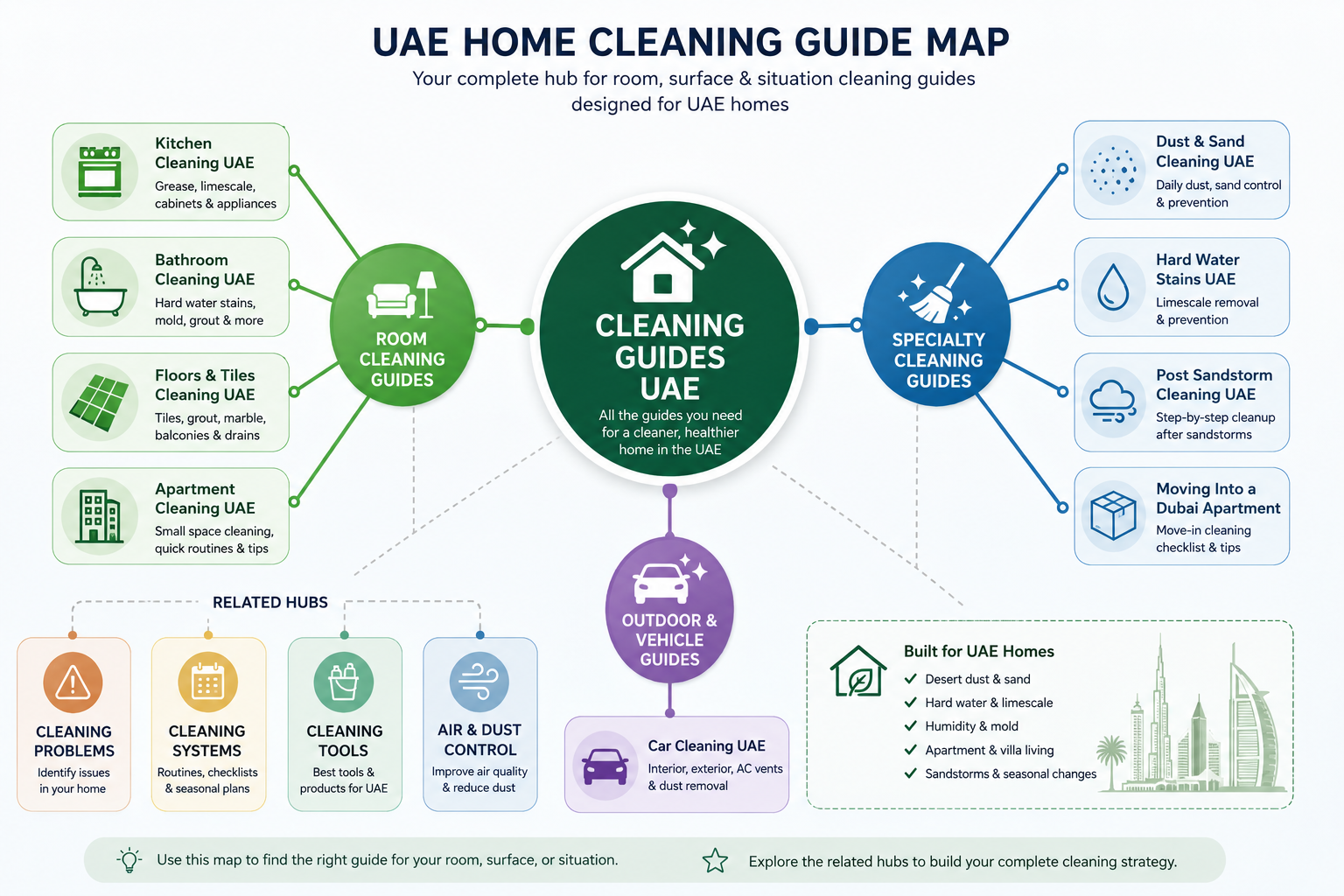
CleanLivingUAE cleaning guides are organised into three categories - Room Cleaning Guides (kitchen, bathroom, floors, apartment), Specialty Cleaning Guides (dust and sand, hard water stains, post sandstorm, move-in cleaning), and Outdoor and Vehicle Guides (car cleaning). Each guide covers methods specific to UAE dust, hard water, and climate conditions. Use the hub structure below to find the right guide for the current situation.
Why UAE Homes Need Different Cleaning Guides
Standard cleaning guidance published for temperate climates does not account for the specific conditions that define everyday home maintenance across Dubai, Abu Dhabi, Sharjah, and other UAE emirates.
Desert dust and sand entering UAE homes is a combination of fine silica particles, construction particulate, and airborne desert sediment. This material enters through door and window seals, AC inlet vents, and gaps around balcony doors. It settles rapidly and is fine enough to bypass standard cleaning methods.
Hard water supplied across UAE properties contains elevated levels of dissolved calcium and magnesium carbonates. These precipitate when water dries, leaving white or chalky mineral deposits on shower glass, taps, sink basins, toilet bowls, and tile grout.
Humidity and mold affect coastal areas including Dubai Marina, JBR, Abu Dhabi Corniche, and Sharjah waterfront zones – particularly from June through September. Continuous AC operation combined with closed windows creates condensation on cold surfaces and supports mold growth in bathrooms, wardrobes, and beneath kitchen sinks.
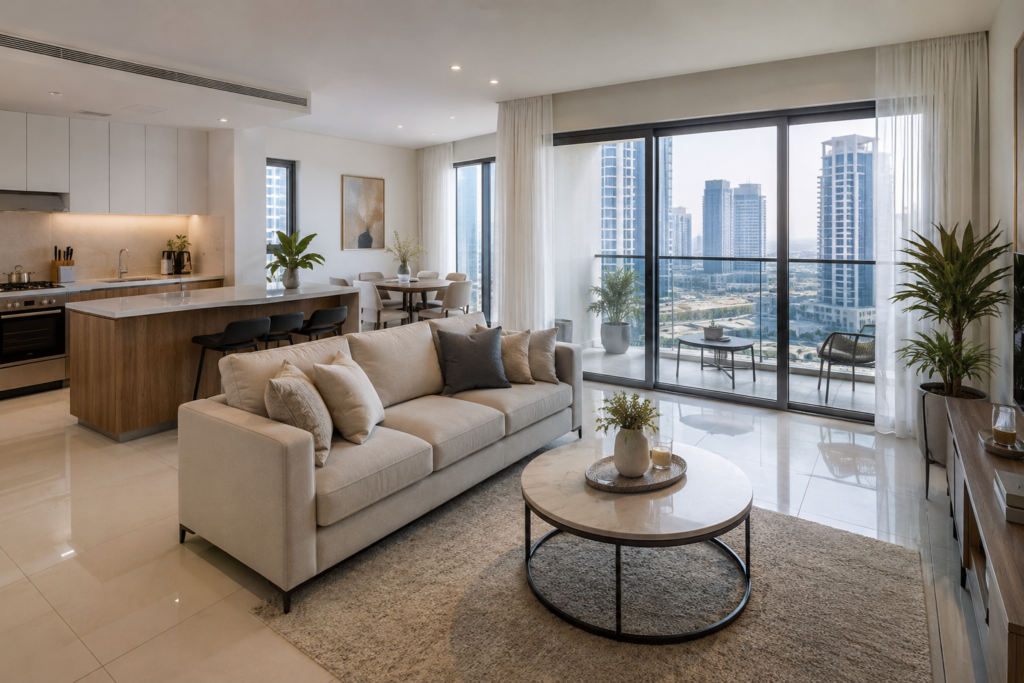
Apartment and villa differences are significant. Apartments have smaller footprints, fewer AC units, and limited outdoor space. Villas have larger surface areas, multiple AC systems, private gardens, and more complex dust infiltration routes.
Room Cleaning Guides
Kitchen Cleaning UAE
What it covers: Degreasing extractor hoods, removing limescale from taps and sinks, cleaning marble and granite countertops safely, maintaining tile grout behind hob areas, and preventing mold in refrigerator seals.
Who it helps: UAE residents who cook regularly and find standard cleaning leaves residue on stone surfaces, or who are preparing a kitchen for move-out inspection.
Key UAE challenge: Grease and desert dust combine on kitchen surfaces. Marble and granite countertops – common in UAE properties – require pH-neutral cleaners to avoid etching damage.
What it covers: Removing hard water deposits from shower glass, descaling taps and showerheads, treating early-stage bathroom mold, cleaning toilet bowls in hard water conditions, and maintaining tile grout in humid bathrooms.
Who it helps: All UAE residents, particularly those in properties with calcium-heavy water, visible scale buildup, or recurring mold on silicone sealant.
Key UAE challenge: Shower glass in UAE properties accumulates mineral deposits rapidly and can become permanently etched if left untreated. Conventional cleaning sprays typically lack the acid concentration needed to dissolve calcium carbonate.
What it covers: Removing fine sand without scratching tile surfaces, cleaning polished marble floors without streaking, maintaining grout lines, mopping techniques suited to UAE dust conditions, and cleaning balcony tiles and drainage areas.
Who it helps: Residents who find floors become dusty again within hours of cleaning, or who notice grout lines darkening over time.
Key UAE challenge: The majority of UAE apartments and villas are fitted with ceramic, porcelain, or marble tiles. Fine desert sand causes micro-scratching if dry-swept incorrectly. Grout lines trap particulate and discolour quickly.
What it covers: Setting up a cleaning zone strategy, managing dust infiltration points including balcony doors and AC vents, creating a cleaning sequence that prevents cross-contamination, cleaning storage areas, and preparing an apartment for move-in or move-out.
Who it helps: UAE apartment residents who want to manage cleaning as a system rather than reacting to individual problems.
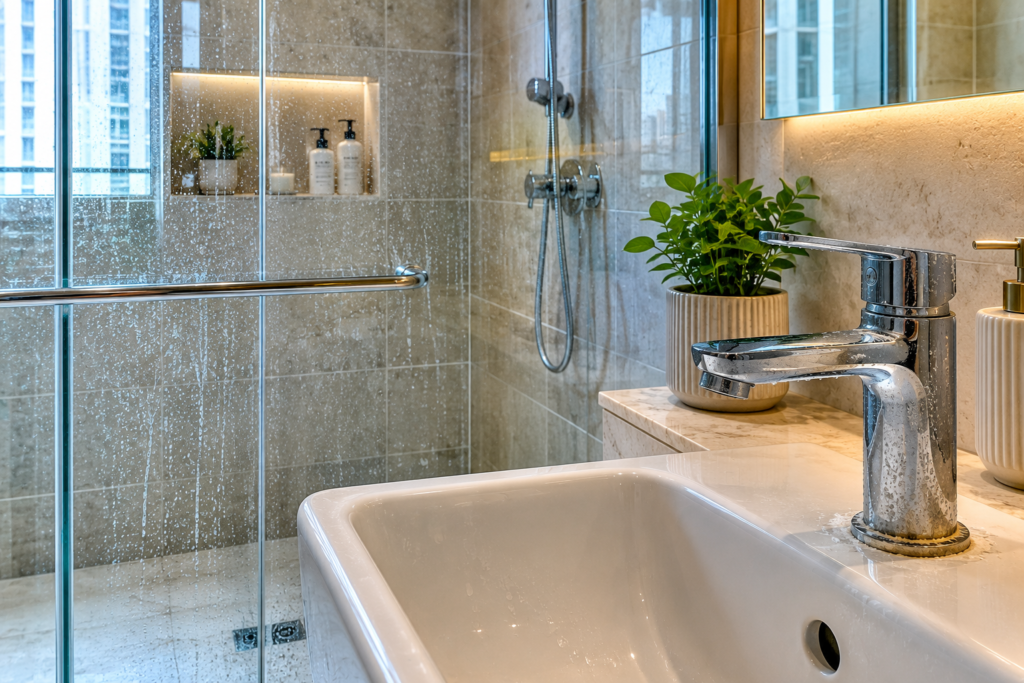
What it covers: The specific properties of UAE desert dust, settlement patterns, re-entry routes, and cleaning methods that reduce reaccumulation between sessions.
Use this guide when dust reappears within hours of cleaning, sand grains are visible on floors after sweeping, balcony surfaces accumulate visible grit, or AC vents appear dusty despite regular use.
What it covers: Removal methods and prevention strategies for mineral deposits on shower glass, taps, toilet bowls, and tile surfaces in UAE hard water conditions.
Use this guide when shower glass appears cloudy or white-streaked, tap bases have mineral buildup, toilet bowls have ring staining, or tile surfaces near water outlets appear chalky.
What it covers: A structured recovery sequence for UAE sandstorm events, including outdoor surfaces, indoor infiltration points, soft furnishings, and AC filter checks.
Use this guide when a sandstorm has passed and dust is visible across surfaces, balcony furniture is coated in sand, or indoor surfaces near windows and doors have accumulated significant dust.
What it covers: A complete move-in cleaning sequence addressing areas building cleaning staff commonly miss – inside wardrobes, underneath appliances, AC grille covers, and bathroom silicone sealants.
Use this guide when moving into a newly handed-over or previously occupied UAE apartment, preparing a unit before furniture is installed, or completing a deep clean before a move-out inspection.
Cleaning requirements across UAE residential property types differ considerably. The comparison below helps residents identify which guides are most relevant to their property type.
Factor
UAE Apartment
UAE Villa
Floor Area
600 – 2,000 sq ft
2,500 – 6,000+ sq ft
Full Clean Time
1.5 – 3 hours
3 – 6+ hours
Dust Exposure
Moderate – balcony & AC entry
High – garden & multiple entry points
Outdoor Areas
Balcony only
Garden, driveway, courtyard
AC Systems
1 – 2 units
4 – 10+ units
Bathrooms
1 – 2
2 – 5
Mold Risk
Bathroom, kitchen, wardrobes
Bathrooms, laundry, storerooms
Post-Sandstorm Cleaning
Moderate
High complexity
Deep Cleaning
Every 3 – 4 months
Every 2 – 3 months
Move-In Cleaning
4 – 8 hours
1 – 3 days
Outdoor and Vehicle Guides
Car Cleaning UAE
What it covers: Removing desert sand and dust from car interiors and exteriors, cleaning AC vents inside vehicles, treating hard water spots on paintwork and glass, and maintaining upholstery in UAE climate conditions.
Who it helps: UAE residents who drive regularly and find desert dust, sand, and hard water deposits affecting vehicle interiors, windows, and paintwork.
Key UAE challenge: Desert sand is abrasive and accumulates rapidly inside and outside vehicles. Hard water from outdoor washing leaves mineral spots on glass and paintwork. High temperatures accelerate interior dust settlement and upholstery deterioration.
The guides on this page focus on how to clean specific rooms, surfaces, and situations. The four related hubs on CleanLivingUAE.com cover the broader cleaning ecosystem for UAE homes.
Manage indoor air quality, AC maintenance, and dust infiltration
Frequently Asked Questions
How often should UAE apartments be deep cleaned?
Based on UAE dust accumulation rates, most apartments benefit from a full deep clean every three to four months. Ground-floor units, properties near construction sites, and apartments with frequently used balconies may require more frequent cleaning.
Why does shower glass in UAE properties stain so quickly?
UAE tap water contains elevated levels of dissolved calcium and magnesium carbonates due to desalination and distribution processes. These minerals deposit on glass when water evaporates. Heat accelerates the drying process, meaning deposits form and harden more rapidly than in countries with softer water.
Can hard water stains be removed from shower glass at home?
Many UAE residents remove hard water deposits using diluted white vinegar or purpose-formulated descaling products available on Amazon.ae. Heavily etched glass – where mineral deposits have penetrated the surface over months without treatment – is harder to restore and may require professional polishing.
What is the correct sequence for cleaning after a UAE sandstorm?
Outdoor areas should be addressed before indoor surfaces. Vacuum cleaning should precede wet mopping on floors. Soft furnishings including cushions, curtains, and bedding should be shaken or washed before the indoor floor clean begins. AC filters should be checked after significant sandstorm events.
What cleaning products should be avoided on marble floors common in UAE villas?
Acidic products including vinegar, lemon juice, and bleach-based sprays should not be used on marble, travertine, or limestone. These acids etch the calcite structure, causing dull patches and surface damage. pH-neutral cleaning solutions formulated for natural stone are recommended.
Is villa cleaning significantly more time-consuming than apartment cleaning?
Yes. The surface area of a typical UAE villa is often three to four times greater than an apartment. Villa cleaning also involves multiple AC units, larger bathroom counts, outdoor areas, and additional rooms such as laundry spaces and storage areas. A full villa clean commonly takes a full day or longer.
What areas are most commonly missed when cleaning a UAE apartment?
Areas commonly overlooked include: tops of interior door frames, inside AC grille slats, wardrobe shelf edges and back walls, window frame drainage channels, and the area beneath and behind kitchen appliances. These areas accumulate UAE-specific dust and hard water residue rapidly.
Is it worth cleaning before a sandstorm or only after?
Pre-sandstorm preparation – sealing balcony gaps, closing all windows, and ensuring AC filters are clean before the storm – reduces the volume of particulate entering the property and makes post-storm cleaning more manageable. Cleaning during a sandstorm is not recommended as surfaces reaccumulate sand immediately.
Are these cleaning guides suitable for both furnished and unfurnished UAE properties?
Yes. Move-in guides specifically address unfurnished or newly handed-over properties. Room-specific guides address cleaning around standard UAE apartment furnishings. Surface-specific guides for hard water and dust apply regardless of furnishing status.
Who is responsible for cleaning in UAE rental apartments – tenant or landlord?
In UAE rental properties, tenants are typically responsible for routine cleaning, filter maintenance, and minor upkeep. Building management or landlords are generally responsible for structural matters, AC duct cleaning, and common area maintenance. Residents should check their tenancy agreement for specific maintenance clauses.
Conclusion
Cleaning guides UAE residents use most often are those designed specifically for local conditions. Desert dust, hard water, humidity, and sandstorms create cleaning challenges that require different methods than those used in other regions.
Information in this guide draws on published research and documentation from the following sources: the UAE Ministry of Climate Change and Environment on regional dust and air quality conditions; Dubai Municipality on water quality standards and mineral content in UAE supply networks; the Dubai Health Authority on indoor air quality guidance for UAE residents; Abu Dhabi Department of Energy on AC maintenance standards; and established reference documentation from RERA (Real Estate Regulatory Agency) on tenant and landlord maintenance responsibilities in UAE rental properties.
Suggested Future Articles
Window and Glass Cleaning UAE
Balcony Cleaning UAE
Marble Floor Cleaning UAE
Wardrobe Mold UAE
Tile Grout Cleaning UAE
Construction Dust UAE Apartments
Factor
UAE Apartment
UAE Villa
Floor Area
600 – 2,000 sq ft
2,500 – 6,000+ sq ft
Full Clean Time
1.5 – 3 hours
3 – 6+ hours
Dust Exposure
Moderate – balcony & AC entry
High – garden & multiple entry points
Outdoor Areas
Balcony only
Garden, driveway, courtyard
AC Systems
1 – 2 units
4 – 10+ units
Bathrooms
1 – 2
2 – 5
Mold Risk
Bathroom, kitchen, wardrobes
Bathrooms, laundry, storerooms
Post-Sandstorm Cleaning
Moderate
High complexity
Deep Cleaning
Every 3 – 4 months
Every 2 – 3 months
Move-In Cleaning
4 – 8 hours
1 – 3 days
Outdoor and Vehicle Guides
Car Cleaning UAE
What it covers: Removing desert sand and dust from car interiors and exteriors, cleaning AC vents inside vehicles, treating hard water spots on paintwork and glass, and maintaining upholstery in UAE climate conditions.
Who it helps: UAE residents who drive regularly and find desert dust, sand, and hard water deposits affecting vehicle interiors, windows, and paintwork.
Key UAE challenge: Desert sand is abrasive and accumulates rapidly inside and outside vehicles. Hard water from outdoor washing leaves mineral spots on glass and paintwork. High temperatures accelerate interior dust settlement and upholstery deterioration.
The guides on this page focus on how to clean specific rooms, surfaces, and situations. The four related hubs on CleanLivingUAE.com cover the broader cleaning ecosystem for UAE homes.
Manage indoor air quality, AC maintenance, and dust infiltration
Frequently Asked Questions
How often should UAE apartments be deep cleaned?
Based on UAE dust accumulation rates, most apartments benefit from a full deep clean every three to four months. Ground-floor units, properties near construction sites, and apartments with frequently used balconies may require more frequent cleaning.
Why does shower glass in UAE properties stain so quickly?
UAE tap water contains elevated levels of dissolved calcium and magnesium carbonates due to desalination and distribution processes. These minerals deposit on glass when water evaporates. Heat accelerates the drying process, meaning deposits form and harden more rapidly than in countries with softer water.
Can hard water stains be removed from shower glass at home?
Many UAE residents remove hard water deposits using diluted white vinegar or purpose-formulated descaling products available on Amazon.ae. Heavily etched glass – where mineral deposits have penetrated the surface over months without treatment – is harder to restore and may require professional polishing.
What is the correct sequence for cleaning after a UAE sandstorm?
Outdoor areas should be addressed before indoor surfaces. Vacuum cleaning should precede wet mopping on floors. Soft furnishings including cushions, curtains, and bedding should be shaken or washed before the indoor floor clean begins. AC filters should be checked after significant sandstorm events.
What cleaning products should be avoided on marble floors common in UAE villas?
Acidic products including vinegar, lemon juice, and bleach-based sprays should not be used on marble, travertine, or limestone. These acids etch the calcite structure, causing dull patches and surface damage. pH-neutral cleaning solutions formulated for natural stone are recommended.
Is villa cleaning significantly more time-consuming than apartment cleaning?
Yes. The surface area of a typical UAE villa is often three to four times greater than an apartment. Villa cleaning also involves multiple AC units, larger bathroom counts, outdoor areas, and additional rooms such as laundry spaces and storage areas. A full villa clean commonly takes a full day or longer.
What areas are most commonly missed when cleaning a UAE apartment?
Areas commonly overlooked include: tops of interior door frames, inside AC grille slats, wardrobe shelf edges and back walls, window frame drainage channels, and the area beneath and behind kitchen appliances. These areas accumulate UAE-specific dust and hard water residue rapidly.
Is it worth cleaning before a sandstorm or only after?
Pre-sandstorm preparation – sealing balcony gaps, closing all windows, and ensuring AC filters are clean before the storm – reduces the volume of particulate entering the property and makes post-storm cleaning more manageable. Cleaning during a sandstorm is not recommended as surfaces reaccumulate sand immediately.
Are these cleaning guides suitable for both furnished and unfurnished UAE properties?
Yes. Move-in guides specifically address unfurnished or newly handed-over properties. Room-specific guides address cleaning around standard UAE apartment furnishings. Surface-specific guides for hard water and dust apply regardless of furnishing status.
Who is responsible for cleaning in UAE rental apartments – tenant or landlord?
In UAE rental properties, tenants are typically responsible for routine cleaning, filter maintenance, and minor upkeep. Building management or landlords are generally responsible for structural matters, AC duct cleaning, and common area maintenance. Residents should check their tenancy agreement for specific maintenance clauses.
Conclusion
Cleaning guides UAE residents use most often are those designed specifically for local conditions. Desert dust, hard water, humidity, and sandstorms create cleaning challenges that require different methods than those used in other regions.
Information in this guide draws on published research and documentation from the following sources: the UAE Ministry of Climate Change and Environment on regional dust and air quality conditions; Dubai Municipality on water quality standards and mineral content in UAE supply networks; the Dubai Health Authority on indoor air quality guidance for UAE residents; Abu Dhabi Department of Energy on AC maintenance standards; and established reference documentation from RERA (Real Estate Regulatory Agency) on tenant and landlord maintenance responsibilities in UAE rental properties.
Suggested Future Articles
Window and Glass Cleaning UAE
Balcony Cleaning UAE
Marble Floor Cleaning UAE
Wardrobe Mold UAE
Tile Grout Cleaning UAE
Construction Dust UAE Apartments
QUICK ANSWER
CleanLivingUAE cleaning guides are organised into three categories - Room Cleaning Guides (kitchen, bathroom, floors, apartment), Specialty Cleaning Guides (dust and sand, hard water stains, post sandstorm, move-in cleaning), and Outdoor and Vehicle Guides (car cleaning). Each guide covers methods specific to UAE dust, hard water, and climate conditions. Use the hub structure below to find the right guide for the current situation.
Why UAE Homes Need Different Cleaning Guides
Standard cleaning guidance published for temperate climates does not account for the specific conditions that define everyday home maintenance across Dubai, Abu Dhabi, Sharjah, and other UAE emirates.
Desert dust and sand entering UAE homes is a combination of fine silica particles, construction particulate, and airborne desert sediment. This material enters through door and window seals, AC inlet vents, and gaps around balcony doors. It settles rapidly and is fine enough to bypass standard cleaning methods.
Hard water supplied across UAE properties contains elevated levels of dissolved calcium and magnesium carbonates. These precipitate when water dries, leaving white or chalky mineral deposits on shower glass, taps, sink basins, toilet bowls, and tile grout.
Humidity and mold affect coastal areas including Dubai Marina, JBR, Abu Dhabi Corniche, and Sharjah waterfront zones – particularly from June through September. Continuous AC operation combined with closed windows creates condensation on cold surfaces and supports mold growth in bathrooms, wardrobes, and beneath kitchen sinks.
Apartment and villa differences are significant. Apartments have smaller footprints, fewer AC units, and limited outdoor space. Villas have larger surface areas, multiple AC systems, private gardens, and more complex dust infiltration routes.
Room Cleaning Guides
Kitchen Cleaning UAE
What it covers: Degreasing extractor hoods, removing limescale from taps and sinks, cleaning marble and granite countertops safely, maintaining tile grout behind hob areas, and preventing mold in refrigerator seals.
Who it helps: UAE residents who cook regularly and find standard cleaning leaves residue on stone surfaces, or who are preparing a kitchen for move-out inspection.
Key UAE challenge: Grease and desert dust combine on kitchen surfaces. Marble and granite countertops – common in UAE properties – require pH-neutral cleaners to avoid etching damage.
What it covers: Removing hard water deposits from shower glass, descaling taps and showerheads, treating early-stage bathroom mold, cleaning toilet bowls in hard water conditions, and maintaining tile grout in humid bathrooms.
Who it helps: All UAE residents, particularly those in properties with calcium-heavy water, visible scale buildup, or recurring mold on silicone sealant.
Key UAE challenge: Shower glass in UAE properties accumulates mineral deposits rapidly and can become permanently etched if left untreated. Conventional cleaning sprays typically lack the acid concentration needed to dissolve calcium carbonate.
What it covers: Removing fine sand without scratching tile surfaces, cleaning polished marble floors without streaking, maintaining grout lines, mopping techniques suited to UAE dust conditions, and cleaning balcony tiles and drainage areas.
Who it helps: Residents who find floors become dusty again within hours of cleaning, or who notice grout lines darkening over time.
Key UAE challenge: The majority of UAE apartments and villas are fitted with ceramic, porcelain, or marble tiles. Fine desert sand causes micro-scratching if dry-swept incorrectly. Grout lines trap particulate and discolour quickly.
What it covers: Setting up a cleaning zone strategy, managing dust infiltration points including balcony doors and AC vents, creating a cleaning sequence that prevents cross-contamination, cleaning storage areas, and preparing an apartment for move-in or move-out.
Who it helps: UAE apartment residents who want to manage cleaning as a system rather than reacting to individual problems.
What it covers: The specific properties of UAE desert dust, settlement patterns, re-entry routes, and cleaning methods that reduce reaccumulation between sessions.
Use this guide when dust reappears within hours of cleaning, sand grains are visible on floors after sweeping, balcony surfaces accumulate visible grit, or AC vents appear dusty despite regular use.
What it covers: Removal methods and prevention strategies for mineral deposits on shower glass, taps, toilet bowls, and tile surfaces in UAE hard water conditions.
Use this guide when shower glass appears cloudy or white-streaked, tap bases have mineral buildup, toilet bowls have ring staining, or tile surfaces near water outlets appear chalky.
What it covers: A structured recovery sequence for UAE sandstorm events, including outdoor surfaces, indoor infiltration points, soft furnishings, and AC filter checks.
Use this guide when a sandstorm has passed and dust is visible across surfaces, balcony furniture is coated in sand, or indoor surfaces near windows and doors have accumulated significant dust.
What it covers: A complete move-in cleaning sequence addressing areas building cleaning staff commonly miss – inside wardrobes, underneath appliances, AC grille covers, and bathroom silicone sealants.
Use this guide when moving into a newly handed-over or previously occupied UAE apartment, preparing a unit before furniture is installed, or completing a deep clean before a move-out inspection.
Cleaning requirements across UAE residential property types differ considerably. The comparison below helps residents identify which guides are most relevant to their property type.
Factor
UAE Apartment
UAE Villa
Floor Area
600 – 2,000 sq ft
2,500 – 6,000+ sq ft
Full Clean Time
1.5 – 3 hours
3 – 6+ hours
Dust Exposure
Moderate – balcony & AC entry
High – garden & multiple entry points
Outdoor Areas
Balcony only
Garden, driveway, courtyard
AC Systems
1 – 2 units
4 – 10+ units
Bathrooms
1 – 2
2 – 5
Mold Risk
Bathroom, kitchen, wardrobes
Bathrooms, laundry, storerooms
Post-Sandstorm Cleaning
Moderate
High complexity
Deep Cleaning
Every 3 – 4 months
Every 2 – 3 months
Move-In Cleaning
4 – 8 hours
1 – 3 days
Outdoor and Vehicle Guides
Car Cleaning UAE
What it covers: Removing desert sand and dust from car interiors and exteriors, cleaning AC vents inside vehicles, treating hard water spots on paintwork and glass, and maintaining upholstery in UAE climate conditions.
Who it helps: UAE residents who drive regularly and find desert dust, sand, and hard water deposits affecting vehicle interiors, windows, and paintwork.
Key UAE challenge: Desert sand is abrasive and accumulates rapidly inside and outside vehicles. Hard water from outdoor washing leaves mineral spots on glass and paintwork. High temperatures accelerate interior dust settlement and upholstery deterioration.
The guides on this page focus on how to clean specific rooms, surfaces, and situations. The four related hubs on CleanLivingUAE.com cover the broader cleaning ecosystem for UAE homes.
Manage indoor air quality, AC maintenance, and dust infiltration
Frequently Asked Questions
How often should UAE apartments be deep cleaned?
Based on UAE dust accumulation rates, most apartments benefit from a full deep clean every three to four months. Ground-floor units, properties near construction sites, and apartments with frequently used balconies may require more frequent cleaning.
Why does shower glass in UAE properties stain so quickly?
UAE tap water contains elevated levels of dissolved calcium and magnesium carbonates due to desalination and distribution processes. These minerals deposit on glass when water evaporates. Heat accelerates the drying process, meaning deposits form and harden more rapidly than in countries with softer water.
Can hard water stains be removed from shower glass at home?
Many UAE residents remove hard water deposits using diluted white vinegar or purpose-formulated descaling products available on Amazon.ae. Heavily etched glass – where mineral deposits have penetrated the surface over months without treatment – is harder to restore and may require professional polishing.
What is the correct sequence for cleaning after a UAE sandstorm?
Outdoor areas should be addressed before indoor surfaces. Vacuum cleaning should precede wet mopping on floors. Soft furnishings including cushions, curtains, and bedding should be shaken or washed before the indoor floor clean begins. AC filters should be checked after significant sandstorm events.
What cleaning products should be avoided on marble floors common in UAE villas?
Acidic products including vinegar, lemon juice, and bleach-based sprays should not be used on marble, travertine, or limestone. These acids etch the calcite structure, causing dull patches and surface damage. pH-neutral cleaning solutions formulated for natural stone are recommended.
Is villa cleaning significantly more time-consuming than apartment cleaning?
Yes. The surface area of a typical UAE villa is often three to four times greater than an apartment. Villa cleaning also involves multiple AC units, larger bathroom counts, outdoor areas, and additional rooms such as laundry spaces and storage areas. A full villa clean commonly takes a full day or longer.
What areas are most commonly missed when cleaning a UAE apartment?
Areas commonly overlooked include: tops of interior door frames, inside AC grille slats, wardrobe shelf edges and back walls, window frame drainage channels, and the area beneath and behind kitchen appliances. These areas accumulate UAE-specific dust and hard water residue rapidly.
Is it worth cleaning before a sandstorm or only after?
Pre-sandstorm preparation – sealing balcony gaps, closing all windows, and ensuring AC filters are clean before the storm – reduces the volume of particulate entering the property and makes post-storm cleaning more manageable. Cleaning during a sandstorm is not recommended as surfaces reaccumulate sand immediately.
Are these cleaning guides suitable for both furnished and unfurnished UAE properties?
Yes. Move-in guides specifically address unfurnished or newly handed-over properties. Room-specific guides address cleaning around standard UAE apartment furnishings. Surface-specific guides for hard water and dust apply regardless of furnishing status.
Who is responsible for cleaning in UAE rental apartments – tenant or landlord?
In UAE rental properties, tenants are typically responsible for routine cleaning, filter maintenance, and minor upkeep. Building management or landlords are generally responsible for structural matters, AC duct cleaning, and common area maintenance. Residents should check their tenancy agreement for specific maintenance clauses.
Conclusion
Cleaning guides UAE residents use most often are those designed specifically for local conditions. Desert dust, hard water, humidity, and sandstorms create cleaning challenges that require different methods than those used in other regions.
Information in this guide draws on published research and documentation from the following sources: the UAE Ministry of Climate Change and Environment on regional dust and air quality conditions; Dubai Municipality on water quality standards and mineral content in UAE supply networks; the Dubai Health Authority on indoor air quality guidance for UAE residents; Abu Dhabi Department of Energy on AC maintenance standards; and established reference documentation from RERA (Real Estate Regulatory Agency) on tenant and landlord maintenance responsibilities in UAE rental properties.
Suggested Future Articles
Window and Glass Cleaning UAE
Balcony Cleaning UAE
Marble Floor Cleaning UAE
Wardrobe Mold UAE
Tile Grout Cleaning UAE
Construction Dust UAE Apartments
Apartment vs Villa Cleaning Comparison
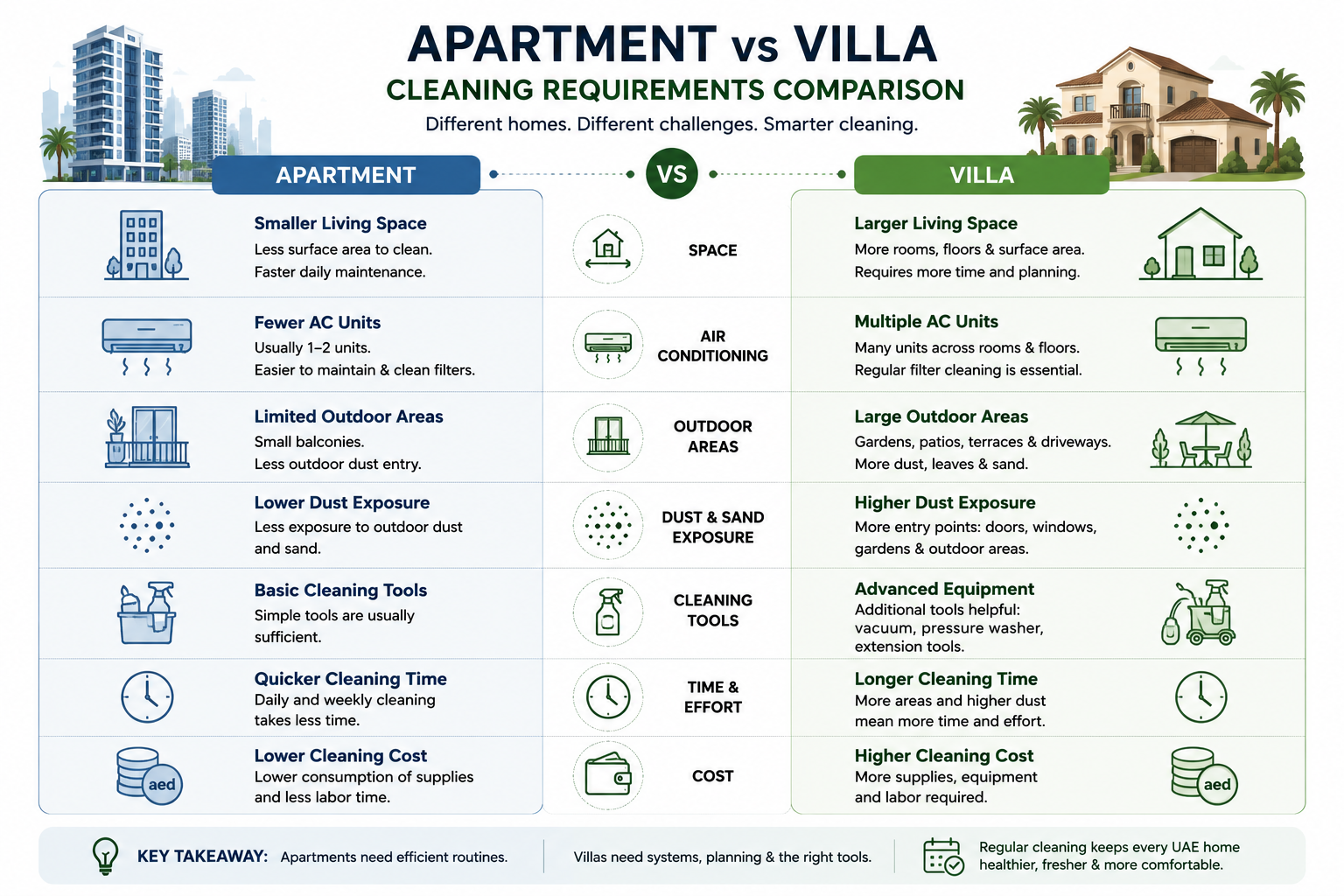
Cleaning requirements across UAE residential property types differ considerably. The comparison below helps residents identify which guides are most relevant to their property type.
Factor
UAE Apartment
UAE Villa
Floor Area
600 – 2,000 sq ft
2,500 – 6,000+ sq ft
Full Clean Time
1.5 – 3 hours
3 – 6+ hours
Dust Exposure
Moderate – balcony & AC entry
High – garden & multiple entry points
Outdoor Areas
Balcony only
Garden, driveway, courtyard
AC Systems
1 – 2 units
4 – 10+ units
Bathrooms
1 – 2
2 – 5
Mold Risk
Bathroom, kitchen, wardrobes
Bathrooms, laundry, storerooms
Post-Sandstorm Cleaning
Moderate
High complexity
Deep Cleaning
Every 3 – 4 months
Every 2 – 3 months
Move-In Cleaning
4 – 8 hours
1 – 3 days
Outdoor and Vehicle Guides
Car Cleaning UAE
What it covers: Removing desert sand and dust from car interiors and exteriors, cleaning AC vents inside vehicles, treating hard water spots on paintwork and glass, and maintaining upholstery in UAE climate conditions.
Who it helps: UAE residents who drive regularly and find desert dust, sand, and hard water deposits affecting vehicle interiors, windows, and paintwork.
Key UAE challenge: Desert sand is abrasive and accumulates rapidly inside and outside vehicles. Hard water from outdoor washing leaves mineral spots on glass and paintwork. High temperatures accelerate interior dust settlement and upholstery deterioration.
The guides on this page focus on how to clean specific rooms, surfaces, and situations. The four related hubs on CleanLivingUAE.com cover the broader cleaning ecosystem for UAE homes.
Manage indoor air quality, AC maintenance, and dust infiltration
Frequently Asked Questions
How often should UAE apartments be deep cleaned?
Based on UAE dust accumulation rates, most apartments benefit from a full deep clean every three to four months. Ground-floor units, properties near construction sites, and apartments with frequently used balconies may require more frequent cleaning.
Why does shower glass in UAE properties stain so quickly?
UAE tap water contains elevated levels of dissolved calcium and magnesium carbonates due to desalination and distribution processes. These minerals deposit on glass when water evaporates. Heat accelerates the drying process, meaning deposits form and harden more rapidly than in countries with softer water.
Can hard water stains be removed from shower glass at home?
Many UAE residents remove hard water deposits using diluted white vinegar or purpose-formulated descaling products available on Amazon.ae. Heavily etched glass – where mineral deposits have penetrated the surface over months without treatment – is harder to restore and may require professional polishing.
What is the correct sequence for cleaning after a UAE sandstorm?
Outdoor areas should be addressed before indoor surfaces. Vacuum cleaning should precede wet mopping on floors. Soft furnishings including cushions, curtains, and bedding should be shaken or washed before the indoor floor clean begins. AC filters should be checked after significant sandstorm events.
What cleaning products should be avoided on marble floors common in UAE villas?
Acidic products including vinegar, lemon juice, and bleach-based sprays should not be used on marble, travertine, or limestone. These acids etch the calcite structure, causing dull patches and surface damage. pH-neutral cleaning solutions formulated for natural stone are recommended.
Is villa cleaning significantly more time-consuming than apartment cleaning?
Yes. The surface area of a typical UAE villa is often three to four times greater than an apartment. Villa cleaning also involves multiple AC units, larger bathroom counts, outdoor areas, and additional rooms such as laundry spaces and storage areas. A full villa clean commonly takes a full day or longer.
What areas are most commonly missed when cleaning a UAE apartment?
Areas commonly overlooked include: tops of interior door frames, inside AC grille slats, wardrobe shelf edges and back walls, window frame drainage channels, and the area beneath and behind kitchen appliances. These areas accumulate UAE-specific dust and hard water residue rapidly.
Is it worth cleaning before a sandstorm or only after?
Pre-sandstorm preparation – sealing balcony gaps, closing all windows, and ensuring AC filters are clean before the storm – reduces the volume of particulate entering the property and makes post-storm cleaning more manageable. Cleaning during a sandstorm is not recommended as surfaces reaccumulate sand immediately.
Are these cleaning guides suitable for both furnished and unfurnished UAE properties?
Yes. Move-in guides specifically address unfurnished or newly handed-over properties. Room-specific guides address cleaning around standard UAE apartment furnishings. Surface-specific guides for hard water and dust apply regardless of furnishing status.
Who is responsible for cleaning in UAE rental apartments – tenant or landlord?
In UAE rental properties, tenants are typically responsible for routine cleaning, filter maintenance, and minor upkeep. Building management or landlords are generally responsible for structural matters, AC duct cleaning, and common area maintenance. Residents should check their tenancy agreement for specific maintenance clauses.
Conclusion
Cleaning guides UAE residents use most often are those designed specifically for local conditions. Desert dust, hard water, humidity, and sandstorms create cleaning challenges that require different methods than those used in other regions.
Information in this guide draws on published research and documentation from the following sources: the UAE Ministry of Climate Change and Environment on regional dust and air quality conditions; Dubai Municipality on water quality standards and mineral content in UAE supply networks; the Dubai Health Authority on indoor air quality guidance for UAE residents; Abu Dhabi Department of Energy on AC maintenance standards; and established reference documentation from RERA (Real Estate Regulatory Agency) on tenant and landlord maintenance responsibilities in UAE rental properties.
Suggested Future Articles
Window and Glass Cleaning UAE
Balcony Cleaning UAE
Marble Floor Cleaning UAE
Wardrobe Mold UAE
Tile Grout Cleaning UAE
Construction Dust UAE Apartments
QUICK ANSWER
CleanLivingUAE cleaning guides are organised into three categories - Room Cleaning Guides (kitchen, bathroom, floors, apartment), Specialty Cleaning Guides (dust and sand, hard water stains, post sandstorm, move-in cleaning), and Outdoor and Vehicle Guides (car cleaning). Each guide covers methods specific to UAE dust, hard water, and climate conditions. Use the hub structure below to find the right guide for the current situation.
Why UAE Homes Need Different Cleaning Guides
Standard cleaning guidance published for temperate climates does not account for the specific conditions that define everyday home maintenance across Dubai, Abu Dhabi, Sharjah, and other UAE emirates.
Desert dust and sand entering UAE homes is a combination of fine silica particles, construction particulate, and airborne desert sediment. This material enters through door and window seals, AC inlet vents, and gaps around balcony doors. It settles rapidly and is fine enough to bypass standard cleaning methods.
Hard water supplied across UAE properties contains elevated levels of dissolved calcium and magnesium carbonates. These precipitate when water dries, leaving white or chalky mineral deposits on shower glass, taps, sink basins, toilet bowls, and tile grout.
Humidity and mold affect coastal areas including Dubai Marina, JBR, Abu Dhabi Corniche, and Sharjah waterfront zones – particularly from June through September. Continuous AC operation combined with closed windows creates condensation on cold surfaces and supports mold growth in bathrooms, wardrobes, and beneath kitchen sinks.
Apartment and villa differences are significant. Apartments have smaller footprints, fewer AC units, and limited outdoor space. Villas have larger surface areas, multiple AC systems, private gardens, and more complex dust infiltration routes.
Room Cleaning Guides
Kitchen Cleaning UAE
What it covers: Degreasing extractor hoods, removing limescale from taps and sinks, cleaning marble and granite countertops safely, maintaining tile grout behind hob areas, and preventing mold in refrigerator seals.
Who it helps: UAE residents who cook regularly and find standard cleaning leaves residue on stone surfaces, or who are preparing a kitchen for move-out inspection.
Key UAE challenge: Grease and desert dust combine on kitchen surfaces. Marble and granite countertops – common in UAE properties – require pH-neutral cleaners to avoid etching damage.
What it covers: Removing hard water deposits from shower glass, descaling taps and showerheads, treating early-stage bathroom mold, cleaning toilet bowls in hard water conditions, and maintaining tile grout in humid bathrooms.
Who it helps: All UAE residents, particularly those in properties with calcium-heavy water, visible scale buildup, or recurring mold on silicone sealant.
Key UAE challenge: Shower glass in UAE properties accumulates mineral deposits rapidly and can become permanently etched if left untreated. Conventional cleaning sprays typically lack the acid concentration needed to dissolve calcium carbonate.
What it covers: Removing fine sand without scratching tile surfaces, cleaning polished marble floors without streaking, maintaining grout lines, mopping techniques suited to UAE dust conditions, and cleaning balcony tiles and drainage areas.
Who it helps: Residents who find floors become dusty again within hours of cleaning, or who notice grout lines darkening over time.
Key UAE challenge: The majority of UAE apartments and villas are fitted with ceramic, porcelain, or marble tiles. Fine desert sand causes micro-scratching if dry-swept incorrectly. Grout lines trap particulate and discolour quickly.
What it covers: Setting up a cleaning zone strategy, managing dust infiltration points including balcony doors and AC vents, creating a cleaning sequence that prevents cross-contamination, cleaning storage areas, and preparing an apartment for move-in or move-out.
Who it helps: UAE apartment residents who want to manage cleaning as a system rather than reacting to individual problems.
What it covers: The specific properties of UAE desert dust, settlement patterns, re-entry routes, and cleaning methods that reduce reaccumulation between sessions.
Use this guide when dust reappears within hours of cleaning, sand grains are visible on floors after sweeping, balcony surfaces accumulate visible grit, or AC vents appear dusty despite regular use.
What it covers: Removal methods and prevention strategies for mineral deposits on shower glass, taps, toilet bowls, and tile surfaces in UAE hard water conditions.
Use this guide when shower glass appears cloudy or white-streaked, tap bases have mineral buildup, toilet bowls have ring staining, or tile surfaces near water outlets appear chalky.
What it covers: A structured recovery sequence for UAE sandstorm events, including outdoor surfaces, indoor infiltration points, soft furnishings, and AC filter checks.
Use this guide when a sandstorm has passed and dust is visible across surfaces, balcony furniture is coated in sand, or indoor surfaces near windows and doors have accumulated significant dust.
What it covers: A complete move-in cleaning sequence addressing areas building cleaning staff commonly miss – inside wardrobes, underneath appliances, AC grille covers, and bathroom silicone sealants.
Use this guide when moving into a newly handed-over or previously occupied UAE apartment, preparing a unit before furniture is installed, or completing a deep clean before a move-out inspection.
Cleaning requirements across UAE residential property types differ considerably. The comparison below helps residents identify which guides are most relevant to their property type.
Factor
UAE Apartment
UAE Villa
Floor Area
600 – 2,000 sq ft
2,500 – 6,000+ sq ft
Full Clean Time
1.5 – 3 hours
3 – 6+ hours
Dust Exposure
Moderate – balcony & AC entry
High – garden & multiple entry points
Outdoor Areas
Balcony only
Garden, driveway, courtyard
AC Systems
1 – 2 units
4 – 10+ units
Bathrooms
1 – 2
2 – 5
Mold Risk
Bathroom, kitchen, wardrobes
Bathrooms, laundry, storerooms
Post-Sandstorm Cleaning
Moderate
High complexity
Deep Cleaning
Every 3 – 4 months
Every 2 – 3 months
Move-In Cleaning
4 – 8 hours
1 – 3 days
Outdoor and Vehicle Guides
Car Cleaning UAE
What it covers: Removing desert sand and dust from car interiors and exteriors, cleaning AC vents inside vehicles, treating hard water spots on paintwork and glass, and maintaining upholstery in UAE climate conditions.
Who it helps: UAE residents who drive regularly and find desert dust, sand, and hard water deposits affecting vehicle interiors, windows, and paintwork.
Key UAE challenge: Desert sand is abrasive and accumulates rapidly inside and outside vehicles. Hard water from outdoor washing leaves mineral spots on glass and paintwork. High temperatures accelerate interior dust settlement and upholstery deterioration.
The guides on this page focus on how to clean specific rooms, surfaces, and situations. The four related hubs on CleanLivingUAE.com cover the broader cleaning ecosystem for UAE homes.
Manage indoor air quality, AC maintenance, and dust infiltration
Frequently Asked Questions
How often should UAE apartments be deep cleaned?
Based on UAE dust accumulation rates, most apartments benefit from a full deep clean every three to four months. Ground-floor units, properties near construction sites, and apartments with frequently used balconies may require more frequent cleaning.
Why does shower glass in UAE properties stain so quickly?
UAE tap water contains elevated levels of dissolved calcium and magnesium carbonates due to desalination and distribution processes. These minerals deposit on glass when water evaporates. Heat accelerates the drying process, meaning deposits form and harden more rapidly than in countries with softer water.
Can hard water stains be removed from shower glass at home?
Many UAE residents remove hard water deposits using diluted white vinegar or purpose-formulated descaling products available on Amazon.ae. Heavily etched glass – where mineral deposits have penetrated the surface over months without treatment – is harder to restore and may require professional polishing.
What is the correct sequence for cleaning after a UAE sandstorm?
Outdoor areas should be addressed before indoor surfaces. Vacuum cleaning should precede wet mopping on floors. Soft furnishings including cushions, curtains, and bedding should be shaken or washed before the indoor floor clean begins. AC filters should be checked after significant sandstorm events.
What cleaning products should be avoided on marble floors common in UAE villas?
Acidic products including vinegar, lemon juice, and bleach-based sprays should not be used on marble, travertine, or limestone. These acids etch the calcite structure, causing dull patches and surface damage. pH-neutral cleaning solutions formulated for natural stone are recommended.
Is villa cleaning significantly more time-consuming than apartment cleaning?
Yes. The surface area of a typical UAE villa is often three to four times greater than an apartment. Villa cleaning also involves multiple AC units, larger bathroom counts, outdoor areas, and additional rooms such as laundry spaces and storage areas. A full villa clean commonly takes a full day or longer.
What areas are most commonly missed when cleaning a UAE apartment?
Areas commonly overlooked include: tops of interior door frames, inside AC grille slats, wardrobe shelf edges and back walls, window frame drainage channels, and the area beneath and behind kitchen appliances. These areas accumulate UAE-specific dust and hard water residue rapidly.
Is it worth cleaning before a sandstorm or only after?
Pre-sandstorm preparation – sealing balcony gaps, closing all windows, and ensuring AC filters are clean before the storm – reduces the volume of particulate entering the property and makes post-storm cleaning more manageable. Cleaning during a sandstorm is not recommended as surfaces reaccumulate sand immediately.
Are these cleaning guides suitable for both furnished and unfurnished UAE properties?
Yes. Move-in guides specifically address unfurnished or newly handed-over properties. Room-specific guides address cleaning around standard UAE apartment furnishings. Surface-specific guides for hard water and dust apply regardless of furnishing status.
Who is responsible for cleaning in UAE rental apartments – tenant or landlord?
In UAE rental properties, tenants are typically responsible for routine cleaning, filter maintenance, and minor upkeep. Building management or landlords are generally responsible for structural matters, AC duct cleaning, and common area maintenance. Residents should check their tenancy agreement for specific maintenance clauses.
Conclusion
Cleaning guides UAE residents use most often are those designed specifically for local conditions. Desert dust, hard water, humidity, and sandstorms create cleaning challenges that require different methods than those used in other regions.
Information in this guide draws on published research and documentation from the following sources: the UAE Ministry of Climate Change and Environment on regional dust and air quality conditions; Dubai Municipality on water quality standards and mineral content in UAE supply networks; the Dubai Health Authority on indoor air quality guidance for UAE residents; Abu Dhabi Department of Energy on AC maintenance standards; and established reference documentation from RERA (Real Estate Regulatory Agency) on tenant and landlord maintenance responsibilities in UAE rental properties.
Suggested Future Articles
Window and Glass Cleaning UAE
Balcony Cleaning UAE
Marble Floor Cleaning UAE
Wardrobe Mold UAE
Tile Grout Cleaning UAE
Construction Dust UAE Apartments
Room Cleaning Guides
Kitchen Cleaning UAE
What it covers: Degreasing extractor hoods, removing limescale from taps and sinks, cleaning marble and granite countertops safely, maintaining tile grout behind hob areas, and preventing mold in refrigerator seals.
Who it helps: UAE residents who cook regularly and find standard cleaning leaves residue on stone surfaces, or who are preparing a kitchen for move-out inspection.
Key UAE challenge: Grease and desert dust combine on kitchen surfaces. Marble and granite countertops – common in UAE properties – require pH-neutral cleaners to avoid etching damage.
What it covers: Removing hard water deposits from shower glass, descaling taps and showerheads, treating early-stage bathroom mold, cleaning toilet bowls in hard water conditions, and maintaining tile grout in humid bathrooms.
Who it helps: All UAE residents, particularly those in properties with calcium-heavy water, visible scale buildup, or recurring mold on silicone sealant.
Key UAE challenge: Shower glass in UAE properties accumulates mineral deposits rapidly and can become permanently etched if left untreated. Conventional cleaning sprays typically lack the acid concentration needed to dissolve calcium carbonate.
What it covers: Removing fine sand without scratching tile surfaces, cleaning polished marble floors without streaking, maintaining grout lines, mopping techniques suited to UAE dust conditions, and cleaning balcony tiles and drainage areas.
Who it helps: Residents who find floors become dusty again within hours of cleaning, or who notice grout lines darkening over time.
Key UAE challenge: The majority of UAE apartments and villas are fitted with ceramic, porcelain, or marble tiles. Fine desert sand causes micro-scratching if dry-swept incorrectly. Grout lines trap particulate and discolour quickly.
What it covers: Setting up a cleaning zone strategy, managing dust infiltration points including balcony doors and AC vents, creating a cleaning sequence that prevents cross-contamination, cleaning storage areas, and preparing an apartment for move-in or move-out.
Who it helps: UAE apartment residents who want to manage cleaning as a system rather than reacting to individual problems.
What it covers: The specific properties of UAE desert dust, settlement patterns, re-entry routes, and cleaning methods that reduce reaccumulation between sessions.
Use this guide when dust reappears within hours of cleaning, sand grains are visible on floors after sweeping, balcony surfaces accumulate visible grit, or AC vents appear dusty despite regular use.
What it covers: Removal methods and prevention strategies for mineral deposits on shower glass, taps, toilet bowls, and tile surfaces in UAE hard water conditions.
Use this guide when shower glass appears cloudy or white-streaked, tap bases have mineral buildup, toilet bowls have ring staining, or tile surfaces near water outlets appear chalky.
What it covers: A structured recovery sequence for UAE sandstorm events, including outdoor surfaces, indoor infiltration points, soft furnishings, and AC filter checks.
Use this guide when a sandstorm has passed and dust is visible across surfaces, balcony furniture is coated in sand, or indoor surfaces near windows and doors have accumulated significant dust.
What it covers: A complete move-in cleaning sequence addressing areas building cleaning staff commonly miss – inside wardrobes, underneath appliances, AC grille covers, and bathroom silicone sealants.
Use this guide when moving into a newly handed-over or previously occupied UAE apartment, preparing a unit before furniture is installed, or completing a deep clean before a move-out inspection.
Cleaning requirements across UAE residential property types differ considerably. The comparison below helps residents identify which guides are most relevant to their property type.
Factor
UAE Apartment
UAE Villa
Floor Area
600 – 2,000 sq ft
2,500 – 6,000+ sq ft
Full Clean Time
1.5 – 3 hours
3 – 6+ hours
Dust Exposure
Moderate – balcony & AC entry
High – garden & multiple entry points
Outdoor Areas
Balcony only
Garden, driveway, courtyard
AC Systems
1 – 2 units
4 – 10+ units
Bathrooms
1 – 2
2 – 5
Mold Risk
Bathroom, kitchen, wardrobes
Bathrooms, laundry, storerooms
Post-Sandstorm Cleaning
Moderate
High complexity
Deep Cleaning
Every 3 – 4 months
Every 2 – 3 months
Move-In Cleaning
4 – 8 hours
1 – 3 days
Outdoor and Vehicle Guides
Car Cleaning UAE
What it covers: Removing desert sand and dust from car interiors and exteriors, cleaning AC vents inside vehicles, treating hard water spots on paintwork and glass, and maintaining upholstery in UAE climate conditions.
Who it helps: UAE residents who drive regularly and find desert dust, sand, and hard water deposits affecting vehicle interiors, windows, and paintwork.
Key UAE challenge: Desert sand is abrasive and accumulates rapidly inside and outside vehicles. Hard water from outdoor washing leaves mineral spots on glass and paintwork. High temperatures accelerate interior dust settlement and upholstery deterioration.
The guides on this page focus on how to clean specific rooms, surfaces, and situations. The four related hubs on CleanLivingUAE.com cover the broader cleaning ecosystem for UAE homes.
Manage indoor air quality, AC maintenance, and dust infiltration
Frequently Asked Questions
How often should UAE apartments be deep cleaned?
Based on UAE dust accumulation rates, most apartments benefit from a full deep clean every three to four months. Ground-floor units, properties near construction sites, and apartments with frequently used balconies may require more frequent cleaning.
Why does shower glass in UAE properties stain so quickly?
UAE tap water contains elevated levels of dissolved calcium and magnesium carbonates due to desalination and distribution processes. These minerals deposit on glass when water evaporates. Heat accelerates the drying process, meaning deposits form and harden more rapidly than in countries with softer water.
Can hard water stains be removed from shower glass at home?
Many UAE residents remove hard water deposits using diluted white vinegar or purpose-formulated descaling products available on Amazon.ae. Heavily etched glass – where mineral deposits have penetrated the surface over months without treatment – is harder to restore and may require professional polishing.
What is the correct sequence for cleaning after a UAE sandstorm?
Outdoor areas should be addressed before indoor surfaces. Vacuum cleaning should precede wet mopping on floors. Soft furnishings including cushions, curtains, and bedding should be shaken or washed before the indoor floor clean begins. AC filters should be checked after significant sandstorm events.
What cleaning products should be avoided on marble floors common in UAE villas?
Acidic products including vinegar, lemon juice, and bleach-based sprays should not be used on marble, travertine, or limestone. These acids etch the calcite structure, causing dull patches and surface damage. pH-neutral cleaning solutions formulated for natural stone are recommended.
Is villa cleaning significantly more time-consuming than apartment cleaning?
Yes. The surface area of a typical UAE villa is often three to four times greater than an apartment. Villa cleaning also involves multiple AC units, larger bathroom counts, outdoor areas, and additional rooms such as laundry spaces and storage areas. A full villa clean commonly takes a full day or longer.
What areas are most commonly missed when cleaning a UAE apartment?
Areas commonly overlooked include: tops of interior door frames, inside AC grille slats, wardrobe shelf edges and back walls, window frame drainage channels, and the area beneath and behind kitchen appliances. These areas accumulate UAE-specific dust and hard water residue rapidly.
Is it worth cleaning before a sandstorm or only after?
Pre-sandstorm preparation – sealing balcony gaps, closing all windows, and ensuring AC filters are clean before the storm – reduces the volume of particulate entering the property and makes post-storm cleaning more manageable. Cleaning during a sandstorm is not recommended as surfaces reaccumulate sand immediately.
Are these cleaning guides suitable for both furnished and unfurnished UAE properties?
Yes. Move-in guides specifically address unfurnished or newly handed-over properties. Room-specific guides address cleaning around standard UAE apartment furnishings. Surface-specific guides for hard water and dust apply regardless of furnishing status.
Who is responsible for cleaning in UAE rental apartments – tenant or landlord?
In UAE rental properties, tenants are typically responsible for routine cleaning, filter maintenance, and minor upkeep. Building management or landlords are generally responsible for structural matters, AC duct cleaning, and common area maintenance. Residents should check their tenancy agreement for specific maintenance clauses.
Conclusion
Cleaning guides UAE residents use most often are those designed specifically for local conditions. Desert dust, hard water, humidity, and sandstorms create cleaning challenges that require different methods than those used in other regions.
Information in this guide draws on published research and documentation from the following sources: the UAE Ministry of Climate Change and Environment on regional dust and air quality conditions; Dubai Municipality on water quality standards and mineral content in UAE supply networks; the Dubai Health Authority on indoor air quality guidance for UAE residents; Abu Dhabi Department of Energy on AC maintenance standards; and established reference documentation from RERA (Real Estate Regulatory Agency) on tenant and landlord maintenance responsibilities in UAE rental properties.
Suggested Future Articles
Window and Glass Cleaning UAE
Balcony Cleaning UAE
Marble Floor Cleaning UAE
Wardrobe Mold UAE
Tile Grout Cleaning UAE
Construction Dust UAE Apartments
QUICK ANSWER
CleanLivingUAE cleaning guides are organised into three categories - Room Cleaning Guides (kitchen, bathroom, floors, apartment), Specialty Cleaning Guides (dust and sand, hard water stains, post sandstorm, move-in cleaning), and Outdoor and Vehicle Guides (car cleaning). Each guide covers methods specific to UAE dust, hard water, and climate conditions. Use the hub structure below to find the right guide for the current situation.
Why UAE Homes Need Different Cleaning Guides
Standard cleaning guidance published for temperate climates does not account for the specific conditions that define everyday home maintenance across Dubai, Abu Dhabi, Sharjah, and other UAE emirates.
Desert dust and sand entering UAE homes is a combination of fine silica particles, construction particulate, and airborne desert sediment. This material enters through door and window seals, AC inlet vents, and gaps around balcony doors. It settles rapidly and is fine enough to bypass standard cleaning methods.
Hard water supplied across UAE properties contains elevated levels of dissolved calcium and magnesium carbonates. These precipitate when water dries, leaving white or chalky mineral deposits on shower glass, taps, sink basins, toilet bowls, and tile grout.
Humidity and mold affect coastal areas including Dubai Marina, JBR, Abu Dhabi Corniche, and Sharjah waterfront zones – particularly from June through September. Continuous AC operation combined with closed windows creates condensation on cold surfaces and supports mold growth in bathrooms, wardrobes, and beneath kitchen sinks.
Apartment and villa differences are significant. Apartments have smaller footprints, fewer AC units, and limited outdoor space. Villas have larger surface areas, multiple AC systems, private gardens, and more complex dust infiltration routes.
Room Cleaning Guides
Kitchen Cleaning UAE
What it covers: Degreasing extractor hoods, removing limescale from taps and sinks, cleaning marble and granite countertops safely, maintaining tile grout behind hob areas, and preventing mold in refrigerator seals.
Who it helps: UAE residents who cook regularly and find standard cleaning leaves residue on stone surfaces, or who are preparing a kitchen for move-out inspection.
Key UAE challenge: Grease and desert dust combine on kitchen surfaces. Marble and granite countertops – common in UAE properties – require pH-neutral cleaners to avoid etching damage.
What it covers: Removing hard water deposits from shower glass, descaling taps and showerheads, treating early-stage bathroom mold, cleaning toilet bowls in hard water conditions, and maintaining tile grout in humid bathrooms.
Who it helps: All UAE residents, particularly those in properties with calcium-heavy water, visible scale buildup, or recurring mold on silicone sealant.
Key UAE challenge: Shower glass in UAE properties accumulates mineral deposits rapidly and can become permanently etched if left untreated. Conventional cleaning sprays typically lack the acid concentration needed to dissolve calcium carbonate.
What it covers: Removing fine sand without scratching tile surfaces, cleaning polished marble floors without streaking, maintaining grout lines, mopping techniques suited to UAE dust conditions, and cleaning balcony tiles and drainage areas.
Who it helps: Residents who find floors become dusty again within hours of cleaning, or who notice grout lines darkening over time.
Key UAE challenge: The majority of UAE apartments and villas are fitted with ceramic, porcelain, or marble tiles. Fine desert sand causes micro-scratching if dry-swept incorrectly. Grout lines trap particulate and discolour quickly.
What it covers: Setting up a cleaning zone strategy, managing dust infiltration points including balcony doors and AC vents, creating a cleaning sequence that prevents cross-contamination, cleaning storage areas, and preparing an apartment for move-in or move-out.
Who it helps: UAE apartment residents who want to manage cleaning as a system rather than reacting to individual problems.
What it covers: The specific properties of UAE desert dust, settlement patterns, re-entry routes, and cleaning methods that reduce reaccumulation between sessions.
Use this guide when dust reappears within hours of cleaning, sand grains are visible on floors after sweeping, balcony surfaces accumulate visible grit, or AC vents appear dusty despite regular use.
What it covers: Removal methods and prevention strategies for mineral deposits on shower glass, taps, toilet bowls, and tile surfaces in UAE hard water conditions.
Use this guide when shower glass appears cloudy or white-streaked, tap bases have mineral buildup, toilet bowls have ring staining, or tile surfaces near water outlets appear chalky.
What it covers: A structured recovery sequence for UAE sandstorm events, including outdoor surfaces, indoor infiltration points, soft furnishings, and AC filter checks.
Use this guide when a sandstorm has passed and dust is visible across surfaces, balcony furniture is coated in sand, or indoor surfaces near windows and doors have accumulated significant dust.
What it covers: A complete move-in cleaning sequence addressing areas building cleaning staff commonly miss – inside wardrobes, underneath appliances, AC grille covers, and bathroom silicone sealants.
Use this guide when moving into a newly handed-over or previously occupied UAE apartment, preparing a unit before furniture is installed, or completing a deep clean before a move-out inspection.
Cleaning requirements across UAE residential property types differ considerably. The comparison below helps residents identify which guides are most relevant to their property type.
Factor
UAE Apartment
UAE Villa
Floor Area
600 – 2,000 sq ft
2,500 – 6,000+ sq ft
Full Clean Time
1.5 – 3 hours
3 – 6+ hours
Dust Exposure
Moderate – balcony & AC entry
High – garden & multiple entry points
Outdoor Areas
Balcony only
Garden, driveway, courtyard
AC Systems
1 – 2 units
4 – 10+ units
Bathrooms
1 – 2
2 – 5
Mold Risk
Bathroom, kitchen, wardrobes
Bathrooms, laundry, storerooms
Post-Sandstorm Cleaning
Moderate
High complexity
Deep Cleaning
Every 3 – 4 months
Every 2 – 3 months
Move-In Cleaning
4 – 8 hours
1 – 3 days
Outdoor and Vehicle Guides
Car Cleaning UAE
What it covers: Removing desert sand and dust from car interiors and exteriors, cleaning AC vents inside vehicles, treating hard water spots on paintwork and glass, and maintaining upholstery in UAE climate conditions.
Who it helps: UAE residents who drive regularly and find desert dust, sand, and hard water deposits affecting vehicle interiors, windows, and paintwork.
Key UAE challenge: Desert sand is abrasive and accumulates rapidly inside and outside vehicles. Hard water from outdoor washing leaves mineral spots on glass and paintwork. High temperatures accelerate interior dust settlement and upholstery deterioration.
The guides on this page focus on how to clean specific rooms, surfaces, and situations. The four related hubs on CleanLivingUAE.com cover the broader cleaning ecosystem for UAE homes.
Manage indoor air quality, AC maintenance, and dust infiltration
Frequently Asked Questions
How often should UAE apartments be deep cleaned?
Based on UAE dust accumulation rates, most apartments benefit from a full deep clean every three to four months. Ground-floor units, properties near construction sites, and apartments with frequently used balconies may require more frequent cleaning.
Why does shower glass in UAE properties stain so quickly?
UAE tap water contains elevated levels of dissolved calcium and magnesium carbonates due to desalination and distribution processes. These minerals deposit on glass when water evaporates. Heat accelerates the drying process, meaning deposits form and harden more rapidly than in countries with softer water.
Can hard water stains be removed from shower glass at home?
Many UAE residents remove hard water deposits using diluted white vinegar or purpose-formulated descaling products available on Amazon.ae. Heavily etched glass – where mineral deposits have penetrated the surface over months without treatment – is harder to restore and may require professional polishing.
What is the correct sequence for cleaning after a UAE sandstorm?
Outdoor areas should be addressed before indoor surfaces. Vacuum cleaning should precede wet mopping on floors. Soft furnishings including cushions, curtains, and bedding should be shaken or washed before the indoor floor clean begins. AC filters should be checked after significant sandstorm events.
What cleaning products should be avoided on marble floors common in UAE villas?
Acidic products including vinegar, lemon juice, and bleach-based sprays should not be used on marble, travertine, or limestone. These acids etch the calcite structure, causing dull patches and surface damage. pH-neutral cleaning solutions formulated for natural stone are recommended.
Is villa cleaning significantly more time-consuming than apartment cleaning?
Yes. The surface area of a typical UAE villa is often three to four times greater than an apartment. Villa cleaning also involves multiple AC units, larger bathroom counts, outdoor areas, and additional rooms such as laundry spaces and storage areas. A full villa clean commonly takes a full day or longer.
What areas are most commonly missed when cleaning a UAE apartment?
Areas commonly overlooked include: tops of interior door frames, inside AC grille slats, wardrobe shelf edges and back walls, window frame drainage channels, and the area beneath and behind kitchen appliances. These areas accumulate UAE-specific dust and hard water residue rapidly.
Is it worth cleaning before a sandstorm or only after?
Pre-sandstorm preparation – sealing balcony gaps, closing all windows, and ensuring AC filters are clean before the storm – reduces the volume of particulate entering the property and makes post-storm cleaning more manageable. Cleaning during a sandstorm is not recommended as surfaces reaccumulate sand immediately.
Are these cleaning guides suitable for both furnished and unfurnished UAE properties?
Yes. Move-in guides specifically address unfurnished or newly handed-over properties. Room-specific guides address cleaning around standard UAE apartment furnishings. Surface-specific guides for hard water and dust apply regardless of furnishing status.
Who is responsible for cleaning in UAE rental apartments – tenant or landlord?
In UAE rental properties, tenants are typically responsible for routine cleaning, filter maintenance, and minor upkeep. Building management or landlords are generally responsible for structural matters, AC duct cleaning, and common area maintenance. Residents should check their tenancy agreement for specific maintenance clauses.
Conclusion
Cleaning guides UAE residents use most often are those designed specifically for local conditions. Desert dust, hard water, humidity, and sandstorms create cleaning challenges that require different methods than those used in other regions.
Information in this guide draws on published research and documentation from the following sources: the UAE Ministry of Climate Change and Environment on regional dust and air quality conditions; Dubai Municipality on water quality standards and mineral content in UAE supply networks; the Dubai Health Authority on indoor air quality guidance for UAE residents; Abu Dhabi Department of Energy on AC maintenance standards; and established reference documentation from RERA (Real Estate Regulatory Agency) on tenant and landlord maintenance responsibilities in UAE rental properties.
Suggested Future Articles
Window and Glass Cleaning UAE
Balcony Cleaning UAE
Marble Floor Cleaning UAE
Wardrobe Mold UAE
Tile Grout Cleaning UAE
Construction Dust UAE Apartments
Factor
UAE Apartment
UAE Villa
Floor Area
600 – 2,000 sq ft
2,500 – 6,000+ sq ft
Full Clean Time
1.5 – 3 hours
3 – 6+ hours
Dust Exposure
Moderate – balcony & AC entry
High – garden & multiple entry points
Outdoor Areas
Balcony only
Garden, driveway, courtyard
AC Systems
1 – 2 units
4 – 10+ units
Bathrooms
1 – 2
2 – 5
Mold Risk
Bathroom, kitchen, wardrobes
Bathrooms, laundry, storerooms
Post-Sandstorm Cleaning
Moderate
High complexity
Deep Cleaning
Every 3 – 4 months
Every 2 – 3 months
Move-In Cleaning
4 – 8 hours
1 – 3 days
Outdoor and Vehicle Guides
Car Cleaning UAE
What it covers: Removing desert sand and dust from car interiors and exteriors, cleaning AC vents inside vehicles, treating hard water spots on paintwork and glass, and maintaining upholstery in UAE climate conditions.
Who it helps: UAE residents who drive regularly and find desert dust, sand, and hard water deposits affecting vehicle interiors, windows, and paintwork.
Key UAE challenge: Desert sand is abrasive and accumulates rapidly inside and outside vehicles. Hard water from outdoor washing leaves mineral spots on glass and paintwork. High temperatures accelerate interior dust settlement and upholstery deterioration.
The guides on this page focus on how to clean specific rooms, surfaces, and situations. The four related hubs on CleanLivingUAE.com cover the broader cleaning ecosystem for UAE homes.
Manage indoor air quality, AC maintenance, and dust infiltration
Frequently Asked Questions
How often should UAE apartments be deep cleaned?
Based on UAE dust accumulation rates, most apartments benefit from a full deep clean every three to four months. Ground-floor units, properties near construction sites, and apartments with frequently used balconies may require more frequent cleaning.
Why does shower glass in UAE properties stain so quickly?
UAE tap water contains elevated levels of dissolved calcium and magnesium carbonates due to desalination and distribution processes. These minerals deposit on glass when water evaporates. Heat accelerates the drying process, meaning deposits form and harden more rapidly than in countries with softer water.
Can hard water stains be removed from shower glass at home?
Many UAE residents remove hard water deposits using diluted white vinegar or purpose-formulated descaling products available on Amazon.ae. Heavily etched glass – where mineral deposits have penetrated the surface over months without treatment – is harder to restore and may require professional polishing.
What is the correct sequence for cleaning after a UAE sandstorm?
Outdoor areas should be addressed before indoor surfaces. Vacuum cleaning should precede wet mopping on floors. Soft furnishings including cushions, curtains, and bedding should be shaken or washed before the indoor floor clean begins. AC filters should be checked after significant sandstorm events.
What cleaning products should be avoided on marble floors common in UAE villas?
Acidic products including vinegar, lemon juice, and bleach-based sprays should not be used on marble, travertine, or limestone. These acids etch the calcite structure, causing dull patches and surface damage. pH-neutral cleaning solutions formulated for natural stone are recommended.
Is villa cleaning significantly more time-consuming than apartment cleaning?
Yes. The surface area of a typical UAE villa is often three to four times greater than an apartment. Villa cleaning also involves multiple AC units, larger bathroom counts, outdoor areas, and additional rooms such as laundry spaces and storage areas. A full villa clean commonly takes a full day or longer.
What areas are most commonly missed when cleaning a UAE apartment?
Areas commonly overlooked include: tops of interior door frames, inside AC grille slats, wardrobe shelf edges and back walls, window frame drainage channels, and the area beneath and behind kitchen appliances. These areas accumulate UAE-specific dust and hard water residue rapidly.
Is it worth cleaning before a sandstorm or only after?
Pre-sandstorm preparation – sealing balcony gaps, closing all windows, and ensuring AC filters are clean before the storm – reduces the volume of particulate entering the property and makes post-storm cleaning more manageable. Cleaning during a sandstorm is not recommended as surfaces reaccumulate sand immediately.
Are these cleaning guides suitable for both furnished and unfurnished UAE properties?
Yes. Move-in guides specifically address unfurnished or newly handed-over properties. Room-specific guides address cleaning around standard UAE apartment furnishings. Surface-specific guides for hard water and dust apply regardless of furnishing status.
Who is responsible for cleaning in UAE rental apartments – tenant or landlord?
In UAE rental properties, tenants are typically responsible for routine cleaning, filter maintenance, and minor upkeep. Building management or landlords are generally responsible for structural matters, AC duct cleaning, and common area maintenance. Residents should check their tenancy agreement for specific maintenance clauses.
Conclusion
Cleaning guides UAE residents use most often are those designed specifically for local conditions. Desert dust, hard water, humidity, and sandstorms create cleaning challenges that require different methods than those used in other regions.
Information in this guide draws on published research and documentation from the following sources: the UAE Ministry of Climate Change and Environment on regional dust and air quality conditions; Dubai Municipality on water quality standards and mineral content in UAE supply networks; the Dubai Health Authority on indoor air quality guidance for UAE residents; Abu Dhabi Department of Energy on AC maintenance standards; and established reference documentation from RERA (Real Estate Regulatory Agency) on tenant and landlord maintenance responsibilities in UAE rental properties.
Suggested Future Articles
Window and Glass Cleaning UAE
Balcony Cleaning UAE
Marble Floor Cleaning UAE
Wardrobe Mold UAE
Tile Grout Cleaning UAE
Construction Dust UAE Apartments
Room Cleaning Guides
Kitchen Cleaning UAE
What it covers: Degreasing extractor hoods, removing limescale from taps and sinks, cleaning marble and granite countertops safely, maintaining tile grout behind hob areas, and preventing mold in refrigerator seals.
Who it helps: UAE residents who cook regularly and find standard cleaning leaves residue on stone surfaces, or who are preparing a kitchen for move-out inspection.
Key UAE challenge: Grease and desert dust combine on kitchen surfaces. Marble and granite countertops – common in UAE properties – require pH-neutral cleaners to avoid etching damage.
What it covers: Removing hard water deposits from shower glass, descaling taps and showerheads, treating early-stage bathroom mold, cleaning toilet bowls in hard water conditions, and maintaining tile grout in humid bathrooms.
Who it helps: All UAE residents, particularly those in properties with calcium-heavy water, visible scale buildup, or recurring mold on silicone sealant.
Key UAE challenge: Shower glass in UAE properties accumulates mineral deposits rapidly and can become permanently etched if left untreated. Conventional cleaning sprays typically lack the acid concentration needed to dissolve calcium carbonate.
What it covers: Removing fine sand without scratching tile surfaces, cleaning polished marble floors without streaking, maintaining grout lines, mopping techniques suited to UAE dust conditions, and cleaning balcony tiles and drainage areas.
Who it helps: Residents who find floors become dusty again within hours of cleaning, or who notice grout lines darkening over time.
Key UAE challenge: The majority of UAE apartments and villas are fitted with ceramic, porcelain, or marble tiles. Fine desert sand causes micro-scratching if dry-swept incorrectly. Grout lines trap particulate and discolour quickly.
What it covers: Setting up a cleaning zone strategy, managing dust infiltration points including balcony doors and AC vents, creating a cleaning sequence that prevents cross-contamination, cleaning storage areas, and preparing an apartment for move-in or move-out.
Who it helps: UAE apartment residents who want to manage cleaning as a system rather than reacting to individual problems.
What it covers: The specific properties of UAE desert dust, settlement patterns, re-entry routes, and cleaning methods that reduce reaccumulation between sessions.
Use this guide when dust reappears within hours of cleaning, sand grains are visible on floors after sweeping, balcony surfaces accumulate visible grit, or AC vents appear dusty despite regular use.
What it covers: Removal methods and prevention strategies for mineral deposits on shower glass, taps, toilet bowls, and tile surfaces in UAE hard water conditions.
Use this guide when shower glass appears cloudy or white-streaked, tap bases have mineral buildup, toilet bowls have ring staining, or tile surfaces near water outlets appear chalky.
What it covers: A structured recovery sequence for UAE sandstorm events, including outdoor surfaces, indoor infiltration points, soft furnishings, and AC filter checks.
Use this guide when a sandstorm has passed and dust is visible across surfaces, balcony furniture is coated in sand, or indoor surfaces near windows and doors have accumulated significant dust.
What it covers: A complete move-in cleaning sequence addressing areas building cleaning staff commonly miss – inside wardrobes, underneath appliances, AC grille covers, and bathroom silicone sealants.
Use this guide when moving into a newly handed-over or previously occupied UAE apartment, preparing a unit before furniture is installed, or completing a deep clean before a move-out inspection.
Cleaning requirements across UAE residential property types differ considerably. The comparison below helps residents identify which guides are most relevant to their property type.
Factor
UAE Apartment
UAE Villa
Floor Area
600 – 2,000 sq ft
2,500 – 6,000+ sq ft
Full Clean Time
1.5 – 3 hours
3 – 6+ hours
Dust Exposure
Moderate – balcony & AC entry
High – garden & multiple entry points
Outdoor Areas
Balcony only
Garden, driveway, courtyard
AC Systems
1 – 2 units
4 – 10+ units
Bathrooms
1 – 2
2 – 5
Mold Risk
Bathroom, kitchen, wardrobes
Bathrooms, laundry, storerooms
Post-Sandstorm Cleaning
Moderate
High complexity
Deep Cleaning
Every 3 – 4 months
Every 2 – 3 months
Move-In Cleaning
4 – 8 hours
1 – 3 days
Outdoor and Vehicle Guides
Car Cleaning UAE
What it covers: Removing desert sand and dust from car interiors and exteriors, cleaning AC vents inside vehicles, treating hard water spots on paintwork and glass, and maintaining upholstery in UAE climate conditions.
Who it helps: UAE residents who drive regularly and find desert dust, sand, and hard water deposits affecting vehicle interiors, windows, and paintwork.
Key UAE challenge: Desert sand is abrasive and accumulates rapidly inside and outside vehicles. Hard water from outdoor washing leaves mineral spots on glass and paintwork. High temperatures accelerate interior dust settlement and upholstery deterioration.
The guides on this page focus on how to clean specific rooms, surfaces, and situations. The four related hubs on CleanLivingUAE.com cover the broader cleaning ecosystem for UAE homes.
Manage indoor air quality, AC maintenance, and dust infiltration
Frequently Asked Questions
How often should UAE apartments be deep cleaned?
Based on UAE dust accumulation rates, most apartments benefit from a full deep clean every three to four months. Ground-floor units, properties near construction sites, and apartments with frequently used balconies may require more frequent cleaning.
Why does shower glass in UAE properties stain so quickly?
UAE tap water contains elevated levels of dissolved calcium and magnesium carbonates due to desalination and distribution processes. These minerals deposit on glass when water evaporates. Heat accelerates the drying process, meaning deposits form and harden more rapidly than in countries with softer water.
Can hard water stains be removed from shower glass at home?
Many UAE residents remove hard water deposits using diluted white vinegar or purpose-formulated descaling products available on Amazon.ae. Heavily etched glass – where mineral deposits have penetrated the surface over months without treatment – is harder to restore and may require professional polishing.
What is the correct sequence for cleaning after a UAE sandstorm?
Outdoor areas should be addressed before indoor surfaces. Vacuum cleaning should precede wet mopping on floors. Soft furnishings including cushions, curtains, and bedding should be shaken or washed before the indoor floor clean begins. AC filters should be checked after significant sandstorm events.
What cleaning products should be avoided on marble floors common in UAE villas?
Acidic products including vinegar, lemon juice, and bleach-based sprays should not be used on marble, travertine, or limestone. These acids etch the calcite structure, causing dull patches and surface damage. pH-neutral cleaning solutions formulated for natural stone are recommended.
Is villa cleaning significantly more time-consuming than apartment cleaning?
Yes. The surface area of a typical UAE villa is often three to four times greater than an apartment. Villa cleaning also involves multiple AC units, larger bathroom counts, outdoor areas, and additional rooms such as laundry spaces and storage areas. A full villa clean commonly takes a full day or longer.
What areas are most commonly missed when cleaning a UAE apartment?
Areas commonly overlooked include: tops of interior door frames, inside AC grille slats, wardrobe shelf edges and back walls, window frame drainage channels, and the area beneath and behind kitchen appliances. These areas accumulate UAE-specific dust and hard water residue rapidly.
Is it worth cleaning before a sandstorm or only after?
Pre-sandstorm preparation – sealing balcony gaps, closing all windows, and ensuring AC filters are clean before the storm – reduces the volume of particulate entering the property and makes post-storm cleaning more manageable. Cleaning during a sandstorm is not recommended as surfaces reaccumulate sand immediately.
Are these cleaning guides suitable for both furnished and unfurnished UAE properties?
Yes. Move-in guides specifically address unfurnished or newly handed-over properties. Room-specific guides address cleaning around standard UAE apartment furnishings. Surface-specific guides for hard water and dust apply regardless of furnishing status.
Who is responsible for cleaning in UAE rental apartments – tenant or landlord?
In UAE rental properties, tenants are typically responsible for routine cleaning, filter maintenance, and minor upkeep. Building management or landlords are generally responsible for structural matters, AC duct cleaning, and common area maintenance. Residents should check their tenancy agreement for specific maintenance clauses.
Conclusion
Cleaning guides UAE residents use most often are those designed specifically for local conditions. Desert dust, hard water, humidity, and sandstorms create cleaning challenges that require different methods than those used in other regions.
Information in this guide draws on published research and documentation from the following sources: the UAE Ministry of Climate Change and Environment on regional dust and air quality conditions; Dubai Municipality on water quality standards and mineral content in UAE supply networks; the Dubai Health Authority on indoor air quality guidance for UAE residents; Abu Dhabi Department of Energy on AC maintenance standards; and established reference documentation from RERA (Real Estate Regulatory Agency) on tenant and landlord maintenance responsibilities in UAE rental properties.
Suggested Future Articles
Window and Glass Cleaning UAE
Balcony Cleaning UAE
Marble Floor Cleaning UAE
Wardrobe Mold UAE
Tile Grout Cleaning UAE
Construction Dust UAE Apartments
QUICK ANSWER
CleanLivingUAE cleaning guides are organised into three categories - Room Cleaning Guides (kitchen, bathroom, floors, apartment), Specialty Cleaning Guides (dust and sand, hard water stains, post sandstorm, move-in cleaning), and Outdoor and Vehicle Guides (car cleaning). Each guide covers methods specific to UAE dust, hard water, and climate conditions. Use the hub structure below to find the right guide for the current situation.
Why UAE Homes Need Different Cleaning Guides
Standard cleaning guidance published for temperate climates does not account for the specific conditions that define everyday home maintenance across Dubai, Abu Dhabi, Sharjah, and other UAE emirates.
Desert dust and sand entering UAE homes is a combination of fine silica particles, construction particulate, and airborne desert sediment. This material enters through door and window seals, AC inlet vents, and gaps around balcony doors. It settles rapidly and is fine enough to bypass standard cleaning methods.
Hard water supplied across UAE properties contains elevated levels of dissolved calcium and magnesium carbonates. These precipitate when water dries, leaving white or chalky mineral deposits on shower glass, taps, sink basins, toilet bowls, and tile grout.
Humidity and mold affect coastal areas including Dubai Marina, JBR, Abu Dhabi Corniche, and Sharjah waterfront zones – particularly from June through September. Continuous AC operation combined with closed windows creates condensation on cold surfaces and supports mold growth in bathrooms, wardrobes, and beneath kitchen sinks.
Apartment and villa differences are significant. Apartments have smaller footprints, fewer AC units, and limited outdoor space. Villas have larger surface areas, multiple AC systems, private gardens, and more complex dust infiltration routes.
Room Cleaning Guides
Kitchen Cleaning UAE
What it covers: Degreasing extractor hoods, removing limescale from taps and sinks, cleaning marble and granite countertops safely, maintaining tile grout behind hob areas, and preventing mold in refrigerator seals.
Who it helps: UAE residents who cook regularly and find standard cleaning leaves residue on stone surfaces, or who are preparing a kitchen for move-out inspection.
Key UAE challenge: Grease and desert dust combine on kitchen surfaces. Marble and granite countertops – common in UAE properties – require pH-neutral cleaners to avoid etching damage.
What it covers: Removing hard water deposits from shower glass, descaling taps and showerheads, treating early-stage bathroom mold, cleaning toilet bowls in hard water conditions, and maintaining tile grout in humid bathrooms.
Who it helps: All UAE residents, particularly those in properties with calcium-heavy water, visible scale buildup, or recurring mold on silicone sealant.
Key UAE challenge: Shower glass in UAE properties accumulates mineral deposits rapidly and can become permanently etched if left untreated. Conventional cleaning sprays typically lack the acid concentration needed to dissolve calcium carbonate.
What it covers: Removing fine sand without scratching tile surfaces, cleaning polished marble floors without streaking, maintaining grout lines, mopping techniques suited to UAE dust conditions, and cleaning balcony tiles and drainage areas.
Who it helps: Residents who find floors become dusty again within hours of cleaning, or who notice grout lines darkening over time.
Key UAE challenge: The majority of UAE apartments and villas are fitted with ceramic, porcelain, or marble tiles. Fine desert sand causes micro-scratching if dry-swept incorrectly. Grout lines trap particulate and discolour quickly.
What it covers: Setting up a cleaning zone strategy, managing dust infiltration points including balcony doors and AC vents, creating a cleaning sequence that prevents cross-contamination, cleaning storage areas, and preparing an apartment for move-in or move-out.
Who it helps: UAE apartment residents who want to manage cleaning as a system rather than reacting to individual problems.
What it covers: The specific properties of UAE desert dust, settlement patterns, re-entry routes, and cleaning methods that reduce reaccumulation between sessions.
Use this guide when dust reappears within hours of cleaning, sand grains are visible on floors after sweeping, balcony surfaces accumulate visible grit, or AC vents appear dusty despite regular use.
What it covers: Removal methods and prevention strategies for mineral deposits on shower glass, taps, toilet bowls, and tile surfaces in UAE hard water conditions.
Use this guide when shower glass appears cloudy or white-streaked, tap bases have mineral buildup, toilet bowls have ring staining, or tile surfaces near water outlets appear chalky.
What it covers: A structured recovery sequence for UAE sandstorm events, including outdoor surfaces, indoor infiltration points, soft furnishings, and AC filter checks.
Use this guide when a sandstorm has passed and dust is visible across surfaces, balcony furniture is coated in sand, or indoor surfaces near windows and doors have accumulated significant dust.
What it covers: A complete move-in cleaning sequence addressing areas building cleaning staff commonly miss – inside wardrobes, underneath appliances, AC grille covers, and bathroom silicone sealants.
Use this guide when moving into a newly handed-over or previously occupied UAE apartment, preparing a unit before furniture is installed, or completing a deep clean before a move-out inspection.
Cleaning requirements across UAE residential property types differ considerably. The comparison below helps residents identify which guides are most relevant to their property type.
Factor
UAE Apartment
UAE Villa
Floor Area
600 – 2,000 sq ft
2,500 – 6,000+ sq ft
Full Clean Time
1.5 – 3 hours
3 – 6+ hours
Dust Exposure
Moderate – balcony & AC entry
High – garden & multiple entry points
Outdoor Areas
Balcony only
Garden, driveway, courtyard
AC Systems
1 – 2 units
4 – 10+ units
Bathrooms
1 – 2
2 – 5
Mold Risk
Bathroom, kitchen, wardrobes
Bathrooms, laundry, storerooms
Post-Sandstorm Cleaning
Moderate
High complexity
Deep Cleaning
Every 3 – 4 months
Every 2 – 3 months
Move-In Cleaning
4 – 8 hours
1 – 3 days
Outdoor and Vehicle Guides
Car Cleaning UAE
What it covers: Removing desert sand and dust from car interiors and exteriors, cleaning AC vents inside vehicles, treating hard water spots on paintwork and glass, and maintaining upholstery in UAE climate conditions.
Who it helps: UAE residents who drive regularly and find desert dust, sand, and hard water deposits affecting vehicle interiors, windows, and paintwork.
Key UAE challenge: Desert sand is abrasive and accumulates rapidly inside and outside vehicles. Hard water from outdoor washing leaves mineral spots on glass and paintwork. High temperatures accelerate interior dust settlement and upholstery deterioration.
The guides on this page focus on how to clean specific rooms, surfaces, and situations. The four related hubs on CleanLivingUAE.com cover the broader cleaning ecosystem for UAE homes.
Manage indoor air quality, AC maintenance, and dust infiltration
Frequently Asked Questions
How often should UAE apartments be deep cleaned?
Based on UAE dust accumulation rates, most apartments benefit from a full deep clean every three to four months. Ground-floor units, properties near construction sites, and apartments with frequently used balconies may require more frequent cleaning.
Why does shower glass in UAE properties stain so quickly?
UAE tap water contains elevated levels of dissolved calcium and magnesium carbonates due to desalination and distribution processes. These minerals deposit on glass when water evaporates. Heat accelerates the drying process, meaning deposits form and harden more rapidly than in countries with softer water.
Can hard water stains be removed from shower glass at home?
Many UAE residents remove hard water deposits using diluted white vinegar or purpose-formulated descaling products available on Amazon.ae. Heavily etched glass – where mineral deposits have penetrated the surface over months without treatment – is harder to restore and may require professional polishing.
What is the correct sequence for cleaning after a UAE sandstorm?
Outdoor areas should be addressed before indoor surfaces. Vacuum cleaning should precede wet mopping on floors. Soft furnishings including cushions, curtains, and bedding should be shaken or washed before the indoor floor clean begins. AC filters should be checked after significant sandstorm events.
What cleaning products should be avoided on marble floors common in UAE villas?
Acidic products including vinegar, lemon juice, and bleach-based sprays should not be used on marble, travertine, or limestone. These acids etch the calcite structure, causing dull patches and surface damage. pH-neutral cleaning solutions formulated for natural stone are recommended.
Is villa cleaning significantly more time-consuming than apartment cleaning?
Yes. The surface area of a typical UAE villa is often three to four times greater than an apartment. Villa cleaning also involves multiple AC units, larger bathroom counts, outdoor areas, and additional rooms such as laundry spaces and storage areas. A full villa clean commonly takes a full day or longer.
What areas are most commonly missed when cleaning a UAE apartment?
Areas commonly overlooked include: tops of interior door frames, inside AC grille slats, wardrobe shelf edges and back walls, window frame drainage channels, and the area beneath and behind kitchen appliances. These areas accumulate UAE-specific dust and hard water residue rapidly.
Is it worth cleaning before a sandstorm or only after?
Pre-sandstorm preparation – sealing balcony gaps, closing all windows, and ensuring AC filters are clean before the storm – reduces the volume of particulate entering the property and makes post-storm cleaning more manageable. Cleaning during a sandstorm is not recommended as surfaces reaccumulate sand immediately.
Are these cleaning guides suitable for both furnished and unfurnished UAE properties?
Yes. Move-in guides specifically address unfurnished or newly handed-over properties. Room-specific guides address cleaning around standard UAE apartment furnishings. Surface-specific guides for hard water and dust apply regardless of furnishing status.
Who is responsible for cleaning in UAE rental apartments – tenant or landlord?
In UAE rental properties, tenants are typically responsible for routine cleaning, filter maintenance, and minor upkeep. Building management or landlords are generally responsible for structural matters, AC duct cleaning, and common area maintenance. Residents should check their tenancy agreement for specific maintenance clauses.
Conclusion
Cleaning guides UAE residents use most often are those designed specifically for local conditions. Desert dust, hard water, humidity, and sandstorms create cleaning challenges that require different methods than those used in other regions.
Information in this guide draws on published research and documentation from the following sources: the UAE Ministry of Climate Change and Environment on regional dust and air quality conditions; Dubai Municipality on water quality standards and mineral content in UAE supply networks; the Dubai Health Authority on indoor air quality guidance for UAE residents; Abu Dhabi Department of Energy on AC maintenance standards; and established reference documentation from RERA (Real Estate Regulatory Agency) on tenant and landlord maintenance responsibilities in UAE rental properties.
Suggested Future Articles
Window and Glass Cleaning UAE
Balcony Cleaning UAE
Marble Floor Cleaning UAE
Wardrobe Mold UAE
Tile Grout Cleaning UAE
Construction Dust UAE Apartments
Specialty Cleaning Guides
Dust and Sand Cleaning UAE
What it covers: The specific properties of UAE desert dust, settlement patterns, re-entry routes, and cleaning methods that reduce reaccumulation between sessions.
Use this guide when dust reappears within hours of cleaning, sand grains are visible on floors after sweeping, balcony surfaces accumulate visible grit, or AC vents appear dusty despite regular use.
What it covers: Removal methods and prevention strategies for mineral deposits on shower glass, taps, toilet bowls, and tile surfaces in UAE hard water conditions.
Use this guide when shower glass appears cloudy or white-streaked, tap bases have mineral buildup, toilet bowls have ring staining, or tile surfaces near water outlets appear chalky.
What it covers: A structured recovery sequence for UAE sandstorm events, including outdoor surfaces, indoor infiltration points, soft furnishings, and AC filter checks.
Use this guide when a sandstorm has passed and dust is visible across surfaces, balcony furniture is coated in sand, or indoor surfaces near windows and doors have accumulated significant dust.
What it covers: A complete move-in cleaning sequence addressing areas building cleaning staff commonly miss – inside wardrobes, underneath appliances, AC grille covers, and bathroom silicone sealants.
Use this guide when moving into a newly handed-over or previously occupied UAE apartment, preparing a unit before furniture is installed, or completing a deep clean before a move-out inspection.
Cleaning requirements across UAE residential property types differ considerably. The comparison below helps residents identify which guides are most relevant to their property type.
Factor
UAE Apartment
UAE Villa
Floor Area
600 – 2,000 sq ft
2,500 – 6,000+ sq ft
Full Clean Time
1.5 – 3 hours
3 – 6+ hours
Dust Exposure
Moderate – balcony & AC entry
High – garden & multiple entry points
Outdoor Areas
Balcony only
Garden, driveway, courtyard
AC Systems
1 – 2 units
4 – 10+ units
Bathrooms
1 – 2
2 – 5
Mold Risk
Bathroom, kitchen, wardrobes
Bathrooms, laundry, storerooms
Post-Sandstorm Cleaning
Moderate
High complexity
Deep Cleaning
Every 3 – 4 months
Every 2 – 3 months
Move-In Cleaning
4 – 8 hours
1 – 3 days
Outdoor and Vehicle Guides
Car Cleaning UAE
What it covers: Removing desert sand and dust from car interiors and exteriors, cleaning AC vents inside vehicles, treating hard water spots on paintwork and glass, and maintaining upholstery in UAE climate conditions.
Who it helps: UAE residents who drive regularly and find desert dust, sand, and hard water deposits affecting vehicle interiors, windows, and paintwork.
Key UAE challenge: Desert sand is abrasive and accumulates rapidly inside and outside vehicles. Hard water from outdoor washing leaves mineral spots on glass and paintwork. High temperatures accelerate interior dust settlement and upholstery deterioration.
The guides on this page focus on how to clean specific rooms, surfaces, and situations. The four related hubs on CleanLivingUAE.com cover the broader cleaning ecosystem for UAE homes.
Manage indoor air quality, AC maintenance, and dust infiltration
Frequently Asked Questions
How often should UAE apartments be deep cleaned?
Based on UAE dust accumulation rates, most apartments benefit from a full deep clean every three to four months. Ground-floor units, properties near construction sites, and apartments with frequently used balconies may require more frequent cleaning.
Why does shower glass in UAE properties stain so quickly?
UAE tap water contains elevated levels of dissolved calcium and magnesium carbonates due to desalination and distribution processes. These minerals deposit on glass when water evaporates. Heat accelerates the drying process, meaning deposits form and harden more rapidly than in countries with softer water.
Can hard water stains be removed from shower glass at home?
Many UAE residents remove hard water deposits using diluted white vinegar or purpose-formulated descaling products available on Amazon.ae. Heavily etched glass – where mineral deposits have penetrated the surface over months without treatment – is harder to restore and may require professional polishing.
What is the correct sequence for cleaning after a UAE sandstorm?
Outdoor areas should be addressed before indoor surfaces. Vacuum cleaning should precede wet mopping on floors. Soft furnishings including cushions, curtains, and bedding should be shaken or washed before the indoor floor clean begins. AC filters should be checked after significant sandstorm events.
What cleaning products should be avoided on marble floors common in UAE villas?
Acidic products including vinegar, lemon juice, and bleach-based sprays should not be used on marble, travertine, or limestone. These acids etch the calcite structure, causing dull patches and surface damage. pH-neutral cleaning solutions formulated for natural stone are recommended.
Is villa cleaning significantly more time-consuming than apartment cleaning?
Yes. The surface area of a typical UAE villa is often three to four times greater than an apartment. Villa cleaning also involves multiple AC units, larger bathroom counts, outdoor areas, and additional rooms such as laundry spaces and storage areas. A full villa clean commonly takes a full day or longer.
What areas are most commonly missed when cleaning a UAE apartment?
Areas commonly overlooked include: tops of interior door frames, inside AC grille slats, wardrobe shelf edges and back walls, window frame drainage channels, and the area beneath and behind kitchen appliances. These areas accumulate UAE-specific dust and hard water residue rapidly.
Is it worth cleaning before a sandstorm or only after?
Pre-sandstorm preparation – sealing balcony gaps, closing all windows, and ensuring AC filters are clean before the storm – reduces the volume of particulate entering the property and makes post-storm cleaning more manageable. Cleaning during a sandstorm is not recommended as surfaces reaccumulate sand immediately.
Are these cleaning guides suitable for both furnished and unfurnished UAE properties?
Yes. Move-in guides specifically address unfurnished or newly handed-over properties. Room-specific guides address cleaning around standard UAE apartment furnishings. Surface-specific guides for hard water and dust apply regardless of furnishing status.
Who is responsible for cleaning in UAE rental apartments – tenant or landlord?
In UAE rental properties, tenants are typically responsible for routine cleaning, filter maintenance, and minor upkeep. Building management or landlords are generally responsible for structural matters, AC duct cleaning, and common area maintenance. Residents should check their tenancy agreement for specific maintenance clauses.
Conclusion
Cleaning guides UAE residents use most often are those designed specifically for local conditions. Desert dust, hard water, humidity, and sandstorms create cleaning challenges that require different methods than those used in other regions.
Information in this guide draws on published research and documentation from the following sources: the UAE Ministry of Climate Change and Environment on regional dust and air quality conditions; Dubai Municipality on water quality standards and mineral content in UAE supply networks; the Dubai Health Authority on indoor air quality guidance for UAE residents; Abu Dhabi Department of Energy on AC maintenance standards; and established reference documentation from RERA (Real Estate Regulatory Agency) on tenant and landlord maintenance responsibilities in UAE rental properties.
Suggested Future Articles
Window and Glass Cleaning UAE
Balcony Cleaning UAE
Marble Floor Cleaning UAE
Wardrobe Mold UAE
Tile Grout Cleaning UAE
Construction Dust UAE Apartments
Room Cleaning Guides
Kitchen Cleaning UAE
What it covers: Degreasing extractor hoods, removing limescale from taps and sinks, cleaning marble and granite countertops safely, maintaining tile grout behind hob areas, and preventing mold in refrigerator seals.
Who it helps: UAE residents who cook regularly and find standard cleaning leaves residue on stone surfaces, or who are preparing a kitchen for move-out inspection.
Key UAE challenge: Grease and desert dust combine on kitchen surfaces. Marble and granite countertops – common in UAE properties – require pH-neutral cleaners to avoid etching damage.
What it covers: Removing hard water deposits from shower glass, descaling taps and showerheads, treating early-stage bathroom mold, cleaning toilet bowls in hard water conditions, and maintaining tile grout in humid bathrooms.
Who it helps: All UAE residents, particularly those in properties with calcium-heavy water, visible scale buildup, or recurring mold on silicone sealant.
Key UAE challenge: Shower glass in UAE properties accumulates mineral deposits rapidly and can become permanently etched if left untreated. Conventional cleaning sprays typically lack the acid concentration needed to dissolve calcium carbonate.
What it covers: Removing fine sand without scratching tile surfaces, cleaning polished marble floors without streaking, maintaining grout lines, mopping techniques suited to UAE dust conditions, and cleaning balcony tiles and drainage areas.
Who it helps: Residents who find floors become dusty again within hours of cleaning, or who notice grout lines darkening over time.
Key UAE challenge: The majority of UAE apartments and villas are fitted with ceramic, porcelain, or marble tiles. Fine desert sand causes micro-scratching if dry-swept incorrectly. Grout lines trap particulate and discolour quickly.
What it covers: Setting up a cleaning zone strategy, managing dust infiltration points including balcony doors and AC vents, creating a cleaning sequence that prevents cross-contamination, cleaning storage areas, and preparing an apartment for move-in or move-out.
Who it helps: UAE apartment residents who want to manage cleaning as a system rather than reacting to individual problems.
What it covers: The specific properties of UAE desert dust, settlement patterns, re-entry routes, and cleaning methods that reduce reaccumulation between sessions.
Use this guide when dust reappears within hours of cleaning, sand grains are visible on floors after sweeping, balcony surfaces accumulate visible grit, or AC vents appear dusty despite regular use.
What it covers: Removal methods and prevention strategies for mineral deposits on shower glass, taps, toilet bowls, and tile surfaces in UAE hard water conditions.
Use this guide when shower glass appears cloudy or white-streaked, tap bases have mineral buildup, toilet bowls have ring staining, or tile surfaces near water outlets appear chalky.
What it covers: A structured recovery sequence for UAE sandstorm events, including outdoor surfaces, indoor infiltration points, soft furnishings, and AC filter checks.
Use this guide when a sandstorm has passed and dust is visible across surfaces, balcony furniture is coated in sand, or indoor surfaces near windows and doors have accumulated significant dust.
What it covers: A complete move-in cleaning sequence addressing areas building cleaning staff commonly miss – inside wardrobes, underneath appliances, AC grille covers, and bathroom silicone sealants.
Use this guide when moving into a newly handed-over or previously occupied UAE apartment, preparing a unit before furniture is installed, or completing a deep clean before a move-out inspection.
Cleaning requirements across UAE residential property types differ considerably. The comparison below helps residents identify which guides are most relevant to their property type.
Factor
UAE Apartment
UAE Villa
Floor Area
600 – 2,000 sq ft
2,500 – 6,000+ sq ft
Full Clean Time
1.5 – 3 hours
3 – 6+ hours
Dust Exposure
Moderate – balcony & AC entry
High – garden & multiple entry points
Outdoor Areas
Balcony only
Garden, driveway, courtyard
AC Systems
1 – 2 units
4 – 10+ units
Bathrooms
1 – 2
2 – 5
Mold Risk
Bathroom, kitchen, wardrobes
Bathrooms, laundry, storerooms
Post-Sandstorm Cleaning
Moderate
High complexity
Deep Cleaning
Every 3 – 4 months
Every 2 – 3 months
Move-In Cleaning
4 – 8 hours
1 – 3 days
Outdoor and Vehicle Guides
Car Cleaning UAE
What it covers: Removing desert sand and dust from car interiors and exteriors, cleaning AC vents inside vehicles, treating hard water spots on paintwork and glass, and maintaining upholstery in UAE climate conditions.
Who it helps: UAE residents who drive regularly and find desert dust, sand, and hard water deposits affecting vehicle interiors, windows, and paintwork.
Key UAE challenge: Desert sand is abrasive and accumulates rapidly inside and outside vehicles. Hard water from outdoor washing leaves mineral spots on glass and paintwork. High temperatures accelerate interior dust settlement and upholstery deterioration.
The guides on this page focus on how to clean specific rooms, surfaces, and situations. The four related hubs on CleanLivingUAE.com cover the broader cleaning ecosystem for UAE homes.
Manage indoor air quality, AC maintenance, and dust infiltration
Frequently Asked Questions
How often should UAE apartments be deep cleaned?
Based on UAE dust accumulation rates, most apartments benefit from a full deep clean every three to four months. Ground-floor units, properties near construction sites, and apartments with frequently used balconies may require more frequent cleaning.
Why does shower glass in UAE properties stain so quickly?
UAE tap water contains elevated levels of dissolved calcium and magnesium carbonates due to desalination and distribution processes. These minerals deposit on glass when water evaporates. Heat accelerates the drying process, meaning deposits form and harden more rapidly than in countries with softer water.
Can hard water stains be removed from shower glass at home?
Many UAE residents remove hard water deposits using diluted white vinegar or purpose-formulated descaling products available on Amazon.ae. Heavily etched glass – where mineral deposits have penetrated the surface over months without treatment – is harder to restore and may require professional polishing.
What is the correct sequence for cleaning after a UAE sandstorm?
Outdoor areas should be addressed before indoor surfaces. Vacuum cleaning should precede wet mopping on floors. Soft furnishings including cushions, curtains, and bedding should be shaken or washed before the indoor floor clean begins. AC filters should be checked after significant sandstorm events.
What cleaning products should be avoided on marble floors common in UAE villas?
Acidic products including vinegar, lemon juice, and bleach-based sprays should not be used on marble, travertine, or limestone. These acids etch the calcite structure, causing dull patches and surface damage. pH-neutral cleaning solutions formulated for natural stone are recommended.
Is villa cleaning significantly more time-consuming than apartment cleaning?
Yes. The surface area of a typical UAE villa is often three to four times greater than an apartment. Villa cleaning also involves multiple AC units, larger bathroom counts, outdoor areas, and additional rooms such as laundry spaces and storage areas. A full villa clean commonly takes a full day or longer.
What areas are most commonly missed when cleaning a UAE apartment?
Areas commonly overlooked include: tops of interior door frames, inside AC grille slats, wardrobe shelf edges and back walls, window frame drainage channels, and the area beneath and behind kitchen appliances. These areas accumulate UAE-specific dust and hard water residue rapidly.
Is it worth cleaning before a sandstorm or only after?
Pre-sandstorm preparation – sealing balcony gaps, closing all windows, and ensuring AC filters are clean before the storm – reduces the volume of particulate entering the property and makes post-storm cleaning more manageable. Cleaning during a sandstorm is not recommended as surfaces reaccumulate sand immediately.
Are these cleaning guides suitable for both furnished and unfurnished UAE properties?
Yes. Move-in guides specifically address unfurnished or newly handed-over properties. Room-specific guides address cleaning around standard UAE apartment furnishings. Surface-specific guides for hard water and dust apply regardless of furnishing status.
Who is responsible for cleaning in UAE rental apartments – tenant or landlord?
In UAE rental properties, tenants are typically responsible for routine cleaning, filter maintenance, and minor upkeep. Building management or landlords are generally responsible for structural matters, AC duct cleaning, and common area maintenance. Residents should check their tenancy agreement for specific maintenance clauses.
Conclusion
Cleaning guides UAE residents use most often are those designed specifically for local conditions. Desert dust, hard water, humidity, and sandstorms create cleaning challenges that require different methods than those used in other regions.
Information in this guide draws on published research and documentation from the following sources: the UAE Ministry of Climate Change and Environment on regional dust and air quality conditions; Dubai Municipality on water quality standards and mineral content in UAE supply networks; the Dubai Health Authority on indoor air quality guidance for UAE residents; Abu Dhabi Department of Energy on AC maintenance standards; and established reference documentation from RERA (Real Estate Regulatory Agency) on tenant and landlord maintenance responsibilities in UAE rental properties.
Suggested Future Articles
Window and Glass Cleaning UAE
Balcony Cleaning UAE
Marble Floor Cleaning UAE
Wardrobe Mold UAE
Tile Grout Cleaning UAE
Construction Dust UAE Apartments
QUICK ANSWER
CleanLivingUAE cleaning guides are organised into three categories - Room Cleaning Guides (kitchen, bathroom, floors, apartment), Specialty Cleaning Guides (dust and sand, hard water stains, post sandstorm, move-in cleaning), and Outdoor and Vehicle Guides (car cleaning). Each guide covers methods specific to UAE dust, hard water, and climate conditions. Use the hub structure below to find the right guide for the current situation.
Why UAE Homes Need Different Cleaning Guides
Standard cleaning guidance published for temperate climates does not account for the specific conditions that define everyday home maintenance across Dubai, Abu Dhabi, Sharjah, and other UAE emirates.
Desert dust and sand entering UAE homes is a combination of fine silica particles, construction particulate, and airborne desert sediment. This material enters through door and window seals, AC inlet vents, and gaps around balcony doors. It settles rapidly and is fine enough to bypass standard cleaning methods.
Hard water supplied across UAE properties contains elevated levels of dissolved calcium and magnesium carbonates. These precipitate when water dries, leaving white or chalky mineral deposits on shower glass, taps, sink basins, toilet bowls, and tile grout.
Humidity and mold affect coastal areas including Dubai Marina, JBR, Abu Dhabi Corniche, and Sharjah waterfront zones – particularly from June through September. Continuous AC operation combined with closed windows creates condensation on cold surfaces and supports mold growth in bathrooms, wardrobes, and beneath kitchen sinks.
Apartment and villa differences are significant. Apartments have smaller footprints, fewer AC units, and limited outdoor space. Villas have larger surface areas, multiple AC systems, private gardens, and more complex dust infiltration routes.
Room Cleaning Guides
Kitchen Cleaning UAE
What it covers: Degreasing extractor hoods, removing limescale from taps and sinks, cleaning marble and granite countertops safely, maintaining tile grout behind hob areas, and preventing mold in refrigerator seals.
Who it helps: UAE residents who cook regularly and find standard cleaning leaves residue on stone surfaces, or who are preparing a kitchen for move-out inspection.
Key UAE challenge: Grease and desert dust combine on kitchen surfaces. Marble and granite countertops – common in UAE properties – require pH-neutral cleaners to avoid etching damage.
What it covers: Removing hard water deposits from shower glass, descaling taps and showerheads, treating early-stage bathroom mold, cleaning toilet bowls in hard water conditions, and maintaining tile grout in humid bathrooms.
Who it helps: All UAE residents, particularly those in properties with calcium-heavy water, visible scale buildup, or recurring mold on silicone sealant.
Key UAE challenge: Shower glass in UAE properties accumulates mineral deposits rapidly and can become permanently etched if left untreated. Conventional cleaning sprays typically lack the acid concentration needed to dissolve calcium carbonate.
What it covers: Removing fine sand without scratching tile surfaces, cleaning polished marble floors without streaking, maintaining grout lines, mopping techniques suited to UAE dust conditions, and cleaning balcony tiles and drainage areas.
Who it helps: Residents who find floors become dusty again within hours of cleaning, or who notice grout lines darkening over time.
Key UAE challenge: The majority of UAE apartments and villas are fitted with ceramic, porcelain, or marble tiles. Fine desert sand causes micro-scratching if dry-swept incorrectly. Grout lines trap particulate and discolour quickly.
What it covers: Setting up a cleaning zone strategy, managing dust infiltration points including balcony doors and AC vents, creating a cleaning sequence that prevents cross-contamination, cleaning storage areas, and preparing an apartment for move-in or move-out.
Who it helps: UAE apartment residents who want to manage cleaning as a system rather than reacting to individual problems.
What it covers: The specific properties of UAE desert dust, settlement patterns, re-entry routes, and cleaning methods that reduce reaccumulation between sessions.
Use this guide when dust reappears within hours of cleaning, sand grains are visible on floors after sweeping, balcony surfaces accumulate visible grit, or AC vents appear dusty despite regular use.
What it covers: Removal methods and prevention strategies for mineral deposits on shower glass, taps, toilet bowls, and tile surfaces in UAE hard water conditions.
Use this guide when shower glass appears cloudy or white-streaked, tap bases have mineral buildup, toilet bowls have ring staining, or tile surfaces near water outlets appear chalky.
What it covers: A structured recovery sequence for UAE sandstorm events, including outdoor surfaces, indoor infiltration points, soft furnishings, and AC filter checks.
Use this guide when a sandstorm has passed and dust is visible across surfaces, balcony furniture is coated in sand, or indoor surfaces near windows and doors have accumulated significant dust.
What it covers: A complete move-in cleaning sequence addressing areas building cleaning staff commonly miss – inside wardrobes, underneath appliances, AC grille covers, and bathroom silicone sealants.
Use this guide when moving into a newly handed-over or previously occupied UAE apartment, preparing a unit before furniture is installed, or completing a deep clean before a move-out inspection.
Cleaning requirements across UAE residential property types differ considerably. The comparison below helps residents identify which guides are most relevant to their property type.
Factor
UAE Apartment
UAE Villa
Floor Area
600 – 2,000 sq ft
2,500 – 6,000+ sq ft
Full Clean Time
1.5 – 3 hours
3 – 6+ hours
Dust Exposure
Moderate – balcony & AC entry
High – garden & multiple entry points
Outdoor Areas
Balcony only
Garden, driveway, courtyard
AC Systems
1 – 2 units
4 – 10+ units
Bathrooms
1 – 2
2 – 5
Mold Risk
Bathroom, kitchen, wardrobes
Bathrooms, laundry, storerooms
Post-Sandstorm Cleaning
Moderate
High complexity
Deep Cleaning
Every 3 – 4 months
Every 2 – 3 months
Move-In Cleaning
4 – 8 hours
1 – 3 days
Outdoor and Vehicle Guides
Car Cleaning UAE
What it covers: Removing desert sand and dust from car interiors and exteriors, cleaning AC vents inside vehicles, treating hard water spots on paintwork and glass, and maintaining upholstery in UAE climate conditions.
Who it helps: UAE residents who drive regularly and find desert dust, sand, and hard water deposits affecting vehicle interiors, windows, and paintwork.
Key UAE challenge: Desert sand is abrasive and accumulates rapidly inside and outside vehicles. Hard water from outdoor washing leaves mineral spots on glass and paintwork. High temperatures accelerate interior dust settlement and upholstery deterioration.
The guides on this page focus on how to clean specific rooms, surfaces, and situations. The four related hubs on CleanLivingUAE.com cover the broader cleaning ecosystem for UAE homes.
Manage indoor air quality, AC maintenance, and dust infiltration
Frequently Asked Questions
How often should UAE apartments be deep cleaned?
Based on UAE dust accumulation rates, most apartments benefit from a full deep clean every three to four months. Ground-floor units, properties near construction sites, and apartments with frequently used balconies may require more frequent cleaning.
Why does shower glass in UAE properties stain so quickly?
UAE tap water contains elevated levels of dissolved calcium and magnesium carbonates due to desalination and distribution processes. These minerals deposit on glass when water evaporates. Heat accelerates the drying process, meaning deposits form and harden more rapidly than in countries with softer water.
Can hard water stains be removed from shower glass at home?
Many UAE residents remove hard water deposits using diluted white vinegar or purpose-formulated descaling products available on Amazon.ae. Heavily etched glass – where mineral deposits have penetrated the surface over months without treatment – is harder to restore and may require professional polishing.
What is the correct sequence for cleaning after a UAE sandstorm?
Outdoor areas should be addressed before indoor surfaces. Vacuum cleaning should precede wet mopping on floors. Soft furnishings including cushions, curtains, and bedding should be shaken or washed before the indoor floor clean begins. AC filters should be checked after significant sandstorm events.
What cleaning products should be avoided on marble floors common in UAE villas?
Acidic products including vinegar, lemon juice, and bleach-based sprays should not be used on marble, travertine, or limestone. These acids etch the calcite structure, causing dull patches and surface damage. pH-neutral cleaning solutions formulated for natural stone are recommended.
Is villa cleaning significantly more time-consuming than apartment cleaning?
Yes. The surface area of a typical UAE villa is often three to four times greater than an apartment. Villa cleaning also involves multiple AC units, larger bathroom counts, outdoor areas, and additional rooms such as laundry spaces and storage areas. A full villa clean commonly takes a full day or longer.
What areas are most commonly missed when cleaning a UAE apartment?
Areas commonly overlooked include: tops of interior door frames, inside AC grille slats, wardrobe shelf edges and back walls, window frame drainage channels, and the area beneath and behind kitchen appliances. These areas accumulate UAE-specific dust and hard water residue rapidly.
Is it worth cleaning before a sandstorm or only after?
Pre-sandstorm preparation – sealing balcony gaps, closing all windows, and ensuring AC filters are clean before the storm – reduces the volume of particulate entering the property and makes post-storm cleaning more manageable. Cleaning during a sandstorm is not recommended as surfaces reaccumulate sand immediately.
Are these cleaning guides suitable for both furnished and unfurnished UAE properties?
Yes. Move-in guides specifically address unfurnished or newly handed-over properties. Room-specific guides address cleaning around standard UAE apartment furnishings. Surface-specific guides for hard water and dust apply regardless of furnishing status.
Who is responsible for cleaning in UAE rental apartments – tenant or landlord?
In UAE rental properties, tenants are typically responsible for routine cleaning, filter maintenance, and minor upkeep. Building management or landlords are generally responsible for structural matters, AC duct cleaning, and common area maintenance. Residents should check their tenancy agreement for specific maintenance clauses.
Conclusion
Cleaning guides UAE residents use most often are those designed specifically for local conditions. Desert dust, hard water, humidity, and sandstorms create cleaning challenges that require different methods than those used in other regions.
Information in this guide draws on published research and documentation from the following sources: the UAE Ministry of Climate Change and Environment on regional dust and air quality conditions; Dubai Municipality on water quality standards and mineral content in UAE supply networks; the Dubai Health Authority on indoor air quality guidance for UAE residents; Abu Dhabi Department of Energy on AC maintenance standards; and established reference documentation from RERA (Real Estate Regulatory Agency) on tenant and landlord maintenance responsibilities in UAE rental properties.
Suggested Future Articles
Window and Glass Cleaning UAE
Balcony Cleaning UAE
Marble Floor Cleaning UAE
Wardrobe Mold UAE
Tile Grout Cleaning UAE
Construction Dust UAE Apartments
Introduction
Cleaning guides UAE residents can rely on need to account for conditions that standard guides from other regions do not address. Desert dust re-enters homes within hours. Hard water leaves mineral deposits on shower glass and taps. Sandstorms create recovery situations that require a specific sequence. Humidity builds mold in closed spaces during summer months.
This hub organises every room-specific, surface-specific, and situation-specific cleaning guide published on CleanLivingUAE.com into a single reference point. Select the guide that matches the current problem or room.
Factor
UAE Apartment
UAE Villa
Floor Area
600 – 2,000 sq ft
2,500 – 6,000+ sq ft
Full Clean Time
1.5 – 3 hours
3 – 6+ hours
Dust Exposure
Moderate – balcony & AC entry
High – garden & multiple entry points
Outdoor Areas
Balcony only
Garden, driveway, courtyard
AC Systems
1 – 2 units
4 – 10+ units
Bathrooms
1 – 2
2 – 5
Mold Risk
Bathroom, kitchen, wardrobes
Bathrooms, laundry, storerooms
Post-Sandstorm Cleaning
Moderate
High complexity
Deep Cleaning
Every 3 – 4 months
Every 2 – 3 months
Move-In Cleaning
4 – 8 hours
1 – 3 days
Outdoor and Vehicle Guides
Car Cleaning UAE
What it covers: Removing desert sand and dust from car interiors and exteriors, cleaning AC vents inside vehicles, treating hard water spots on paintwork and glass, and maintaining upholstery in UAE climate conditions.
Who it helps: UAE residents who drive regularly and find desert dust, sand, and hard water deposits affecting vehicle interiors, windows, and paintwork.
Key UAE challenge: Desert sand is abrasive and accumulates rapidly inside and outside vehicles. Hard water from outdoor washing leaves mineral spots on glass and paintwork. High temperatures accelerate interior dust settlement and upholstery deterioration.
The guides on this page focus on how to clean specific rooms, surfaces, and situations. The four related hubs on CleanLivingUAE.com cover the broader cleaning ecosystem for UAE homes.
Manage indoor air quality, AC maintenance, and dust infiltration
Frequently Asked Questions
How often should UAE apartments be deep cleaned?
Based on UAE dust accumulation rates, most apartments benefit from a full deep clean every three to four months. Ground-floor units, properties near construction sites, and apartments with frequently used balconies may require more frequent cleaning.
Why does shower glass in UAE properties stain so quickly?
UAE tap water contains elevated levels of dissolved calcium and magnesium carbonates due to desalination and distribution processes. These minerals deposit on glass when water evaporates. Heat accelerates the drying process, meaning deposits form and harden more rapidly than in countries with softer water.
Can hard water stains be removed from shower glass at home?
Many UAE residents remove hard water deposits using diluted white vinegar or purpose-formulated descaling products available on Amazon.ae. Heavily etched glass – where mineral deposits have penetrated the surface over months without treatment – is harder to restore and may require professional polishing.
What is the correct sequence for cleaning after a UAE sandstorm?
Outdoor areas should be addressed before indoor surfaces. Vacuum cleaning should precede wet mopping on floors. Soft furnishings including cushions, curtains, and bedding should be shaken or washed before the indoor floor clean begins. AC filters should be checked after significant sandstorm events.
What cleaning products should be avoided on marble floors common in UAE villas?
Acidic products including vinegar, lemon juice, and bleach-based sprays should not be used on marble, travertine, or limestone. These acids etch the calcite structure, causing dull patches and surface damage. pH-neutral cleaning solutions formulated for natural stone are recommended.
Is villa cleaning significantly more time-consuming than apartment cleaning?
Yes. The surface area of a typical UAE villa is often three to four times greater than an apartment. Villa cleaning also involves multiple AC units, larger bathroom counts, outdoor areas, and additional rooms such as laundry spaces and storage areas. A full villa clean commonly takes a full day or longer.
What areas are most commonly missed when cleaning a UAE apartment?
Areas commonly overlooked include: tops of interior door frames, inside AC grille slats, wardrobe shelf edges and back walls, window frame drainage channels, and the area beneath and behind kitchen appliances. These areas accumulate UAE-specific dust and hard water residue rapidly.
Is it worth cleaning before a sandstorm or only after?
Pre-sandstorm preparation – sealing balcony gaps, closing all windows, and ensuring AC filters are clean before the storm – reduces the volume of particulate entering the property and makes post-storm cleaning more manageable. Cleaning during a sandstorm is not recommended as surfaces reaccumulate sand immediately.
Are these cleaning guides suitable for both furnished and unfurnished UAE properties?
Yes. Move-in guides specifically address unfurnished or newly handed-over properties. Room-specific guides address cleaning around standard UAE apartment furnishings. Surface-specific guides for hard water and dust apply regardless of furnishing status.
Who is responsible for cleaning in UAE rental apartments – tenant or landlord?
In UAE rental properties, tenants are typically responsible for routine cleaning, filter maintenance, and minor upkeep. Building management or landlords are generally responsible for structural matters, AC duct cleaning, and common area maintenance. Residents should check their tenancy agreement for specific maintenance clauses.
Conclusion
Cleaning guides UAE residents use most often are those designed specifically for local conditions. Desert dust, hard water, humidity, and sandstorms create cleaning challenges that require different methods than those used in other regions.
Information in this guide draws on published research and documentation from the following sources: the UAE Ministry of Climate Change and Environment on regional dust and air quality conditions; Dubai Municipality on water quality standards and mineral content in UAE supply networks; the Dubai Health Authority on indoor air quality guidance for UAE residents; Abu Dhabi Department of Energy on AC maintenance standards; and established reference documentation from RERA (Real Estate Regulatory Agency) on tenant and landlord maintenance responsibilities in UAE rental properties.
Suggested Future Articles
Window and Glass Cleaning UAE
Balcony Cleaning UAE
Marble Floor Cleaning UAE
Wardrobe Mold UAE
Tile Grout Cleaning UAE
Construction Dust UAE Apartments
Apartment vs Villa Cleaning Comparison
Cleaning requirements across UAE residential property types differ considerably. The comparison below helps residents identify which guides are most relevant to their property type.
Factor
UAE Apartment
UAE Villa
Floor Area
600 – 2,000 sq ft
2,500 – 6,000+ sq ft
Full Clean Time
1.5 – 3 hours
3 – 6+ hours
Dust Exposure
Moderate – balcony & AC entry
High – garden & multiple entry points
Outdoor Areas
Balcony only
Garden, driveway, courtyard
AC Systems
1 – 2 units
4 – 10+ units
Bathrooms
1 – 2
2 – 5
Mold Risk
Bathroom, kitchen, wardrobes
Bathrooms, laundry, storerooms
Post-Sandstorm Cleaning
Moderate
High complexity
Deep Cleaning
Every 3 – 4 months
Every 2 – 3 months
Move-In Cleaning
4 – 8 hours
1 – 3 days
Outdoor and Vehicle Guides
Car Cleaning UAE
What it covers: Removing desert sand and dust from car interiors and exteriors, cleaning AC vents inside vehicles, treating hard water spots on paintwork and glass, and maintaining upholstery in UAE climate conditions.
Who it helps: UAE residents who drive regularly and find desert dust, sand, and hard water deposits affecting vehicle interiors, windows, and paintwork.
Key UAE challenge: Desert sand is abrasive and accumulates rapidly inside and outside vehicles. Hard water from outdoor washing leaves mineral spots on glass and paintwork. High temperatures accelerate interior dust settlement and upholstery deterioration.
The guides on this page focus on how to clean specific rooms, surfaces, and situations. The four related hubs on CleanLivingUAE.com cover the broader cleaning ecosystem for UAE homes.
Manage indoor air quality, AC maintenance, and dust infiltration
Frequently Asked Questions
How often should UAE apartments be deep cleaned?
Based on UAE dust accumulation rates, most apartments benefit from a full deep clean every three to four months. Ground-floor units, properties near construction sites, and apartments with frequently used balconies may require more frequent cleaning.
Why does shower glass in UAE properties stain so quickly?
UAE tap water contains elevated levels of dissolved calcium and magnesium carbonates due to desalination and distribution processes. These minerals deposit on glass when water evaporates. Heat accelerates the drying process, meaning deposits form and harden more rapidly than in countries with softer water.
Can hard water stains be removed from shower glass at home?
Many UAE residents remove hard water deposits using diluted white vinegar or purpose-formulated descaling products available on Amazon.ae. Heavily etched glass – where mineral deposits have penetrated the surface over months without treatment – is harder to restore and may require professional polishing.
What is the correct sequence for cleaning after a UAE sandstorm?
Outdoor areas should be addressed before indoor surfaces. Vacuum cleaning should precede wet mopping on floors. Soft furnishings including cushions, curtains, and bedding should be shaken or washed before the indoor floor clean begins. AC filters should be checked after significant sandstorm events.
What cleaning products should be avoided on marble floors common in UAE villas?
Acidic products including vinegar, lemon juice, and bleach-based sprays should not be used on marble, travertine, or limestone. These acids etch the calcite structure, causing dull patches and surface damage. pH-neutral cleaning solutions formulated for natural stone are recommended.
Is villa cleaning significantly more time-consuming than apartment cleaning?
Yes. The surface area of a typical UAE villa is often three to four times greater than an apartment. Villa cleaning also involves multiple AC units, larger bathroom counts, outdoor areas, and additional rooms such as laundry spaces and storage areas. A full villa clean commonly takes a full day or longer.
What areas are most commonly missed when cleaning a UAE apartment?
Areas commonly overlooked include: tops of interior door frames, inside AC grille slats, wardrobe shelf edges and back walls, window frame drainage channels, and the area beneath and behind kitchen appliances. These areas accumulate UAE-specific dust and hard water residue rapidly.
Is it worth cleaning before a sandstorm or only after?
Pre-sandstorm preparation – sealing balcony gaps, closing all windows, and ensuring AC filters are clean before the storm – reduces the volume of particulate entering the property and makes post-storm cleaning more manageable. Cleaning during a sandstorm is not recommended as surfaces reaccumulate sand immediately.
Are these cleaning guides suitable for both furnished and unfurnished UAE properties?
Yes. Move-in guides specifically address unfurnished or newly handed-over properties. Room-specific guides address cleaning around standard UAE apartment furnishings. Surface-specific guides for hard water and dust apply regardless of furnishing status.
Who is responsible for cleaning in UAE rental apartments – tenant or landlord?
In UAE rental properties, tenants are typically responsible for routine cleaning, filter maintenance, and minor upkeep. Building management or landlords are generally responsible for structural matters, AC duct cleaning, and common area maintenance. Residents should check their tenancy agreement for specific maintenance clauses.
Conclusion
Cleaning guides UAE residents use most often are those designed specifically for local conditions. Desert dust, hard water, humidity, and sandstorms create cleaning challenges that require different methods than those used in other regions.
Information in this guide draws on published research and documentation from the following sources: the UAE Ministry of Climate Change and Environment on regional dust and air quality conditions; Dubai Municipality on water quality standards and mineral content in UAE supply networks; the Dubai Health Authority on indoor air quality guidance for UAE residents; Abu Dhabi Department of Energy on AC maintenance standards; and established reference documentation from RERA (Real Estate Regulatory Agency) on tenant and landlord maintenance responsibilities in UAE rental properties.
Suggested Future Articles
Window and Glass Cleaning UAE
Balcony Cleaning UAE
Marble Floor Cleaning UAE
Wardrobe Mold UAE
Tile Grout Cleaning UAE
Construction Dust UAE Apartments
Specialty Cleaning Guides
Dust and Sand Cleaning UAE
What it covers: The specific properties of UAE desert dust, settlement patterns, re-entry routes, and cleaning methods that reduce reaccumulation between sessions.
Use this guide when dust reappears within hours of cleaning, sand grains are visible on floors after sweeping, balcony surfaces accumulate visible grit, or AC vents appear dusty despite regular use.
What it covers: Removal methods and prevention strategies for mineral deposits on shower glass, taps, toilet bowls, and tile surfaces in UAE hard water conditions.
Use this guide when shower glass appears cloudy or white-streaked, tap bases have mineral buildup, toilet bowls have ring staining, or tile surfaces near water outlets appear chalky.
What it covers: A structured recovery sequence for UAE sandstorm events, including outdoor surfaces, indoor infiltration points, soft furnishings, and AC filter checks.
Use this guide when a sandstorm has passed and dust is visible across surfaces, balcony furniture is coated in sand, or indoor surfaces near windows and doors have accumulated significant dust.
What it covers: A complete move-in cleaning sequence addressing areas building cleaning staff commonly miss – inside wardrobes, underneath appliances, AC grille covers, and bathroom silicone sealants.
Use this guide when moving into a newly handed-over or previously occupied UAE apartment, preparing a unit before furniture is installed, or completing a deep clean before a move-out inspection.
Cleaning requirements across UAE residential property types differ considerably. The comparison below helps residents identify which guides are most relevant to their property type.
Factor
UAE Apartment
UAE Villa
Floor Area
600 – 2,000 sq ft
2,500 – 6,000+ sq ft
Full Clean Time
1.5 – 3 hours
3 – 6+ hours
Dust Exposure
Moderate – balcony & AC entry
High – garden & multiple entry points
Outdoor Areas
Balcony only
Garden, driveway, courtyard
AC Systems
1 – 2 units
4 – 10+ units
Bathrooms
1 – 2
2 – 5
Mold Risk
Bathroom, kitchen, wardrobes
Bathrooms, laundry, storerooms
Post-Sandstorm Cleaning
Moderate
High complexity
Deep Cleaning
Every 3 – 4 months
Every 2 – 3 months
Move-In Cleaning
4 – 8 hours
1 – 3 days
Outdoor and Vehicle Guides
Car Cleaning UAE
What it covers: Removing desert sand and dust from car interiors and exteriors, cleaning AC vents inside vehicles, treating hard water spots on paintwork and glass, and maintaining upholstery in UAE climate conditions.
Who it helps: UAE residents who drive regularly and find desert dust, sand, and hard water deposits affecting vehicle interiors, windows, and paintwork.
Key UAE challenge: Desert sand is abrasive and accumulates rapidly inside and outside vehicles. Hard water from outdoor washing leaves mineral spots on glass and paintwork. High temperatures accelerate interior dust settlement and upholstery deterioration.
The guides on this page focus on how to clean specific rooms, surfaces, and situations. The four related hubs on CleanLivingUAE.com cover the broader cleaning ecosystem for UAE homes.
Manage indoor air quality, AC maintenance, and dust infiltration
Frequently Asked Questions
How often should UAE apartments be deep cleaned?
Based on UAE dust accumulation rates, most apartments benefit from a full deep clean every three to four months. Ground-floor units, properties near construction sites, and apartments with frequently used balconies may require more frequent cleaning.
Why does shower glass in UAE properties stain so quickly?
UAE tap water contains elevated levels of dissolved calcium and magnesium carbonates due to desalination and distribution processes. These minerals deposit on glass when water evaporates. Heat accelerates the drying process, meaning deposits form and harden more rapidly than in countries with softer water.
Can hard water stains be removed from shower glass at home?
Many UAE residents remove hard water deposits using diluted white vinegar or purpose-formulated descaling products available on Amazon.ae. Heavily etched glass – where mineral deposits have penetrated the surface over months without treatment – is harder to restore and may require professional polishing.
What is the correct sequence for cleaning after a UAE sandstorm?
Outdoor areas should be addressed before indoor surfaces. Vacuum cleaning should precede wet mopping on floors. Soft furnishings including cushions, curtains, and bedding should be shaken or washed before the indoor floor clean begins. AC filters should be checked after significant sandstorm events.
What cleaning products should be avoided on marble floors common in UAE villas?
Acidic products including vinegar, lemon juice, and bleach-based sprays should not be used on marble, travertine, or limestone. These acids etch the calcite structure, causing dull patches and surface damage. pH-neutral cleaning solutions formulated for natural stone are recommended.
Is villa cleaning significantly more time-consuming than apartment cleaning?
Yes. The surface area of a typical UAE villa is often three to four times greater than an apartment. Villa cleaning also involves multiple AC units, larger bathroom counts, outdoor areas, and additional rooms such as laundry spaces and storage areas. A full villa clean commonly takes a full day or longer.
What areas are most commonly missed when cleaning a UAE apartment?
Areas commonly overlooked include: tops of interior door frames, inside AC grille slats, wardrobe shelf edges and back walls, window frame drainage channels, and the area beneath and behind kitchen appliances. These areas accumulate UAE-specific dust and hard water residue rapidly.
Is it worth cleaning before a sandstorm or only after?
Pre-sandstorm preparation – sealing balcony gaps, closing all windows, and ensuring AC filters are clean before the storm – reduces the volume of particulate entering the property and makes post-storm cleaning more manageable. Cleaning during a sandstorm is not recommended as surfaces reaccumulate sand immediately.
Are these cleaning guides suitable for both furnished and unfurnished UAE properties?
Yes. Move-in guides specifically address unfurnished or newly handed-over properties. Room-specific guides address cleaning around standard UAE apartment furnishings. Surface-specific guides for hard water and dust apply regardless of furnishing status.
Who is responsible for cleaning in UAE rental apartments – tenant or landlord?
In UAE rental properties, tenants are typically responsible for routine cleaning, filter maintenance, and minor upkeep. Building management or landlords are generally responsible for structural matters, AC duct cleaning, and common area maintenance. Residents should check their tenancy agreement for specific maintenance clauses.
Conclusion
Cleaning guides UAE residents use most often are those designed specifically for local conditions. Desert dust, hard water, humidity, and sandstorms create cleaning challenges that require different methods than those used in other regions.
Information in this guide draws on published research and documentation from the following sources: the UAE Ministry of Climate Change and Environment on regional dust and air quality conditions; Dubai Municipality on water quality standards and mineral content in UAE supply networks; the Dubai Health Authority on indoor air quality guidance for UAE residents; Abu Dhabi Department of Energy on AC maintenance standards; and established reference documentation from RERA (Real Estate Regulatory Agency) on tenant and landlord maintenance responsibilities in UAE rental properties.
Suggested Future Articles
Window and Glass Cleaning UAE
Balcony Cleaning UAE
Marble Floor Cleaning UAE
Wardrobe Mold UAE
Tile Grout Cleaning UAE
Construction Dust UAE Apartments
Room Cleaning Guides
Kitchen Cleaning UAE
What it covers: Degreasing extractor hoods, removing limescale from taps and sinks, cleaning marble and granite countertops safely, maintaining tile grout behind hob areas, and preventing mold in refrigerator seals.
Who it helps: UAE residents who cook regularly and find standard cleaning leaves residue on stone surfaces, or who are preparing a kitchen for move-out inspection.
Key UAE challenge: Grease and desert dust combine on kitchen surfaces. Marble and granite countertops – common in UAE properties – require pH-neutral cleaners to avoid etching damage.
What it covers: Removing hard water deposits from shower glass, descaling taps and showerheads, treating early-stage bathroom mold, cleaning toilet bowls in hard water conditions, and maintaining tile grout in humid bathrooms.
Who it helps: All UAE residents, particularly those in properties with calcium-heavy water, visible scale buildup, or recurring mold on silicone sealant.
Key UAE challenge: Shower glass in UAE properties accumulates mineral deposits rapidly and can become permanently etched if left untreated. Conventional cleaning sprays typically lack the acid concentration needed to dissolve calcium carbonate.
What it covers: Removing fine sand without scratching tile surfaces, cleaning polished marble floors without streaking, maintaining grout lines, mopping techniques suited to UAE dust conditions, and cleaning balcony tiles and drainage areas.
Who it helps: Residents who find floors become dusty again within hours of cleaning, or who notice grout lines darkening over time.
Key UAE challenge: The majority of UAE apartments and villas are fitted with ceramic, porcelain, or marble tiles. Fine desert sand causes micro-scratching if dry-swept incorrectly. Grout lines trap particulate and discolour quickly.
What it covers: Setting up a cleaning zone strategy, managing dust infiltration points including balcony doors and AC vents, creating a cleaning sequence that prevents cross-contamination, cleaning storage areas, and preparing an apartment for move-in or move-out.
Who it helps: UAE apartment residents who want to manage cleaning as a system rather than reacting to individual problems.
What it covers: The specific properties of UAE desert dust, settlement patterns, re-entry routes, and cleaning methods that reduce reaccumulation between sessions.
Use this guide when dust reappears within hours of cleaning, sand grains are visible on floors after sweeping, balcony surfaces accumulate visible grit, or AC vents appear dusty despite regular use.
What it covers: Removal methods and prevention strategies for mineral deposits on shower glass, taps, toilet bowls, and tile surfaces in UAE hard water conditions.
Use this guide when shower glass appears cloudy or white-streaked, tap bases have mineral buildup, toilet bowls have ring staining, or tile surfaces near water outlets appear chalky.
What it covers: A structured recovery sequence for UAE sandstorm events, including outdoor surfaces, indoor infiltration points, soft furnishings, and AC filter checks.
Use this guide when a sandstorm has passed and dust is visible across surfaces, balcony furniture is coated in sand, or indoor surfaces near windows and doors have accumulated significant dust.
What it covers: A complete move-in cleaning sequence addressing areas building cleaning staff commonly miss – inside wardrobes, underneath appliances, AC grille covers, and bathroom silicone sealants.
Use this guide when moving into a newly handed-over or previously occupied UAE apartment, preparing a unit before furniture is installed, or completing a deep clean before a move-out inspection.
Cleaning requirements across UAE residential property types differ considerably. The comparison below helps residents identify which guides are most relevant to their property type.
Factor
UAE Apartment
UAE Villa
Floor Area
600 – 2,000 sq ft
2,500 – 6,000+ sq ft
Full Clean Time
1.5 – 3 hours
3 – 6+ hours
Dust Exposure
Moderate – balcony & AC entry
High – garden & multiple entry points
Outdoor Areas
Balcony only
Garden, driveway, courtyard
AC Systems
1 – 2 units
4 – 10+ units
Bathrooms
1 – 2
2 – 5
Mold Risk
Bathroom, kitchen, wardrobes
Bathrooms, laundry, storerooms
Post-Sandstorm Cleaning
Moderate
High complexity
Deep Cleaning
Every 3 – 4 months
Every 2 – 3 months
Move-In Cleaning
4 – 8 hours
1 – 3 days
Outdoor and Vehicle Guides
Car Cleaning UAE
What it covers: Removing desert sand and dust from car interiors and exteriors, cleaning AC vents inside vehicles, treating hard water spots on paintwork and glass, and maintaining upholstery in UAE climate conditions.
Who it helps: UAE residents who drive regularly and find desert dust, sand, and hard water deposits affecting vehicle interiors, windows, and paintwork.
Key UAE challenge: Desert sand is abrasive and accumulates rapidly inside and outside vehicles. Hard water from outdoor washing leaves mineral spots on glass and paintwork. High temperatures accelerate interior dust settlement and upholstery deterioration.
The guides on this page focus on how to clean specific rooms, surfaces, and situations. The four related hubs on CleanLivingUAE.com cover the broader cleaning ecosystem for UAE homes.
Manage indoor air quality, AC maintenance, and dust infiltration
Frequently Asked Questions
How often should UAE apartments be deep cleaned?
Based on UAE dust accumulation rates, most apartments benefit from a full deep clean every three to four months. Ground-floor units, properties near construction sites, and apartments with frequently used balconies may require more frequent cleaning.
Why does shower glass in UAE properties stain so quickly?
UAE tap water contains elevated levels of dissolved calcium and magnesium carbonates due to desalination and distribution processes. These minerals deposit on glass when water evaporates. Heat accelerates the drying process, meaning deposits form and harden more rapidly than in countries with softer water.
Can hard water stains be removed from shower glass at home?
Many UAE residents remove hard water deposits using diluted white vinegar or purpose-formulated descaling products available on Amazon.ae. Heavily etched glass – where mineral deposits have penetrated the surface over months without treatment – is harder to restore and may require professional polishing.
What is the correct sequence for cleaning after a UAE sandstorm?
Outdoor areas should be addressed before indoor surfaces. Vacuum cleaning should precede wet mopping on floors. Soft furnishings including cushions, curtains, and bedding should be shaken or washed before the indoor floor clean begins. AC filters should be checked after significant sandstorm events.
What cleaning products should be avoided on marble floors common in UAE villas?
Acidic products including vinegar, lemon juice, and bleach-based sprays should not be used on marble, travertine, or limestone. These acids etch the calcite structure, causing dull patches and surface damage. pH-neutral cleaning solutions formulated for natural stone are recommended.
Is villa cleaning significantly more time-consuming than apartment cleaning?
Yes. The surface area of a typical UAE villa is often three to four times greater than an apartment. Villa cleaning also involves multiple AC units, larger bathroom counts, outdoor areas, and additional rooms such as laundry spaces and storage areas. A full villa clean commonly takes a full day or longer.
What areas are most commonly missed when cleaning a UAE apartment?
Areas commonly overlooked include: tops of interior door frames, inside AC grille slats, wardrobe shelf edges and back walls, window frame drainage channels, and the area beneath and behind kitchen appliances. These areas accumulate UAE-specific dust and hard water residue rapidly.
Is it worth cleaning before a sandstorm or only after?
Pre-sandstorm preparation – sealing balcony gaps, closing all windows, and ensuring AC filters are clean before the storm – reduces the volume of particulate entering the property and makes post-storm cleaning more manageable. Cleaning during a sandstorm is not recommended as surfaces reaccumulate sand immediately.
Are these cleaning guides suitable for both furnished and unfurnished UAE properties?
Yes. Move-in guides specifically address unfurnished or newly handed-over properties. Room-specific guides address cleaning around standard UAE apartment furnishings. Surface-specific guides for hard water and dust apply regardless of furnishing status.
Who is responsible for cleaning in UAE rental apartments – tenant or landlord?
In UAE rental properties, tenants are typically responsible for routine cleaning, filter maintenance, and minor upkeep. Building management or landlords are generally responsible for structural matters, AC duct cleaning, and common area maintenance. Residents should check their tenancy agreement for specific maintenance clauses.
Conclusion
Cleaning guides UAE residents use most often are those designed specifically for local conditions. Desert dust, hard water, humidity, and sandstorms create cleaning challenges that require different methods than those used in other regions.
Information in this guide draws on published research and documentation from the following sources: the UAE Ministry of Climate Change and Environment on regional dust and air quality conditions; Dubai Municipality on water quality standards and mineral content in UAE supply networks; the Dubai Health Authority on indoor air quality guidance for UAE residents; Abu Dhabi Department of Energy on AC maintenance standards; and established reference documentation from RERA (Real Estate Regulatory Agency) on tenant and landlord maintenance responsibilities in UAE rental properties.
Suggested Future Articles
Window and Glass Cleaning UAE
Balcony Cleaning UAE
Marble Floor Cleaning UAE
Wardrobe Mold UAE
Tile Grout Cleaning UAE
Construction Dust UAE Apartments
QUICK ANSWER
CleanLivingUAE cleaning guides are organised into three categories - Room Cleaning Guides (kitchen, bathroom, floors, apartment), Specialty Cleaning Guides (dust and sand, hard water stains, post sandstorm, move-in cleaning), and Outdoor and Vehicle Guides (car cleaning). Each guide covers methods specific to UAE dust, hard water, and climate conditions. Use the hub structure below to find the right guide for the current situation.
Why UAE Homes Need Different Cleaning Guides
Standard cleaning guidance published for temperate climates does not account for the specific conditions that define everyday home maintenance across Dubai, Abu Dhabi, Sharjah, and other UAE emirates.
Desert dust and sand entering UAE homes is a combination of fine silica particles, construction particulate, and airborne desert sediment. This material enters through door and window seals, AC inlet vents, and gaps around balcony doors. It settles rapidly and is fine enough to bypass standard cleaning methods.
Hard water supplied across UAE properties contains elevated levels of dissolved calcium and magnesium carbonates. These precipitate when water dries, leaving white or chalky mineral deposits on shower glass, taps, sink basins, toilet bowls, and tile grout.
Humidity and mold affect coastal areas including Dubai Marina, JBR, Abu Dhabi Corniche, and Sharjah waterfront zones – particularly from June through September. Continuous AC operation combined with closed windows creates condensation on cold surfaces and supports mold growth in bathrooms, wardrobes, and beneath kitchen sinks.
Apartment and villa differences are significant. Apartments have smaller footprints, fewer AC units, and limited outdoor space. Villas have larger surface areas, multiple AC systems, private gardens, and more complex dust infiltration routes.
Room Cleaning Guides
Kitchen Cleaning UAE
What it covers: Degreasing extractor hoods, removing limescale from taps and sinks, cleaning marble and granite countertops safely, maintaining tile grout behind hob areas, and preventing mold in refrigerator seals.
Who it helps: UAE residents who cook regularly and find standard cleaning leaves residue on stone surfaces, or who are preparing a kitchen for move-out inspection.
Key UAE challenge: Grease and desert dust combine on kitchen surfaces. Marble and granite countertops – common in UAE properties – require pH-neutral cleaners to avoid etching damage.
What it covers: Removing hard water deposits from shower glass, descaling taps and showerheads, treating early-stage bathroom mold, cleaning toilet bowls in hard water conditions, and maintaining tile grout in humid bathrooms.
Who it helps: All UAE residents, particularly those in properties with calcium-heavy water, visible scale buildup, or recurring mold on silicone sealant.
Key UAE challenge: Shower glass in UAE properties accumulates mineral deposits rapidly and can become permanently etched if left untreated. Conventional cleaning sprays typically lack the acid concentration needed to dissolve calcium carbonate.
What it covers: Removing fine sand without scratching tile surfaces, cleaning polished marble floors without streaking, maintaining grout lines, mopping techniques suited to UAE dust conditions, and cleaning balcony tiles and drainage areas.
Who it helps: Residents who find floors become dusty again within hours of cleaning, or who notice grout lines darkening over time.
Key UAE challenge: The majority of UAE apartments and villas are fitted with ceramic, porcelain, or marble tiles. Fine desert sand causes micro-scratching if dry-swept incorrectly. Grout lines trap particulate and discolour quickly.
What it covers: Setting up a cleaning zone strategy, managing dust infiltration points including balcony doors and AC vents, creating a cleaning sequence that prevents cross-contamination, cleaning storage areas, and preparing an apartment for move-in or move-out.
Who it helps: UAE apartment residents who want to manage cleaning as a system rather than reacting to individual problems.
What it covers: The specific properties of UAE desert dust, settlement patterns, re-entry routes, and cleaning methods that reduce reaccumulation between sessions.
Use this guide when dust reappears within hours of cleaning, sand grains are visible on floors after sweeping, balcony surfaces accumulate visible grit, or AC vents appear dusty despite regular use.
What it covers: Removal methods and prevention strategies for mineral deposits on shower glass, taps, toilet bowls, and tile surfaces in UAE hard water conditions.
Use this guide when shower glass appears cloudy or white-streaked, tap bases have mineral buildup, toilet bowls have ring staining, or tile surfaces near water outlets appear chalky.
What it covers: A structured recovery sequence for UAE sandstorm events, including outdoor surfaces, indoor infiltration points, soft furnishings, and AC filter checks.
Use this guide when a sandstorm has passed and dust is visible across surfaces, balcony furniture is coated in sand, or indoor surfaces near windows and doors have accumulated significant dust.
What it covers: A complete move-in cleaning sequence addressing areas building cleaning staff commonly miss – inside wardrobes, underneath appliances, AC grille covers, and bathroom silicone sealants.
Use this guide when moving into a newly handed-over or previously occupied UAE apartment, preparing a unit before furniture is installed, or completing a deep clean before a move-out inspection.
Cleaning requirements across UAE residential property types differ considerably. The comparison below helps residents identify which guides are most relevant to their property type.
Factor
UAE Apartment
UAE Villa
Floor Area
600 – 2,000 sq ft
2,500 – 6,000+ sq ft
Full Clean Time
1.5 – 3 hours
3 – 6+ hours
Dust Exposure
Moderate – balcony & AC entry
High – garden & multiple entry points
Outdoor Areas
Balcony only
Garden, driveway, courtyard
AC Systems
1 – 2 units
4 – 10+ units
Bathrooms
1 – 2
2 – 5
Mold Risk
Bathroom, kitchen, wardrobes
Bathrooms, laundry, storerooms
Post-Sandstorm Cleaning
Moderate
High complexity
Deep Cleaning
Every 3 – 4 months
Every 2 – 3 months
Move-In Cleaning
4 – 8 hours
1 – 3 days
Outdoor and Vehicle Guides
Car Cleaning UAE
What it covers: Removing desert sand and dust from car interiors and exteriors, cleaning AC vents inside vehicles, treating hard water spots on paintwork and glass, and maintaining upholstery in UAE climate conditions.
Who it helps: UAE residents who drive regularly and find desert dust, sand, and hard water deposits affecting vehicle interiors, windows, and paintwork.
Key UAE challenge: Desert sand is abrasive and accumulates rapidly inside and outside vehicles. Hard water from outdoor washing leaves mineral spots on glass and paintwork. High temperatures accelerate interior dust settlement and upholstery deterioration.
The guides on this page focus on how to clean specific rooms, surfaces, and situations. The four related hubs on CleanLivingUAE.com cover the broader cleaning ecosystem for UAE homes.
Manage indoor air quality, AC maintenance, and dust infiltration
Frequently Asked Questions
How often should UAE apartments be deep cleaned?
Based on UAE dust accumulation rates, most apartments benefit from a full deep clean every three to four months. Ground-floor units, properties near construction sites, and apartments with frequently used balconies may require more frequent cleaning.
Why does shower glass in UAE properties stain so quickly?
UAE tap water contains elevated levels of dissolved calcium and magnesium carbonates due to desalination and distribution processes. These minerals deposit on glass when water evaporates. Heat accelerates the drying process, meaning deposits form and harden more rapidly than in countries with softer water.
Can hard water stains be removed from shower glass at home?
Many UAE residents remove hard water deposits using diluted white vinegar or purpose-formulated descaling products available on Amazon.ae. Heavily etched glass – where mineral deposits have penetrated the surface over months without treatment – is harder to restore and may require professional polishing.
What is the correct sequence for cleaning after a UAE sandstorm?
Outdoor areas should be addressed before indoor surfaces. Vacuum cleaning should precede wet mopping on floors. Soft furnishings including cushions, curtains, and bedding should be shaken or washed before the indoor floor clean begins. AC filters should be checked after significant sandstorm events.
What cleaning products should be avoided on marble floors common in UAE villas?
Acidic products including vinegar, lemon juice, and bleach-based sprays should not be used on marble, travertine, or limestone. These acids etch the calcite structure, causing dull patches and surface damage. pH-neutral cleaning solutions formulated for natural stone are recommended.
Is villa cleaning significantly more time-consuming than apartment cleaning?
Yes. The surface area of a typical UAE villa is often three to four times greater than an apartment. Villa cleaning also involves multiple AC units, larger bathroom counts, outdoor areas, and additional rooms such as laundry spaces and storage areas. A full villa clean commonly takes a full day or longer.
What areas are most commonly missed when cleaning a UAE apartment?
Areas commonly overlooked include: tops of interior door frames, inside AC grille slats, wardrobe shelf edges and back walls, window frame drainage channels, and the area beneath and behind kitchen appliances. These areas accumulate UAE-specific dust and hard water residue rapidly.
Is it worth cleaning before a sandstorm or only after?
Pre-sandstorm preparation – sealing balcony gaps, closing all windows, and ensuring AC filters are clean before the storm – reduces the volume of particulate entering the property and makes post-storm cleaning more manageable. Cleaning during a sandstorm is not recommended as surfaces reaccumulate sand immediately.
Are these cleaning guides suitable for both furnished and unfurnished UAE properties?
Yes. Move-in guides specifically address unfurnished or newly handed-over properties. Room-specific guides address cleaning around standard UAE apartment furnishings. Surface-specific guides for hard water and dust apply regardless of furnishing status.
Who is responsible for cleaning in UAE rental apartments – tenant or landlord?
In UAE rental properties, tenants are typically responsible for routine cleaning, filter maintenance, and minor upkeep. Building management or landlords are generally responsible for structural matters, AC duct cleaning, and common area maintenance. Residents should check their tenancy agreement for specific maintenance clauses.
Conclusion
Cleaning guides UAE residents use most often are those designed specifically for local conditions. Desert dust, hard water, humidity, and sandstorms create cleaning challenges that require different methods than those used in other regions.
Information in this guide draws on published research and documentation from the following sources: the UAE Ministry of Climate Change and Environment on regional dust and air quality conditions; Dubai Municipality on water quality standards and mineral content in UAE supply networks; the Dubai Health Authority on indoor air quality guidance for UAE residents; Abu Dhabi Department of Energy on AC maintenance standards; and established reference documentation from RERA (Real Estate Regulatory Agency) on tenant and landlord maintenance responsibilities in UAE rental properties.
Suggested Future Articles
Window and Glass Cleaning UAE
Balcony Cleaning UAE
Marble Floor Cleaning UAE
Wardrobe Mold UAE
Tile Grout Cleaning UAE
Construction Dust UAE Apartments
Introduction
Cleaning guides UAE residents can rely on need to account for conditions that standard guides from other regions do not address. Desert dust re-enters homes within hours. Hard water leaves mineral deposits on shower glass and taps. Sandstorms create recovery situations that require a specific sequence. Humidity builds mold in closed spaces during summer months.
This hub organises every room-specific, surface-specific, and situation-specific cleaning guide published on CleanLivingUAE.com into a single reference point. Select the guide that matches the current problem or room.
Factor
UAE Apartment
UAE Villa
Floor Area
600 – 2,000 sq ft
2,500 – 6,000+ sq ft
Full Clean Time
1.5 – 3 hours
3 – 6+ hours
Dust Exposure
Moderate – balcony & AC entry
High – garden & multiple entry points
Outdoor Areas
Balcony only
Garden, driveway, courtyard
AC Systems
1 – 2 units
4 – 10+ units
Bathrooms
1 – 2
2 – 5
Mold Risk
Bathroom, kitchen, wardrobes
Bathrooms, laundry, storerooms
Post-Sandstorm Cleaning
Moderate
High complexity
Deep Cleaning
Every 3 – 4 months
Every 2 – 3 months
Move-In Cleaning
4 – 8 hours
1 – 3 days
Outdoor and Vehicle Guides
Car Cleaning UAE
What it covers: Removing desert sand and dust from car interiors and exteriors, cleaning AC vents inside vehicles, treating hard water spots on paintwork and glass, and maintaining upholstery in UAE climate conditions.
Who it helps: UAE residents who drive regularly and find desert dust, sand, and hard water deposits affecting vehicle interiors, windows, and paintwork.
Key UAE challenge: Desert sand is abrasive and accumulates rapidly inside and outside vehicles. Hard water from outdoor washing leaves mineral spots on glass and paintwork. High temperatures accelerate interior dust settlement and upholstery deterioration.
The guides on this page focus on how to clean specific rooms, surfaces, and situations. The four related hubs on CleanLivingUAE.com cover the broader cleaning ecosystem for UAE homes.
Manage indoor air quality, AC maintenance, and dust infiltration
Frequently Asked Questions
How often should UAE apartments be deep cleaned?
Based on UAE dust accumulation rates, most apartments benefit from a full deep clean every three to four months. Ground-floor units, properties near construction sites, and apartments with frequently used balconies may require more frequent cleaning.
Why does shower glass in UAE properties stain so quickly?
UAE tap water contains elevated levels of dissolved calcium and magnesium carbonates due to desalination and distribution processes. These minerals deposit on glass when water evaporates. Heat accelerates the drying process, meaning deposits form and harden more rapidly than in countries with softer water.
Can hard water stains be removed from shower glass at home?
Many UAE residents remove hard water deposits using diluted white vinegar or purpose-formulated descaling products available on Amazon.ae. Heavily etched glass – where mineral deposits have penetrated the surface over months without treatment – is harder to restore and may require professional polishing.
What is the correct sequence for cleaning after a UAE sandstorm?
Outdoor areas should be addressed before indoor surfaces. Vacuum cleaning should precede wet mopping on floors. Soft furnishings including cushions, curtains, and bedding should be shaken or washed before the indoor floor clean begins. AC filters should be checked after significant sandstorm events.
What cleaning products should be avoided on marble floors common in UAE villas?
Acidic products including vinegar, lemon juice, and bleach-based sprays should not be used on marble, travertine, or limestone. These acids etch the calcite structure, causing dull patches and surface damage. pH-neutral cleaning solutions formulated for natural stone are recommended.
Is villa cleaning significantly more time-consuming than apartment cleaning?
Yes. The surface area of a typical UAE villa is often three to four times greater than an apartment. Villa cleaning also involves multiple AC units, larger bathroom counts, outdoor areas, and additional rooms such as laundry spaces and storage areas. A full villa clean commonly takes a full day or longer.
What areas are most commonly missed when cleaning a UAE apartment?
Areas commonly overlooked include: tops of interior door frames, inside AC grille slats, wardrobe shelf edges and back walls, window frame drainage channels, and the area beneath and behind kitchen appliances. These areas accumulate UAE-specific dust and hard water residue rapidly.
Is it worth cleaning before a sandstorm or only after?
Pre-sandstorm preparation – sealing balcony gaps, closing all windows, and ensuring AC filters are clean before the storm – reduces the volume of particulate entering the property and makes post-storm cleaning more manageable. Cleaning during a sandstorm is not recommended as surfaces reaccumulate sand immediately.
Are these cleaning guides suitable for both furnished and unfurnished UAE properties?
Yes. Move-in guides specifically address unfurnished or newly handed-over properties. Room-specific guides address cleaning around standard UAE apartment furnishings. Surface-specific guides for hard water and dust apply regardless of furnishing status.
Who is responsible for cleaning in UAE rental apartments – tenant or landlord?
In UAE rental properties, tenants are typically responsible for routine cleaning, filter maintenance, and minor upkeep. Building management or landlords are generally responsible for structural matters, AC duct cleaning, and common area maintenance. Residents should check their tenancy agreement for specific maintenance clauses.
Conclusion
Cleaning guides UAE residents use most often are those designed specifically for local conditions. Desert dust, hard water, humidity, and sandstorms create cleaning challenges that require different methods than those used in other regions.
Information in this guide draws on published research and documentation from the following sources: the UAE Ministry of Climate Change and Environment on regional dust and air quality conditions; Dubai Municipality on water quality standards and mineral content in UAE supply networks; the Dubai Health Authority on indoor air quality guidance for UAE residents; Abu Dhabi Department of Energy on AC maintenance standards; and established reference documentation from RERA (Real Estate Regulatory Agency) on tenant and landlord maintenance responsibilities in UAE rental properties.
Suggested Future Articles
Window and Glass Cleaning UAE
Balcony Cleaning UAE
Marble Floor Cleaning UAE
Wardrobe Mold UAE
Tile Grout Cleaning UAE
Construction Dust UAE Apartments
Apartment vs Villa Cleaning Comparison
Cleaning requirements across UAE residential property types differ considerably. The comparison below helps residents identify which guides are most relevant to their property type.
Factor
UAE Apartment
UAE Villa
Floor Area
600 – 2,000 sq ft
2,500 – 6,000+ sq ft
Full Clean Time
1.5 – 3 hours
3 – 6+ hours
Dust Exposure
Moderate – balcony & AC entry
High – garden & multiple entry points
Outdoor Areas
Balcony only
Garden, driveway, courtyard
AC Systems
1 – 2 units
4 – 10+ units
Bathrooms
1 – 2
2 – 5
Mold Risk
Bathroom, kitchen, wardrobes
Bathrooms, laundry, storerooms
Post-Sandstorm Cleaning
Moderate
High complexity
Deep Cleaning
Every 3 – 4 months
Every 2 – 3 months
Move-In Cleaning
4 – 8 hours
1 – 3 days
Outdoor and Vehicle Guides
Car Cleaning UAE
What it covers: Removing desert sand and dust from car interiors and exteriors, cleaning AC vents inside vehicles, treating hard water spots on paintwork and glass, and maintaining upholstery in UAE climate conditions.
Who it helps: UAE residents who drive regularly and find desert dust, sand, and hard water deposits affecting vehicle interiors, windows, and paintwork.
Key UAE challenge: Desert sand is abrasive and accumulates rapidly inside and outside vehicles. Hard water from outdoor washing leaves mineral spots on glass and paintwork. High temperatures accelerate interior dust settlement and upholstery deterioration.
The guides on this page focus on how to clean specific rooms, surfaces, and situations. The four related hubs on CleanLivingUAE.com cover the broader cleaning ecosystem for UAE homes.
Manage indoor air quality, AC maintenance, and dust infiltration
Frequently Asked Questions
How often should UAE apartments be deep cleaned?
Based on UAE dust accumulation rates, most apartments benefit from a full deep clean every three to four months. Ground-floor units, properties near construction sites, and apartments with frequently used balconies may require more frequent cleaning.
Why does shower glass in UAE properties stain so quickly?
UAE tap water contains elevated levels of dissolved calcium and magnesium carbonates due to desalination and distribution processes. These minerals deposit on glass when water evaporates. Heat accelerates the drying process, meaning deposits form and harden more rapidly than in countries with softer water.
Can hard water stains be removed from shower glass at home?
Many UAE residents remove hard water deposits using diluted white vinegar or purpose-formulated descaling products available on Amazon.ae. Heavily etched glass – where mineral deposits have penetrated the surface over months without treatment – is harder to restore and may require professional polishing.
What is the correct sequence for cleaning after a UAE sandstorm?
Outdoor areas should be addressed before indoor surfaces. Vacuum cleaning should precede wet mopping on floors. Soft furnishings including cushions, curtains, and bedding should be shaken or washed before the indoor floor clean begins. AC filters should be checked after significant sandstorm events.
What cleaning products should be avoided on marble floors common in UAE villas?
Acidic products including vinegar, lemon juice, and bleach-based sprays should not be used on marble, travertine, or limestone. These acids etch the calcite structure, causing dull patches and surface damage. pH-neutral cleaning solutions formulated for natural stone are recommended.
Is villa cleaning significantly more time-consuming than apartment cleaning?
Yes. The surface area of a typical UAE villa is often three to four times greater than an apartment. Villa cleaning also involves multiple AC units, larger bathroom counts, outdoor areas, and additional rooms such as laundry spaces and storage areas. A full villa clean commonly takes a full day or longer.
What areas are most commonly missed when cleaning a UAE apartment?
Areas commonly overlooked include: tops of interior door frames, inside AC grille slats, wardrobe shelf edges and back walls, window frame drainage channels, and the area beneath and behind kitchen appliances. These areas accumulate UAE-specific dust and hard water residue rapidly.
Is it worth cleaning before a sandstorm or only after?
Pre-sandstorm preparation – sealing balcony gaps, closing all windows, and ensuring AC filters are clean before the storm – reduces the volume of particulate entering the property and makes post-storm cleaning more manageable. Cleaning during a sandstorm is not recommended as surfaces reaccumulate sand immediately.
Are these cleaning guides suitable for both furnished and unfurnished UAE properties?
Yes. Move-in guides specifically address unfurnished or newly handed-over properties. Room-specific guides address cleaning around standard UAE apartment furnishings. Surface-specific guides for hard water and dust apply regardless of furnishing status.
Who is responsible for cleaning in UAE rental apartments – tenant or landlord?
In UAE rental properties, tenants are typically responsible for routine cleaning, filter maintenance, and minor upkeep. Building management or landlords are generally responsible for structural matters, AC duct cleaning, and common area maintenance. Residents should check their tenancy agreement for specific maintenance clauses.
Conclusion
Cleaning guides UAE residents use most often are those designed specifically for local conditions. Desert dust, hard water, humidity, and sandstorms create cleaning challenges that require different methods than those used in other regions.
Information in this guide draws on published research and documentation from the following sources: the UAE Ministry of Climate Change and Environment on regional dust and air quality conditions; Dubai Municipality on water quality standards and mineral content in UAE supply networks; the Dubai Health Authority on indoor air quality guidance for UAE residents; Abu Dhabi Department of Energy on AC maintenance standards; and established reference documentation from RERA (Real Estate Regulatory Agency) on tenant and landlord maintenance responsibilities in UAE rental properties.
Suggested Future Articles
Window and Glass Cleaning UAE
Balcony Cleaning UAE
Marble Floor Cleaning UAE
Wardrobe Mold UAE
Tile Grout Cleaning UAE
Construction Dust UAE Apartments
Specialty Cleaning Guides
Dust and Sand Cleaning UAE
What it covers: The specific properties of UAE desert dust, settlement patterns, re-entry routes, and cleaning methods that reduce reaccumulation between sessions.
Use this guide when dust reappears within hours of cleaning, sand grains are visible on floors after sweeping, balcony surfaces accumulate visible grit, or AC vents appear dusty despite regular use.
What it covers: Removal methods and prevention strategies for mineral deposits on shower glass, taps, toilet bowls, and tile surfaces in UAE hard water conditions.
Use this guide when shower glass appears cloudy or white-streaked, tap bases have mineral buildup, toilet bowls have ring staining, or tile surfaces near water outlets appear chalky.
What it covers: A structured recovery sequence for UAE sandstorm events, including outdoor surfaces, indoor infiltration points, soft furnishings, and AC filter checks.
Use this guide when a sandstorm has passed and dust is visible across surfaces, balcony furniture is coated in sand, or indoor surfaces near windows and doors have accumulated significant dust.
What it covers: A complete move-in cleaning sequence addressing areas building cleaning staff commonly miss – inside wardrobes, underneath appliances, AC grille covers, and bathroom silicone sealants.
Use this guide when moving into a newly handed-over or previously occupied UAE apartment, preparing a unit before furniture is installed, or completing a deep clean before a move-out inspection.
Cleaning requirements across UAE residential property types differ considerably. The comparison below helps residents identify which guides are most relevant to their property type.
Factor
UAE Apartment
UAE Villa
Floor Area
600 – 2,000 sq ft
2,500 – 6,000+ sq ft
Full Clean Time
1.5 – 3 hours
3 – 6+ hours
Dust Exposure
Moderate – balcony & AC entry
High – garden & multiple entry points
Outdoor Areas
Balcony only
Garden, driveway, courtyard
AC Systems
1 – 2 units
4 – 10+ units
Bathrooms
1 – 2
2 – 5
Mold Risk
Bathroom, kitchen, wardrobes
Bathrooms, laundry, storerooms
Post-Sandstorm Cleaning
Moderate
High complexity
Deep Cleaning
Every 3 – 4 months
Every 2 – 3 months
Move-In Cleaning
4 – 8 hours
1 – 3 days
Outdoor and Vehicle Guides
Car Cleaning UAE
What it covers: Removing desert sand and dust from car interiors and exteriors, cleaning AC vents inside vehicles, treating hard water spots on paintwork and glass, and maintaining upholstery in UAE climate conditions.
Who it helps: UAE residents who drive regularly and find desert dust, sand, and hard water deposits affecting vehicle interiors, windows, and paintwork.
Key UAE challenge: Desert sand is abrasive and accumulates rapidly inside and outside vehicles. Hard water from outdoor washing leaves mineral spots on glass and paintwork. High temperatures accelerate interior dust settlement and upholstery deterioration.
The guides on this page focus on how to clean specific rooms, surfaces, and situations. The four related hubs on CleanLivingUAE.com cover the broader cleaning ecosystem for UAE homes.
Manage indoor air quality, AC maintenance, and dust infiltration
Frequently Asked Questions
How often should UAE apartments be deep cleaned?
Based on UAE dust accumulation rates, most apartments benefit from a full deep clean every three to four months. Ground-floor units, properties near construction sites, and apartments with frequently used balconies may require more frequent cleaning.
Why does shower glass in UAE properties stain so quickly?
UAE tap water contains elevated levels of dissolved calcium and magnesium carbonates due to desalination and distribution processes. These minerals deposit on glass when water evaporates. Heat accelerates the drying process, meaning deposits form and harden more rapidly than in countries with softer water.
Can hard water stains be removed from shower glass at home?
Many UAE residents remove hard water deposits using diluted white vinegar or purpose-formulated descaling products available on Amazon.ae. Heavily etched glass – where mineral deposits have penetrated the surface over months without treatment – is harder to restore and may require professional polishing.
What is the correct sequence for cleaning after a UAE sandstorm?
Outdoor areas should be addressed before indoor surfaces. Vacuum cleaning should precede wet mopping on floors. Soft furnishings including cushions, curtains, and bedding should be shaken or washed before the indoor floor clean begins. AC filters should be checked after significant sandstorm events.
What cleaning products should be avoided on marble floors common in UAE villas?
Acidic products including vinegar, lemon juice, and bleach-based sprays should not be used on marble, travertine, or limestone. These acids etch the calcite structure, causing dull patches and surface damage. pH-neutral cleaning solutions formulated for natural stone are recommended.
Is villa cleaning significantly more time-consuming than apartment cleaning?
Yes. The surface area of a typical UAE villa is often three to four times greater than an apartment. Villa cleaning also involves multiple AC units, larger bathroom counts, outdoor areas, and additional rooms such as laundry spaces and storage areas. A full villa clean commonly takes a full day or longer.
What areas are most commonly missed when cleaning a UAE apartment?
Areas commonly overlooked include: tops of interior door frames, inside AC grille slats, wardrobe shelf edges and back walls, window frame drainage channels, and the area beneath and behind kitchen appliances. These areas accumulate UAE-specific dust and hard water residue rapidly.
Is it worth cleaning before a sandstorm or only after?
Pre-sandstorm preparation – sealing balcony gaps, closing all windows, and ensuring AC filters are clean before the storm – reduces the volume of particulate entering the property and makes post-storm cleaning more manageable. Cleaning during a sandstorm is not recommended as surfaces reaccumulate sand immediately.
Are these cleaning guides suitable for both furnished and unfurnished UAE properties?
Yes. Move-in guides specifically address unfurnished or newly handed-over properties. Room-specific guides address cleaning around standard UAE apartment furnishings. Surface-specific guides for hard water and dust apply regardless of furnishing status.
Who is responsible for cleaning in UAE rental apartments – tenant or landlord?
In UAE rental properties, tenants are typically responsible for routine cleaning, filter maintenance, and minor upkeep. Building management or landlords are generally responsible for structural matters, AC duct cleaning, and common area maintenance. Residents should check their tenancy agreement for specific maintenance clauses.
Conclusion
Cleaning guides UAE residents use most often are those designed specifically for local conditions. Desert dust, hard water, humidity, and sandstorms create cleaning challenges that require different methods than those used in other regions.
Information in this guide draws on published research and documentation from the following sources: the UAE Ministry of Climate Change and Environment on regional dust and air quality conditions; Dubai Municipality on water quality standards and mineral content in UAE supply networks; the Dubai Health Authority on indoor air quality guidance for UAE residents; Abu Dhabi Department of Energy on AC maintenance standards; and established reference documentation from RERA (Real Estate Regulatory Agency) on tenant and landlord maintenance responsibilities in UAE rental properties.
Suggested Future Articles
Window and Glass Cleaning UAE
Balcony Cleaning UAE
Marble Floor Cleaning UAE
Wardrobe Mold UAE
Tile Grout Cleaning UAE
Construction Dust UAE Apartments
Room Cleaning Guides
Kitchen Cleaning UAE
What it covers: Degreasing extractor hoods, removing limescale from taps and sinks, cleaning marble and granite countertops safely, maintaining tile grout behind hob areas, and preventing mold in refrigerator seals.
Who it helps: UAE residents who cook regularly and find standard cleaning leaves residue on stone surfaces, or who are preparing a kitchen for move-out inspection.
Key UAE challenge: Grease and desert dust combine on kitchen surfaces. Marble and granite countertops – common in UAE properties – require pH-neutral cleaners to avoid etching damage.
What it covers: Removing hard water deposits from shower glass, descaling taps and showerheads, treating early-stage bathroom mold, cleaning toilet bowls in hard water conditions, and maintaining tile grout in humid bathrooms.
Who it helps: All UAE residents, particularly those in properties with calcium-heavy water, visible scale buildup, or recurring mold on silicone sealant.
Key UAE challenge: Shower glass in UAE properties accumulates mineral deposits rapidly and can become permanently etched if left untreated. Conventional cleaning sprays typically lack the acid concentration needed to dissolve calcium carbonate.
What it covers: Removing fine sand without scratching tile surfaces, cleaning polished marble floors without streaking, maintaining grout lines, mopping techniques suited to UAE dust conditions, and cleaning balcony tiles and drainage areas.
Who it helps: Residents who find floors become dusty again within hours of cleaning, or who notice grout lines darkening over time.
Key UAE challenge: The majority of UAE apartments and villas are fitted with ceramic, porcelain, or marble tiles. Fine desert sand causes micro-scratching if dry-swept incorrectly. Grout lines trap particulate and discolour quickly.
What it covers: Setting up a cleaning zone strategy, managing dust infiltration points including balcony doors and AC vents, creating a cleaning sequence that prevents cross-contamination, cleaning storage areas, and preparing an apartment for move-in or move-out.
Who it helps: UAE apartment residents who want to manage cleaning as a system rather than reacting to individual problems.
What it covers: The specific properties of UAE desert dust, settlement patterns, re-entry routes, and cleaning methods that reduce reaccumulation between sessions.
Use this guide when dust reappears within hours of cleaning, sand grains are visible on floors after sweeping, balcony surfaces accumulate visible grit, or AC vents appear dusty despite regular use.
What it covers: Removal methods and prevention strategies for mineral deposits on shower glass, taps, toilet bowls, and tile surfaces in UAE hard water conditions.
Use this guide when shower glass appears cloudy or white-streaked, tap bases have mineral buildup, toilet bowls have ring staining, or tile surfaces near water outlets appear chalky.
What it covers: A structured recovery sequence for UAE sandstorm events, including outdoor surfaces, indoor infiltration points, soft furnishings, and AC filter checks.
Use this guide when a sandstorm has passed and dust is visible across surfaces, balcony furniture is coated in sand, or indoor surfaces near windows and doors have accumulated significant dust.
What it covers: A complete move-in cleaning sequence addressing areas building cleaning staff commonly miss – inside wardrobes, underneath appliances, AC grille covers, and bathroom silicone sealants.
Use this guide when moving into a newly handed-over or previously occupied UAE apartment, preparing a unit before furniture is installed, or completing a deep clean before a move-out inspection.
Cleaning requirements across UAE residential property types differ considerably. The comparison below helps residents identify which guides are most relevant to their property type.
Factor
UAE Apartment
UAE Villa
Floor Area
600 – 2,000 sq ft
2,500 – 6,000+ sq ft
Full Clean Time
1.5 – 3 hours
3 – 6+ hours
Dust Exposure
Moderate – balcony & AC entry
High – garden & multiple entry points
Outdoor Areas
Balcony only
Garden, driveway, courtyard
AC Systems
1 – 2 units
4 – 10+ units
Bathrooms
1 – 2
2 – 5
Mold Risk
Bathroom, kitchen, wardrobes
Bathrooms, laundry, storerooms
Post-Sandstorm Cleaning
Moderate
High complexity
Deep Cleaning
Every 3 – 4 months
Every 2 – 3 months
Move-In Cleaning
4 – 8 hours
1 – 3 days
Outdoor and Vehicle Guides
Car Cleaning UAE
What it covers: Removing desert sand and dust from car interiors and exteriors, cleaning AC vents inside vehicles, treating hard water spots on paintwork and glass, and maintaining upholstery in UAE climate conditions.
Who it helps: UAE residents who drive regularly and find desert dust, sand, and hard water deposits affecting vehicle interiors, windows, and paintwork.
Key UAE challenge: Desert sand is abrasive and accumulates rapidly inside and outside vehicles. Hard water from outdoor washing leaves mineral spots on glass and paintwork. High temperatures accelerate interior dust settlement and upholstery deterioration.
The guides on this page focus on how to clean specific rooms, surfaces, and situations. The four related hubs on CleanLivingUAE.com cover the broader cleaning ecosystem for UAE homes.
Manage indoor air quality, AC maintenance, and dust infiltration
Frequently Asked Questions
How often should UAE apartments be deep cleaned?
Based on UAE dust accumulation rates, most apartments benefit from a full deep clean every three to four months. Ground-floor units, properties near construction sites, and apartments with frequently used balconies may require more frequent cleaning.
Why does shower glass in UAE properties stain so quickly?
UAE tap water contains elevated levels of dissolved calcium and magnesium carbonates due to desalination and distribution processes. These minerals deposit on glass when water evaporates. Heat accelerates the drying process, meaning deposits form and harden more rapidly than in countries with softer water.
Can hard water stains be removed from shower glass at home?
Many UAE residents remove hard water deposits using diluted white vinegar or purpose-formulated descaling products available on Amazon.ae. Heavily etched glass – where mineral deposits have penetrated the surface over months without treatment – is harder to restore and may require professional polishing.
What is the correct sequence for cleaning after a UAE sandstorm?
Outdoor areas should be addressed before indoor surfaces. Vacuum cleaning should precede wet mopping on floors. Soft furnishings including cushions, curtains, and bedding should be shaken or washed before the indoor floor clean begins. AC filters should be checked after significant sandstorm events.
What cleaning products should be avoided on marble floors common in UAE villas?
Acidic products including vinegar, lemon juice, and bleach-based sprays should not be used on marble, travertine, or limestone. These acids etch the calcite structure, causing dull patches and surface damage. pH-neutral cleaning solutions formulated for natural stone are recommended.
Is villa cleaning significantly more time-consuming than apartment cleaning?
Yes. The surface area of a typical UAE villa is often three to four times greater than an apartment. Villa cleaning also involves multiple AC units, larger bathroom counts, outdoor areas, and additional rooms such as laundry spaces and storage areas. A full villa clean commonly takes a full day or longer.
What areas are most commonly missed when cleaning a UAE apartment?
Areas commonly overlooked include: tops of interior door frames, inside AC grille slats, wardrobe shelf edges and back walls, window frame drainage channels, and the area beneath and behind kitchen appliances. These areas accumulate UAE-specific dust and hard water residue rapidly.
Is it worth cleaning before a sandstorm or only after?
Pre-sandstorm preparation – sealing balcony gaps, closing all windows, and ensuring AC filters are clean before the storm – reduces the volume of particulate entering the property and makes post-storm cleaning more manageable. Cleaning during a sandstorm is not recommended as surfaces reaccumulate sand immediately.
Are these cleaning guides suitable for both furnished and unfurnished UAE properties?
Yes. Move-in guides specifically address unfurnished or newly handed-over properties. Room-specific guides address cleaning around standard UAE apartment furnishings. Surface-specific guides for hard water and dust apply regardless of furnishing status.
Who is responsible for cleaning in UAE rental apartments – tenant or landlord?
In UAE rental properties, tenants are typically responsible for routine cleaning, filter maintenance, and minor upkeep. Building management or landlords are generally responsible for structural matters, AC duct cleaning, and common area maintenance. Residents should check their tenancy agreement for specific maintenance clauses.
Conclusion
Cleaning guides UAE residents use most often are those designed specifically for local conditions. Desert dust, hard water, humidity, and sandstorms create cleaning challenges that require different methods than those used in other regions.
Information in this guide draws on published research and documentation from the following sources: the UAE Ministry of Climate Change and Environment on regional dust and air quality conditions; Dubai Municipality on water quality standards and mineral content in UAE supply networks; the Dubai Health Authority on indoor air quality guidance for UAE residents; Abu Dhabi Department of Energy on AC maintenance standards; and established reference documentation from RERA (Real Estate Regulatory Agency) on tenant and landlord maintenance responsibilities in UAE rental properties.
Suggested Future Articles
Window and Glass Cleaning UAE
Balcony Cleaning UAE
Marble Floor Cleaning UAE
Wardrobe Mold UAE
Tile Grout Cleaning UAE
Construction Dust UAE Apartments
QUICK ANSWER
CleanLivingUAE cleaning guides are organised into three categories - Room Cleaning Guides (kitchen, bathroom, floors, apartment), Specialty Cleaning Guides (dust and sand, hard water stains, post sandstorm, move-in cleaning), and Outdoor and Vehicle Guides (car cleaning). Each guide covers methods specific to UAE dust, hard water, and climate conditions. Use the hub structure below to find the right guide for the current situation.
Why UAE Homes Need Different Cleaning Guides
Standard cleaning guidance published for temperate climates does not account for the specific conditions that define everyday home maintenance across Dubai, Abu Dhabi, Sharjah, and other UAE emirates.
Desert dust and sand entering UAE homes is a combination of fine silica particles, construction particulate, and airborne desert sediment. This material enters through door and window seals, AC inlet vents, and gaps around balcony doors. It settles rapidly and is fine enough to bypass standard cleaning methods.
Hard water supplied across UAE properties contains elevated levels of dissolved calcium and magnesium carbonates. These precipitate when water dries, leaving white or chalky mineral deposits on shower glass, taps, sink basins, toilet bowls, and tile grout.
Humidity and mold affect coastal areas including Dubai Marina, JBR, Abu Dhabi Corniche, and Sharjah waterfront zones – particularly from June through September. Continuous AC operation combined with closed windows creates condensation on cold surfaces and supports mold growth in bathrooms, wardrobes, and beneath kitchen sinks.
Apartment and villa differences are significant. Apartments have smaller footprints, fewer AC units, and limited outdoor space. Villas have larger surface areas, multiple AC systems, private gardens, and more complex dust infiltration routes.
Room Cleaning Guides
Kitchen Cleaning UAE
What it covers: Degreasing extractor hoods, removing limescale from taps and sinks, cleaning marble and granite countertops safely, maintaining tile grout behind hob areas, and preventing mold in refrigerator seals.
Who it helps: UAE residents who cook regularly and find standard cleaning leaves residue on stone surfaces, or who are preparing a kitchen for move-out inspection.
Key UAE challenge: Grease and desert dust combine on kitchen surfaces. Marble and granite countertops – common in UAE properties – require pH-neutral cleaners to avoid etching damage.
What it covers: Removing hard water deposits from shower glass, descaling taps and showerheads, treating early-stage bathroom mold, cleaning toilet bowls in hard water conditions, and maintaining tile grout in humid bathrooms.
Who it helps: All UAE residents, particularly those in properties with calcium-heavy water, visible scale buildup, or recurring mold on silicone sealant.
Key UAE challenge: Shower glass in UAE properties accumulates mineral deposits rapidly and can become permanently etched if left untreated. Conventional cleaning sprays typically lack the acid concentration needed to dissolve calcium carbonate.
What it covers: Removing fine sand without scratching tile surfaces, cleaning polished marble floors without streaking, maintaining grout lines, mopping techniques suited to UAE dust conditions, and cleaning balcony tiles and drainage areas.
Who it helps: Residents who find floors become dusty again within hours of cleaning, or who notice grout lines darkening over time.
Key UAE challenge: The majority of UAE apartments and villas are fitted with ceramic, porcelain, or marble tiles. Fine desert sand causes micro-scratching if dry-swept incorrectly. Grout lines trap particulate and discolour quickly.
What it covers: Setting up a cleaning zone strategy, managing dust infiltration points including balcony doors and AC vents, creating a cleaning sequence that prevents cross-contamination, cleaning storage areas, and preparing an apartment for move-in or move-out.
Who it helps: UAE apartment residents who want to manage cleaning as a system rather than reacting to individual problems.
What it covers: The specific properties of UAE desert dust, settlement patterns, re-entry routes, and cleaning methods that reduce reaccumulation between sessions.
Use this guide when dust reappears within hours of cleaning, sand grains are visible on floors after sweeping, balcony surfaces accumulate visible grit, or AC vents appear dusty despite regular use.
What it covers: Removal methods and prevention strategies for mineral deposits on shower glass, taps, toilet bowls, and tile surfaces in UAE hard water conditions.
Use this guide when shower glass appears cloudy or white-streaked, tap bases have mineral buildup, toilet bowls have ring staining, or tile surfaces near water outlets appear chalky.
What it covers: A structured recovery sequence for UAE sandstorm events, including outdoor surfaces, indoor infiltration points, soft furnishings, and AC filter checks.
Use this guide when a sandstorm has passed and dust is visible across surfaces, balcony furniture is coated in sand, or indoor surfaces near windows and doors have accumulated significant dust.
What it covers: A complete move-in cleaning sequence addressing areas building cleaning staff commonly miss – inside wardrobes, underneath appliances, AC grille covers, and bathroom silicone sealants.
Use this guide when moving into a newly handed-over or previously occupied UAE apartment, preparing a unit before furniture is installed, or completing a deep clean before a move-out inspection.
Cleaning requirements across UAE residential property types differ considerably. The comparison below helps residents identify which guides are most relevant to their property type.
Factor
UAE Apartment
UAE Villa
Floor Area
600 – 2,000 sq ft
2,500 – 6,000+ sq ft
Full Clean Time
1.5 – 3 hours
3 – 6+ hours
Dust Exposure
Moderate – balcony & AC entry
High – garden & multiple entry points
Outdoor Areas
Balcony only
Garden, driveway, courtyard
AC Systems
1 – 2 units
4 – 10+ units
Bathrooms
1 – 2
2 – 5
Mold Risk
Bathroom, kitchen, wardrobes
Bathrooms, laundry, storerooms
Post-Sandstorm Cleaning
Moderate
High complexity
Deep Cleaning
Every 3 – 4 months
Every 2 – 3 months
Move-In Cleaning
4 – 8 hours
1 – 3 days
Outdoor and Vehicle Guides
Car Cleaning UAE
What it covers: Removing desert sand and dust from car interiors and exteriors, cleaning AC vents inside vehicles, treating hard water spots on paintwork and glass, and maintaining upholstery in UAE climate conditions.
Who it helps: UAE residents who drive regularly and find desert dust, sand, and hard water deposits affecting vehicle interiors, windows, and paintwork.
Key UAE challenge: Desert sand is abrasive and accumulates rapidly inside and outside vehicles. Hard water from outdoor washing leaves mineral spots on glass and paintwork. High temperatures accelerate interior dust settlement and upholstery deterioration.
The guides on this page focus on how to clean specific rooms, surfaces, and situations. The four related hubs on CleanLivingUAE.com cover the broader cleaning ecosystem for UAE homes.
Manage indoor air quality, AC maintenance, and dust infiltration
Frequently Asked Questions
How often should UAE apartments be deep cleaned?
Based on UAE dust accumulation rates, most apartments benefit from a full deep clean every three to four months. Ground-floor units, properties near construction sites, and apartments with frequently used balconies may require more frequent cleaning.
Why does shower glass in UAE properties stain so quickly?
UAE tap water contains elevated levels of dissolved calcium and magnesium carbonates due to desalination and distribution processes. These minerals deposit on glass when water evaporates. Heat accelerates the drying process, meaning deposits form and harden more rapidly than in countries with softer water.
Can hard water stains be removed from shower glass at home?
Many UAE residents remove hard water deposits using diluted white vinegar or purpose-formulated descaling products available on Amazon.ae. Heavily etched glass – where mineral deposits have penetrated the surface over months without treatment – is harder to restore and may require professional polishing.
What is the correct sequence for cleaning after a UAE sandstorm?
Outdoor areas should be addressed before indoor surfaces. Vacuum cleaning should precede wet mopping on floors. Soft furnishings including cushions, curtains, and bedding should be shaken or washed before the indoor floor clean begins. AC filters should be checked after significant sandstorm events.
What cleaning products should be avoided on marble floors common in UAE villas?
Acidic products including vinegar, lemon juice, and bleach-based sprays should not be used on marble, travertine, or limestone. These acids etch the calcite structure, causing dull patches and surface damage. pH-neutral cleaning solutions formulated for natural stone are recommended.
Is villa cleaning significantly more time-consuming than apartment cleaning?
Yes. The surface area of a typical UAE villa is often three to four times greater than an apartment. Villa cleaning also involves multiple AC units, larger bathroom counts, outdoor areas, and additional rooms such as laundry spaces and storage areas. A full villa clean commonly takes a full day or longer.
What areas are most commonly missed when cleaning a UAE apartment?
Areas commonly overlooked include: tops of interior door frames, inside AC grille slats, wardrobe shelf edges and back walls, window frame drainage channels, and the area beneath and behind kitchen appliances. These areas accumulate UAE-specific dust and hard water residue rapidly.
Is it worth cleaning before a sandstorm or only after?
Pre-sandstorm preparation – sealing balcony gaps, closing all windows, and ensuring AC filters are clean before the storm – reduces the volume of particulate entering the property and makes post-storm cleaning more manageable. Cleaning during a sandstorm is not recommended as surfaces reaccumulate sand immediately.
Are these cleaning guides suitable for both furnished and unfurnished UAE properties?
Yes. Move-in guides specifically address unfurnished or newly handed-over properties. Room-specific guides address cleaning around standard UAE apartment furnishings. Surface-specific guides for hard water and dust apply regardless of furnishing status.
Who is responsible for cleaning in UAE rental apartments – tenant or landlord?
In UAE rental properties, tenants are typically responsible for routine cleaning, filter maintenance, and minor upkeep. Building management or landlords are generally responsible for structural matters, AC duct cleaning, and common area maintenance. Residents should check their tenancy agreement for specific maintenance clauses.
Conclusion
Cleaning guides UAE residents use most often are those designed specifically for local conditions. Desert dust, hard water, humidity, and sandstorms create cleaning challenges that require different methods than those used in other regions.
Information in this guide draws on published research and documentation from the following sources: the UAE Ministry of Climate Change and Environment on regional dust and air quality conditions; Dubai Municipality on water quality standards and mineral content in UAE supply networks; the Dubai Health Authority on indoor air quality guidance for UAE residents; Abu Dhabi Department of Energy on AC maintenance standards; and established reference documentation from RERA (Real Estate Regulatory Agency) on tenant and landlord maintenance responsibilities in UAE rental properties.
Suggested Future Articles
Window and Glass Cleaning UAE
Balcony Cleaning UAE
Marble Floor Cleaning UAE
Wardrobe Mold UAE
Tile Grout Cleaning UAE
Construction Dust UAE Apartments
Why Trust CleanLivingUAE?
CleanLivingUAE product guides focus on UAE home conditions, including desert dust, sand, humidity, hard water, tile floors, apartment storage, and villa cleaning needs. Recommendations are based on product specifications, Amazon.ae availability, buyer-use cases, surface suitability, and editorial review.
Some product mentions may include affiliate links.
CleanLivingUAE product guides follow a separate review process for evaluating cleaning tools and product recommendations for UAE homes. This includes UAE-specific factors such as dust, sand, hard water, humidity, surface compatibility, apartment storage, and villa cleaning needs.
On How We Review the Cleaning Products, Clck the button below: