How to reduce dust in Dubai homes – 11 proven methods that actually work covering AC filters, HEPA vacuuming, entry mats, and humidity control for apartments and villas in 2026.
Research-Based
UAE Focused
Specs Checked
Buyer Rated
Why Is Dust Such a Persistent Problem in Dubai Homes?
How to reduce dust in Dubai homes starts with understanding where particles come from – desert sand, construction activity, and year-round AC recirculation push fine particles into apartments and villas faster than in most other residential environments worldwide.
Desert sand, construction activity, and air conditioning systems all push fine particles into homes faster than in most other parts of the world. Knowing how to reduce dust in Dubai homes means understanding where dust comes from, how it gets in, and what actually works to control it.
QUICK ANSWER
To reduce dust in Dubai homes, clean AC filters every 2-4 weeks, vacuum with a HEPA filter 2-3 times per week, use damp microfiber cloths on surfaces, place entry mats on both sides of the door, and keep windows closed during dusty conditions. A consistent cleaning routine is more effective than occasional deep cleaning.
Dust builds up quickly in Dubai homes because fine desert particles enter through doors, balconies and small gaps, while air-conditioning systems continuously recirculate indoor air. To reduce dust in Dubai homes, the most effective approach is to stop particles at entry points, maintain AC filters, vacuum fine dust rather than sweep it, and remove settled particles before they can recirculate. The 11 methods below are designed for UAE apartments and villas and focus on reducing how quickly dust returns after cleaning.
This guide covers practical steps for UAE apartments and villas, based on conditions commonly observed across the emirates.
Dust-control method
Best for
Suggested frequency
Impact
Clean AC filters
Recirculated fine dust
Every 2-4 weeks
High
HEPA vacuuming
Floors, rugs, fine particles
2-3 times weekly
High
Damp microfiber dusting
Furniture and surfaces
Several times weekly
High
Entry mats
Sand at doors
Continuous
Medium-High
Close windows in dusty weather
Outdoor particles
As needed
High
Clean balcony/door tracks
Entry-point dust
Weekly
Medium
Mop after vacuuming
Fine floor residue
Weekly / as needed
Medium
Air filtration
Airborne particles
Continuous
Medium-High
Seal gaps and door sweeps
Persistent entry leaks
One-off fix
High
Vacuum AC vents
Duct-distributed particles
Monthly
Medium
Post-sandstorm deep clean
Heavy outdoor dust events
After each event
High
Why Dust Builds Up Faster in Dubai and UAE Homes
Dust builds up faster in UAE homes than in most other countries. The combination of desert geography, a hot climate, and sealed indoor spaces creates conditions where dust accumulates quickly and returns soon after cleaning.
Desert Sand and Fine Particulate Matter
The UAE is surrounded by desert. Fine sand particles are present in the outdoor air at all times. During windy days or sandstorms, these levels rise sharply. The particles are small enough to slip through door gaps, worn window seals, and ventilation openings without being noticed.
Heavy Reliance on Air Conditioning
Most UAE residents keep windows and doors shut year-round because of the heat. This means air conditioning systems do most of the work moving air around the home. When AC filters are dirty, the system pushes fine dust particles back into the room instead of trapping them. Dust around AC vents is one of the most commonly reported signs of this problem in UAE apartments.
For a detailed breakdown of how AC systems contribute to indoor dust levels, see the AC filter cleaning UAE apartment guide.
Closed Indoor Environments
With windows sealed and AC running constantly, indoor air gets recycled rather than refreshed. Dust that settles on furniture, curtains, and floors gets disturbed and resettles repeatedly. Without fresh air coming in, there is nothing to dilute or carry particles out.
Construction and Urban Development
Building work is ongoing across Dubai and other emirates. Cement dust, gypsum, and fine sand from construction sites add to the normal desert particulate load outdoors. Residents living near active sites commonly report noticeably higher dust levels inside their homes.
How to Reduce Construction Dust Entering a UAE Apartment
Keep windows and balcony doors closed during active construction nearby
Check window frame seals and balcony-door weather stripping for gaps
Add door sweeps to any gaps under entrance doors
Vacuum (do not dry-sweep) fine construction dust – cement and gypsum particles are fine enough to become airborne again when swept
Clean window tracks and balcony thresholds frequently as they trap fine particles that blow inward when doors open
Run a HEPA air purifier indoors during heavy construction periods nearby
Avoid opening windows to “air out” the apartment during active construction – wait until work has stopped and outdoor dust has settled
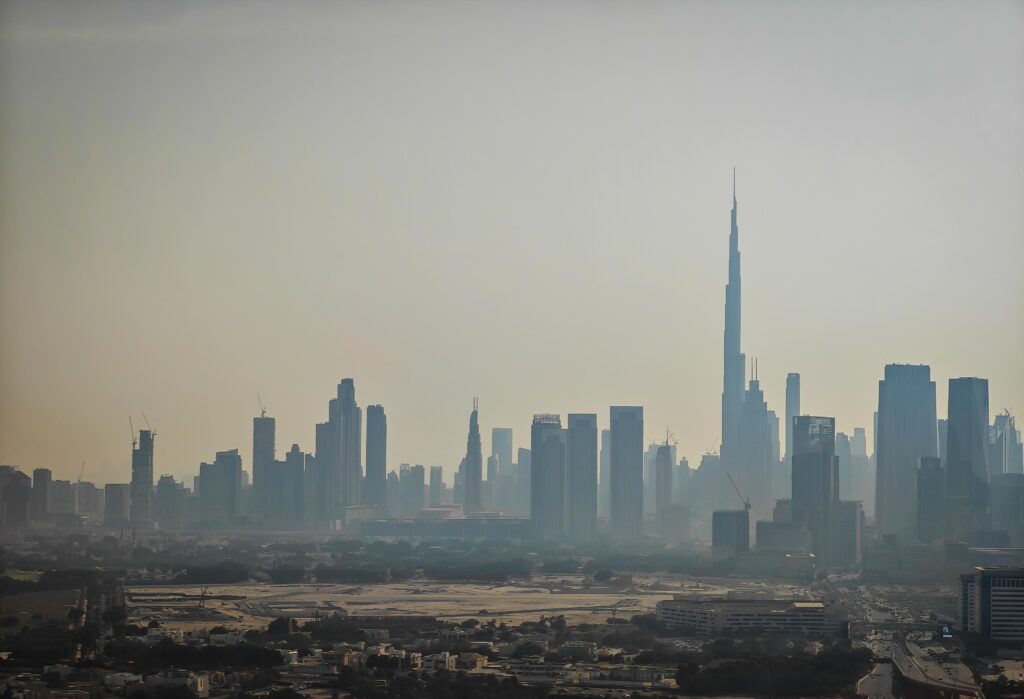
Dubai Downtown and Business bay in the distance. Aerial drone view of Dubai panorama with sandstorm dust
How Dust Enters Dubai Homes in the UAE
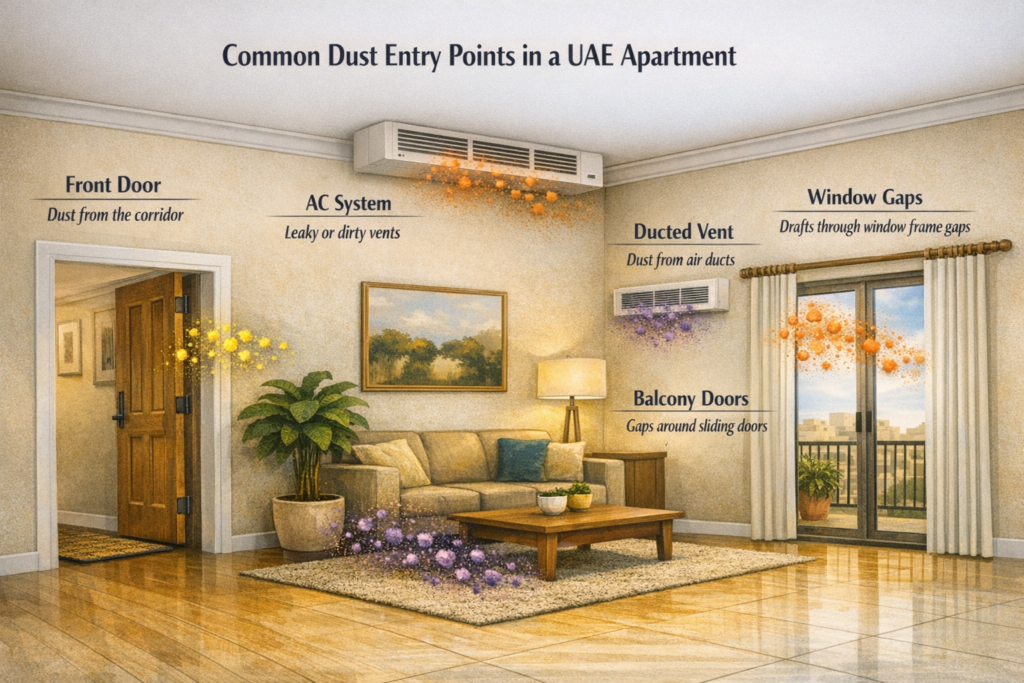
Controlling dust starts with knowing how it gets in. There are four main entry points in most UAE apartments and villas.
Entry Doors and Shoe Zones
The front door is one of the biggest dust entry points in any UAE home. Every time the door opens, outdoor air carries particles inside. Shoes also track in sand and grit from corridors, car parks, and outdoor areas.
Balconies and Sliding Doors
Most Dubai apartments have a balcony. Dust and sand settle on balcony floors and furniture throughout the day. When sliding doors are opened, that dust moves straight into the living area – especially after a sandstorm.
Windows and Frame Gaps
Closed windows still let fine particles in if the frames are old or the seals have worn down. Windowsills collect dust consistently and act as a transfer point when cleaning or when air moves through the room.
AC Vents and Ducted Airflow
In apartments with central air conditioning, dust can travel through the ductwork and be released through vents into living spaces. In split unit systems, a clogged filter reduces the unit’s ability to trap particles, allowing fine dust to pass directly into the room.
Common Dust Entry Points and How to Control Them
Entry Point
How Dust Enters
Control Method
Entry Doors and Shoes
Sand on shoes and airflow when the door opens
Use double mats and remove shoes indoors
Balconies and Sliding Doors
Wind-blown dust and sand
Keep doors closed during windy conditions
Windows and Frame Gaps
Fine particles entering through small gaps
Seal gaps and clean sills regularly
AC Vents and Ducts
Dust recirculated through the cooling system
Clean filters and service AC regularly
Daily Habits That Help Reduce Dust in Dubai Homes
Small daily actions make a significant difference in managing dust in UAE apartments and villas. These habits reduce the amount of dust that enters and resettles each day.
Place a mat outside and inside the front door. Many residents find that using mats at both sides of the entrance noticeably reduces the sand tracked through the home.
Remove outdoor shoes before entering. A shoe rack near the entrance keeps sand and grit from spreading to other rooms.
Wipe surfaces with a slightly damp microfiber cloth. Dry dusting lifts particles into the air and lets them resettle elsewhere. A damp cloth captures them instead.
Keep balcony doors and windows closed on windy days and during sandstorms. Check UAE weather updates during dusty periods.
Keep AC filters clean. A quick wipe of visible AC vents with a dry microfiber cloth each day helps stop surface dust from building up around the airflow.
Do not shake cushions, rugs, or fabric items indoors. This releases trapped particles back into the air, where they resettle across the room.
How Often You Should Vacuum in UAE Homes
Recommended Frequency by Living Situation
In a standard UAE apartment with moderate dust exposure, vacuuming two to three times a week is generally sufficient. Villas with garden access, lower-floor balconies, or nearby construction may need daily vacuuming of main areas.
After a sandstorm or heavy dust event, all floor surfaces should be vacuumed immediately – including tile and marble. Fine desert particles are abrasive and can scratch hard floors if left for too long.
Fine Dust vs Coarse Sand – Frequency Differences
Coarse sand is easy to spot and settles quickly near entry points. Fine dust is harder to manage because it stays airborne longer and lands across a much wider area – on high shelves, fan blades, curtain rails, and behind appliances. Surfaces that are not cleaned regularly become a source of airborne dust each time someone walks past or opens a door.
Area / Task
Apartment (Moderate Dust)
Villa (Standard Dust)
High Dust Areas (Construction / Near Desert)
Vacuum Floors
2-3 times per week
2-3 times per week
Daily
Dust Surfaces
3-4 times per week
3-5 times per week
Daily
Mop Floors
1-2 times per week
2-3 times per week
Every 2 days
AC Filter Cleaning
Every 2-4 weeks
Every 2-4 weeks
Every 2 weeks
Air Purifier Filter
Every 3-6 months
Every 3-6 months
Every 2-3 months
Deep Cleaning
Once a month
Once a month
Twice a month
How to Manage Fine Dust vs Sand in UAE Homes
Fine dust and coarse sand need different approaches. Using the wrong method for each type can make the problem worse.
Managing Coarse Sand
Sand settles fast and concentrates near doors, balconies, and floor areas close to windows. Vacuuming is more effective than sweeping for these surfaces. Sweeping can scatter lighter particles and push coarser grains into tile grout, making them harder to remove later.
Managing Fine Dust
Fine dust clings to all surfaces and is harder to remove completely because it becomes airborne again easily. Microfiber cloths are widely considered the most effective tool for capturing fine particles from hard surfaces without scattering them. HEPA vacuum filters are better suited to fine dust than standard filters, both on floors and on upholstered furniture. Electrostatic dusters work well on surfaces like slatted furniture, electronics, and decorative items where a cloth is harder to use.
Best Tools to Stop Indoor Dust UAE Apartments Accumulate
Some product mentions may include affiliate links.
The tools below are commonly used to manage indoor dust UAE apartments and villas collect. Each is explained based on how well it suits UAE conditions. No personal testing claims are made.
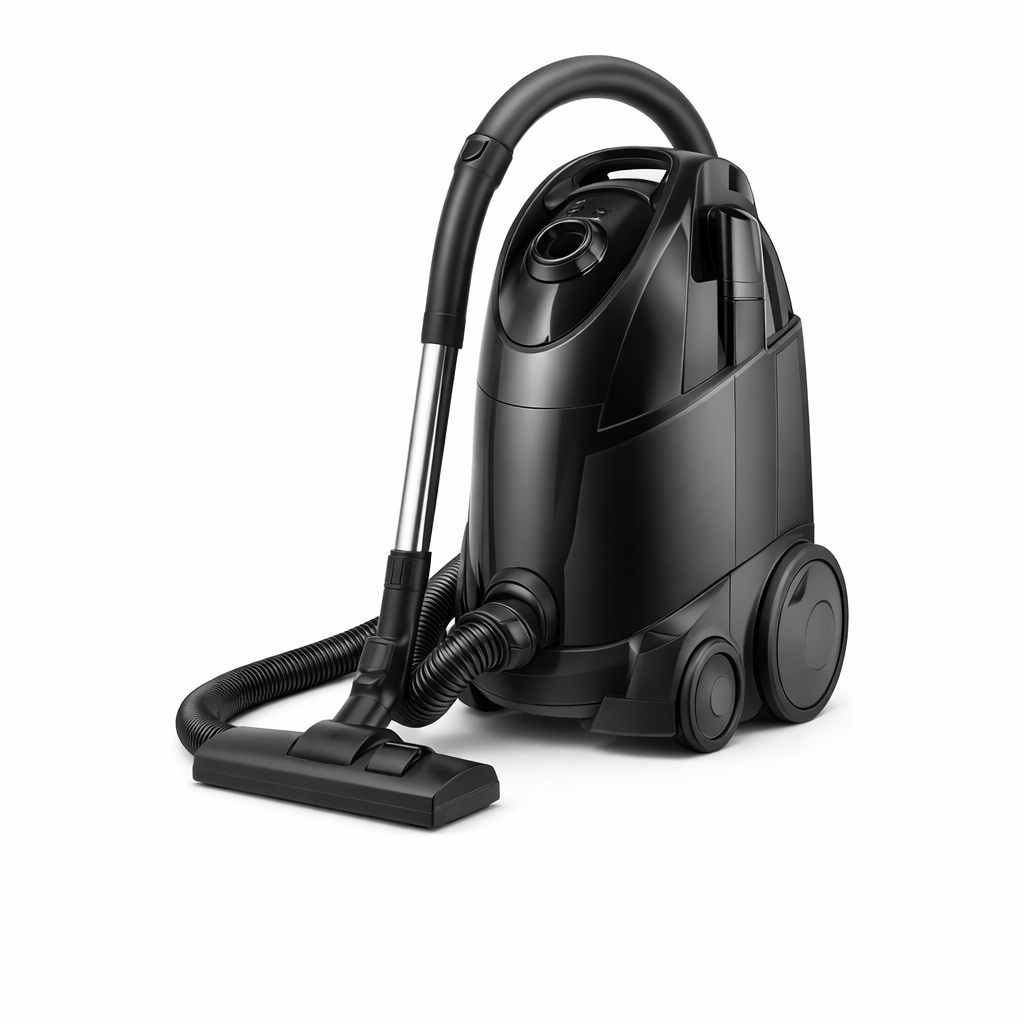
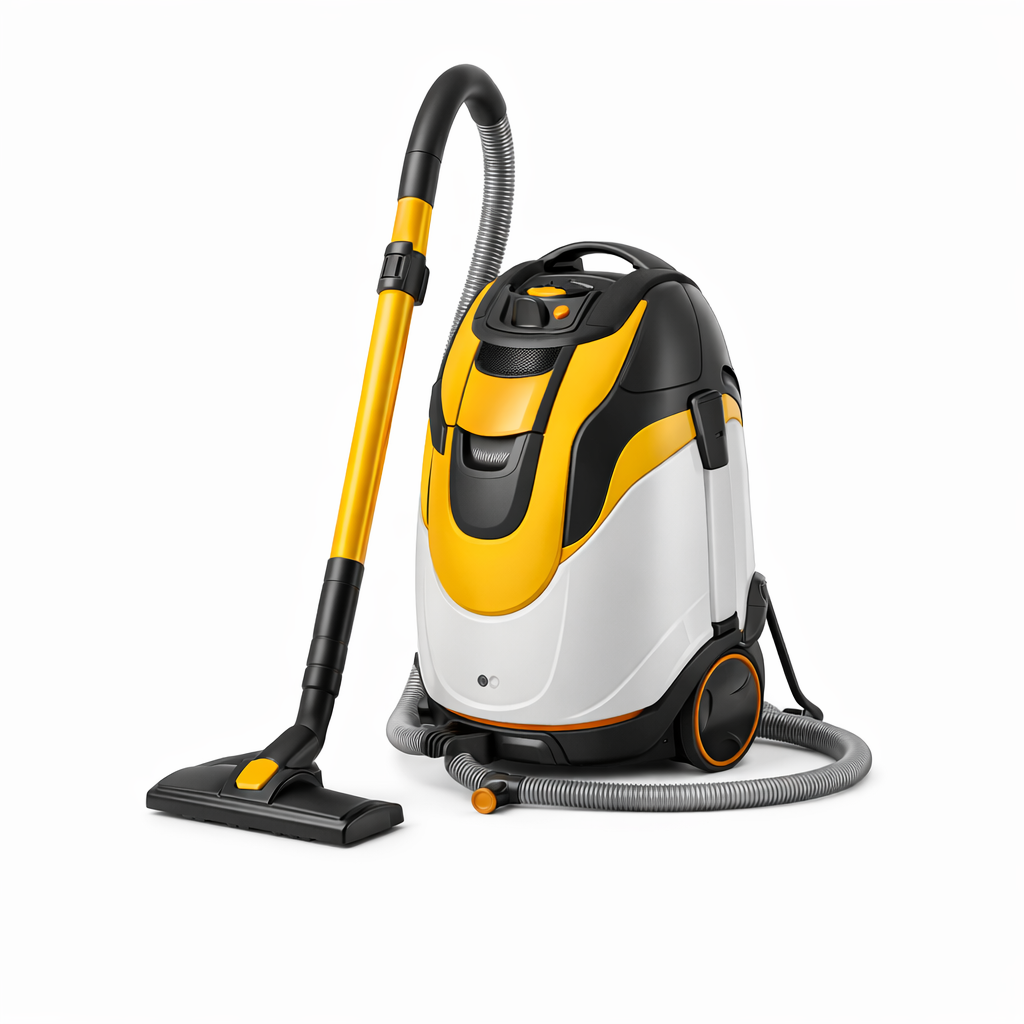
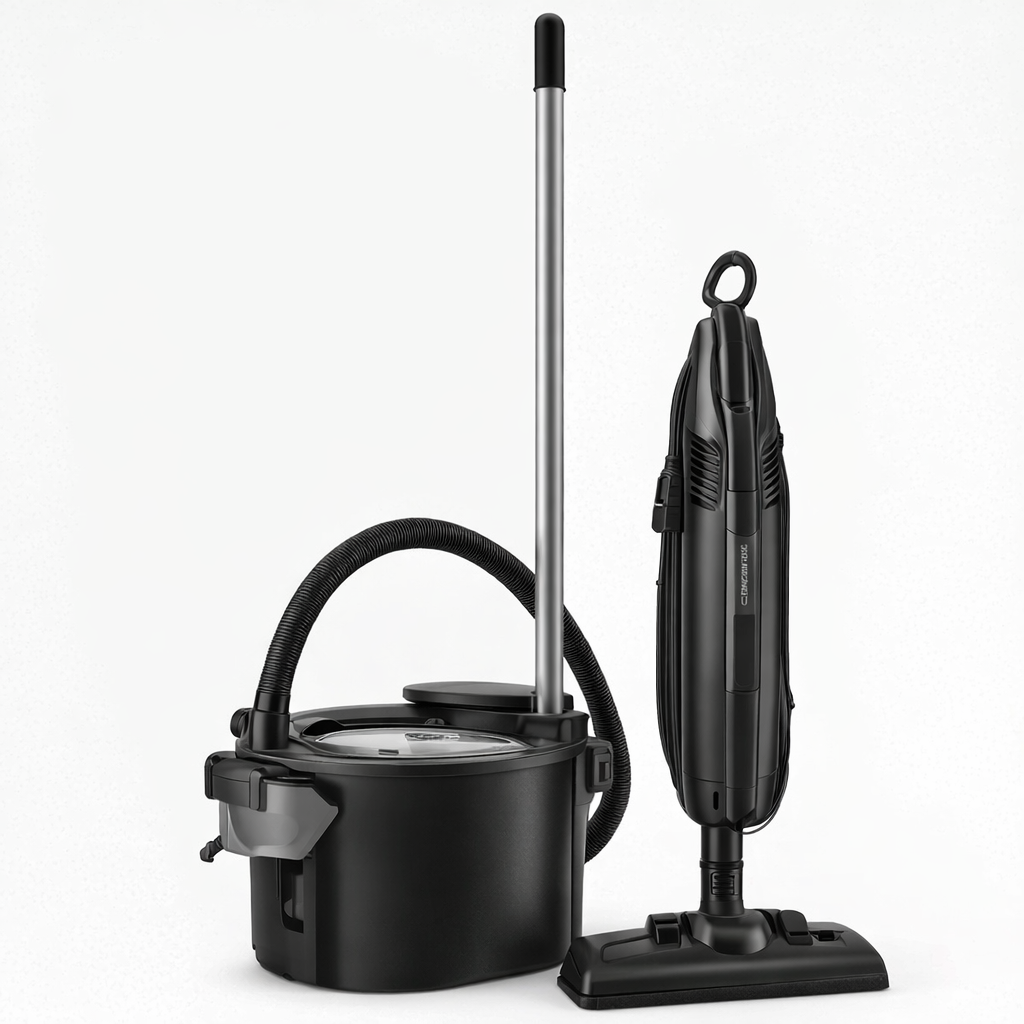
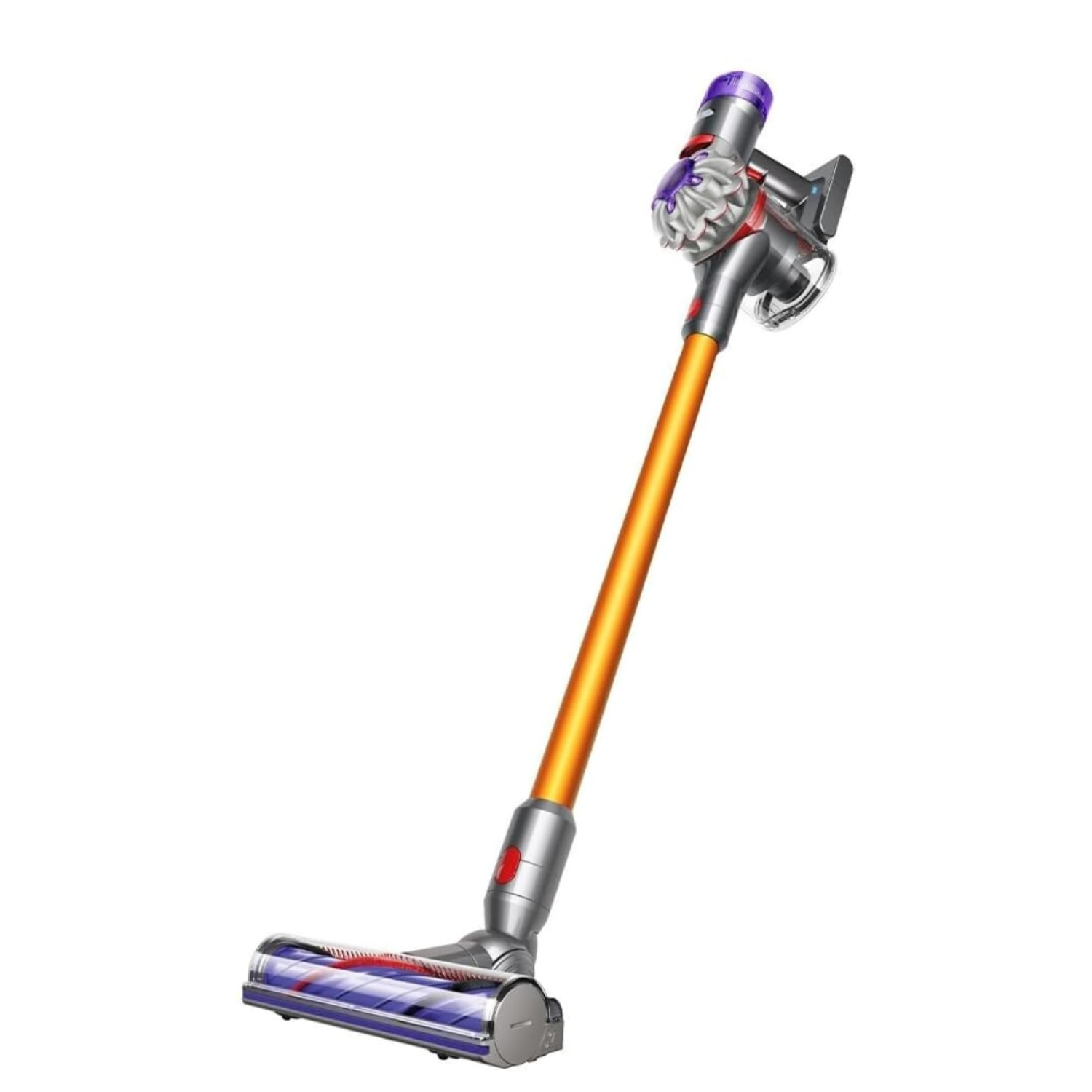
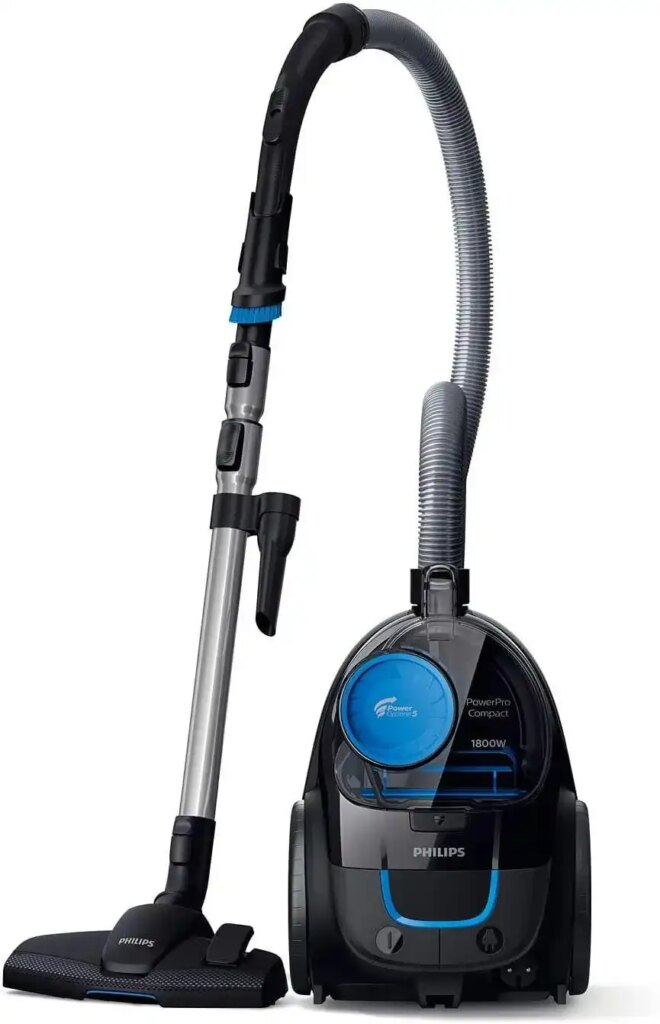
A HEPA vacuum is one of the most practical tools for how to stop dust in UAE homes. Standard vacuums can blow fine desert particles back out through the exhaust. A HEPA vacuum traps them instead. For UAE use, look for a sealed-system HEPA model – this means all the air passes through the filter with no gaps or bypasses.
Cordless models are convenient for quick daily use across multiple rooms. Bagged models are a good choice in high-dust UAE environments because the bag seals the dust when removed, rather than releasing it back into the air the way an open canister can. Browse HEPA Vacuum Cleaners on Amazon.ae.
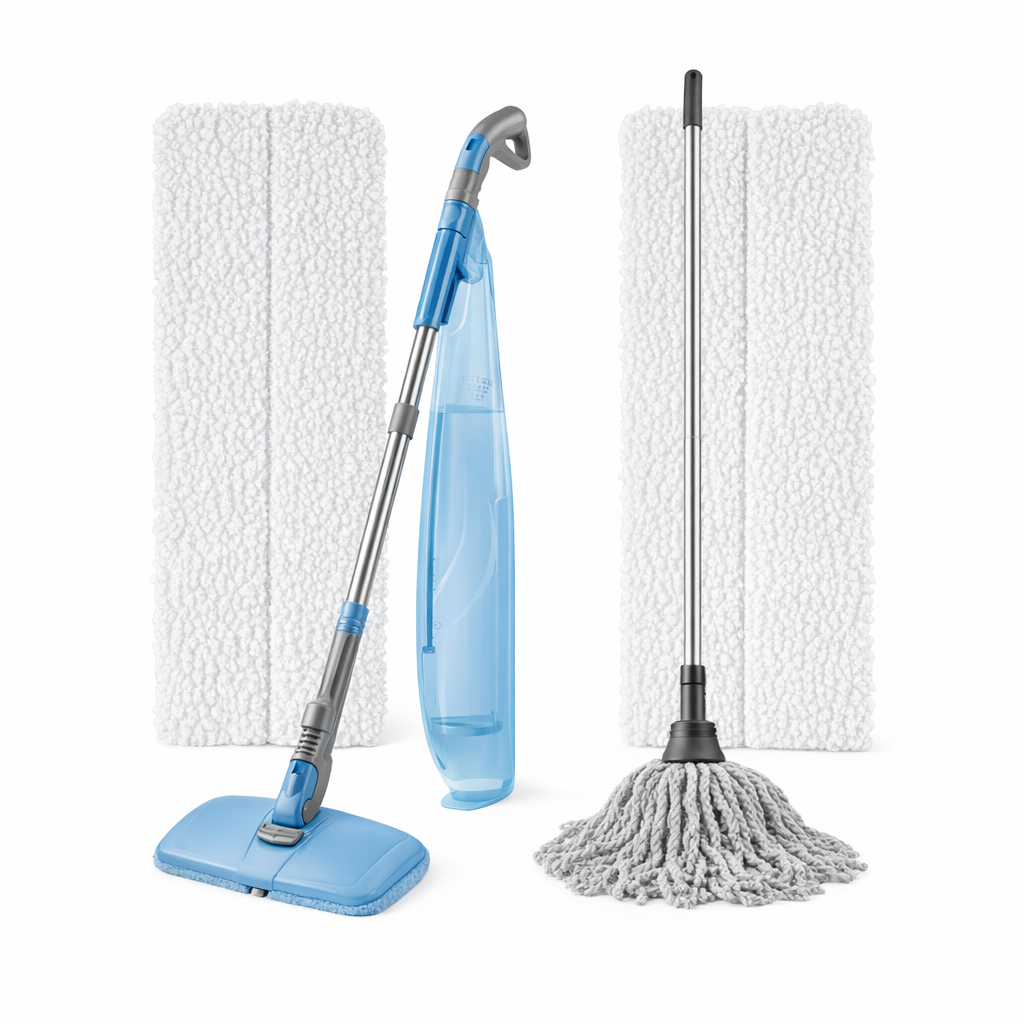
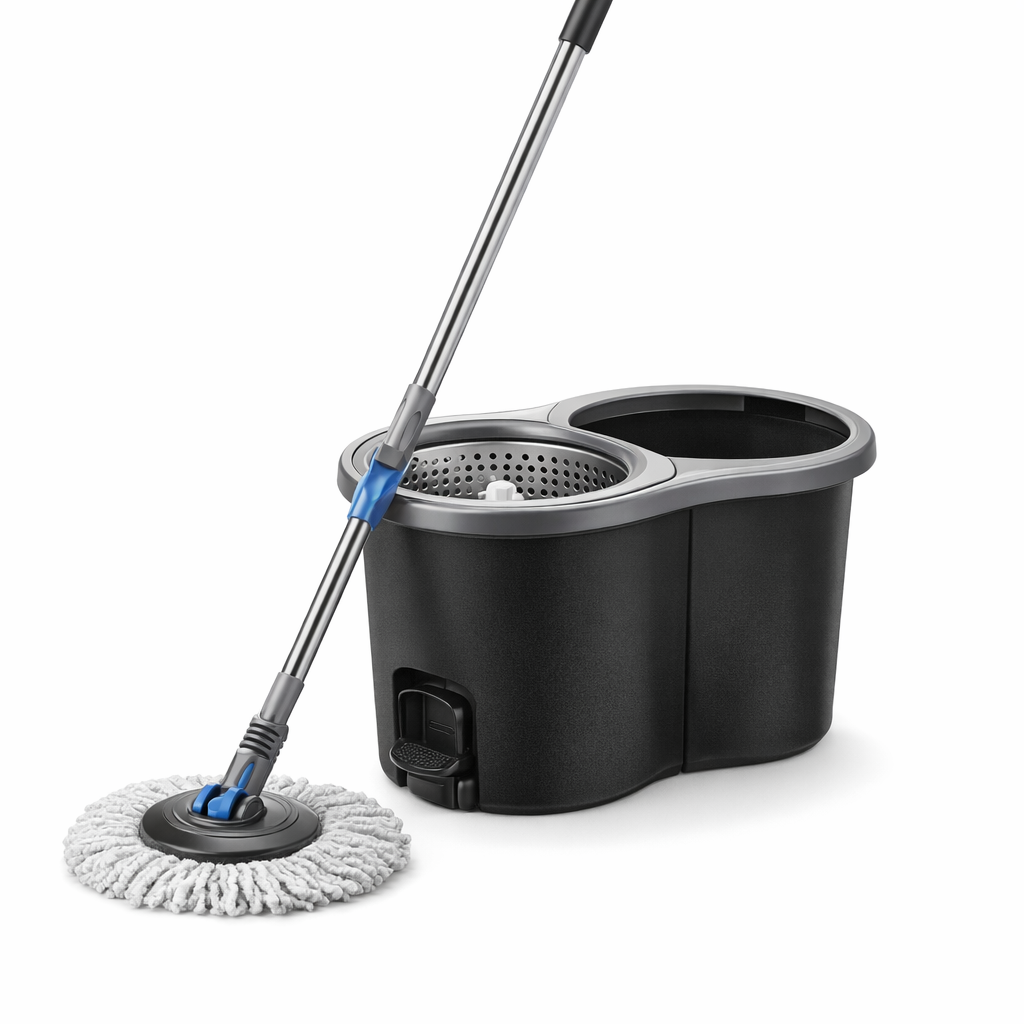
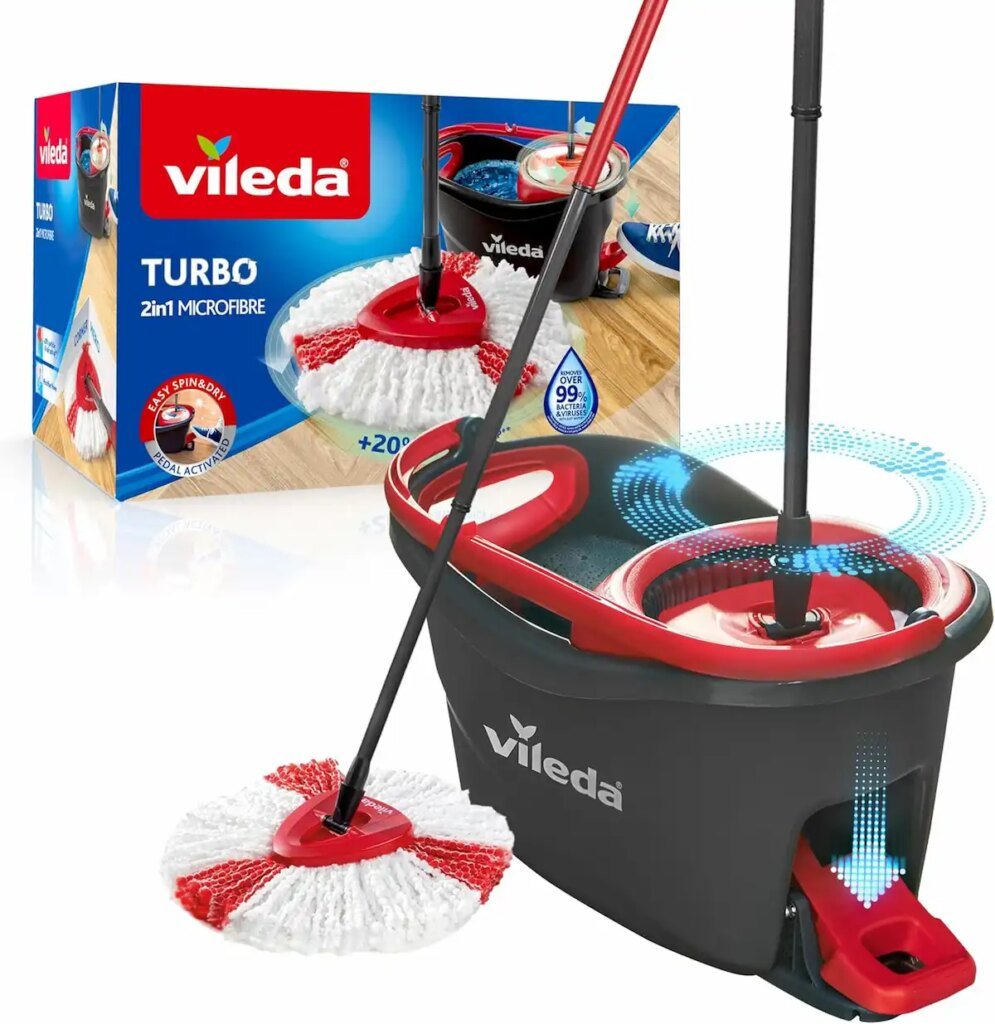
Microfiber cloths and mop heads attract fine dust through static and hold it rather than pushing it across surfaces. This makes them significantly more effective than regular cotton cloths or mops for the fine desert silica that explains why dust builds up UAE homes so consistently.
Flat microfiber mop systems are well suited to the tile and marble floors common in UAE apartments and villas across Dubai, Abu Dhabi, and Sharjah. One important note – always wash microfiber without fabric softener. Softener coats the fibres and removes the static that makes microfiber effective for capturing fine dust. Browse Microfiber Cleaning Systems on Amazon.ae
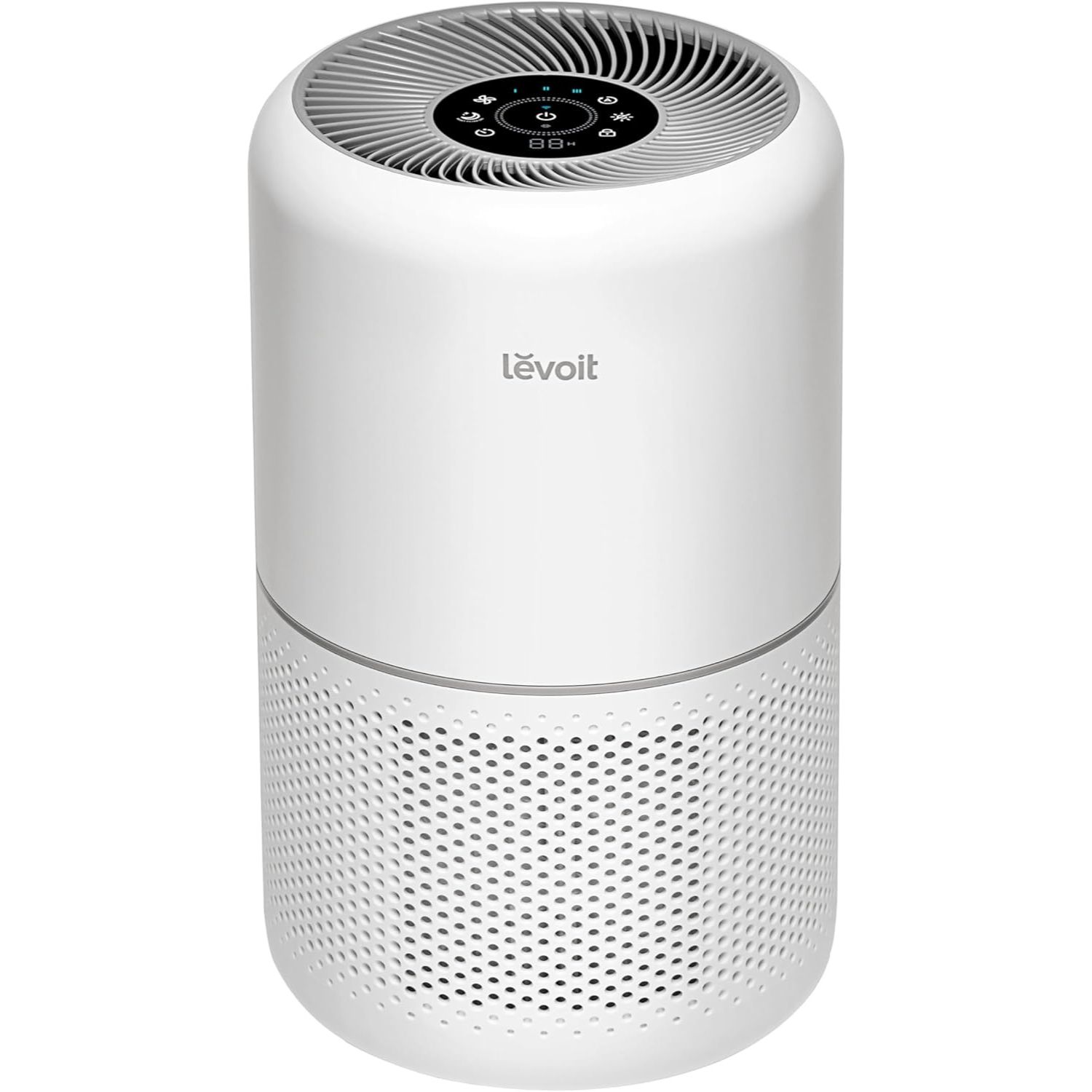
An air purifier does not replace regular cleaning. What it does is reduce the number of fine particles floating in the air – the particles that settle on surfaces again after cleaning. In a sealed, air-conditioned UAE apartment where the AC pushes the same air around all day, a HEPA air purifier running in the background can make a noticeable difference to how quickly dust builds up.
The key is sizing. The unit needs to match the size of the room. A small purifier in a large open-plan living area will not have much effect. Check the CADR rating – this is a standard measure of how much air the unit can clean per hour – and match it to the room’s square footage. Browse HEPA Air Purifiers on Amazon.ae.
Entry mats are one of the simplest and most cost-effective tools for reducing how much desert dust enters the home in the first place. A mat with a rough outer surface scrapes particles off shoes. An absorbent inner layer catches the finer dust that remains. Rubber-backed mats sit flat on smooth tile floors and are easier to lift for cleaning.
Mats need to be shaken out every day and washed once a week. A mat that is not cleaned regularly becomes full of dust and starts releasing it back into the home – the opposite of what it is there to do. Browse Heavy Duty Coir entry mats on Amazon.ae.
Cleaning Method Comparison for UAE Dust
Method
Best For
Effectiveness
Notes
HEPA Vacuum
Fine dust and sand
High
Recommended baseline for UAE homes
Sweeping
Coarse sand only
Low
Can spread fine dust if used alone
Microfiber Cloth
Hard surfaces
High
Traps fine particles without redistributing them
Dry Duster
Light surface dust
Low
Tends to redistribute rather than remove dust
Damp Mop
Hard floors after vacuuming
High
Most effective when used after vacuuming
Air Purifier (HEPA)
Airborne particles
Medium
Works best alongside regular surface cleaning
Practical Dust Reduction System for Dubai Homes and UAE Apartments
A simple, consistent routine works better than occasional deep cleaning. The following system is structured around typical UAE apartment and villa conditions.
Daily
Wipe entry area and door frame with a damp microfiber cloth
Vacuum or brush entry mat outside the front door
Wipe AC vents with a dry microfiber cloth
Wipe countertops and frequently used surfaces with a damp microfiber cloth
Two to Three Times Per Week
Vacuum all floor surfaces using a HEPA vacuum
Damp-mop hard floors after vacuuming
Wipe skirting boards and lower furniture legs
Weekly
Clean split AC unit filters or check central system vent covers
Wipe ceiling fan blades and high shelves with a damp cloth or electrostatic duster
Shake entry mats outside and replace
Wipe windowsills and balcony door tracks
Monthly
Deep clean AC filters or arrange maintenance if needed
Wipe inside wardrobes and behind appliances
Clean curtains or fabric window coverings according to care instructions
Wipe surfaces, clean entry area, and check AC vents
2-3x Weekly
Vacuum floors and mop hard surfaces
Weekly
Clean filters, dust high areas, and clean windowsills
Monthly
Deep clean filters, clean behind furniture, and wash fabrics
When Dust Becomes a Bigger Problem in UAE Homes
Allergy and Respiratory Sensitivity
Desert dust contains silica and mineral particles that can irritate the nose, eyes, and throat – particularly during periods of high dust. Many UAE residents report sneezing, eye irritation, or congestion when dust levels rise indoors. These reactions are commonly associated with increased airborne particle levels. Anyone experiencing persistent or severe symptoms should consult a qualified medical professional.
Impact on Indoor Air Quality
Indoor air quality in UAE homes is affected by desert particles, AC recirculation, limited ventilation, and dust mites that build up in soft furnishings over time. Closed UAE apartments tend to have higher particle concentrations than homes in cooler or more naturally ventilated climates.
Some product mentions may include affiliate links. These are selected based on suitability for UAE dust conditions rather than promotional preference.
HEPA air purifiers are a useful addition for UAE apartments where extra particle control is needed beyond regular cleaning. Placing a unit in the bedroom or main living area provides ongoing filtration, particularly during dusty periods or after sandstorms.
Common Mistakes When Reducing Dust in Dubai Homes
×Dry dusting large surfaces instead of using a damp microfiber cloth
×Sweeping indoor tile floors before vacuuming fine desert dust
×Mopping floors before removing sand and dust with a HEPA vacuum
×Ignoring balcony door tracks, window gaps, and sliding door seals
×Cleaning AC filters only when airflow becomes weak
×Leaving entry mats dirty until they start releasing trapped sand indoors
×Relying only on air purifiers without regular surface cleaning
Related Dubai Dust Cleaning Guides
For more specific cleaning situations, these related guides may help:
This guide is based on commonly observed dust patterns in UAE residential environments and typical maintenance practices recommended for desert climates.
Knowing how to reduce dust in Dubai homes is a practical necessity for residents across the UAE. Desert sand, AC recirculation, and sealed indoor spaces make dust a continuous challenge rather than an occasional one.
The most effective approach is a consistent combination of daily surface maintenance, regular vacuuming with HEPA filtration, clean AC filters, and managed entry points. A steady routine delivers better results than infrequent intensive cleaning sessions.
How often should UAE apartment residents vacuum to control dust?
UAE apartments should be vacuumed two to three times per week to control dust. Homes near construction areas or exposed to high wind may require daily vacuuming of high-traffic areas.
Why does dust return so quickly in Dubai homes?
Dust returns quickly in Dubai homes because fine desert particles continuously enter through doors, AC systems, and balconies. Limited ventilation and air recirculation cause dust to resettle rapidly after cleaning.
Do AC filters contribute to dust in UAE homes?
Yes. Dirty AC filters reduce filtration efficiency and allow dust to circulate back into the home. Cleaning filters every two to four weeks is commonly recommended in UAE conditions.
Is sweeping or vacuuming better for sand on tile floors in UAE homes?
Vacuuming is more effective than sweeping for sand on UAE tile and marble floors. Sweeping can spread fine dust and push sand into grout lines.
What type of cloth is most effective for dusting surfaces in UAE homes?
A slightly damp microfiber cloth is the most effective option for dusting in UAE homes. It captures fine particles instead of redistributing them.
Does opening windows increase dust in Dubai homes?
Yes. Opening windows in Dubai homes usually increases indoor dust because outdoor air carries desert particles. Windows should remain closed during dusty or windy conditions.
How can entry points be controlled to reduce dust in UAE homes?
Entry points can be controlled by using double door mats and removing shoes indoors. This reduces the amount of sand and dust entering UAE homes.
Does mopping help reduce dust in Dubai homes?
Yes. Mopping after vacuuming removes fine dust particles left on hard floors. This is one of the most effective cleaning methods in UAE homes.
Why is dust worse in apartments than villas in Dubai?
Dust is often worse in apartments due to shared ventilation systems and corridor airflow. Residents also have less control over AC maintenance compared to villas.
How do I stop construction dust entering my Dubai apartment?
Keep windows and balcony doors closed during active nearby construction. Check door and window seals for gaps, add a door sweep if needed, and vacuum with HEPA filtration rather than dry-sweeping fine construction dust. Running a HEPA air purifier indoors provides additional protection during heavy construction periods.
General maintenance guidance referenced reflects practices commonly recommended by UAE-based property and facility management resources. Readers seeking medical advice on dust-related allergies or respiratory conditions are encouraged to consult a qualified healthcare professional registered with the Dubai Health Authority or the relevant health authority in their emirate.
Why Trust CleanLivingUAE?
CleanLivingUAE product guides focus on UAE home conditions, including desert dust, sand, humidity, hard water, tile floors, apartment storage and villa cleaning needs. Recommendations are based on product specifications, Amazon.ae availability, buyer feedback, surface suitability and editorial review.
Some product mentions may include affiliate links.
CleanLivingUAE product guides follow a separate review process for evaluating cleaning tools and product recommendations for UAE homes. This includes UAE-specific factors such as dust, sand, hard water, humidity, surface compatibility, apartment storage, and villa cleaning needs.
On How We Review the Cleaning Products, Clck the button below: