Quick Answer
Bakhoor smoke is more than fragrance. Heating aromatic wood, oils and resins releases particles and airborne compounds into indoor air, and charcoal adds carbon monoxide and other combustion pollutants.
Electric burners remove charcoal combustion but should not be assumed to be emission-free. Using smaller amounts and keeping air moving are practical ways to limit exposure.Charcoal Bakhoor vs Electric Bakhoor Burner at a Glance
| Factor | Charcoal Bakhoor | Electric Bakhoor Burner |
|---|---|---|
| Heat source | Lit charcoal disc or briquette | Electric heating plate |
| Charcoal combustion | Yes | No |
| Smoke from bakhoor | Yes, as the bakhoor heats and chars | Heated bakhoor can still release smoke and vapour; real-home testing is limited |
| Ash | Charcoal ash plus charred bakhoor | Charred bakhoor residue only |
| Carbon monoxide potential | Charcoal is a recognised carbon monoxide source | Charcoal source removed; published testing of electric burners is limited |
| Particles | From both the charcoal and the bakhoor | Can come from the heated bakhoor; direct real-home testing is limited |
| Cleaning residue | Ash, charred pieces and oily deposits | Oily residue on the plate and nearby surfaces |
| Ventilation | Recommended | Still recommended |
| Apartment practicality | Requires lighting, cooling and disposing of hot charcoal | No open coals, but still needs a stable surface and supervision |
What Is in Bakhoor Smoke?
Bakhoor is commonly described as wood chips soaked in fragrance oils and blended with resins and other aromatic ingredients. Emissions vary with the blend, temperature, heat source and amount used.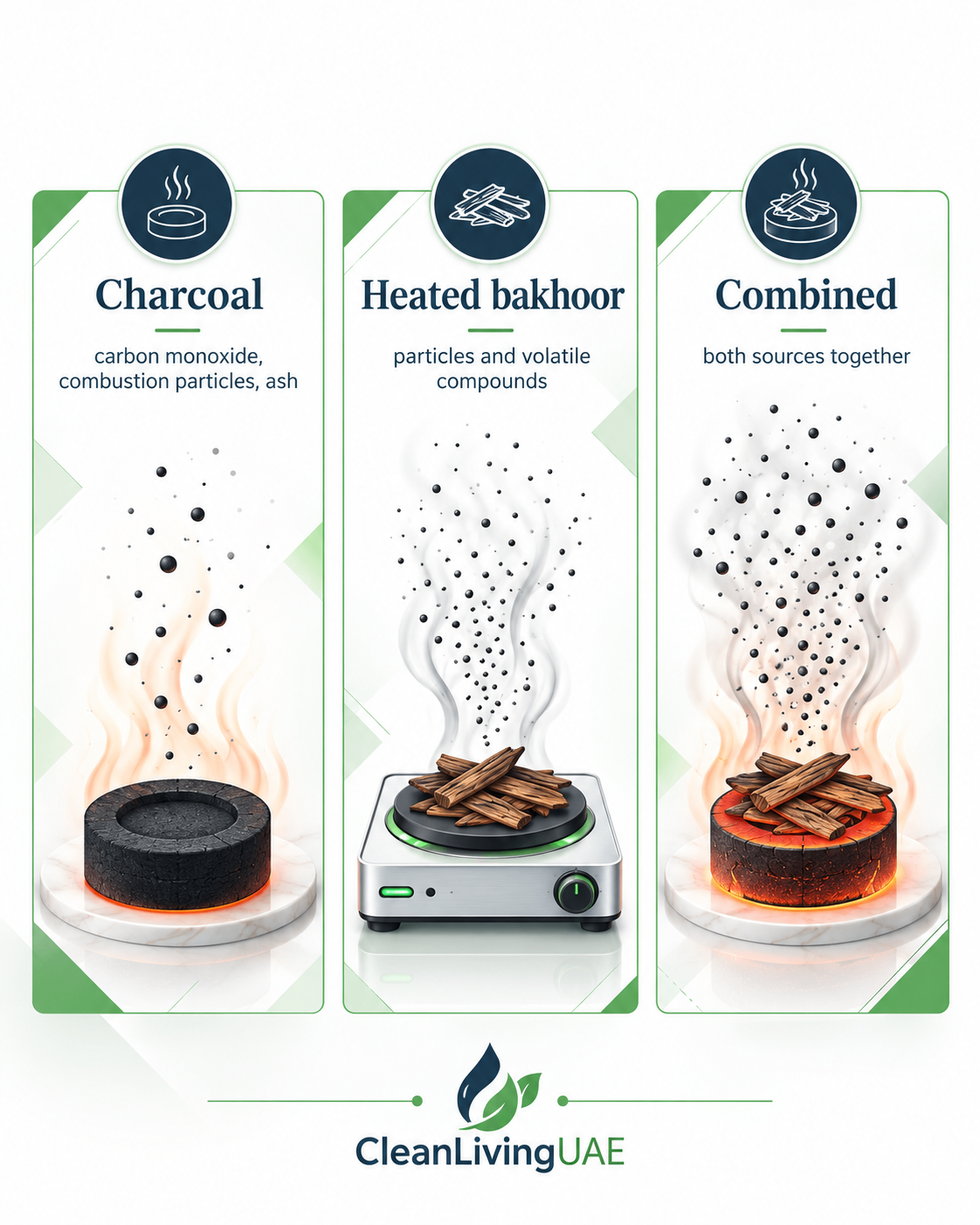
Emissions From Charcoal
Charcoal combustion produces carbon monoxide (CO), fine particles and other combustion by-products. University of North Carolina researchers who tested incense typically used in UAE homes noted that the charcoal briquettes used to heat it add significantly to carbon monoxide and other pollutants (Cohen et al., 2013). An analysis of raw bakhoor also identified charcoal smoke as a source of potentially hazardous compounds (Elsayed et al., 2016).Emissions From the Heated Bakhoor
The aromatic material is a source in its own right. In a 2026 chamber study, charcoal burned alone produced only a weak, short-lived particle signal, while bakhoor placed on the charcoal produced sustained and much higher particle concentrations (Zhou et al., 2026). The researchers linked differences between products mainly to the oil-based fraction of the bakhoor rather than the base wood.Combined Emissions
In traditional use, both sources act together. Studies that heat bakhoor on charcoal measure the combined output, which has included particles, carbon monoxide, nitrogen oxides, formaldehyde and other volatile compounds (Cohen et al., 2013).Particles and VOCs in Plain Language
Particulate matter (PM) refers to tiny solid or liquid particles suspended in air. Fine particles (PM2.5) are 2.5 micrometres across or smaller, and ultrafine particles are smaller than 0.1 micrometres. In the 2026 chamber study, ultrafine particles made up roughly 70 to 75 percent of the particles emitted by number (Zhou et al., 2026).Volatile organic compounds (VOCs) are carbon-based chemicals that become gases at room temperature. Formaldehyde is one example measured in incense smoke. Because VOCs are gases, they need different filtration from particles.Is Bakhoor Smoke Harmful?
Bakhoor smoke can worsen indoor air quality, and research supports limiting unnecessary smoke exposure indoors, particularly where ventilation is limited. The evidence does not support describing bakhoor as universally dangerous, nor describing indoor smoke as harmless.Exposure depends on the amount used per session, how long and how often it is burned, room size, ventilation, the heat source and individual sensitivity, for example in people with existing respiratory conditions.Laboratory, household and population studies each answer different questions, and an association shows that two things occur together, not that one directly causes the other.What Does UAE Research Say About Bakhoor Smoke?
Household Measurements and Health Associations
The largest UAE study measured indoor air in 628 Emirati households across all seven emirates between 2009 and 2010, using passive samplers left in the main living room for seven days, and interviewed 1,590 household members (Yeatts et al., 2012).- About 86 percent of participants lived in homes where incense was burned at least weekly, and 44 percent in homes where it was burned daily.
- Homes burning incense two or more times a week were more likely to have measurable sulphur dioxide, hydrogen sulphide and formaldehyde, and more frequent burning was associated with higher indoor particle levels.
- Daily incense burning was associated with higher odds of reporting headaches, difficulty concentrating and forgetfulness, roughly two to three times the odds in homes burning once a week or less.
- No consistent association was found between incense use and respiratory symptoms. Households with a family member who had asthma tended to burn incense less often, which the authors noted could affect the results.
Laboratory Chamber Testing
A follow-up hazard assessment burned two types of incense typically used in UAE homes over three hours in an indoor chamber, at smoke concentrations intended to reflect a typical UAE living room (Cohen et al., 2013). Both emitted significant amounts of particles, carbon monoxide, formaldehyde and nitrogen oxides, and the smoke triggered an inflammatory response in human lung cells in the laboratory.A laboratory cell response is not the same as a health outcome in people. The authors recommended better ventilation and suggested alternatives to charcoal, including electric devices.Chemical Characterisation
A UAE study analysed smoke from three bakhoor brands and identified more than 850 compounds, including some classified as carcinogenic, toxic or irritant (Dalibalta et al., 2015). This shows what can be present, not how much a person inhales in a real home.Recent Regional Chamber Research
A 2026 study from King Abdullah University of Science and Technology (KAUST) in Saudi Arabia heated 1 gram of commercially available bakhoor on charcoal in a controlled chamber (Zhou et al., 2026). Visible smoke typically lasted about 20 minutes and particle concentrations peaked at around 5 minutes. The products were sourced in Saudi Arabia, but the method reflects common Gulf practice.Wider Gulf Findings
Results from neighbouring countries are mixed. A cross-sectional study in Saudi Arabia’s Eastern Province associated bakhoor smoke exposure with respiratory symptoms and lower lung function in adults (Al Khathlan et al., 2021). A community survey in Oman found that home bakhoor use was not associated with asthma among schoolchildren overall, although it was commonly reported as a wheezing trigger among children who already had asthma (Al-Rawas et al., 2009).What the Research Does Not Prove
- No study establishes a specific safe or unsafe number of sessions.
- Most chamber studies use charcoal, so electric burners remain under-studied.
- Several key UAE studies are more than a decade old, and products have changed since.
- Formulations vary widely, so findings for one blend may not apply to another.
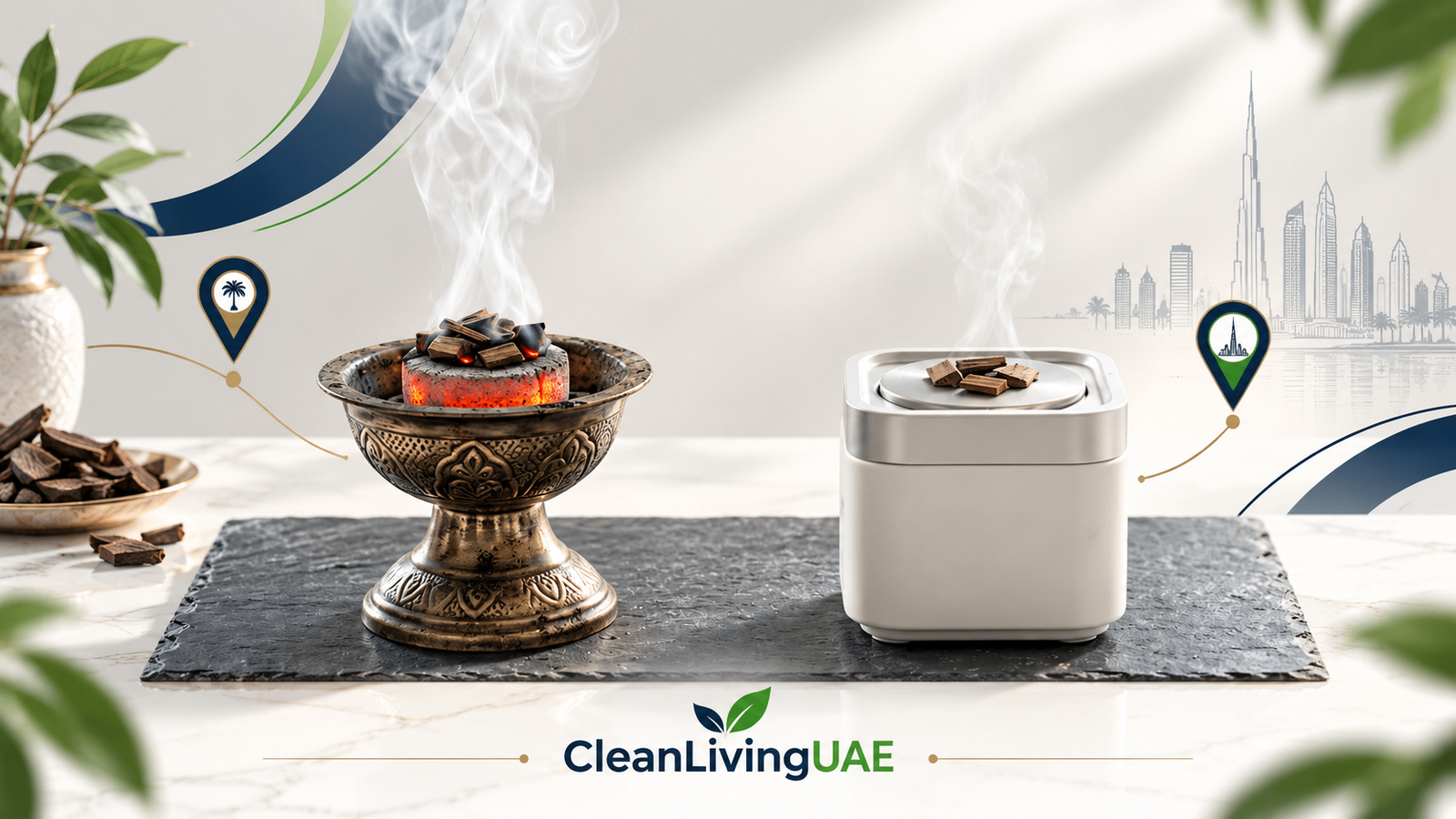
Charcoal vs Electric Bakhoor Burners
The heat source changes the exposure profile. For product comparisons, see the guide to the best bakhoor burners in the UAE.Charcoal
Charcoal adds carbon monoxide, extra combustion particles, ash and other combustion by-products on top of the emissions from the bakhoor itself (Cohen et al., 2013). Hot coals also bring burn and fire risks.Electric
An electric burner heats the bakhoor on a plate, so there is no charcoal combustion and no charcoal ash. Heating the bakhoor can still release particles and airborne compounds, but published real-home testing of electric bakhoor burners is limited. The KAUST authors described electric burners as a potentially useful alternative whose net effect still needs evaluation under realistic use (Zhou et al., 2026).Is Bakhoor Harmful Without Charcoal?
Removing charcoal removes charcoal combustion, the main source of carbon monoxide in traditional bakhoor burning. It does not necessarily remove everything. The KAUST study found that particle formation was driven largely by the oily fraction of the bakhoor (Zhou et al., 2026).Because that experiment still used charcoal as the heat source, it does not directly measure emissions from an electric burner. However, the findings suggest that the bakhoor material itself is an important source of particle formation.No published study has directly shown that electric burners are medically safer. Electric heating may reduce some combustion-related exposure without eliminating emissions, and exposure still depends on the material, heat setting, amount used and ventilation.Why UAE Apartments Need Extra Attention
- Smaller rooms: the same amount of bakhoor produces a higher concentration in a smaller volume of air.
- Closed windows: many residents keep windows shut in hot, humid or dusty weather, which reduces fresh air exchange.
- Air conditioning: split and ducted systems often recirculate indoor air rather than bringing in large volumes of outdoor air.
- Smoke detectors: many apartment buildings have smoke detectors inside units and/or common areas.
- Shared spaces: in some buildings, smells can travel into corridors or neighbouring units through door gaps or shared ventilation.
Bakhoor Smoke and Air Conditioning
Bakhoor smoke and scent can circulate between rooms through air conditioning, particularly with central or ducted systems. Fragrance residue and fine particles may build up on filters, vents and nearby surfaces over time. Standard AC systems are designed for cooling, not for removing smoke or gases from the air.Regular filter maintenance matters more where bakhoor is burned often. See the AC filter cleaning guide for UAE homes and how often to clean AC filters in the UAE.Can an Air Purifier Help With Bakhoor Smoke?
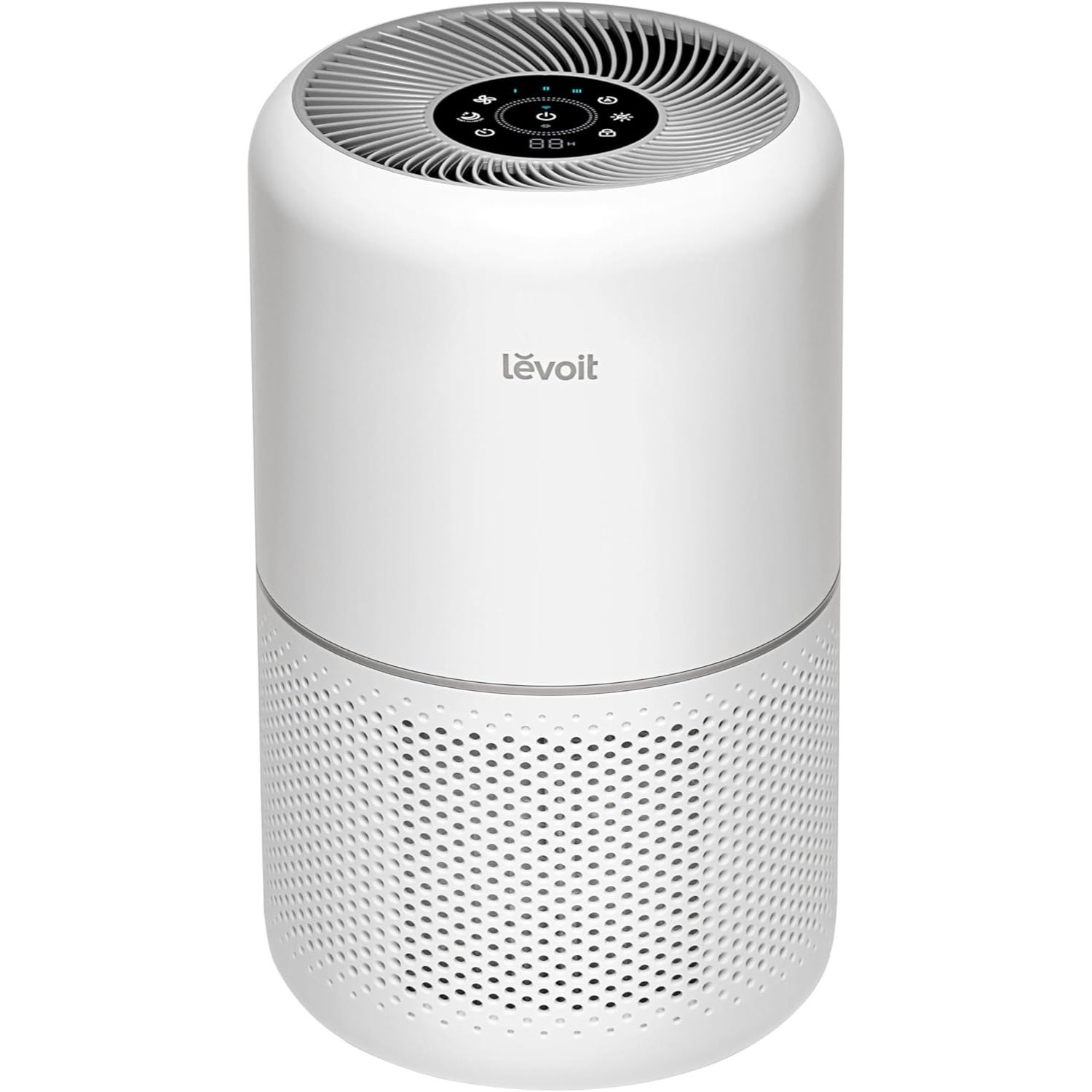
An air purifier can reduce some of what bakhoor smoke adds to indoor air, but the filter type determines what it can capture. The US Environmental Protection Agency notes that most filters are designed for either particles or gases, and that no air cleaner eliminates all indoor air pollutants.HEPA Filtration
High-efficiency particulate air (HEPA) filters capture airborne particles, including smoke particles, when the unit is suitably sized and running. HEPA filters do not remove gases, so they do not remove VOCs or carbon monoxide.Activated Carbon
Activated carbon and other gas-phase filters adsorb some gases and odours, which can help with lingering bakhoor smell. Performance depends on how much carbon the filter contains and which compounds are present. Carbon also becomes saturated over time.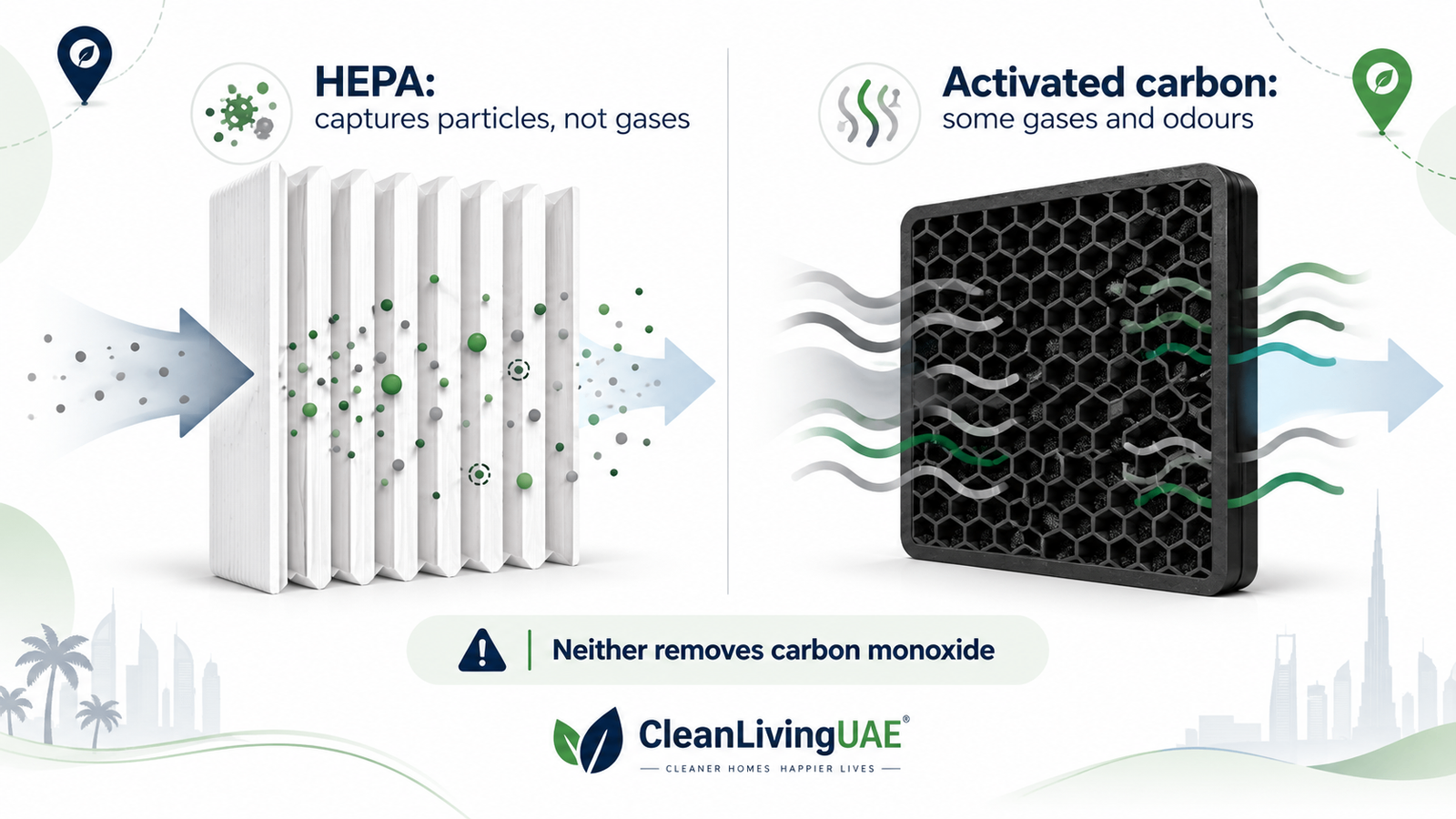
| Feature | HEPA Filter | Activated Carbon Filter |
|---|---|---|
| Main target | Airborne particles, including smoke particles | Some gases and odours |
| Removes VOCs | No | Some, depending on carbon quantity and the compound |
| Removes carbon monoxide | No | Not a reliable method |
| Performance rating | CADR for particles | No widely used rating for gases |
| Maintenance | Replace as loaded, per manufacturer guidance | Replace periodically as carbon saturates |
| Role with bakhoor | Reducing airborne smoke particles | Reducing lingering smell and some gases |
How Long Should You Ventilate After Burning Bakhoor?
There is no single evidence-based number of minutes that suits every home. Ventilation time depends on the amount used, room volume, outdoor conditions such as heat, dust or a sandstorm, available airflow, and whether charcoal was used.In the 2026 KAUST chamber study, the authors noted that at typical residential air exchange rates, airborne particles could remain for roughly 1 to 20 hours under the conditions discussed in their analysis. This should not be treated as a universal persistence time for every UAE home.Continue ventilation after burning where practical rather than assuming exposure ends when visible smoke disappears. Opening a window or door, using an extractor fan and running a suitably sized air purifier can help.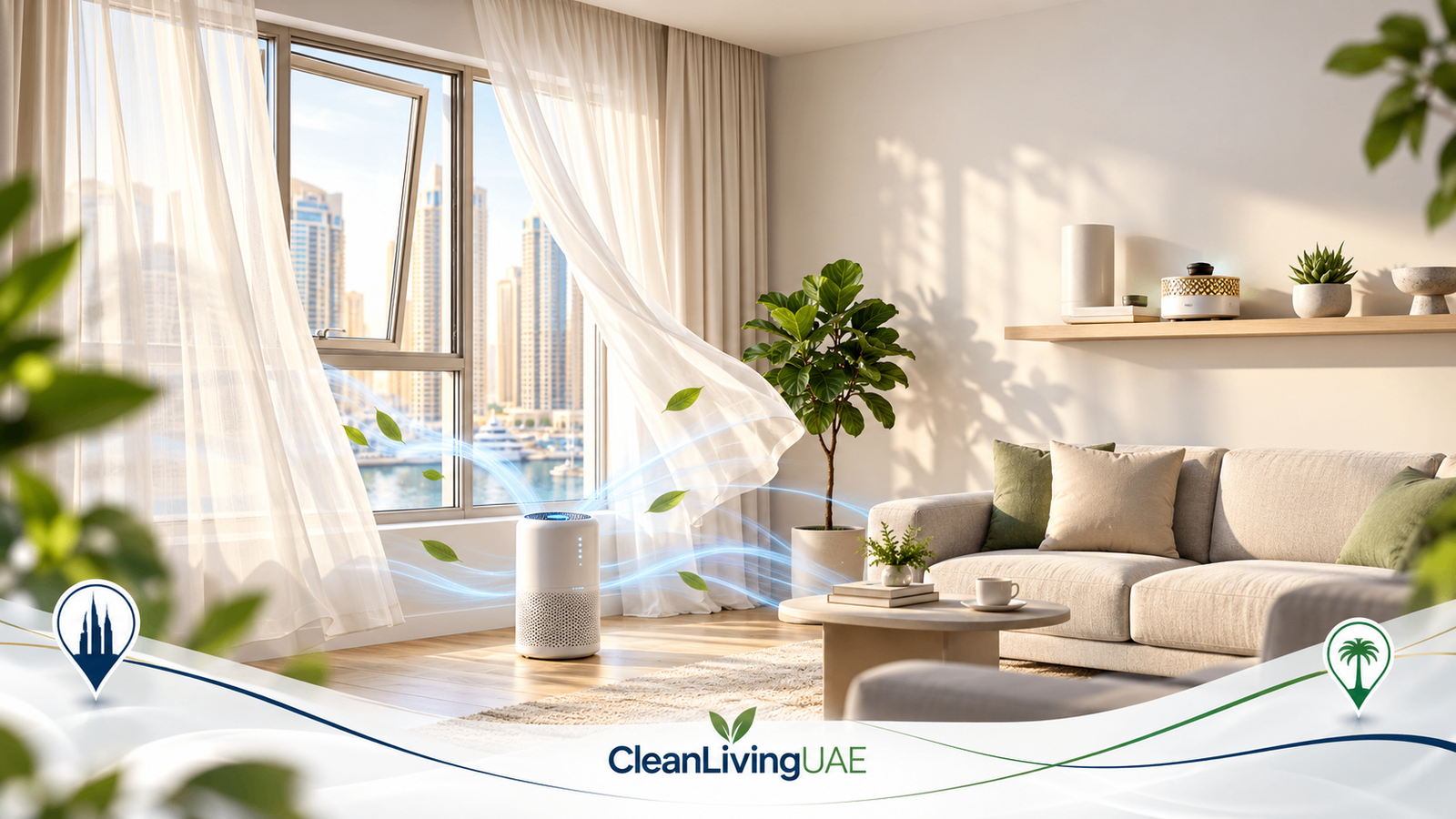
Can Bakhoor Smoke Trigger Smoke Detectors?
Yes. Smoke detectors respond to airborne particles, so heavy smoke close to a detector may set it off. Detector type, placement, the amount of bakhoor and airflow all affect how likely an alarm is. In some UAE buildings, alarms are linked to building or emergency monitoring systems, so building rules on incense burning should be followed.Never disable, cover or interfere with a smoke detector to burn bakhoor.Using smaller amounts and burning away from detectors in a ventilated area reduces the chance of an alarm.Bakhoor Around Children, Pets and People With Asthma
Reducing unnecessary indoor smoke exposure is a reasonable approach in any household, especially where children, pets or people with respiratory conditions spend time.- Keep hot burners, charcoal and ash out of reach of children and pets.
- Avoid heavy burning in rooms where children sleep or spend long periods.
- Maintain ventilation during and after burning.
- Smoke and airborne particles may irritate sensitive airways, and people with asthma or other respiratory conditions may be more sensitive to smoke.
- Pets share the same indoor air, so owners with species-specific concerns should seek veterinary advice.
Does Bakhoor Leave Residue in the Home?
Bakhoor can leave visible and invisible residue, including:- Oily fragrance residue on surfaces near the burner
- Charcoal ash and charred bakhoor on burner plates and trays
- Dust that may stick to oily deposits on nearby shelves, walls and furniture
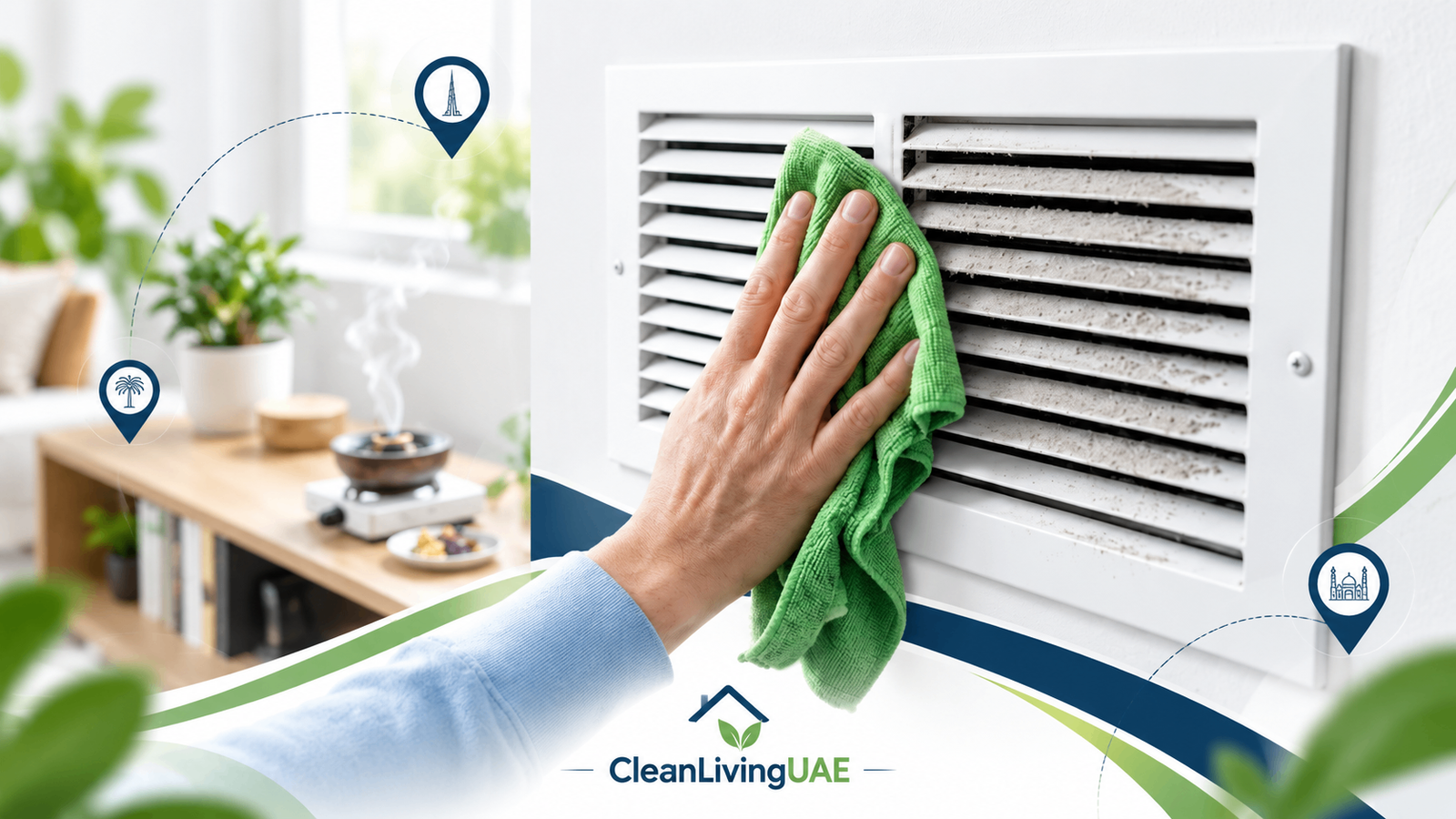
- Residue on AC filters and vent grilles in rooms where bakhoor is burned often
How to Reduce Bakhoor Smoke Indoors
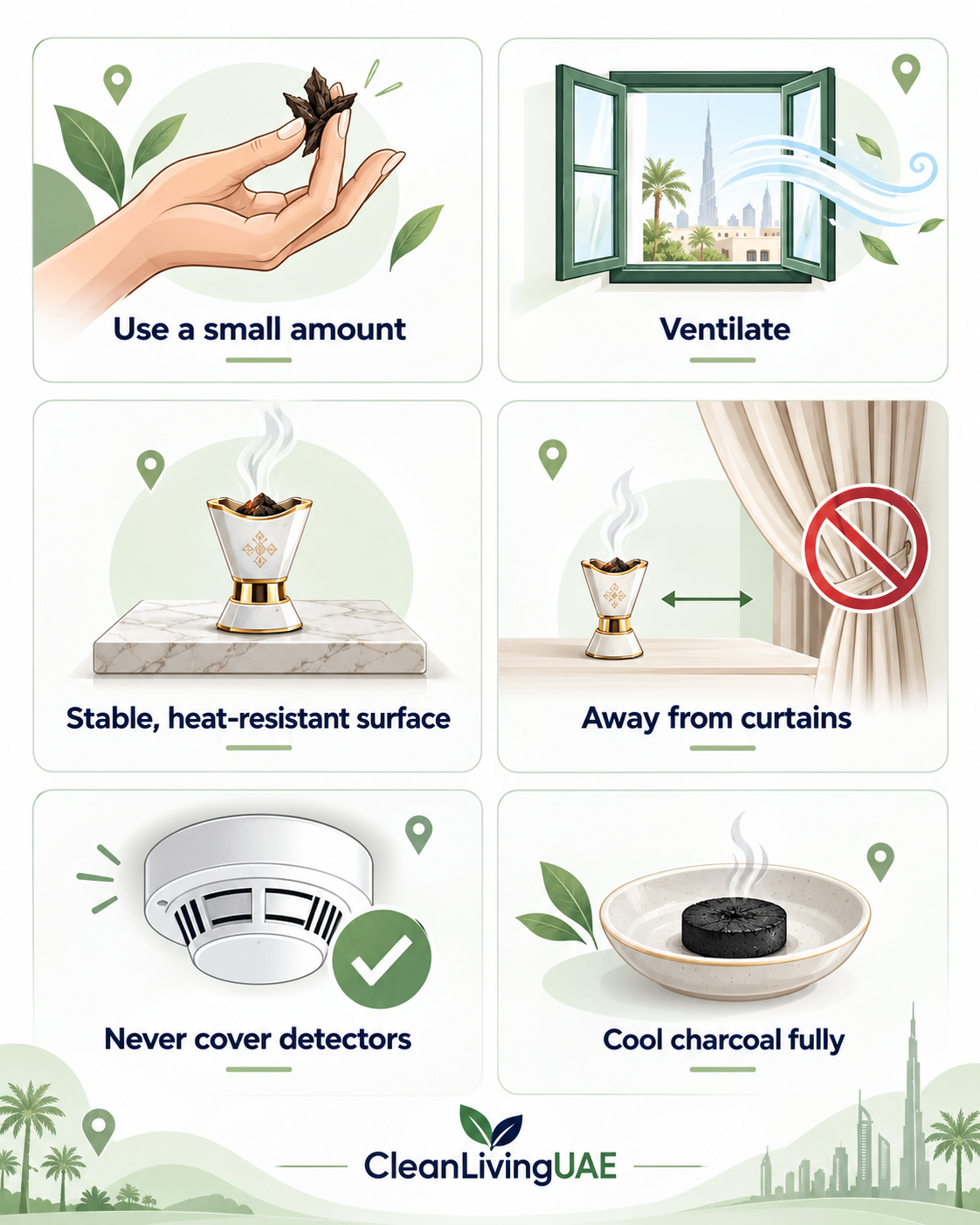
- Use a small amount.
- Maintain ventilation where practical.
- Avoid repeated heavy sessions in closed rooms.
- Keep the burner on a stable, heat-resistant surface.
- Keep burners away from curtains and combustible materials.
- Never leave a burner unattended.
- Keep children and pets away from hot burners.
- Let charcoal cool fully before disposal.
- Follow manufacturer instructions for electric burners.
- Clean accumulated residue regularly.
Is Incense Smoke Bad for You?
Incense smoke in general can worsen indoor air quality. A long-running study in Singapore associated long-term home incense use with higher cardiovascular mortality (Pan et al., 2014). As with bakhoor research, this is an association rather than proof of direct causation, and it involved stick or coil incense rather than bakhoor.Bakhoor Smoke vs Incense Smoke
Bakhoor is a form of incense, but it is not identical to the stick and cone incense used in many other regions. Bakhoor is typically based on wood chips soaked in oils and resins and is usually heated on charcoal or an electric plate rather than self-burning, so emissions differ between product types.Broader incense research is relevant but does not apply identically, and bakhoor-specific studies are the more reliable guide. For terminology, see the guide to the difference between bakhoor and oud.Bakhoor Smoke – Quick Verdict
Frequently Asked Questions
Is bakhoor smoke harmful?
Bakhoor smoke can worsen indoor air quality by adding particles and airborne compounds. A UAE study associated daily incense burning with symptoms such as headaches, but this does not prove direct causation. Limiting unnecessary exposure and ventilating are reasonable steps.
Is bakhoor harmful without charcoal?
Removing charcoal removes charcoal combustion and its carbon monoxide. Heating bakhoor can still release particles and compounds, although published testing of electric burners is limited.
Is incense smoke bad for you?
Incense smoke can worsen indoor air quality, and long-term studies have reported associations with some health outcomes. Effects vary with the type of incense, amount burned and ventilation, and associations do not prove causation.
Does bakhoor smoke contain carbon monoxide?
When bakhoor is heated on charcoal, carbon monoxide is produced, mainly from the charcoal. Chamber testing of incense used in UAE homes measured carbon monoxide alongside particles, formaldehyde and nitrogen oxides.
Is an electric bakhoor burner better for indoor air?
An electric burner removes charcoal combustion and ash, which may reduce some combustion-related emissions. It should not be assumed to be emission-free, and real-home testing of electric burners is limited.
Can bakhoor smoke trigger a smoke detector?
Yes. Heavy smoke near a detector may set it off. Use smaller amounts, burn away from detectors and never disable or cover a detector.
How long should you ventilate after burning bakhoor?
There is no single fixed time. It depends on the amount used, room size, airflow and heat source. Continue ventilating after visible smoke clears, since particles can remain in indoor air for some time.
Can an air purifier remove bakhoor smoke?
A HEPA purifier can capture airborne smoke particles, and an activated carbon filter can help with some gases and odours. HEPA does not remove VOCs, and no purifier removes everything.
Does bakhoor leave residue on AC filters and surfaces?
Frequent burning can leave oily fragrance residue, fine particles and, with charcoal, ash on nearby surfaces, AC filters and vents. Dust may stick to oily deposits, so regular cleaning helps.
How can you reduce bakhoor smoke in a UAE apartment?
Use small amounts, ventilate where practical, avoid repeated heavy sessions in closed rooms, keep burners away from smoke detectors and combustible materials, and keep AC filters and nearby surfaces clean.