Why Summer Dust Survival in UAE Homes Requires a Different Strategy
Summer dust survival guide UAE residents need between May and September begins with one core idea – summer dust is managed through prevention systems, not endless cleaning.
Between May and September, outdoor temperatures, air conditioning demand, and airborne dust all reach their annual peak across the Emirates. During these months, windows stay closed for weeks at a time, split and ducted air conditioning units run almost continuously, and fine desert particles keep moving even when the air feels still.
This combination changes how dust behaves indoors. Instead of arriving in occasional waves, fine particles accumulate steadily and recirculate through cooled rooms that rarely receive fresh outdoor air. Many UAE residents report that dust appears to “return faster” in summer, even after thorough cleaning. The reason is structural rather than effort related: the home is operating as a closed, recirculating environment during the dustiest stretch of the year.
The approach below is built around a layered Summer Dust Survival System. Each layer targets a specific entry point or accumulation zone, so the home defends against dust at multiple stages rather than relying on a single weekly clean. The goal is a calmer, lower-maintenance summer with cleaner surfaces, better summer air quality UAE homes can sustain, and less repeated work.

Why Summer Dust Matters in the UAE
Several UAE-specific conditions converge during the summer months to make dust a year-round-peak concern between May and September.
- Shamal season: The northwesterly shamal winds that lift desert sand across the Gulf are commonly associated with the warmer months, raising the volume of fine particulate moving through outdoor air.
- Peak air conditioning usage: Summer is the period of heaviest cooling demand in UAE homes, with split and ducted systems often running continuously, which keeps indoor air recirculating rather than flushing out.
- Frequent dust activity: Dry conditions, periodic dust events, and ongoing construction across many communities mean fine dust is repeatedly present in the outdoor environment during this season.
For current advisories and conditions, residents can refer to public guidance from the UAE National Center of Meteorology. The exact frequency and severity of dust events vary year to year and by location, so local conditions should guide how aggressively the system below is applied.
Summer Dust Reality Check
During UAE summers, homes often operate as closed environments for months at a time. Continuous air conditioning use, frequent dust events, and limited natural ventilation increase the importance of preventative dust control systems.
Summer Dust Survival vs Traditional Cleaning
The survival approach differs from conventional cleaning in where the effort goes. Traditional cleaning reacts to dust after it settles. A survival system works upstream, stopping dust at its sources and intercepting it before it spreads.
| Traditional Approach | Summer Dust Survival System |
|---|---|
| Clean when dust becomes visible | Prevent dust from entering |
| Focus mainly on floors | Focus on dust sources and entry points |
| Reactive and repetitive | Preventive and layered |
| More effort, recurring results | Less effort, more durable results |
How Do You Reduce Dust in a UAE Home During Summer?
- Install a two-mat entryway system, with a coarse outdoor mat and a finer indoor mat.
- Remove shoes at the door to stop desert dust being walked through the home.
- Clean air conditioning filters every two weeks during peak summer.
- Vacuum balcony door tracks weekly to clear accumulated fine sand.
- Use HEPA air filtration in bedrooms and main living areas.
- Vacuum before mopping, never the other way around.
- Keep windows and balcony doors closed during dusty or hazy conditions.
- Follow a short weekly dust reset routine to prevent buildup.
This Guide Is Most Useful For
The summer dust survival system is adaptable, but some households feel the difference more than others. It is most useful for:
- Apartment residents managing balcony infiltration, shared corridors, and high-rise airflow.
- Villa residents dealing with multiple entry points, garden dust, and ducted cooling.
- Families with children, where indoor air quality and reduced dust are higher priorities.
- Pet owners, where dust combines with hair and dander on floors and soft furnishings.
- Allergy sufferers, who tend to notice fine-dust buildup and airborne particles sooner.
- Homes near construction sites, which face a heavier and more constant outdoor dust load.
UAE Summer Dust Calendar
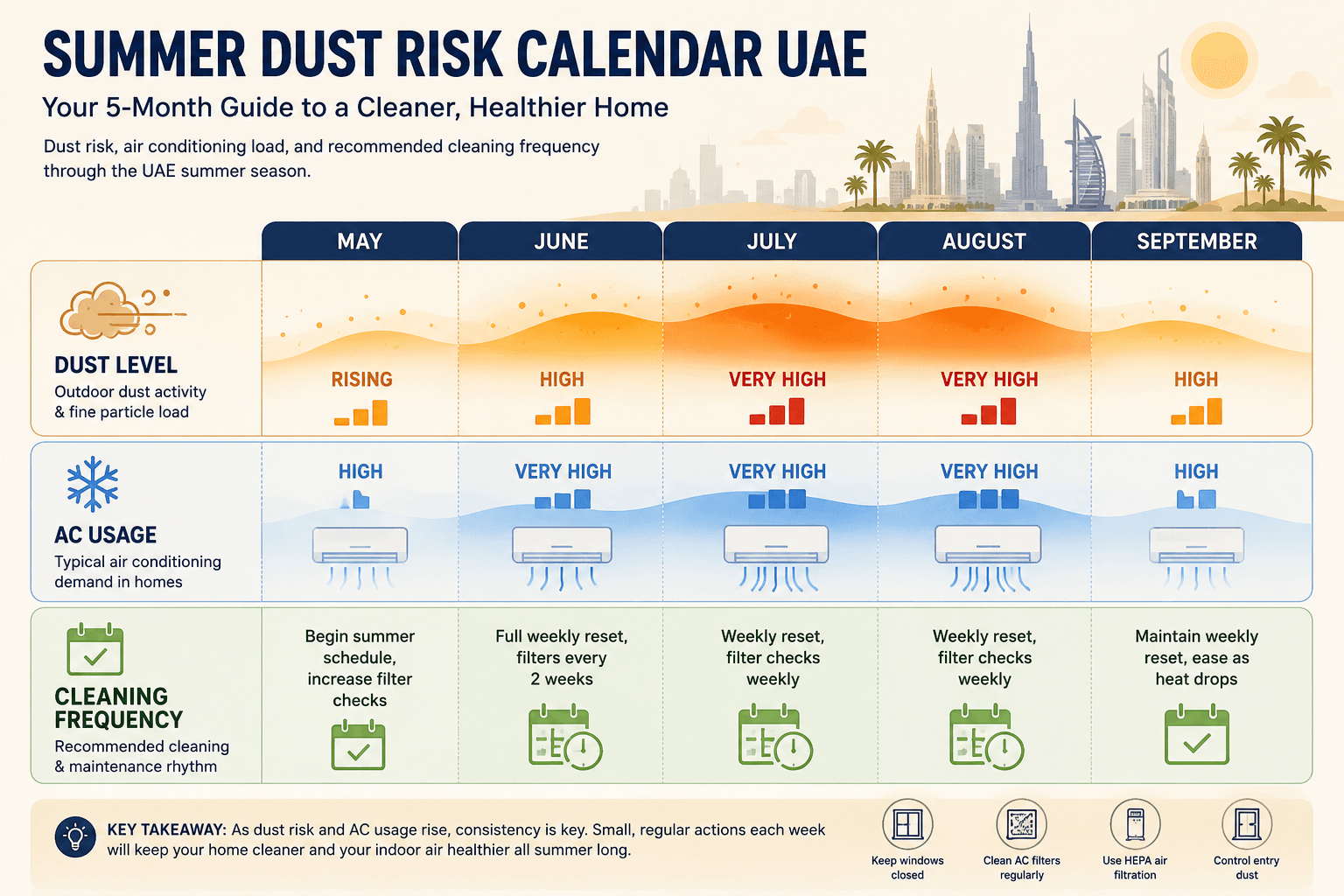
Dust pressure is not constant across the summer. The table below outlines how dust risk, air conditioning load, and recommended cleaning frequency typically shift through the dust season UAE residents experience from May to September. Conditions vary by location, so homes near construction, open desert, or major roads may sit one level higher than shown. Residents can combine this schedule with the broader framework outlined in the guide to seasonal cleaning for UAE homes.
| Month | Dust Risk | AC Usage | Recommended Cleaning Frequency |
|---|---|---|---|
| May | Rising | High | Begin summer schedule, increase filter checks |
| June | High | Very high | Full weekly reset, filters every 2 weeks |
| July | Very high | Very high | Weekly reset, filter checks weekly |
| August | Very high | Very high | Weekly reset, filter checks weekly |
| September | High | High | Maintain weekly reset, ease as heat drops |
Why Dust Problems Become Worse During UAE Summers
Summer dust in UAE homes reaches its annual peak between May and September when shamal winds carry fine desert particulate from surrounding desert systems into coastal cities at elevated concentrations.
Summer dust is not simply more of the same dust seen in cooler months. Several UAE-specific conditions combine during the hottest period to intensify both the volume of dust and the speed at which it settles indoors.
Constant Air Conditioning Operation
During UAE summers, cooling systems often run around the clock. This continuous operation has a direct effect on indoor dust behaviour.
When air conditioning recirculates indoor air for long periods, fine particles are moved repeatedly through the same rooms rather than being flushed out by fresh ventilation. Particles that would normally settle and stay put can be lifted again by airflow from vents, then redistributed across surfaces. This is commonly described as dust “never fully settling.”
Filters also load more quickly in summer. As filters collect more particles, airflow can drop and trapped dust may begin to bypass a clogged filter, allowing finer particles back into circulation. A filter that performed well in March may be visibly loaded within weeks during peak summer use. Interval guidance is covered in the AC filter cleaning guide for UAE homes.
Increased Outdoor Dust Activity
The wider environment is also more active. Summer brings dry conditions, higher daytime heat, and periodic shamal winds, the northwesterly winds common to the Gulf region that lift desert sand and dust over long distances. Ongoing construction activity across many UAE communities adds a steady supply of fine particulate to the outdoor air.
Even with windows closed, this outdoor dust finds its way indoors through door gaps, balcony thresholds, lift lobbies, shared corridors, and on clothing, bags, and shoes. The higher the outdoor dust load, the more pressure there is on every entry point in the home.
Reduced Natural Ventilation
In cooler months, opening windows can help clear indoor air and move settled dust outdoors. In summer, that option largely disappears. Opening windows during the day invites heat, humidity, and fresh dust, so most homes stay sealed.
The result is a trapped-particle environment. Dust generated indoors, from skin cells, fabric fibres, cooking, and foot traffic, combines with infiltrated outdoor dust and stays in circulation. Without periodic flushing, indoor particle levels can build gradually over the season. This is one reason summer dust feels persistent even in apartments that are cleaned regularly.
Understanding Summer Dust Sources in UAE Homes
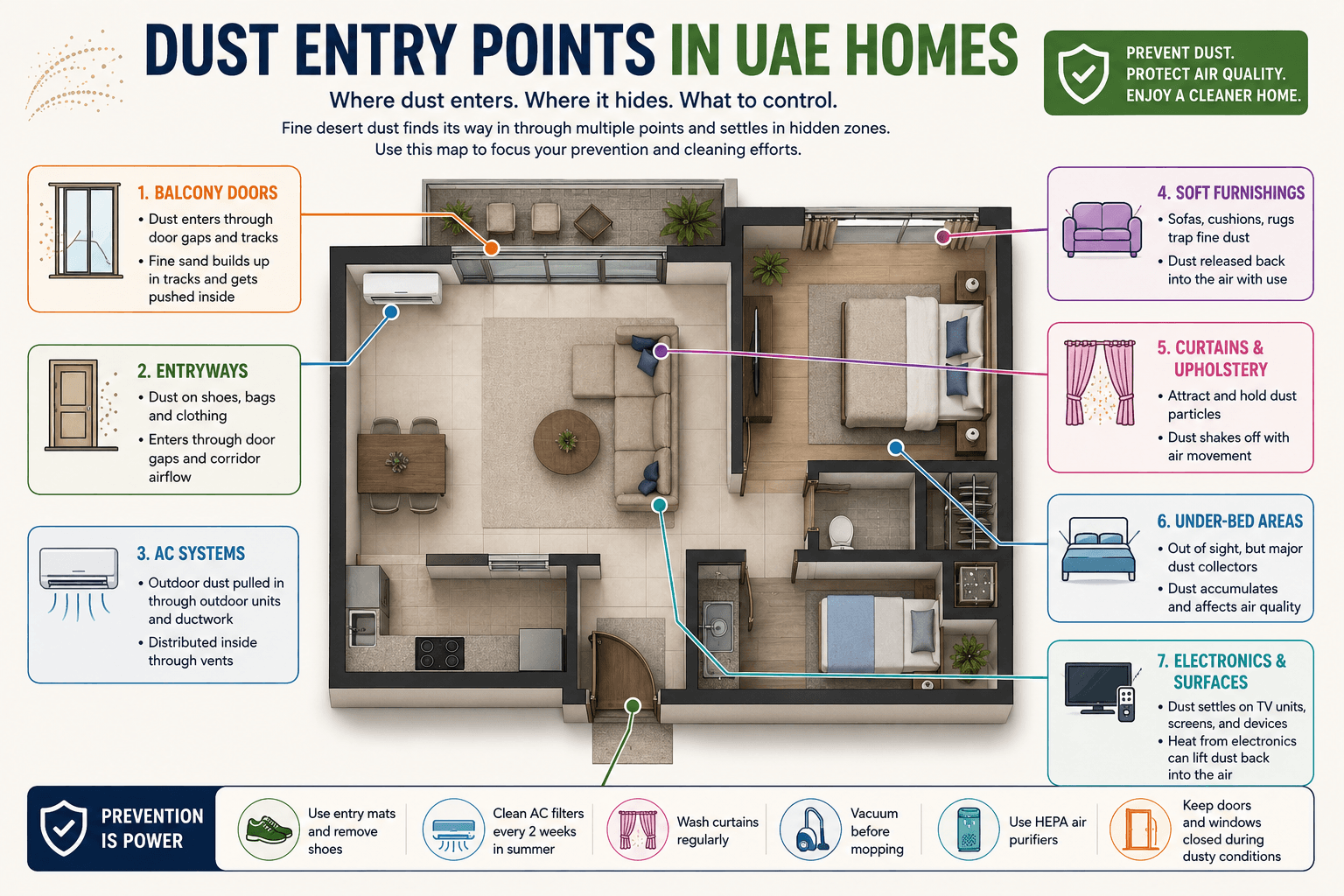
Effective control depends on knowing where summer dust enters and where it concentrates. The zones below are the most common contributors in UAE apartments and villas.
Balcony Doors
Balcony thresholds and sliding-door tracks are among the highest-risk points in summer. Fine sand collects in the track channels, and every door movement can release particles into the living area. Air pressure differences in high-rise buildings can also draw dust inward around the door seal. This is examined in more detail in the guide to balcony dust problems in UAE homes.
![[IMAGE 3 — position here] Description: A balcony door track packed with accumulated sand. Alt text: Balcony door track filled with sand after a UAE sandstorm](https://cleanlivinguae.com/wp-content/uploads/2026/05/Post-Sandstorm-Cleaning-UAE-2-1024x683.png)
Entryways
The main door is a primary transfer point. Shoes, bags, and clothing carry desert dust directly into the home. Without a controlled entry zone, this material spreads across floors within hours and is then circulated by air conditioning.
AC Systems
Beyond filters, the wider cooling system can act as a distribution network. Dust settles on vents, grilles, and internal components, and is then pushed back into rooms during operation. Visible dust around supply vents is a common warning sign that the system needs attention.
![[IMAGE 2 — position here] Description: A split AC filter covered in desert dust after a sandstorm. Alt text: Split AC filter loaded with desert dust after a UAE sandstorm](https://cleanlivinguae.com/wp-content/uploads/2026/05/Post-Sandstorm-Cleaning-UAE-4-1024x683.png)
Soft Furnishings
Sofas, cushions, mattresses, and rugs trap and release fine particles. Sitting down, adjusting cushions, or making the bed can send a small cloud of dust back into the air, where it resettles on nearby surfaces.
Under-Bed Areas
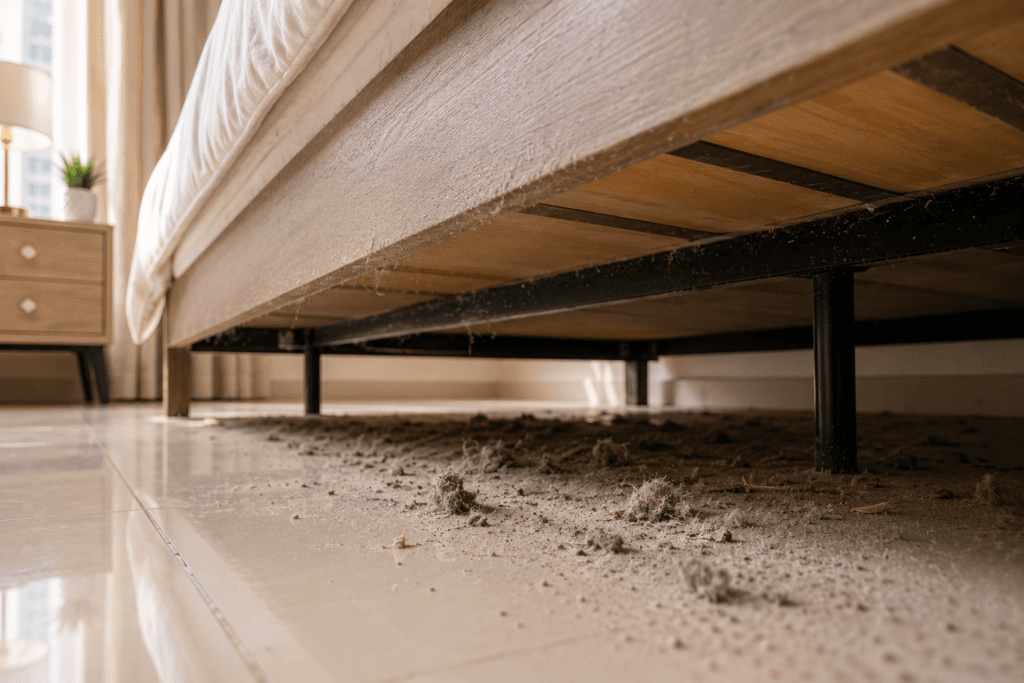
Low-traffic, low-airflow spaces under beds accumulate dust quietly throughout the summer. Because they are out of sight, they are often skipped, then become a reservoir that feeds the rest of the room every time air moves across the floor.
Curtains and Upholstery
Fabric curtains are large vertical dust collectors, especially near balcony doors and windows. They hold fine particles within the weave and release them with movement or airflow from nearby vents.
Electronics
Televisions, media units, routers, and computer towers generate static charge and warmth that attract fine dust. These surfaces are commonly associated with visible dust buildup and are easy to overlook in a standard clean.
The UAE Summer Dust Survival System
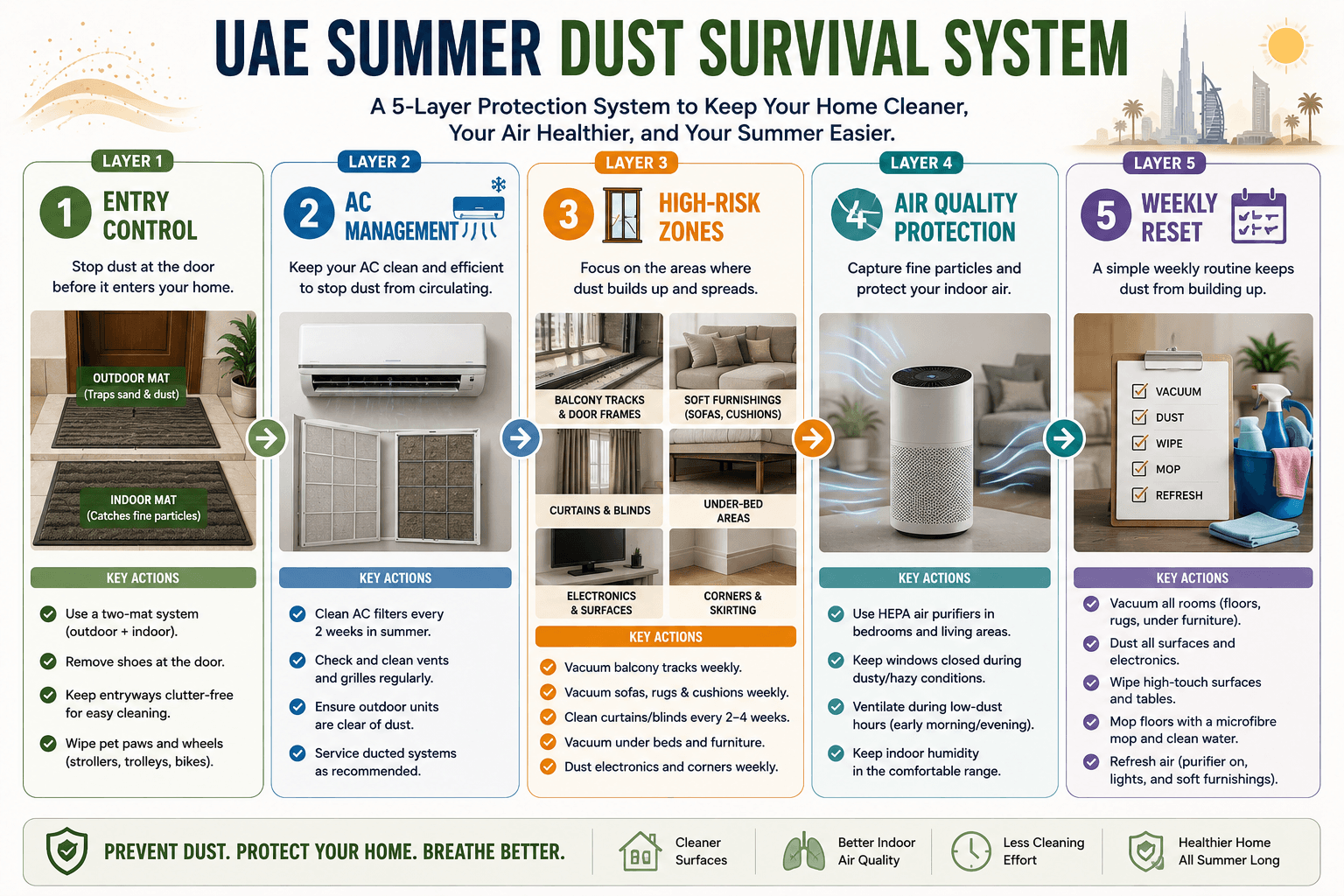
The system below uses five layers. Each layer reduces dust at a different stage, so particles are intercepted before they reach surfaces, captured where they collect, and cleared on a predictable schedule.
Some product mentions may include affiliate links.
Layer 1 – Entryway Dust Control
The first layer stops dust at the door before it ever reaches living areas.
- Outdoor mat: A coarse, scraper-style mat placed outside the main door is designed to remove larger sand and grit from shoe soles.
- Indoor mat: A second, finer mat inside the door captures remaining fine particles. This two-mat approach is often described as the most effective low-cost dust barrier for UAE homes. Mat selection is covered in the guide to the best entry mats for dust in UAE homes.
- Shoe management: A no-shoes-indoors habit, or a designated shoe zone at the entry, prevents desert dust from being walked across the home.
- Bag placement: Keeping bags and outdoor items on a tray or shelf near the door, rather than on sofas or beds, limits transfer of dust onto soft furnishings.

Layer 2 – AC Dust Management
The second layer targets the system that moves air through the home all summer.
- Filter cleaning frequency: During peak summer, many UAE residents inspect filters every two weeks and rinse or vacuum reusable filters as needed. A loaded filter reduces airflow and allows finer dust back into rooms.
- Signs filters need attention: Reduced cooling, weaker airflow from vents, visible grey buildup on the filter mesh, or a faint dusty smell when the unit starts are common indicators.
- Split AC versus ducted systems: With split units, the washable filter behind the front panel is generally a resident task and can be cleaned regularly. With ducted systems, the accessible return-air filter can usually be maintained by residents, while internal duct cleaning is typically handled by building maintenance or a professional service. Detailed intervals are set out in the AC filter cleaning guide for UAE homes.
Layer 3 – High-Risk Dust Zone Management
The third layer focuses on the surfaces and channels where summer dust concentrates.
- Balcony tracks: Vacuum sliding-door tracks with a crevice tool, then wipe with a damp microfibre cloth. Dry sand should be lifted before any moisture is applied, to avoid creating a paste in the channel.
- Curtains: Vacuum curtains with an upholstery attachment on a low setting, and launder them periodically according to fabric care guidance.
- Sofas: Vacuum cushions and crevices weekly. Microfibre cloths are commonly preferred over feather dusters because they trap particles instead of scattering them.
- Beds: Vacuum the mattress surface and clear under-bed areas regularly, since both are quiet dust reservoirs in summer.
- TV units: Wipe electronics and media units with a dry or slightly damp microfibre cloth, working from top to bottom so dislodged dust falls onto surfaces still to be cleaned.
Layer 4 – Air Quality Protection
The fourth layer addresses the fine particles already suspended in indoor air.
- HEPA filtration: HEPA-grade filtration in vacuums and purifiers is designed to capture very fine particles that ordinary filters can release back into the room. HEPA vacuum options are compared in the guide to the best HEPA vacuums in UAE homes.
- Air purifiers: A purifier sized for the room and positioned away from walls can help reduce airborne dust, particularly in bedrooms and main living areas. Filter replacement should follow the manufacturer’s guidance. Suitable models are compared in the guide to air purifiers for UAE dust control.
- Ventilation timing: When brief ventilation is needed, early morning before peak heat is generally the most comfortable window. During shamal conditions or visibly hazy days, keeping the home sealed is usually preferable.
Air conditioning filters and air purifiers serve different roles, and they work best together rather than as substitutes. The table below outlines how their functions differ.
| Function | AC Filter | Air Purifier |
|---|---|---|
| Protect HVAC system | Yes | No |
| Remove airborne dust from room air | Limited | Yes |
| Fine particle filtration, PM2.5 | Limited | Yes |
| Whole-room air cleaning | No | Yes |
| Maintains cooling airflow | Yes | No |
In practice, the AC filter primarily protects the cooling system and captures larger particles, while a HEPA air purifier targets the fine airborne dust that remains suspended in room air. Using both gives broader coverage during peak summer.
Best Summer Ventilation Window
When brief ventilation is unavoidable, timing matters. The guide below reflects typical UAE summer conditions.
| Time | Recommendation |
|---|---|
| Early morning | Best |
| Midday | Avoid |
| Afternoon | Avoid |
| Evening | Moderate |
| During a dust event | Keep closed |
Layer 5 – Weekly Dust Reset Routine
The fifth layer brings the system together in a short, repeatable weekly workflow that prevents buildup from accumulating.
- Dust high surfaces first, working from shelves and tops of furniture downward.
- Wipe electronics and media units with a microfibre cloth.
- Vacuum upholstery, curtains, and mattress surfaces with the appropriate attachment.
- Vacuum balcony tracks and entry zones, then damp-wipe them.
- Vacuum all floors, including under beds and behind furniture where reachable.
- Damp-mop hard floors after vacuuming, never before, to avoid turning dry dust into streaks.
- Shake out or vacuum entry mats and check the air conditioning filter.
Cleaning Tools That Support Summer Dust Control in UAE Homes
Some product mentions may include affiliate links.
UAE summers place specific demands on cleaning equipment, from heavy air conditioning circulation to fine sand that settles into fabrics and floor surfaces. The tool categories below support the five-layer system above, helping manage airborne dust, surface dust, and floor dust through the hottest months. The right choice depends on the home’s layout and the surfaces being cleaned, so most homes use a small combination rather than a single tool.
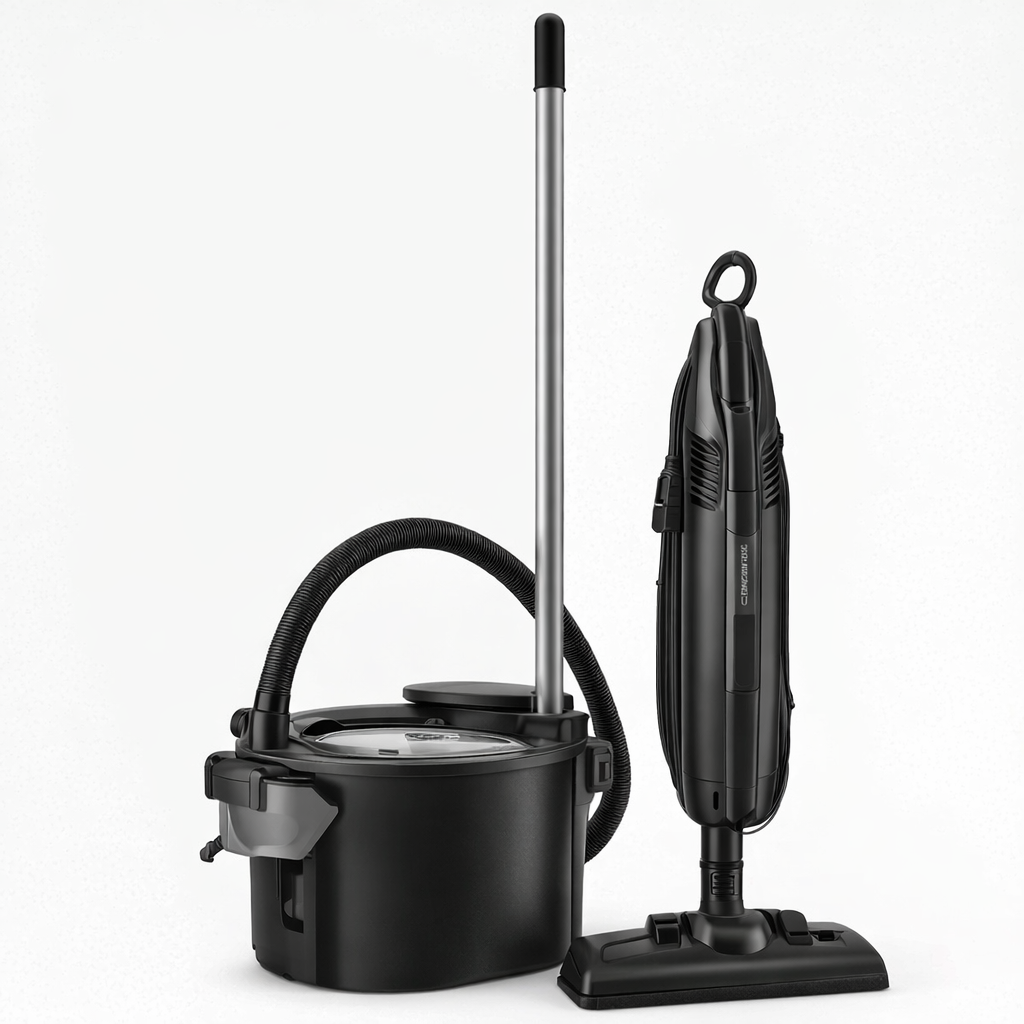
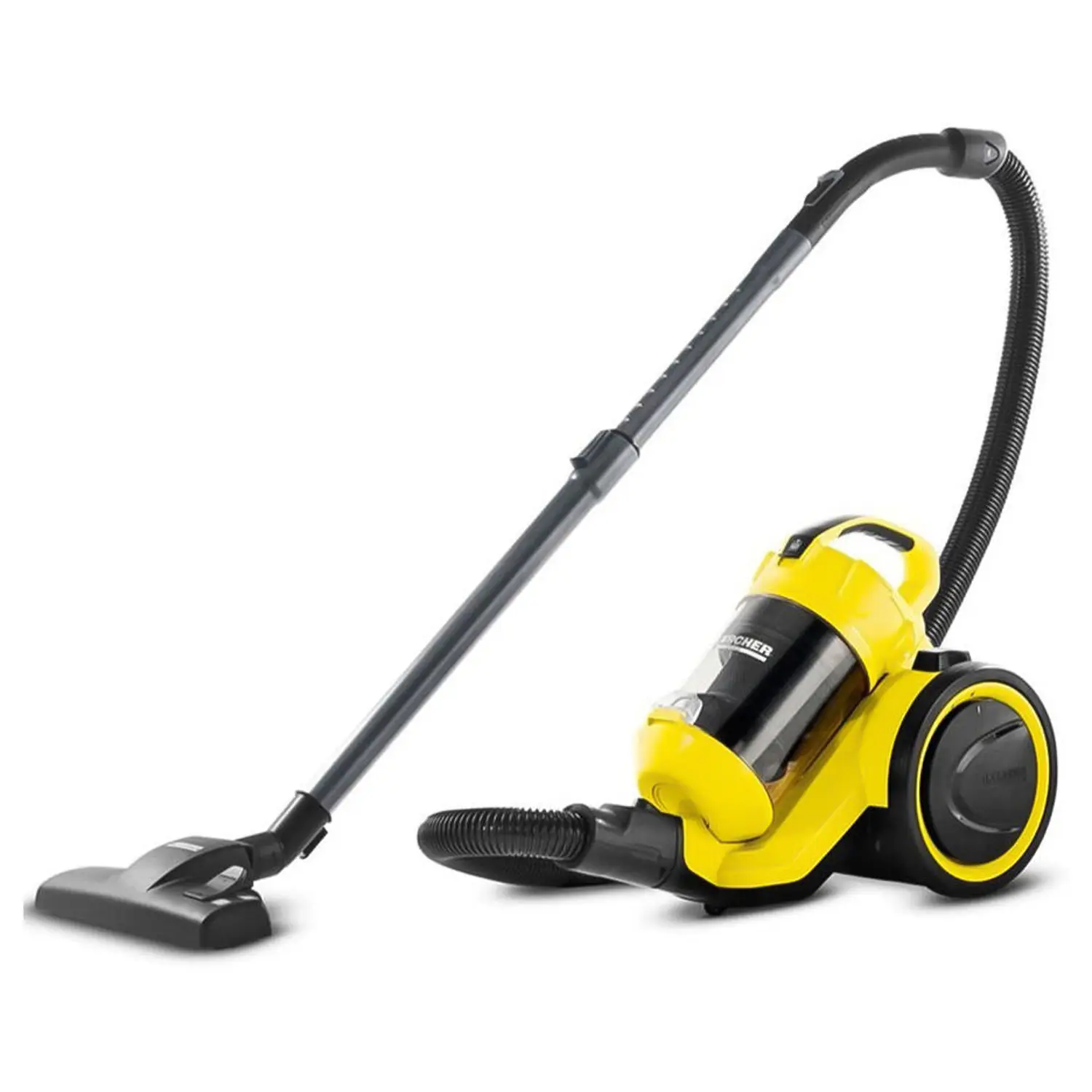
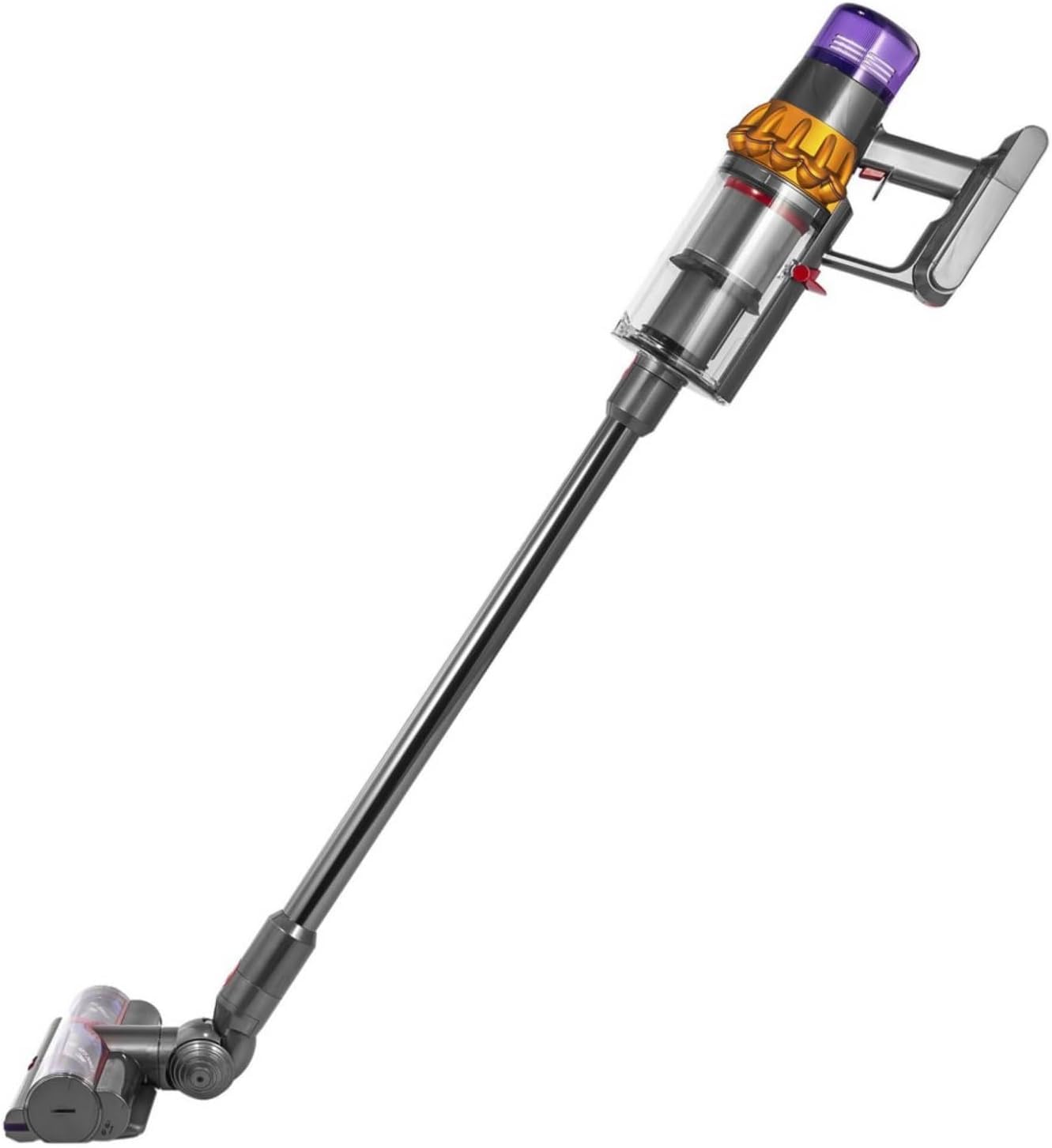
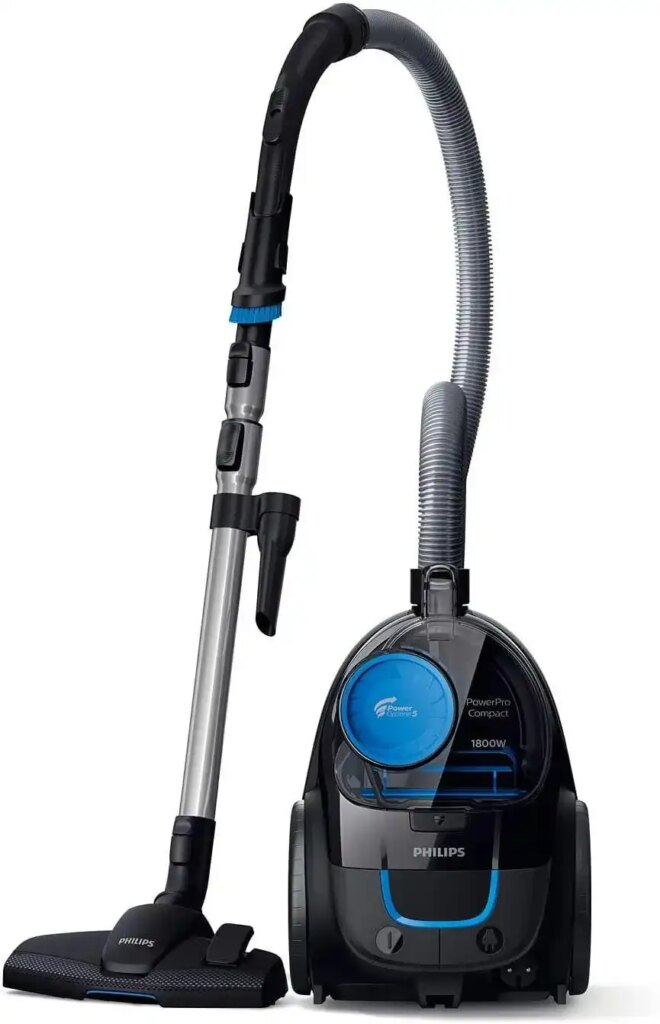
- HEPA vacuum cleaners for UAE dust control: HEPA vacuums are designed to capture fine dust and sand particles commonly found in UAE homes, and suit tile, marble, rugs, and upholstery. See the guide to the best HEPA vacuums in UAE homes.
- Air purifiers for managing fine indoor dust: HEPA air purifiers help reduce airborne dust and fine sand during dusty periods, with bedrooms and living rooms the most common placement areas. See air purifiers for UAE dust control.
- Microfiber cloths for fine dust removal: Microfiber cloths help trap fine UAE dust rather than spreading it across surfaces, and separate cloths for dry dusting and wet cleaning improve efficiency.
- Dusting tools for dust removal: Electrostatic extendable dusters trap fine particles without scattering them, which suits UAE homes with tall ceilings and hard-to-reach surfaces.
- AC vent brushes for dust accumulation: Narrow-profile brushes fit between AC louvre slats to remove dust buildup between professional filter services, without damaging the unit.
- Spin mops and floor mops for post-cleaning: Spin mops with microfibre heads capture residual fine particles on hard floors when used after vacuuming has removed the loose dust.
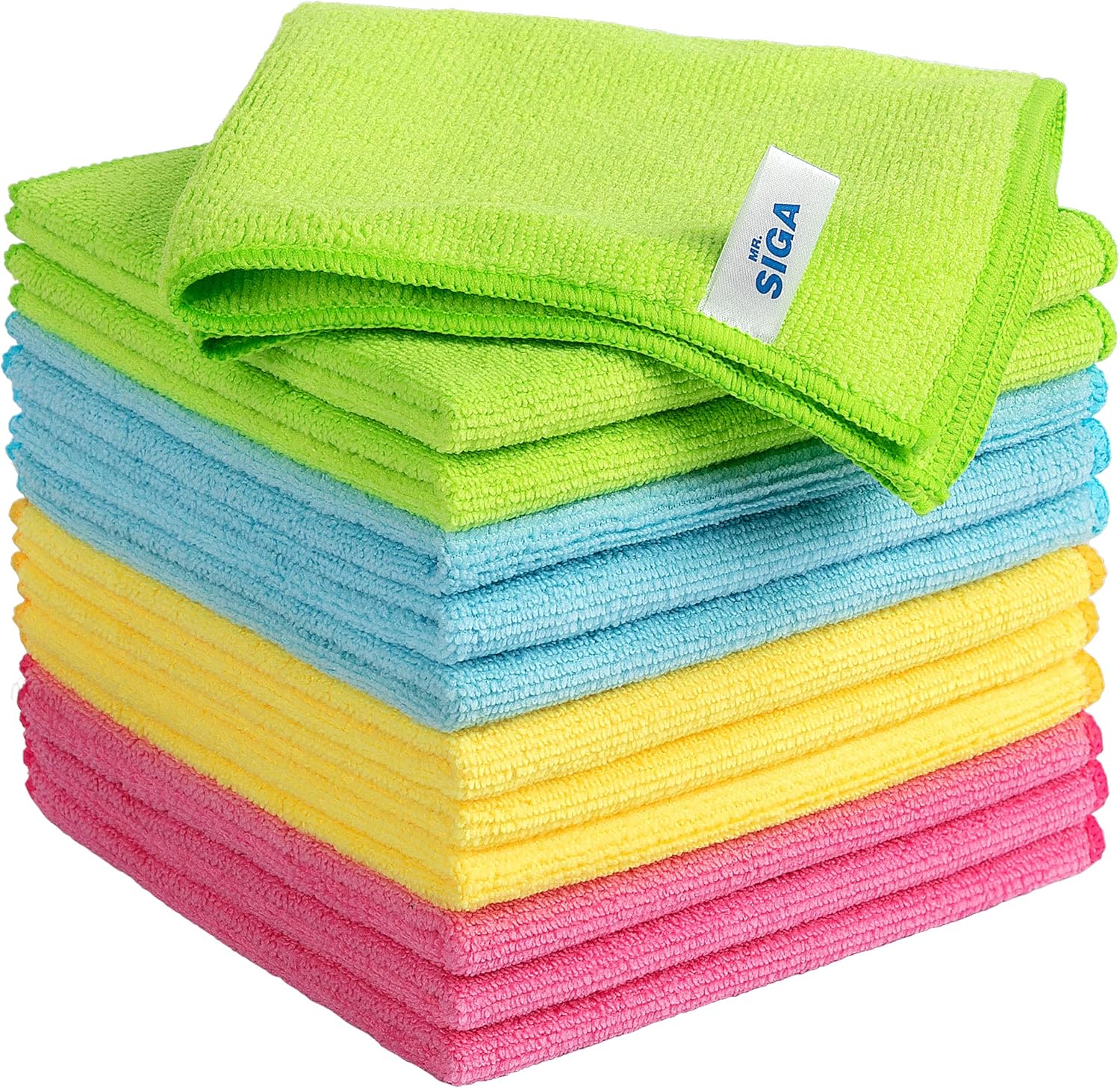
Microfiber Cloths for
Fine Dust Removal
Microfiber cloths help trap fine UAE dust instead of spreading it across surfaces. Separate cloths for dry dusting and wet cleaning improve cleaning efficiency.
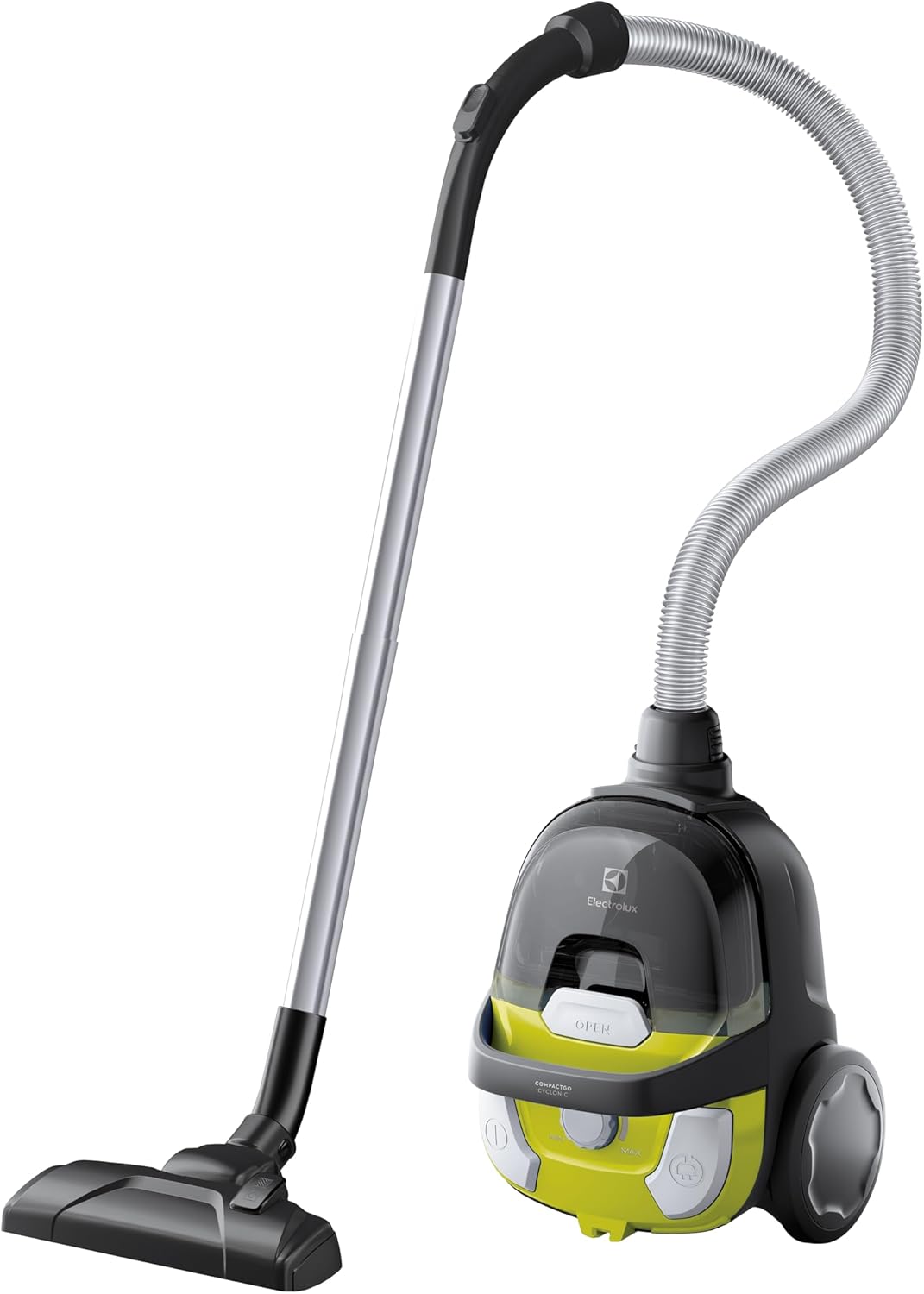
HEPA Vacuum Cleaners for
UAE Dust Control
HEPA vacuum cleaners capture fine dust and sand particles commonly found in UAE homes. They are effective for tile, marble, rugs, and upholstery.
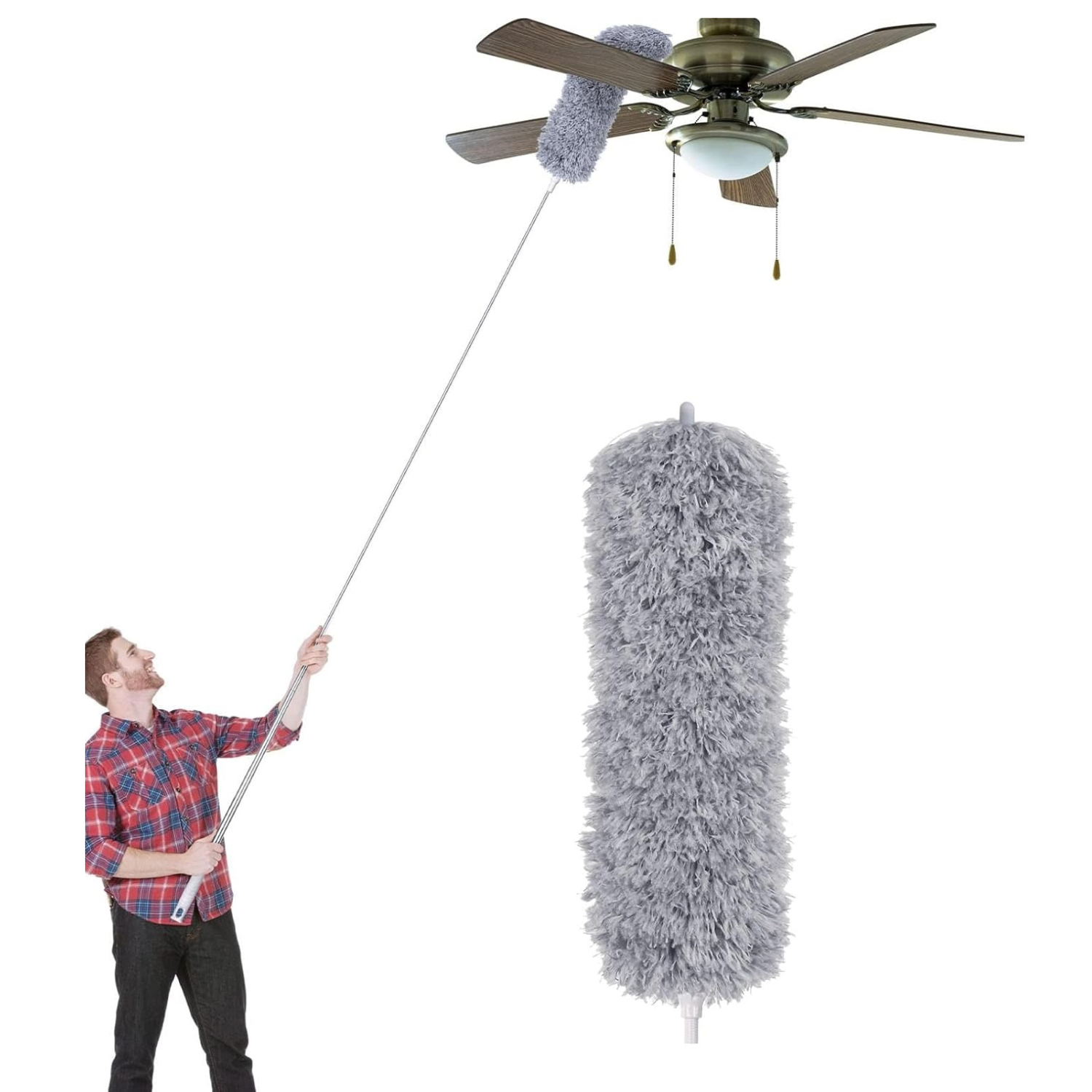
Dusting Tools for
Dust Removal
Electrostatic extendable dusters trap fine particles without spreading them, making them well suited to UAE homes with tall ceilings and hard-to-reach surfaces.
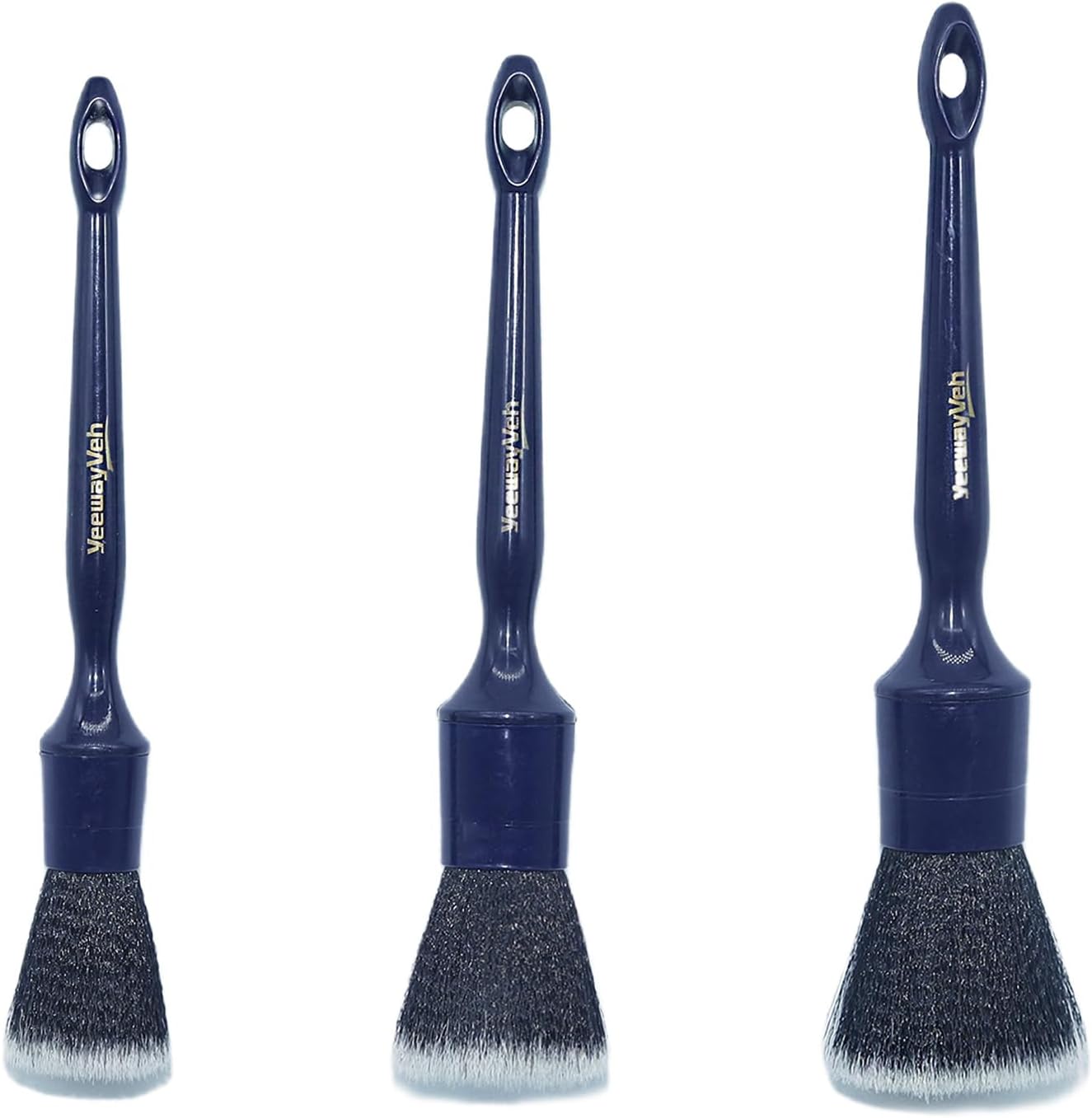
AC Vent Brushes for
Dust Accumulation
Narrow-profile brushes fit between AC louvre slats to remove dust buildup between professional filter services, without damaging the unit.
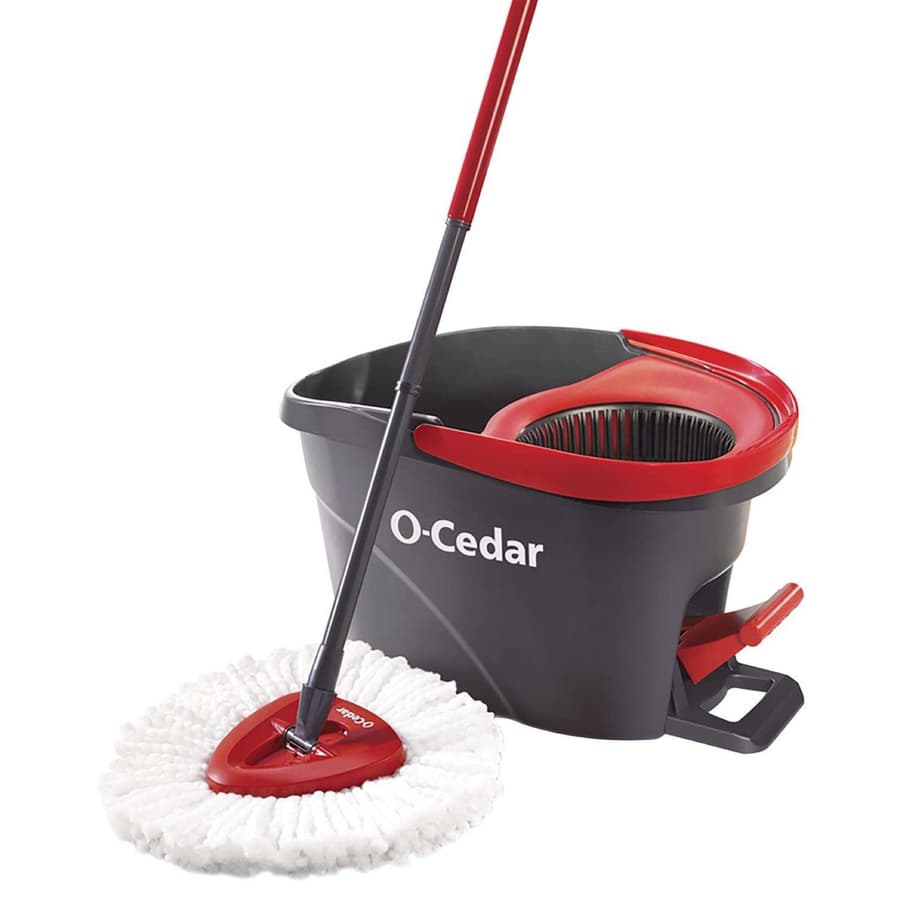
Spin Mops and Floor Mops
for post-cleaning
Spin mops with microfiber heads capture residual fine particles on hard floors when used after vacuuming that it may have missed.
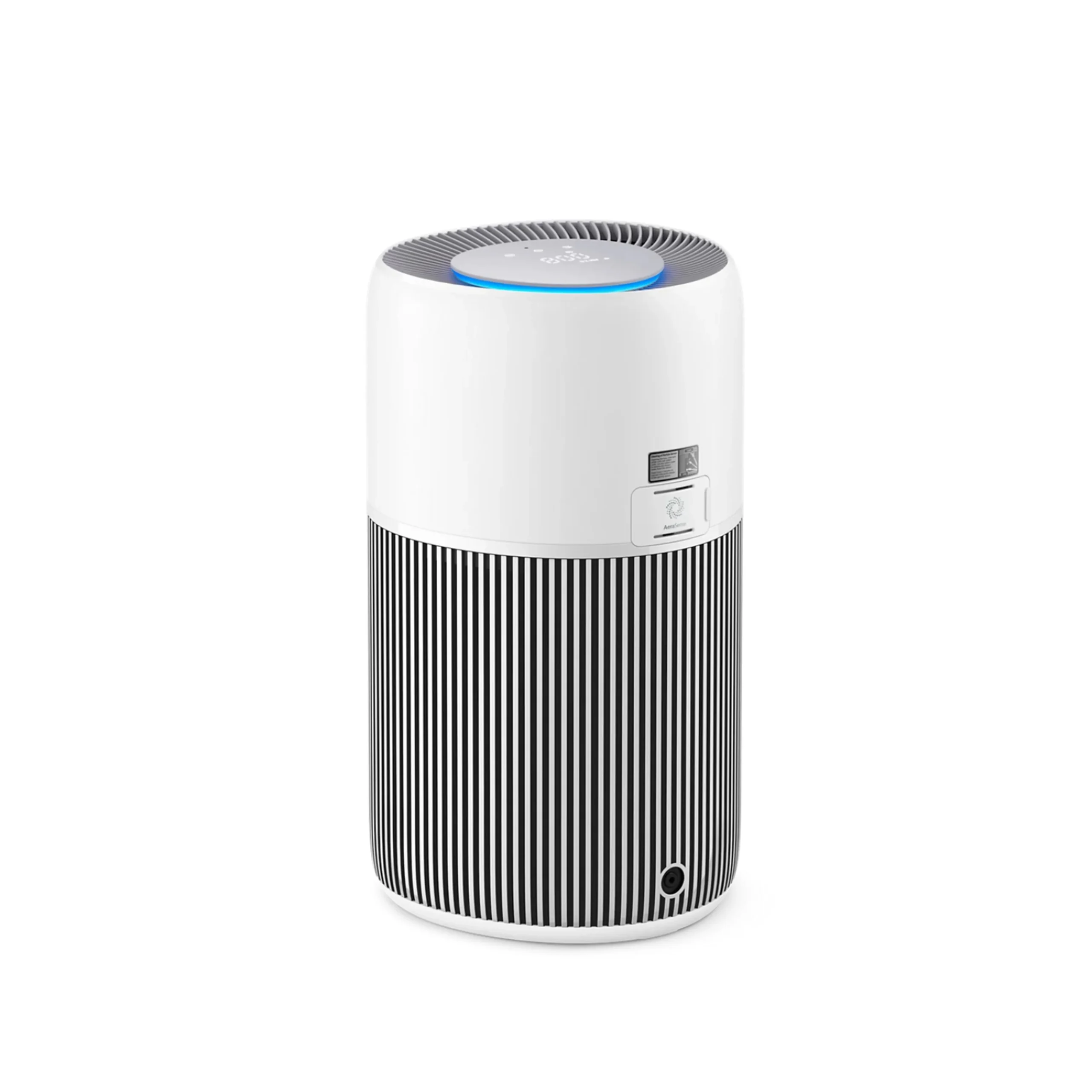
Air Purifiers for Managing
Fine Indoor Dust
HEPA air purifiers help reduce airborne dust and fine sand during dusty periods. Bedrooms and living rooms are the most common placement areas in UAE homes.
Summer Cleaning Frequency Guide
The intervals below are general recommendations based on typical UAE summer conditions. Homes near construction sites, open desert, or busy roads may need more frequent attention as part of effective dust control UAE apartment routines.
| Area | Recommended Summer Frequency |
|---|---|
| AC Filters | Inspect weekly; rinse or vacuum every 2 weeks |
| Balcony Tracks | Weekly, more often after windy days |
| Curtains | Vacuum weekly; launder monthly |
| Under Beds | Weekly |
| Upholstery | Vacuum weekly |
| Floors | Quick daily pass; full clean 2 to 3 times weekly |
| Entryway Mats | Shake or vacuum every 2 to 3 days |
| Air Purifier Filters | Check monthly; replace per manufacturer guidance |
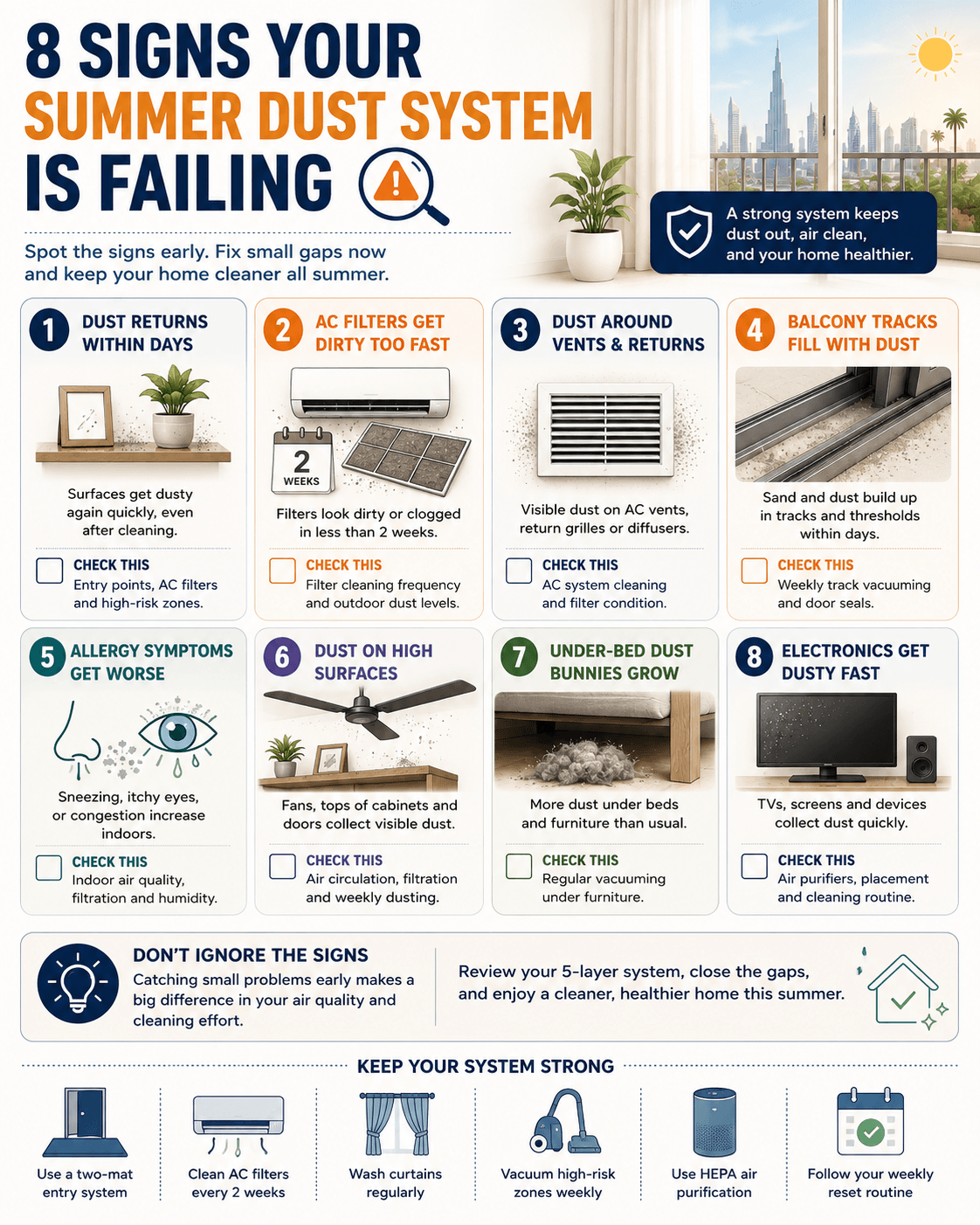
8 Signs Your Summer Dust System Is Failing
When prevention slips, the warning signs usually appear before the home looks obviously dusty. The indicators below suggest one or more layers of the survival system needs attention.
- Visible dust returns on dark or glossy furniture within 24 hours of cleaning.
- The AC filter looks grey or loaded within a week of being cleaned.
- Dust gathers around supply vents and grilles between cleans.
- Sneezing, congestion, or itchy eyes increase noticeably indoors.
- Balcony door tracks refill with fine sand soon after being cleared.
- Dust is clearly visible in beams of sunlight across a room.
- The air purifier filter loads or signals replacement unusually quickly.
- Surfaces feel dusty again almost immediately after wiping.
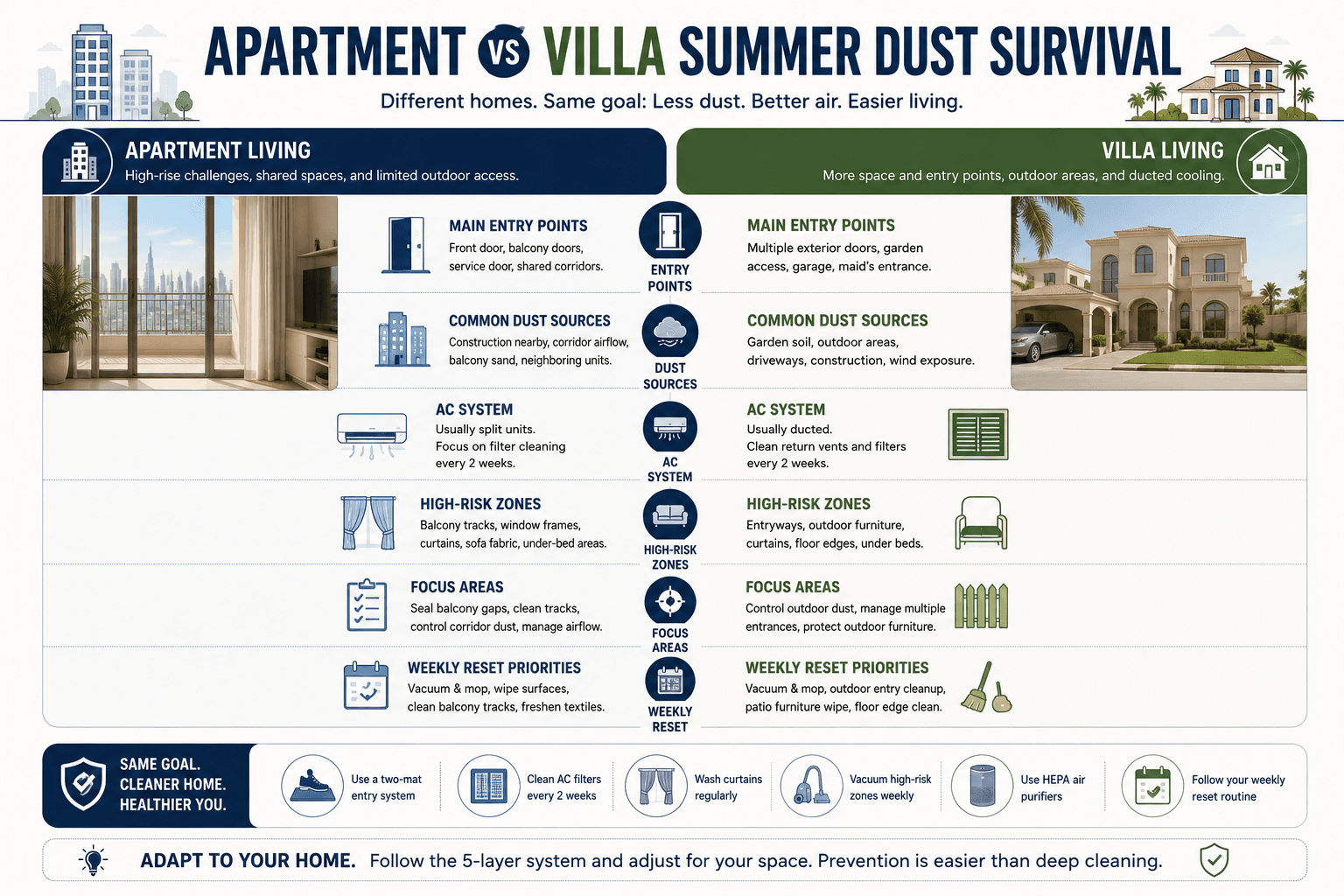
Apartment vs Villa Summer Dust Survival
Summer dust in Dubai apartments is particularly concentrated in high-rise developments near active construction – the combination of construction particulate, desert dust, and reduced natural ventilation during sealed summer operation creates some of the highest indoor dust loads in the region.
Apartments and villas face the same UAE summer conditions, but the dust pressure points differ. Tailoring the system to the property type improves results.
Apartments
Common challenges include:
- Balcony infiltration: A single balcony often serves as the main outdoor dust vector for the whole unit, concentrating risk at one threshold.
- Shared corridors: Dust enters from lift lobbies and common areas each time the main door opens.
- High-rise airflow: Pressure differences in tall buildings can draw fine dust inward around door and window seals.
Apartment-specific dust patterns are examined further in the guide to fine dust in UAE apartments.
Villas
Common challenges include:
- Larger floor area: More surface to clean means dust spreads across a wider space and takes longer to reset.
- Multiple entry points: Several external doors increase the number of transfer zones to control.
- Garden dust: Adjacent sand, soil, and landscaping add a continuous local dust source close to the home.
- Ducted systems: Whole-home ducted cooling distributes air, and dust, across many rooms, making filter maintenance and vent care especially important.
| Aspect | Apartments | Villas |
|---|---|---|
| Main dust vector | Single balcony and main door | Multiple external doors and garden |
| Floor area | Smaller, faster to reset | Larger, longer cleaning cycles |
| Cooling system | Usually split units | Often ducted systems |
| Filter responsibility | Mostly resident managed | Resident filters plus periodic professional duct care |
| Outdoor dust source | Shared corridors and high-rise airflow | Garden, soil, and surrounding open ground |
| Priority focus | Entry control and balcony tracks | Multiple entries, vents, and garden-side rooms |
Mistakes That Make Summer Dust Worse
Several common habits unintentionally increase summer dust or spread it further. Avoiding them often improves results more than adding extra cleaning sessions.
- Wet mopping before vacuuming: Mopping over dry dust creates muddy streaks and pushes fine particles into grout lines. Vacuuming first removes loose dust so mopping can finish the surface cleanly.
- Ignoring AC filters: A loaded filter reduces airflow and can allow fine dust back into rooms, so the rest of the home stays dusty no matter how often surfaces are wiped.
- Opening windows midday: Daytime ventilation in summer brings in heat, humidity, and fresh desert dust, undoing recent cleaning.
- Overusing feather dusters: Feather dusters tend to scatter fine particles into the air rather than capture them, where they resettle nearby. Microfibre cloths trap dust instead.
- Leaving balcony doors open: Even short periods with the balcony open allow sand and fine particles to enter and settle deep into soft furnishings.
- Using low-quality vacuum filters: Vacuums without effective fine-particle filtration can release dust back into the room through the exhaust, spreading it as they clean.
How Summer Dust Prevention Saves Time and Money
A prevention-first system is not only cleaner; it tends to be more economical over the season. The benefits below are commonly associated with consistent UAE dust prevention rather than reactive cleaning.
- Reduced cleaning frequency: Stopping dust at entry points means fewer full cleans are needed to keep surfaces presentable.
- Less HVAC strain: Cleaner filters allow normal airflow, which reduces the load on the cooling system during heavy summer use.
- Longer filter life: Lower dust loads can extend the usable life of washable filters and reduce how often disposable filters are replaced.
- Less furniture and upholstery buildup: Controlling sources limits how much fine dust settles into fabrics, slowing wear and reducing deep-cleaning needs.
- Improved air purifier efficiency: When less airborne dust reaches the purifier, its filters last longer and the unit maintains performance more consistently.
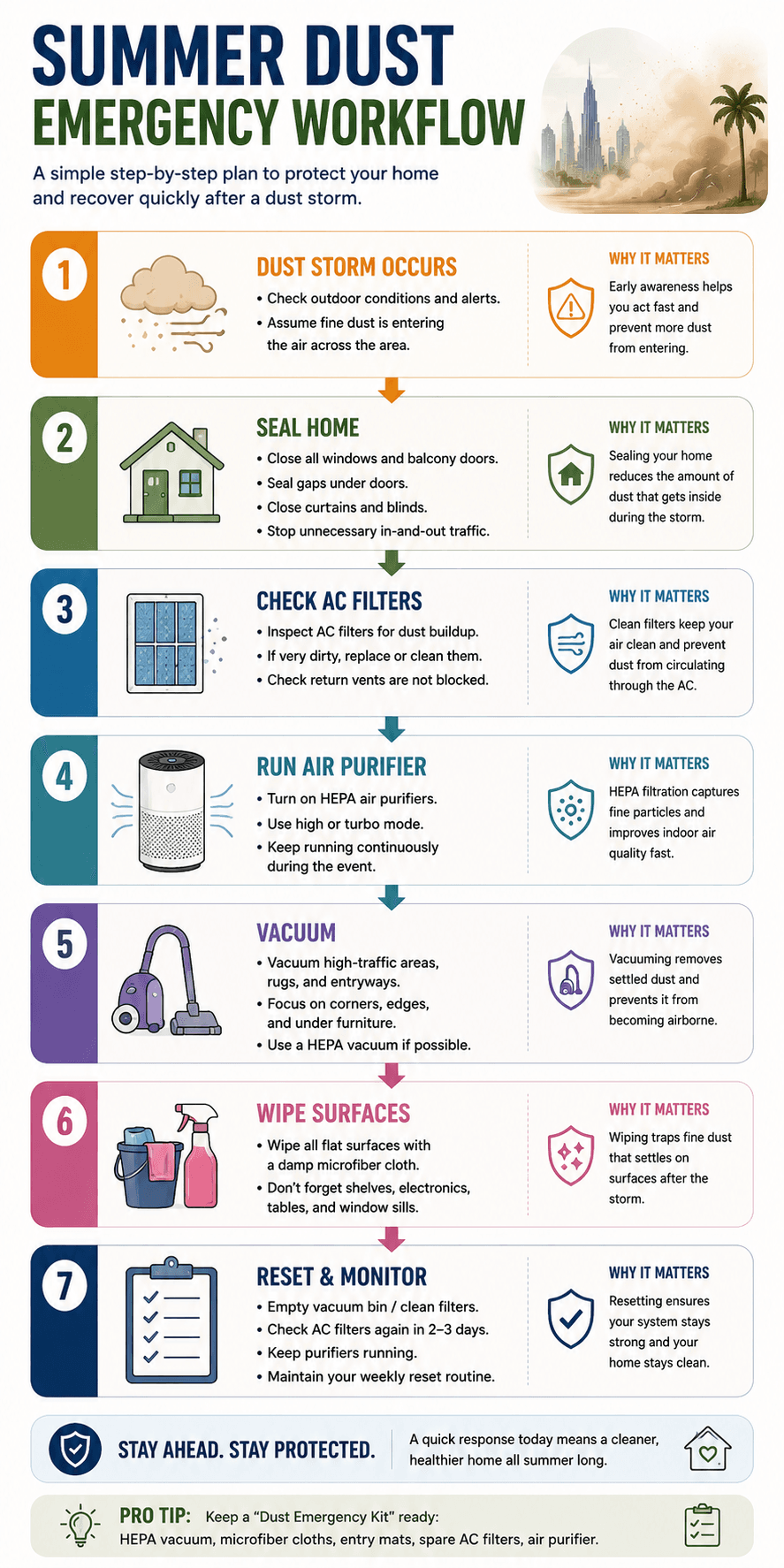
Summer Dust Emergency Plan After a Dust Storm
Shamal winds and seasonal dust storms can blanket a home with fine particles in hours. A staged response prevents fine dust from being driven deeper into surfaces. A full sequence is available in the post-sandstorm cleaning guide for UAE homes.
First Hour
- Keep all windows and balcony doors closed and sealed.
- Check and, if needed, clean or replace heavily loaded AC filters so the system is not pushing dust through the home.
- Run HEPA air purifiers in the most-used rooms.
- Avoid disturbing settled dust until heavy material can be vacuumed, to keep it from becoming airborne again.
First Day
- Vacuum hard surfaces and floors with a HEPA-grade vacuum before any wet cleaning.
- Wipe horizontal surfaces and electronics with damp microfibre cloths, working top to bottom.
- Clean balcony door tracks and entry zones, since these receive the heaviest load.
- Damp-mop hard floors only after vacuuming is complete.
First Weekend
- Launder curtains, bedding, and washable cushion covers that trapped airborne dust.
- Vacuum upholstery, mattresses, and under-bed areas thoroughly.
- Reset air purifier and AC filters to clean condition for the days ahead.
- Re-check balcony tracks and entry mats, which often hold residual sand after a storm.
Summer Dust Survival Checklist
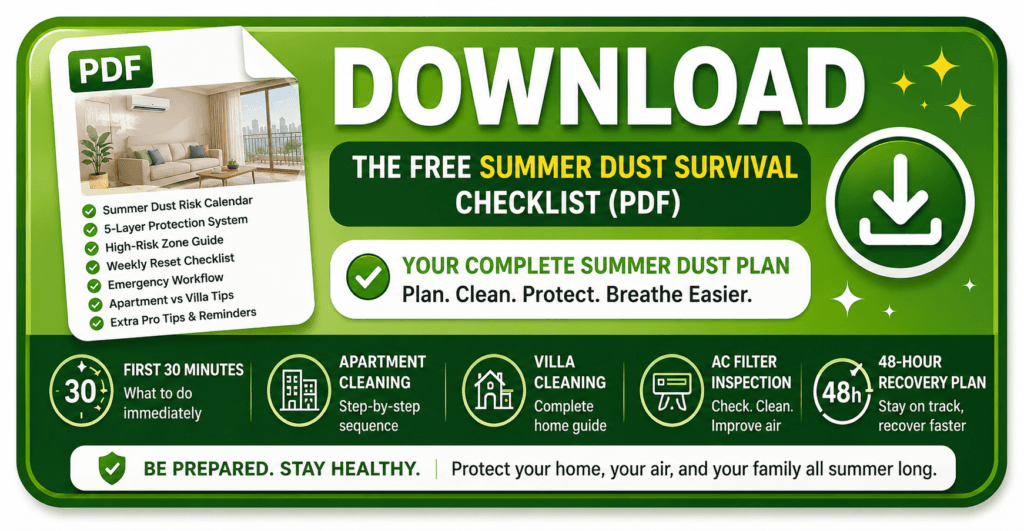
This checklist turns the system into routine tasks across daily, weekly, and monthly intervals, serving as a practical summer dust cleaning checklist UAE households can follow.
Daily Tasks
- Quick floor pass in high-traffic areas.
- Shake or vacuum entry mats if heavily used.
- Wipe one or two high-dust surfaces, such as a media unit or side table.
- Keep balcony doors and windows closed during the day.
Weekly Tasks
- Run the full weekly reset routine described above.
- Vacuum upholstery, curtains, and mattress surfaces.
- Clean balcony door tracks and entry zones.
- Inspect AC filters and clean if loaded.
Monthly Tasks
- Launder curtains and washable soft furnishings.
- Deep-clean under beds and behind large furniture.
- Replace or check air purifier filters per manufacturer guidance.
- Review the whole system and adjust frequencies for any rooms collecting dust faster.
Building a Long-Term Dust Reduction Strategy
Summer dust control works best as an ongoing system rather than a series of reactive cleans. A few principles keep the approach sustainable across the season and beyond.
- System thinking: Treat dust as something to intercept at multiple points, from the entry door to the air conditioning filter to the surfaces themselves, rather than chasing it after it settles.
- Prevention versus cleaning: Effort spent stopping dust at entry points and on filters generally reduces total cleaning more than additional wiping sessions do.
- Layered control methods: Each layer covers a different weakness, so no single missed task leaves the home exposed. Stacking entry control, AC management, zone cleaning, air filtration, and a weekly reset compounds the benefit.
- Seasonal adaptation: Frequencies that work in winter usually need to increase in summer. Adjusting intervals during peak dust months, then easing them in cooler periods, keeps the workload proportionate. This connects naturally with broader routines covered in the guide to seasonal cleaning for UAE homes, the wider dust and sand cleaning resources for UAE homes, and the steps in how to reduce dust in Dubai homes and deep cleaning for UAE homes.
Conclusion
A reliable summer dust survival guide UAE residents can apply year after year comes down to one shift in approach: managing UAE summer dust as a prevention system rather than a recurring cleaning problem. The hottest months concentrate every dust pressure at once, with constant air conditioning, sealed windows, active shamal winds, and ongoing construction all working against indoor air quality.
By layering entryway control, air conditioning maintenance, high-risk zone management, HEPA air filtration, and a short weekly reset, a home defends against dust at multiple stages instead of relying on effort alone. Adjusting frequencies for the season, watching for the warning signs, avoiding the common mistakes, and following a staged response after dust storms keeps surfaces cleaner with less repeated work. Summer dust will never disappear entirely in the UAE, but a well-built system keeps it manageable through the most demanding months of the year.
Homes that perform best during UAE summers are rarely the homes cleaned most often. They are usually the homes with the strongest prevention systems. Small adjustments made before dust enters the living space generally produce greater results than large cleaning sessions after dust has already settled.
For a broader routine structure, see the full Cleaning Systems UAE hub.
Frequently Asked Questions
Why does my UAE home get dustier in summer than in winter?
Summer combines constant air conditioning, sealed windows, dry conditions, shamal winds, and active construction. Indoor air recirculates without fresh ventilation, so fine particles stay in the home and settle repeatedly instead of being flushed out.
How often should AC filters be cleaned during UAE summer?
Many residents inspect filters weekly and rinse or vacuum reusable filters every two weeks during peak summer. Reduced cooling, weak airflow, or visible grey buildup are signs a filter needs attention sooner.
Is it better to vacuum or mop first for summer dust?
Vacuum first, then mop. Mopping over dry dust creates streaks and pushes fine particles into grout. Vacuuming removes loose dust so mopping can finish the surface cleanly.
Should windows be opened to clear indoor dust in summer?
Generally no during the day. Opening windows in peak summer brings in heat, humidity, and fresh desert dust. Brief early-morning ventilation may be acceptable on clear days, but homes should stay sealed during hazy or windy conditions.
Do air purifiers help with UAE summer dust?
Air purifiers with HEPA-grade filtration are designed to capture fine airborne particles and can help reduce dust in bedrooms and main living areas. Effectiveness depends on correct room sizing, placement, and regular filter replacement.
What is the most common entry point for summer dust in apartments?
Balcony doors and sliding-door tracks are usually the highest-risk points, followed by the main entry door. Fine sand collects in track channels and is released into living areas with door movement.
How can balcony door tracks be cleaned without spreading dust?
Vacuum dry sand from the track with a crevice tool first, then wipe with a damp microfibre cloth. Applying moisture before removing dry sand can create a paste that is harder to clear.
Are feather dusters effective for fine UAE dust?
Feather dusters tend to scatter fine particles into the air, where they resettle nearby. Microfibre cloths are commonly preferred because they trap dust rather than redistributing it.
How do villa and apartment dust control needs differ in summer?
Apartments concentrate risk at a single balcony, main door, and high-rise airflow, while villas face multiple entries, garden dust, and ducted cooling across a larger area. Villas usually need attention to more entry points and vents.
What should be done first after a summer dust storm?
Keep the home sealed, check and clean AC filters, and run HEPA air purifiers in main rooms. Vacuum heavy dust before any wet cleaning, then damp-wipe surfaces and clean balcony tracks and entry zones.
General guidance on dust, air quality, and seasonal weather conditions referenced in this article aligns with public information from the UAE National Center of Meteorology on shamal winds and dust events, Dubai Municipality on environmental and indoor cleanliness practices, the UAE Ministry of Climate Change and Environment on air quality, and the World Health Organization on indoor air quality and particulate exposure. Product performance characteristics described above reflect typical manufacturer information for HEPA filtration, air purifiers, and vacuum systems and should be verified against individual product listings before purchase.