Bed bugs in the UAE can appear in apartments, villas, hotels and furnished rentals, and finding them is not a sign of poor housekeeping. Public health guidance is clear that the cleanliness of a home does not determine whether bed bugs are present. They travel with people and belongings, so a spotless apartment can be affected just as easily as a cluttered one.

UAE households already manage fine dust and sand, air-conditioned rooms and busy apartment living, but bed bugs are a separate issue. They are not linked to dust or sand, and outdoor heat offers no protection because they live indoors, close to where people sleep in climate-controlled rooms. Because bed bugs spend much of their time hidden in seams, joints and cracks, an infestation can be difficult to notice during its early stages. This guide explains how to identify bed bugs, where they come from, where they hide and what practical, evidence-based steps help contain and prevent them.
Are Bed Bugs a Problem in the UAE?
Bed bugs in the UAE are the same household pest found worldwide, wherever people live, sleep and travel. The CDC notes that they have been found everywhere from budget accommodation to luxury hotels. Reliable public data on how many UAE homes experience bed bugs is limited, so this guide does not estimate prevalence. What can be said is that several features of UAE living create opportunities for bed bugs to move between places:
- Apartments: high-rise buildings place many households close together, with shared walls, corridors and service spaces
- Villas: larger homes can have more bedrooms, guest rooms and stored furniture where early activity goes unnoticed
- Hotels and short-stay rentals: frequent turnover of guests and luggage increases the number of possible introductions
- Furnished accommodation: mattresses, sofas and bed frames may have been used by previous occupants
- Shared accommodation: several people sleeping in one space means more belongings and more routes of introduction
- Second-hand furniture: used beds, sofas and headboards can carry bed bugs hidden in seams and joints
- International travel: the UAE is a major travel hub, and luggage is a well-documented way for bed bugs to move
Does UAE Heat Kill Bed Bugs?
No. Outdoor summer heat does not remove indoor bed bugs. They live inside homes, close to people, where air conditioning keeps temperatures comfortable for both residents and insects. Controlled heat can kill bed bugs, but this requires professional equipment and monitoring, not hot weather or home heaters.
What Do Bed Bugs Look Like?
Accurate identification is the first step, because several other insects and even specks of dust can be mistaken for bed bugs.
Adult Bed Bugs
- Size: about 5 to 7 mm long, often compared to an apple seed
- Colour: brown when unfed; more reddish-brown after feeding
- Shape: flat and oval when unfed; swollen and more elongated after a blood meal
- Wings: no functional wings, so they cannot fly
Nymphs
Nymphs are young bed bugs. They are smaller than adults and translucent or whitish-yellow when unfed, which can make them very difficult to see without magnification. After feeding, they may appear reddish because blood is visible through the body.
Eggs
Bed bug eggs are about the size of a pinhead and pearl-white. They are often laid in protected cracks, seams and crevices, and can be hard to see on light-coloured fabric.
Bed Bug Identification Table
Scroll sideways to see the full table.
| Feature | Adult Bed Bug | Nymph | Egg |
|---|---|---|---|
| Size | About 5-7 mm | Smaller than adults, growing with each stage | About 1 mm, pinhead-sized |
| Colour | Brown; reddish-brown after feeding | Translucent to whitish-yellow; reddish after feeding | Pearl-white |
| Shape | Flat, oval; swollen after feeding | Similar shape to adult, smaller | Small, elongated oval |
| Visibility | Visible to the naked eye | Hard to see, especially unfed | Very hard to see without close inspection |
| Commonly found | Seams, frames, headboards, cracks | Same areas as adults | Seams, crevices, joints in furniture |
11 Signs of Bed Bugs in Your UAE Home
The most reliable signs of bed bugs are physical evidence rather than bites. Checking for several signs together gives a clearer picture than relying on any single clue.
- Live bed bugs. Seeing a live insect that matches the description above is the clearest sign. Adults are often found in mattress seams, bed frame joints and headboards.
- Dark spotting or faecal marks. Bed bug droppings appear as small dark or rusty spots, often in clusters along seams. Unlike dust or sand particles, these spots commonly smear when wiped with a damp cloth.
- Shed skins. Nymphs shed their outer skins as they grow. These pale, empty shells are often found near hiding places.
- Eggs or empty eggshells. Tiny pearl-white eggs or hatched shells in seams and crevices indicate that breeding has taken place.
- Blood spotting on bedding. Small rusty or reddish spots on sheets or pillowcases can occur when a feeding bug is crushed. On their own, these spots are not conclusive.
- Evidence around mattress seams. Piping, tufts, folds and labels are common places to find bed bugs on mattress surfaces, along with their droppings and skins.
- Evidence around headboards and bed frames. Joints, screw holes and the gap between a headboard and the wall are frequent hiding spots.
- Evidence in nearby cracks and furniture. Bedside tables, drawers, skirting boards and loose wall fittings close to the bed can also harbour bed bugs.
- Activity around sofas and other resting areas. Bed bugs are drawn to wherever people rest for long periods, so sofas, recliners and floor mattresses can be affected, especially where someone sleeps regularly.
- Repeated evidence after cleaning or inspection. New spotting, skins or live bugs appearing after bedding has been washed and the area checked suggest an active population.
- Bites together with other evidence. Unexplained bites become more meaningful when combined with any of the physical signs above. Some people also notice a musty odour in heavier infestations.
Why Bites Alone Cannot Confirm Bed Bugs
Bite reactions look similar to those from mosquitoes, fleas and other insects, and they can also be confused with skin conditions. Some people do not react at all, so a household can have bed bugs even when nobody has visible bites. For this reason, the CDC advises looking for physical evidence of bed bugs rather than relying on bites.
Bed Bug Bites – What Should You Know?
Bed bugs bite exposed skin, usually while people are asleep. This section covers general information only and is not medical advice.
- Reactions vary. Some people develop itchy red marks, while others show little or no visible reaction.
- Timing varies. Marks may appear one to several days after being bitten, which makes it hard to link them to a specific place or night.
- Bites resemble other insect bites. Bed bug bites can look similar to mosquito or flea bites.
- Bites cannot confirm an infestation. Physical evidence is needed.
- Disease transmission. According to the CDC, bed bugs are not known to spread disease, although bites can cause itching, discomfort and disturbed sleep.
A rash should not be diagnosed from its appearance alone. Anyone experiencing significant swelling, signs of infection, breathing difficulty, a suspected allergic reaction or other concerning symptoms should seek appropriate medical care. A doctor or pharmacist can advise on persistent itching or uncertain skin reactions.
Where Do Bed Bugs Come From?
Bed bugs do not come from dirt, dust or sand, and they are not caused by poor hygiene. They are hitchhikers that move from place to place with people and their belongings. Common routes include:
- Luggage and travel bags: bed bugs can hide in the seams and folds of suitcases after a hotel stay or overnight trip
- Clothing and bedding: folded clothes, blankets and linens can carry bed bugs between locations
- Used furniture: second-hand beds, sofas, headboards and bedside tables can contain hidden bugs or eggs
- Mattresses: used mattresses, including those left in building corridors or bin areas, can be a source
- Moving homes: boxes, furniture and belongings moved between properties can introduce bed bugs to a new home
- Nearby living spaces: in multi-unit buildings, bed bugs can sometimes spread between neighbouring living spaces through cracks, crevices and wall voids
Travel and Hotel Stays
Because many UAE residents travel frequently for work, family visits and holidays, luggage deserves particular attention. Hotels at every price level can be affected, so a quick check of the bed and headboard on arrival, and of luggage on return, is a practical habit rather than a sign of suspicion.
Moving Into a New Apartment
A move is an opportunity to check for bed bugs before furniture is placed. Inspecting any furnished items, particularly mattresses and bed frames, before unpacking reduces the chance of spreading existing activity. The apartment move-in cleaning guide for Dubai covers broader preparation for a new home.
Can Bed Bugs Fly or Jump?
No. Bed bugs cannot fly and cannot jump. They have no functional wings and move by crawling. They can, however, crawl relatively quickly across floors, walls and furniture, and they spread mainly by being carried in luggage, clothing and furniture. This is why checking belongings is more useful than worrying about bed bugs arriving through windows or balconies.
Where Do Bed Bugs Hide?
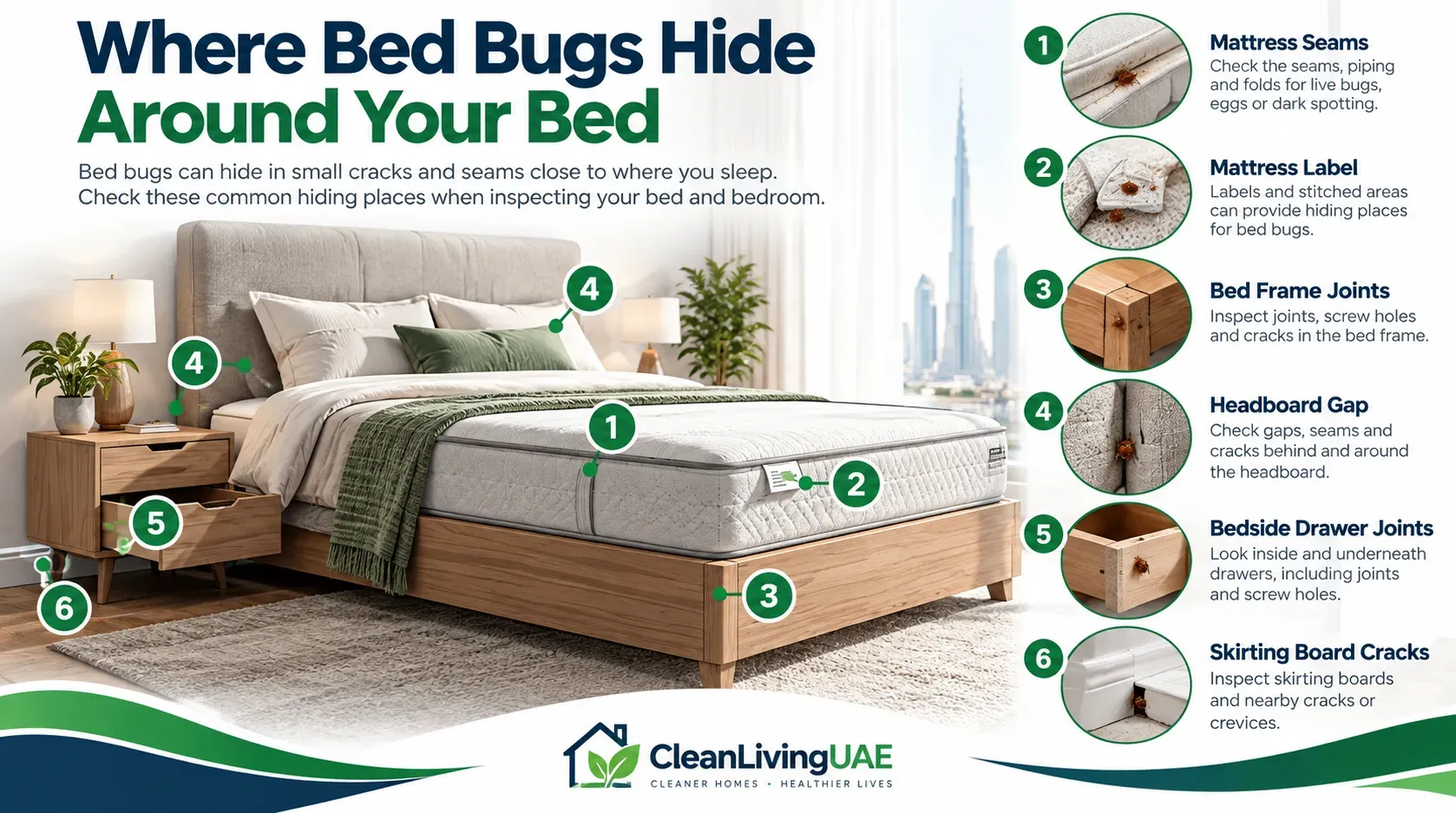
Bed bugs prefer narrow, dark and undisturbed spaces close to where people rest. The CDC notes that they commonly hide within about 8 feet (roughly 2.4 metres) of sleeping areas, although they can spread further as populations grow. Bed bugs on mattress seams are often the first to be noticed, but they also hide in many other places.
Around the Bed
- Mattress seams, piping, tufts and labels
- Box springs and bed bases
- Bed frame joints, screw holes and slats
- Headboards, especially where they meet the wall
Around the Bedroom
- Cracks and crevices in skirting boards and floor edges
- Bedside tables, drawers and their joints
- Behind loose wallpaper, picture frames and wall-mounted items
- Curtain folds close to the bed
Beyond the Bedroom
- Sofas, recliners and upholstered chairs, especially where someone naps or sleeps
- Luggage, backpacks and bags stored near beds
- Floor mattresses and cushions in guest rooms or shared accommodation
Inspection should stay safe and non-invasive. There is no need to open electrical sockets, dismantle appliances or remove fixed fittings. Where hidden areas need checking, a professional pest management provider is better placed to do so safely.
Bed Bug Eggs and Life Cycle
Understanding the bed bug life cycle helps explain why a single treatment rarely solves the problem. Bed bugs develop through three main stages: egg, nymph and adult.
How the Life Cycle Works
- Egg: laid in protected crevices; the EPA notes that an eye spot becomes visible after about five days
- Nymph: university extension sources describe five nymph stages, each requiring a blood meal before the bug can moult to the next stage
- Adult: fully grown bed bugs can continue feeding and reproducing
Development is generally faster at warm room temperatures and slower in cooler conditions. Extension sources also report that bed bugs can survive for months without feeding, which is why an apparently quiet period does not always mean an infestation has ended.
Bed Bug Life Cycle Table
Scroll sideways to see the full table.
| Stage | What It Looks Like | Why It Matters |
|---|---|---|
| Egg | Pinhead-sized, pearl-white, often in crevices | Eggs can survive some treatments and hatch later |
| Nymph | Small, translucent to whitish-yellow; reddish after feeding | Shed skins and nymphs show breeding is taking place |
| Adult | Apple-seed-sized, brown to reddish-brown, flat and oval | Adults are easiest to see and continue the cycle |

Because bed bug eggs can hatch after a surface treatment has been applied, follow-up inspections over several weeks are an important part of any control plan.
How to Check a Bed and Mattress for Bed Bugs
Knowing how to check for bed bugs helps separate real activity from other causes of bites or marks. A careful inspection needs only a bright torch, a card or flat plastic scraper, clear tape or a sealed bag, and a phone camera.
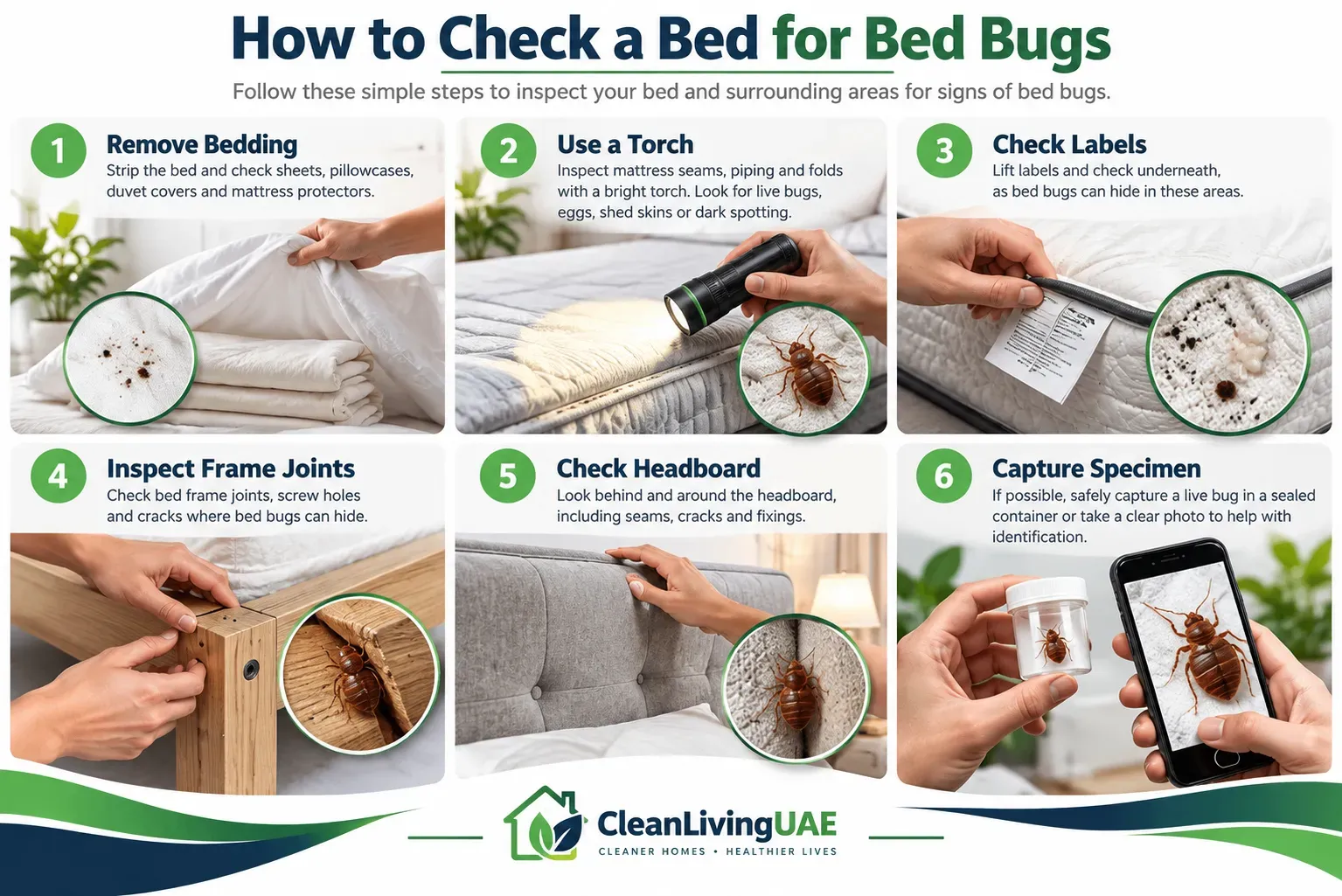
- Strip the bedding carefully. Evidence of bed bugs in bed linen often shows as spotting, skins or live bugs, so remove sheets and pillowcases slowly and check them first. Place them directly into a bag rather than carrying them loose through the home.
- Check the mattress seams and piping. Shine a torch along every seam, fold and tuft, on all sides of the mattress.
- Look at labels and edges. Tags, corners and handles provide protected spaces where bed bugs often gather.
- Inspect the bed frame and base. Check joints, slats, screw holes and the underside of the base where accessible.
- Check the headboard. Look along edges and, where it can be safely moved, the back of the headboard and the wall behind it.
- Inspect nearby furniture. Check bedside tables, drawers and the edges of skirting boards close to the bed.
- Check luggage after travel. Inspect seams, pockets, zips and wheel housings, ideally before bringing bags into the bedroom.
- Document what you find. Take clear photos and, if possible, collect a specimen with clear tape or in a sealed bag for identification.
What Evidence Is Most Useful?
Live bugs, shed skins and eggs are the strongest evidence. Dark spotting that smears when dampened is also useful. Bites without any physical evidence are the least reliable indicator. Placing interceptor traps under bed legs can help with ongoing monitoring, as they catch bed bugs climbing up to or down from the bed.
What to Do If You Find Bed Bugs
Finding bed bugs can be stressful, but calm, methodical steps are more effective than rushed ones. The goal at this stage is to confirm the problem and avoid spreading it.
- Confirm the pest. Compare photos or a collected specimen with reliable identification guides, or ask a pest management professional to confirm.
- Avoid moving belongings between rooms. Moving to another bedroom or carrying items around the home can spread bed bugs to new areas.
- Bag washable items. Place bedding, clothing and fabrics in sealed plastic bags in the room where they were found before taking them to the washing machine.
- Dry on high heat. For suitable fabrics, use a clothes dryer on high heat for at least 30 minutes, following the item’s care instructions. Washing alone may not reliably eliminate all bed bugs. Keep treated items in fresh sealed bags until the problem is resolved.
- Vacuum carefully. Vacuum mattress seams, bed frames, skirting boards and nearby furniture. Seal the vacuum bag or contents in a plastic bag immediately and dispose of it outside the home, such as in the building rubbish room.
- Reduce clutter without spreading items. Clutter creates hiding places, but items should be bagged and checked in place rather than moved to other rooms.
- Consider bed bug encasements. Zippered mattress and box-spring encasements designed for bed bugs can trap bugs inside and remove seams as hiding places.
- Monitor for continued activity. The EPA recommends continuing inspections at least every 7 days after treatment to catch survivors or newly hatched nymphs.
- Consider professional pest management. This is especially relevant for established, widespread or recurring infestations.
Unsafe Methods to Avoid
Some methods shared online are ineffective or dangerous. The EPA specifically warns against several of them.
- Flammable liquids: petrol, kerosene and rubbing alcohol can ignite and should never be used as bed bug treatments
- Home heating: raising the room temperature with space heaters, appliances or the thermostat does not work and creates fire risk
- Foggers and bug bombs: the spray does not reach the cracks where bed bugs hide and should not be relied on as a control method
- Indiscriminate pesticide use: using products not labelled for bed bugs or for indoor use, overapplying, or mixing products can harm people and pets
- Treating mattresses or bedding with unlabelled products: only products whose labels specifically permit this use should be considered
Can You Get Rid of Bed Bugs Yourself?
The honest answer depends on the size of the problem. DIY measures can support control, but they are not a guaranteed solution.
Early or Suspected Activity
When only a few bugs or limited evidence are found in one area, careful laundering, vacuuming, encasements and close monitoring may help contain the problem. Confirmation and follow-up are still essential.
Reducing or Containing an Infestation
Where activity is confirmed but limited, home measures can reduce numbers and limit spread while a longer-term plan is put in place. Many users report that combining several methods produces better results than relying on any single one.
Established Infestations
Where bed bugs are found in several rooms, in furniture beyond the bed, or keep returning after treatment, DIY methods alone are unlikely to be sufficient. Professional pest management is usually the more realistic option.
What Integrated Pest Management Means
Integrated Pest Management (IPM) is the approach recommended by the EPA. In simple terms, it means using several methods together rather than relying on one product. For bed bugs, this commonly combines:
- Inspection and confirmation
- Laundering and high-heat drying of fabrics
- Vacuuming and removing clutter
- Encasements for mattresses and box springs
- Monitoring with interceptor traps
- Targeted use of products labelled for bed bugs, where appropriate
- Professional treatment, including heat treatment carried out by trained providers, when needed
Steam can kill bed bugs on contact in seams and surfaces when applied correctly, but it does not penetrate deeply and is best viewed as one part of a wider plan. Details on appliance types are covered in the steam cleaner guide for UAE homes.
For readers comparing products that may form part of a bed bug treatment UAE plan, including sprays, powders and other options, a separate guide to the best bed bug sprays and killers in the UAE is planned. No spray, powder or single product should be expected to eliminate an established infestation on its own.
Practical Tools for Inspection and Prevention
Some product mentions may include affiliate links.
The following tool categories support inspection, containment and monitoring. They are not a substitute for confirmation or professional help where needed, and listings on Amazon.ae change frequently, so product details should be checked at the time of purchase.
- Bright LED torch: makes seams, joints and crevices easier to inspect
- Magnifying glass: helps identify nymphs, eggs and shed skins
- Interceptor traps: placed under bed legs to monitor for bed bugs climbing onto or off the bed
- Zippered bed bug encasements: fully enclose mattresses and box springs
- Sealable plastic bags: keep infested or cleaned items separate
- Vacuum with a sealable bag or bin: allows collected material to be contained and removed; see the HEPA vacuum guide for UAE homes
- Luggage racks or hard surfaces: keep suitcases off beds and carpets during travel and after return
A Note on Mattress Encasements
Fully enclosing encasements designed for bed bugs can form part of a broader management strategy. They trap any bugs already inside the mattress, prevent new bugs from reaching the internal seams, and make the surface easier to inspect. An ordinary fitted mattress protector does not do the same job, and no encasement eliminates bed bugs living in the bed frame, headboard or surrounding furniture. A comparison of suitable mattress protectors and encasements for UAE homes is planned.
When Should You Call Professional Pest Control?
Professional pest management is usually appropriate in the following situations:
- Multiple live bed bugs are found, rather than a single insect
- Evidence appears in several locations, such as more than one bed, a sofa or different rooms
- Activity recurs after laundering, vacuuming and other home measures
- Apartment or shared-building concerns suggest bed bugs may be moving between units
- DIY control has not worked after several weeks of consistent effort
- The extent of the problem is unclear, particularly in large villas or shared accommodation
Professional bed bug management may involve inspection, targeted treatment and follow-up monitoring or visits, depending on the extent of the infestation and treatment method. When choosing a provider, residents may wish to confirm that the company holds a valid trade licence and any approval required by the relevant municipality, and ask what methods will be used, what preparation is needed and whether follow-up visits are included.
Tenants and Building Management
In apartments, informing the landlord, property manager or building management early can help, particularly where neighbouring units may be involved. Responsibilities for pest control can vary by tenancy contract, building and emirate, so the terms of the tenancy agreement and local guidance should be checked.
How to Prevent Bed Bugs in UAE Homes
Knowing how to prevent bed bugs is mostly about reducing the chances of bringing them home and catching any introduction early. Regular cleaning helps with early detection, but it cannot prevent every infestation on its own.
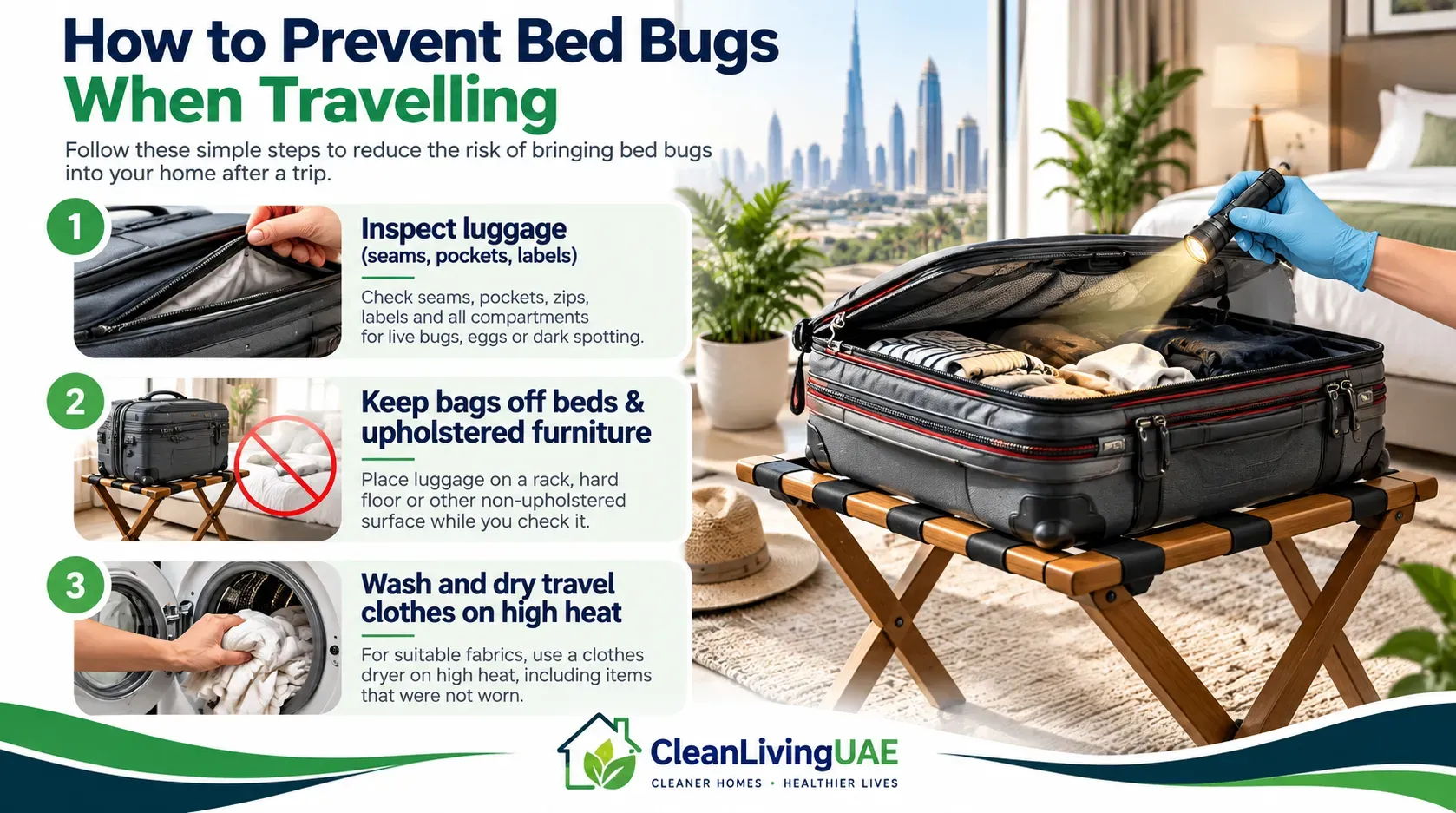
- Inspect luggage after travel. Inspect luggage away from sleeping areas before bringing it into the bedroom.
- Keep luggage off beds. In hotels and at home, use luggage racks or hard floors rather than placing bags on beds or upholstered furniture.
- Dry travel clothing on high heat. For suitable fabrics, use a clothes dryer on high heat after a trip, including items that were not worn.
- Inspect second-hand furniture carefully. Check seams, joints and undersides before bringing used beds, sofas or headboards indoors. Avoid picking up mattresses or upholstered items left in corridors or bin areas.
- Check furnished rentals on arrival. Inspect beds and sofas before unpacking in a new apartment, holiday home or shared room.
- Monitor sleeping areas. A quick monthly check of mattress seams and headboards, or interceptor traps under bed legs, helps detect activity early.
- Reduce unnecessary clutter. Fewer items around the bed means fewer hiding places and easier inspection.
- Consider encasements. Bed bug encasements make inspection easier and remove seams as hiding places.
- Respond early to physical evidence. A small, early problem is far easier to manage than an established one.
A regular deep cleaning routine for UAE homes reaches areas around and behind beds that daily cleaning often misses, which makes early signs easier to spot.
Bed Bugs in Dubai vs Abu Dhabi – Is There a Difference?
There is no reliable public evidence that bed bugs are more or less common in either emirate. A bed bug in Dubai looks, behaves and spreads in the same way as one in Abu Dhabi, Sharjah or any other emirate, so identification, inspection and prevention principles are the same everywhere in the country.
What may differ between emirates is the practical side of getting help:
- Local authorities: pest control providers are regulated at emirate level, so the relevant municipality and its requirements depend on location
- Service availability: the range of providers, treatment methods and pricing can vary between cities
- Building management: processes for reporting pest activity differ between individual buildings and communities
Whether the concern involves Dubai bed bugs in a high-rise apartment or bed bugs in Abu Dhabi in a family villa, the same first steps apply: confirm the pest, avoid spreading belongings, contain affected items and seek professional help if activity is established or recurring. Residents in Sharjah, Ajman, Ras Al Khaimah, Fujairah and Umm Al Quwain can follow the same approach.
Bed Bugs vs Other Common UAE Household Pests
Several common household pests can be confused with bed bugs, particularly when the only clue is a bite or a small insect in the home.
Scroll sideways to see the full table.
| Pest | Typical Clue | Where Commonly Found | Flies/Jumps? |
|---|---|---|---|
| Bed bugs | Dark spotting, shed skins, pale eggs, live bugs in seams | Mattresses, bed frames, headboards, sofas | Neither; crawls only |
| Fleas | Bites often on lower legs; small dark insects on pets | Pet bedding, carpets, rugs, pet resting areas | Jumps; does not fly |
| Cockroaches | Pepper-like droppings, egg cases, musty smell | Kitchens, bathrooms, under sinks, near drains | Some species can fly short distances; German cockroaches rarely fly |
| Mosquitoes | Bites on exposed skin, buzzing at night | Near standing water, balconies, plant saucers | Flies |
Cockroaches are generally a food-contamination and allergy concern rather than a biting pest. The cockroach killer comparison for UAE homes covers gels, baits and traps, and a separate guide covers preventing cockroaches in UAE apartments. Mosquito bites and standing water around balconies are covered in the guides on how to get rid of mosquitoes in UAE homes and the best mosquito killers in the UAE.
Because bed bugs frequently hide in upholstered furniture, regular sofa care supports early detection. Related guidance is available in the upholstery cleaning tools guide for UAE homes and in the guide to sofa cleaning in Dubai.
Key Takeaways
Dealing with bed bugs in the UAE starts with confirming physical evidence rather than relying on bites alone. Once bed bugs are confirmed, the priority is containment: avoid moving belongings between rooms, bag and launder fabrics, vacuum carefully and monitor over several weeks. Evidence-based control combines several methods, and professional pest management is the realistic option when an infestation is established or keeps returning. For readers comparing treatment products as part of a wider plan, a guide to bed bug sprays and killers in the UAE is planned.
Frequently Asked Questions
Are bed bugs common in the UAE?
Bed bugs in the UAE occur as they do worldwide, but reliable public data on how many homes are affected is limited. Frequent travel, hotel stays, furnished rentals and second-hand furniture all create opportunities for bed bugs to be introduced.
Where do bed bugs come from?
Bed bugs are carried into homes in luggage, clothing, bedding and used furniture, or can move between nearby living spaces. They are not caused by dirt, dust or poor hygiene.
Can bed bugs fly?
No. Bed bugs have no functional wings and cannot fly. They move by crawling and spread mainly by being carried in belongings.
Can bed bugs jump?
No. Bed bugs cannot jump. Insects that jump onto people or pets, particularly around the lower legs, are more likely to be fleas.
What do bed bug eggs look like?
Bed bug eggs are about the size of a pinhead and pearl-white. They are usually laid in protected seams, cracks and crevices, and an eye spot may become visible after about five days.
Where do bed bugs hide during the day?
They hide in narrow, dark spaces close to where people rest, including mattress seams, box springs, bed frame joints, headboards, bedside furniture, skirting board cracks and upholstered furniture.
Are bed bug bites dangerous?
According to the CDC, bed bugs are not known to spread disease. Bites can cause itching, discomfort and disturbed sleep. Anyone with significant swelling, signs of infection, breathing difficulty or other concerning symptoms should seek medical care.
Can cleaning get rid of bed bugs?
Cleaning helps, but it does not eliminate an established infestation on its own. Laundering, high-heat drying and vacuuming reduce numbers, while encasements, monitoring and professional treatment are often also needed.
Can bed bugs live inside a mattress?
Bed bugs usually live on the surface of mattresses, in seams, piping, tufts and labels, rather than deep inside the filling. Damaged mattresses with torn covers can offer more hiding places, and zippered encasements can trap bugs already present.
When should professional pest control be considered?
Professional help is appropriate when multiple live bugs are found, evidence appears in several locations, activity returns after home efforts, the problem may involve neighbouring units, or the extent of the infestation is unclear.
Sources
Information in this article draws on the CDC overview of bed bugs, the US Environmental Protection Agency guide to bed bug appearance and life cycle, the EPA do-it-yourself bed bug control guidance, the EPA guidance on protecting your home from bed bugs, the University of Kentucky Entomology bed bug fact sheet, and the University of California Statewide IPM Program Pest Notes on bed bugs.