Why AC Filter Cleaning Matters More in the UAE
In most countries, AC filter cleaning is a seasonal task. In the UAE, it is an ongoing maintenance requirement driven by conditions that have no close parallel in temperate climates.
Constant AC Operation
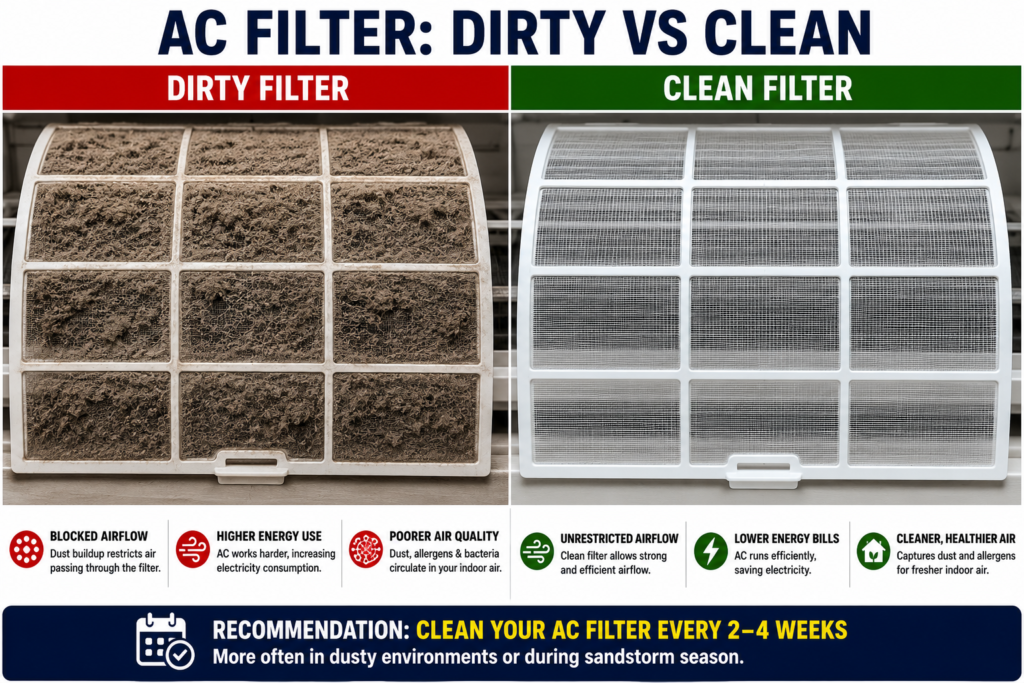
UAE residents commonly run air conditioning for ten to twenty-four hours per day, particularly between May and October. This continuous operation means filters are actively collecting airborne particles without pause. The longer a filter runs without cleaning, the more restricted its airflow becomes, reducing cooling efficiency and increasing energy consumption.
Dust and Sand Infiltration
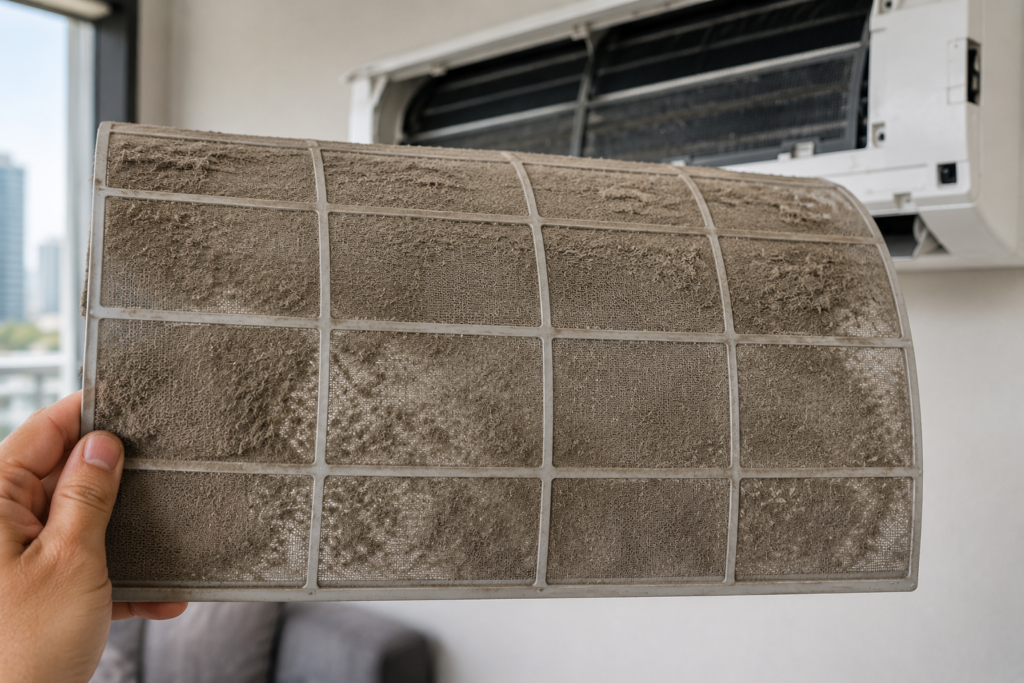
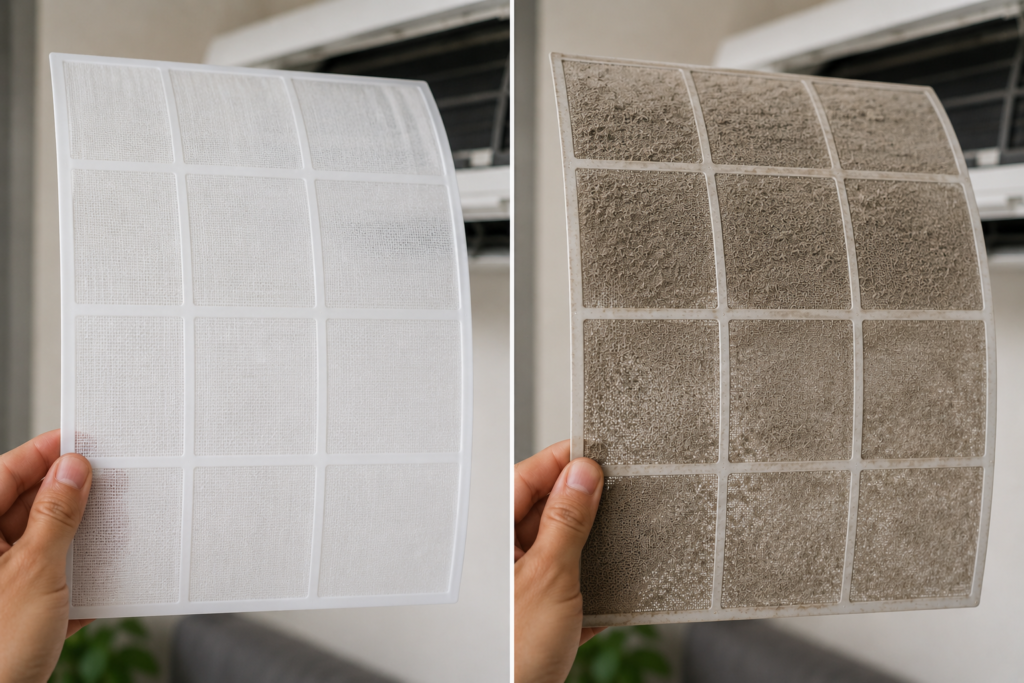
UAE homes are exposed to fine desert particulate matter on a near-constant basis. Even with windows and doors closed, fine dust enters through door gaps, ventilation points, and building structure. Split AC systems draw air from inside the room, which already contains suspended dust particles. Over time, layers of fine sand and dust accumulate on mesh filters, forming a compacted barrier that reduces air passage.
High PM2.5 Exposure
Particulate matter smaller than 2.5 microns, commonly referred to as PM2.5, is present at elevated levels in UAE outdoor air, particularly during sandstorm events and periods of high construction activity. While AC systems do not directly filter outdoor air in standard split configurations, the indoor circulation of these particles – tracked in on clothing, entering through ventilation gaps, and resuspended from surfaces – contributes to filter loading over time.
Indoor Air Recirculation
Split AC systems in UAE apartments typically recirculate existing indoor air rather than drawing fresh air from outside. This means any dust, pet dander, cooking residue, or biological matter already present in the home continuously passes through the filter. Without regular cleaning, the filter becomes a concentrated reservoir of accumulated particles that can reduce air quality rather than protect it.
Humidity and Mould Risk
In coastal areas including Dubai Marina, JBR, Jumeirah, and Abu Dhabi waterfront districts, indoor humidity levels can create conditions suitable for mould and mildew growth on AC filter surfaces. A damp, dust-loaded filter provides a substrate where organic material can accumulate. This does not automatically result in mould, but the combination of moisture and organic dust particles increases risk when filters are left uncleaned for extended periods.
For a broader look at managing moisture-related issues in UAE homes, see the guide on Humidity and Mould Prevention in UAE Homes.
Apartment vs Villa Exposure Differences
Apartments in high-rise towers typically have fewer external surfaces exposed to direct outdoor dust, but balconies and ventilation gaps remain common entry points. Villas have larger external perimeters, often more windows, garden areas, and multiple AC units across more rooms, which creates a different maintenance workload. Villa residents commonly manage four to ten indoor AC units compared to one to three in a standard apartment.
How Often to Clean AC Filters UAE
The right cleaning frequency depends on several household-specific factors. The table below provides a practical reference for common UAE household types.
| Household Type | Recommended Cleaning Frequency | Notes |
|---|---|---|
| Standard apartment, no pets | Every 3-4 weeks in summer; every 5-6 weeks in winter | Baseline schedule for typical UAE conditions |
| Villa with multiple AC units | Every 3-4 weeks across all units | Higher external dust exposure from multiple entry points |
| Home with pets | Every 1-2 weeks | Pet hair and dander can accelerate filter loading |
| Near active construction site | Every 1-2 weeks | Construction particulate often enters through gaps and openings |
| Coastal high-humidity area | Every 2-3 weeks | Moisture can increase filter contamination risk |
| Household with allergies or asthma | Every 1-2 weeks | Lower filter load supports better indoor air quality |
| After a sandstorm event | Within 24-48 hours | Clean promptly regardless of the last service date |
| Seldom-used guest room | Check every 6-8 weeks; clean if dust is visible | Low use does not eliminate dust accumulation |
These frequencies are based on commonly observed UAE household conditions and AC maintenance guidance adapted for the regional climate. Individual results will vary depending on building quality, sealing standards, and local environmental conditions.
UAE AC Filter Cleaning Frequency by Lifestyle
| Lifestyle | Suggested Cleaning Frequency |
|---|---|
| Single occupant apartment | Every 4 weeks |
| Family with children | Every 2-3 weeks |
| Pets indoors | Weekly to fortnightly |
| Near active construction site | Weekly |
| Coastal humidity zone | Every 2-3 weeks |
| Allergy or asthma household | Weekly to fortnightly |
Recommended UAE AC Filter Cleaning Schedule by Season
Summer – May to September
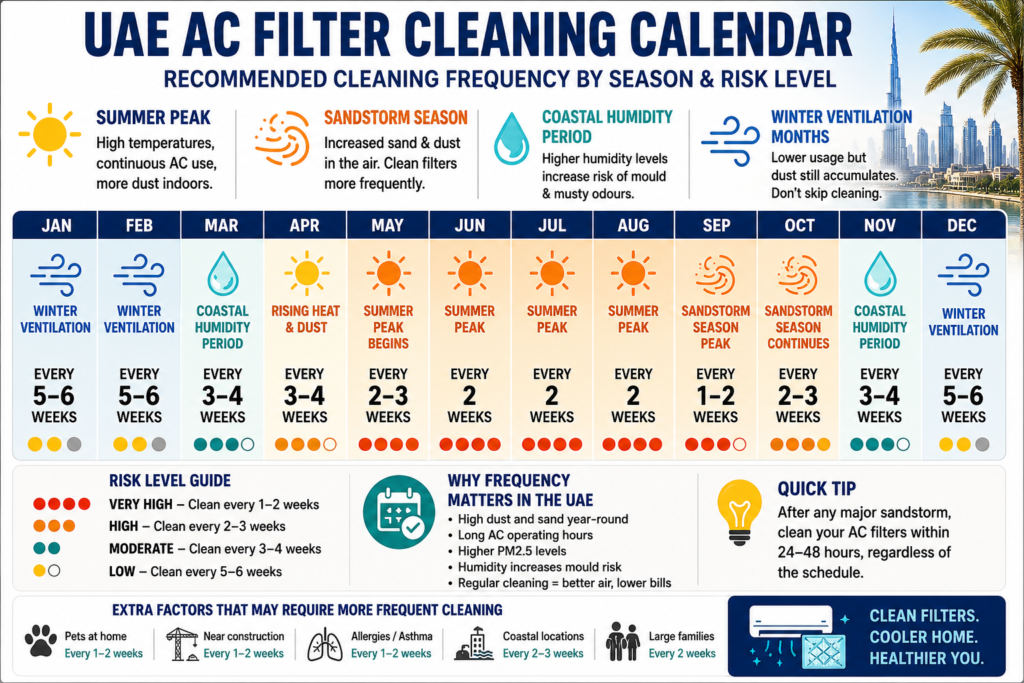
Summer represents the highest demand period for AC systems in the UAE. Units commonly run continuously for extended hours, sometimes without interruption. Filter loading accelerates significantly during this period. Cleaning every two to three weeks is commonly recommended for most households. For pet owners or homes with allergy sufferers, weekly checks allow for early intervention before airflow is visibly reduced.
Sandstorm Season – March to June
Sandstorms in the UAE occur most frequently between March and June, with some events extending into July. A single moderate sandstorm can deposit a visible layer of fine sand on indoor surfaces within hours. AC filters in active units during a sandstorm event commonly require cleaning within one to two days of the storm clearing. This cleaning should be treated as an event-driven maintenance task rather than waiting for a scheduled interval.
For guidance on managing sand entry into UAE homes more broadly, see the complete guide on Dust and Sand Cleaning in UAE Homes.
Winter Ventilation Season – November to February
Winter months in the UAE allow for some reduction in AC usage, though many residents continue running systems for temperature and humidity control. The reduced operational hours lower the rate of filter loading, and a four to six week interval is commonly workable for most households during this period. Windows are more likely to be opened during winter, which can introduce additional dust from outside, so filter checks remain important even with reduced AC usage.
Humid Coastal Periods – June to September
For residents in coastal areas such as Dubai Marina, JBR, Palm Jumeirah, Abu Dhabi Corniche, and Sharjah waterfront districts, the summer months combine high AC usage with elevated outdoor humidity. When humid air enters through gaps and circulates through the AC system, moisture can interact with accumulated dust on filters. Cleaning every two to three weeks is particularly important in these locations to reduce the risk of moisture-related contamination.
Types of AC Filters Common in UAE Homes
Not all residential AC units in the UAE use the same filter type. Understanding which type is installed in a given unit helps determine the correct cleaning or replacement approach.
Standard Washable Mesh Filters
The most common type found in residential split AC units across UAE apartments and villas. These are reusable plastic-framed mesh panels designed to be removed, rinsed, dried, and reinstalled. They capture larger dust particles and pet hair effectively but are not designed to filter fine particulate at the PM2.5 level. Regular washing extends their functional life significantly.
Carbon or Deodorising Filters
Some split AC models include a secondary thin carbon layer behind the main mesh filter. These are designed to reduce odours rather than capture dust. Carbon filters are typically not washable and require periodic replacement according to the manufacturer’s schedule, commonly every three to six months depending on usage.
Anti-bacterial and Enzyme-coated Filters
Certain mid-range and higher-specification residential units include filters with anti-bacterial coatings designed to inhibit biological growth on the filter surface. These can still be washed, but harsh chemical cleaning agents should be avoided as they can degrade the coating. Manufacturer guidance on cleaning frequency and method should be followed for these types.
HEPA Add-on Filters
Some residential AC models offer optional or built-in HEPA-grade secondary filters that capture finer particles than standard mesh. These are not washable in most cases and require replacement rather than cleaning. If a unit includes a HEPA-grade element, the manufacturer’s documentation should be checked for the correct maintenance interval, as washing a non-washable HEPA filter damages its filtration structure.
Filter Type Comparison
| Filter Type | Washable | Replacement Needed | Common in UAE Homes |
|---|---|---|---|
| Standard washable mesh | Yes | No | Very common – most split AC units |
| Carbon / deodorising | No | Yes, every 3-6 months | Moderate – mid-range units |
| Anti-bacterial coated | Yes, carefully | No, unless degraded | Less common – higher-spec units |
| HEPA add-on | No | Yes, per manufacturer guidance | Less common – select models |
Split AC vs Ducted AC Filter Maintenance
UAE apartments almost universally use wall-mounted split AC systems, where each indoor unit has its own accessible mesh filter at the front. Villas, larger apartments, and commercial spaces more commonly use ducted systems, where conditioned air is distributed through ceiling or wall ducts from a central air handling unit.
In ducted systems, the primary filter is typically located at the air handling unit or at return air grilles in the ceiling. These filters are often thicker panel-type or pleated filters rather than thin mesh. They require less frequent removal but are harder to access and may require a stepladder or technician access in some villa configurations. The cleaning or replacement interval for ducted system filters varies by filter thickness and type, and manufacturer guidance should be consulted. In high-dust UAE conditions, quarterly inspection is a reasonable starting point for ducted systems.
Signs Your AC Filter Needs Cleaning Earlier
Regardless of schedule, several observable signs indicate that a filter requires immediate attention. Recognising these early prevents a minor maintenance task from becoming a larger efficiency or air quality problem.
A dirty or damp filter may also contribute to stale odours when the system starts. If the issue involves smell rather than visible filter dust alone, see the guide to musty smells from AC in UAE homes.
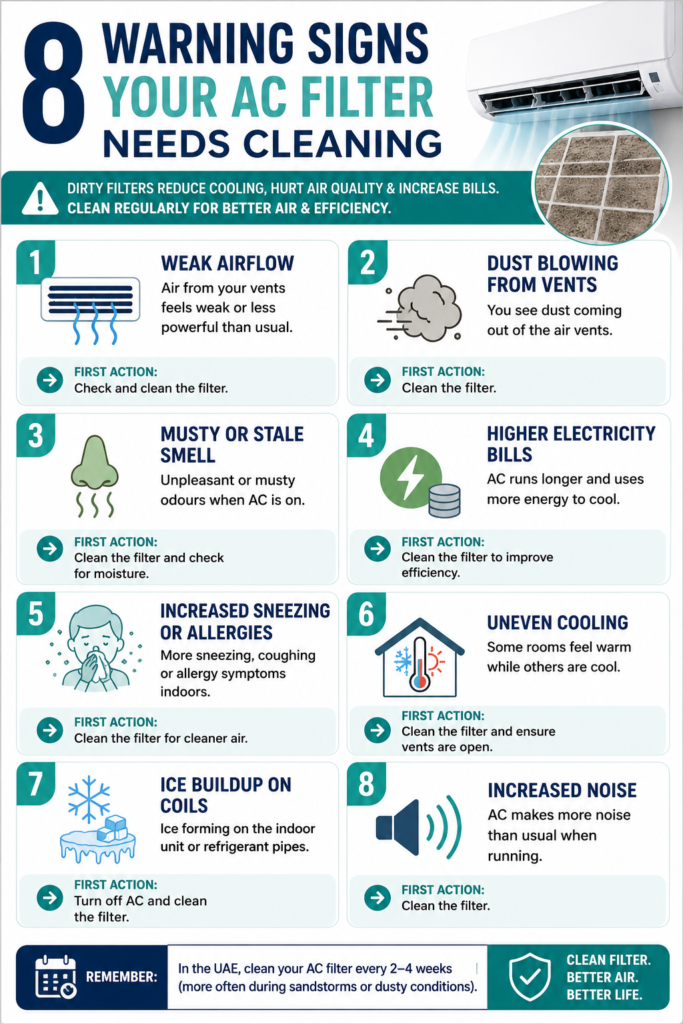
Quick Check – Your AC Filter Probably Needs Cleaning If
- Airflow from vents feels noticeably weaker than usual
- Dust is visible around vent edges during operation
- The room takes longer than normal to cool down
- Electricity bills have increased without a change in usage
- A musty or stale smell appears when the AC starts
- Sneezing, congestion, or eye irritation has increased
- The indoor unit is producing more noise than usual
- Ice is visible on the indoor unit casing
Weak Airflow
If the volume of air coming from AC vents has noticeably decreased, a clogged filter is one of the first causes to check. A heavily loaded filter physically restricts air passage, reducing the volume of cooled air entering the room. Many users report that the room feels warmer than usual despite the AC running at normal settings.
Dust Blowing from Vents
When a filter becomes so saturated that air is forced around rather than through it, dust particles can be pushed out through supply vents. Visible dust movement near vents during AC operation is a clear signal that the filter requires immediate cleaning.
Musty or Stale Smell
An unusual odour when the AC first starts, or a persistent musty smell during operation, can indicate biological accumulation on the filter surface. While this does not confirm mould growth, it warrants filter inspection and cleaning. If the smell persists after cleaning, professional inspection of the coil and drain pan is advisable.
Higher Electricity Bills
A clogged filter forces the AC compressor and fan motor to work harder to maintain airflow and temperature. This increased load translates directly into higher electricity consumption. While other factors also influence electricity bills, unexplained increases during consistent usage periods are commonly associated with restricted airflow.
Increased Sneezing, Congestion, or Eye Irritation
In households where residents notice worsening allergic symptoms, increased sneezing, eye irritation, or morning congestion, a heavily loaded AC filter may be redistributing trapped particles. This is particularly relevant in homes with allergy or asthma sufferers.
For related guidance on managing fine particulate matter inside UAE apartments, see the article on Fine Dust in UAE Apartments.
Uneven Cooling Across Rooms
If some rooms cool efficiently while others remain warm, and all units are set to the same temperature, comparing filter condition across units is a practical first step. In villas with multiple units, individual filters accumulate dust at different rates depending on room usage and proximity to dust entry points.
Ice Buildup on the Indoor Unit
In more advanced cases of filter restriction, reduced airflow can cause the evaporator coil to freeze. Ice formation on the indoor unit is an indicator that airflow is critically restricted. The AC should be turned off immediately and the filter removed and cleaned before restarting.
Noise Increase
An AC unit working harder due to filter restriction may produce increased operational noise. A unit that has become noticeably louder than its normal operating level warrants inspection, starting with the filter.
What Happens if AC Filters Are Not Cleaned Regularly
Neglecting filter maintenance creates a compounding set of problems that extend beyond air quality into equipment performance and household expenses.
Reduced Cooling Efficiency
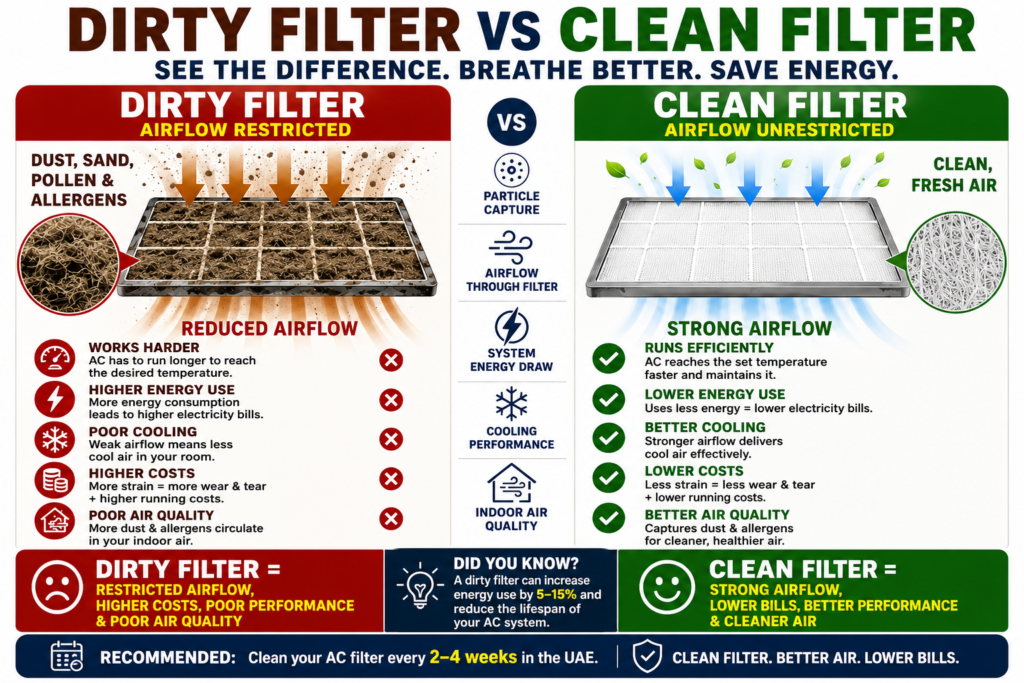
As filter resistance increases, the volume of air circulated through the cooling coil decreases. The room takes longer to reach the set temperature, and the AC runs for extended periods to compensate. Over time this reduces the effective cooling capacity of the unit.
Higher Energy Consumption
The energy cost of running an AC unit with a heavily clogged filter is measurably higher than a well-maintained unit. In UAE homes where AC runs for many hours daily, the cumulative cost increase over a summer season can be significant. While exact figures vary by unit type, usage pattern, and tariff rate, the operational principle is consistent: restricted airflow requires greater energy input to achieve the same cooling output.
Indoor Dust Circulation
When a filter is saturated, its ability to trap additional particles decreases. Particles that would ordinarily be captured may pass through partially or accumulate on the filter surface and dislodge during operation, re-entering the airstream. This effectively reverses the protective function the filter is designed to serve.
Coil Contamination
Dust that bypasses or penetrates a saturated filter deposits on the evaporator coil behind it. Coil contamination is not a homeowner-serviceable task in most split AC configurations and requires professional cleaning. Preventing coil contamination by maintaining clean filters reduces the need for more extensive and costly professional interventions.
Potential Mould Growth
In humid conditions, a combination of moisture from normal AC operation and organic matter accumulated on a filter can create conditions where biological growth is possible. This is more relevant in coastal zones and in units where the drain pan does not fully evacuate condensate. Regular filter cleaning removes the accumulation that contributes to this risk.
Poor Indoor Air Quality
The cumulative effect of a neglected filter is a steady reduction in indoor air quality. Fine particles, allergens, and biological matter that a clean filter would capture circulate freely through the living space. This is particularly relevant for households with children, elderly residents, or individuals with respiratory conditions.
Increased Strain on Mechanical Components
Sustained operation under restricted airflow conditions places elevated mechanical demand on the fan motor and compressor. Over time this contributes to accelerated component wear and may shorten the operational lifespan of the unit. Preventive filter maintenance is widely regarded as one of the most cost-effective ways to extend AC equipment life.
How to Clean Split AC Filters Properly
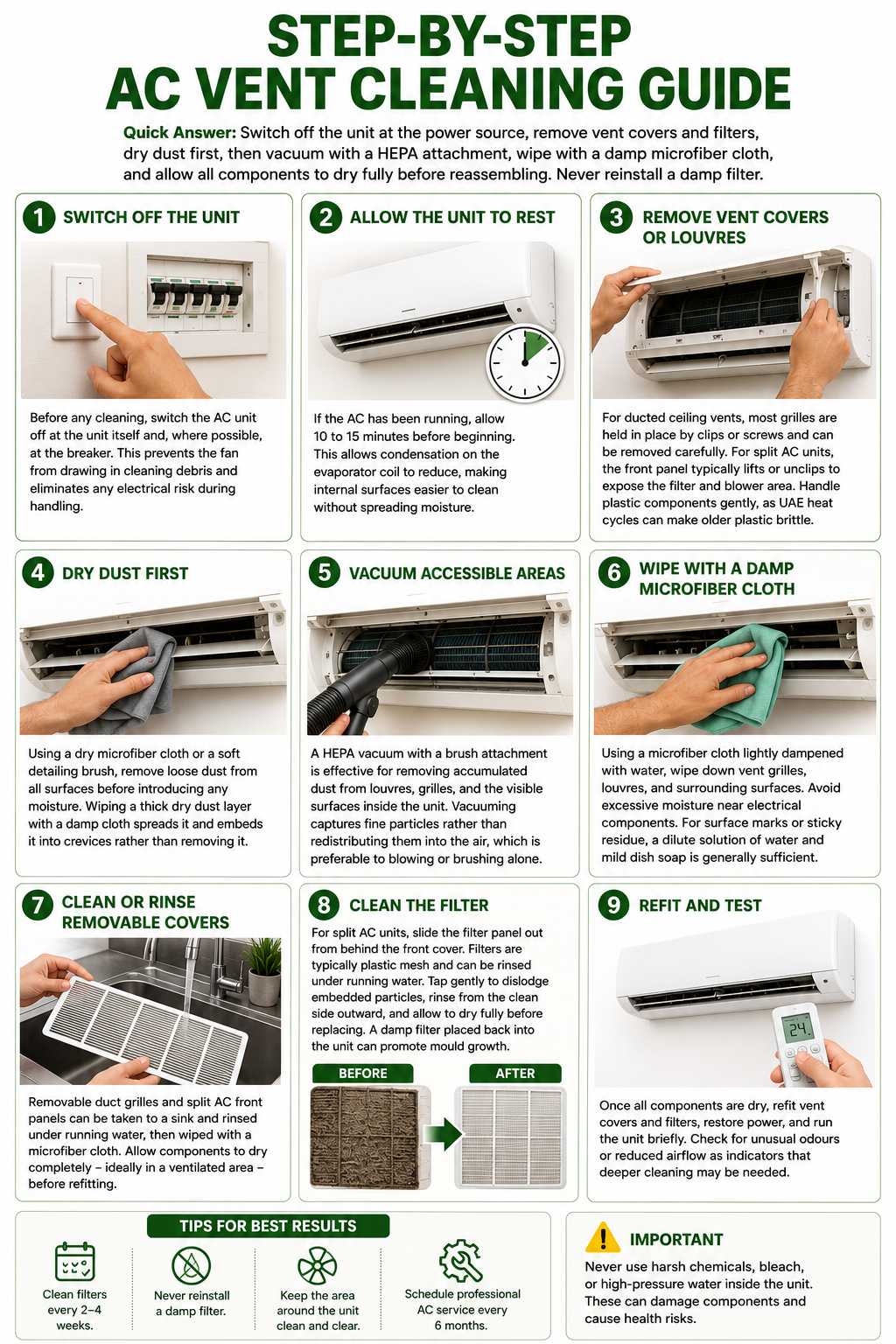
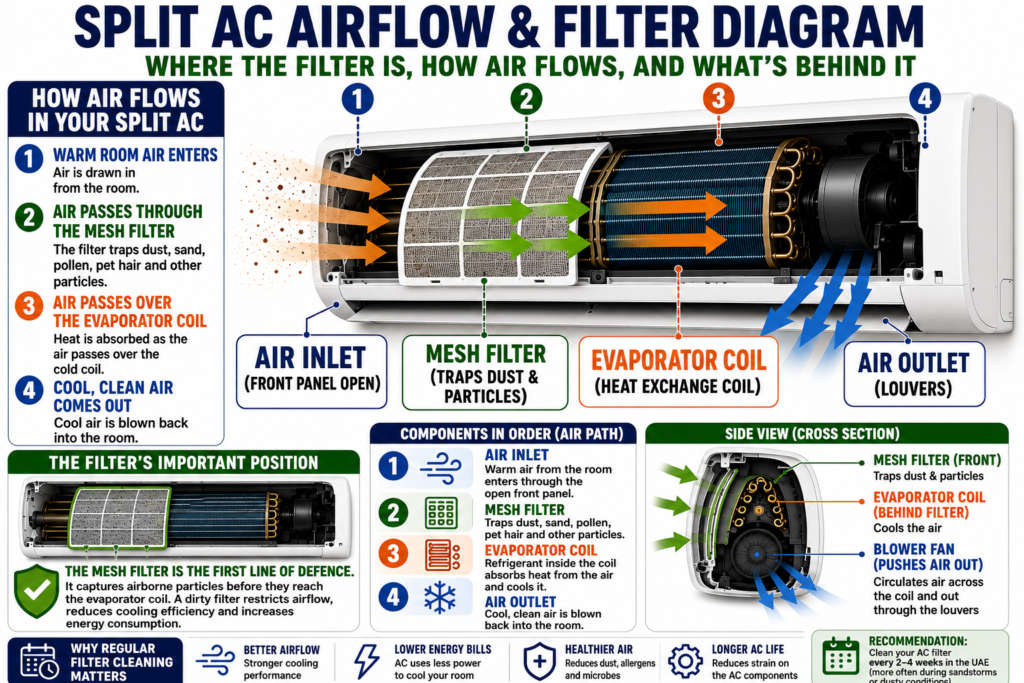
The mesh filters in residential split AC units are designed for homeowner cleaning. The process requires no specialist tools and takes approximately ten to fifteen minutes per unit when done routinely.
Step 1 – Turn Off Power
Switch off the AC unit using the remote control and then turn off power at the wall switch or isolator if one is accessible. This prevents the unit from starting during the cleaning process.
Step 2 – Open the Front Panel
The front panel of a split AC indoor unit typically lifts or swings upward from the lower edge. Most panels have two or more plastic clips or hinges. Lift the panel gently and allow it to rest in its open position. Do not force the panel or pull at sharp angles.
Step 3 – Remove the Mesh Filters
The mesh filters are rectangular plastic-framed panels that sit directly beneath the front cover. They slide or lift out in most standard residential models. Handle them carefully to avoid dislodging accumulated dust back into the room.
Step 4 – Vacuum or Rinse
For light dust accumulation, running a brush attachment from a vacuum over the filter surface is effective and avoids introducing moisture into the process. For heavier accumulation, rinsing under lukewarm running water from the clean side of the filter outward removes compacted dust without damaging the mesh. Avoid high-pressure water streams which can deform the mesh. Do not use detergents unless specifically recommended by the unit manufacturer, as residue can affect airflow and potentially cause odours.
Step 5 – Dry Fully Before Reinstalling
This step is critical. A filter reinstalled while still damp creates conditions for mould and bacterial growth on the filter surface and on surrounding components. Filters should be air-dried in a shaded area until completely dry. In UAE summer conditions this typically takes thirty to sixty minutes outdoors. Avoid direct sunlight on plastic-framed filters for extended periods as heat can cause warping.
Step 6 – Reinstall Correctly
Slide the dry filters back into their original position, ensuring they sit flush against the housing with no gaps at the edges. Close the front panel until it clicks into place. Restore power and resume normal operation.
How Long Does AC Filter Cleaning Take?
For a single split AC unit with standard mesh filters, the full process from panel opening to reinstallation takes approximately ten to fifteen minutes, excluding drying time. Drying typically adds thirty to sixty minutes in UAE summer conditions when filters are placed in a shaded outdoor area. For households cleaning multiple units in one session, a practical approach is to remove and rinse all filters first, allow them to dry simultaneously, then reinstall all units at once. A full villa with six units can commonly be serviced in under two hours using this method.
What Homeowners Can Do vs What Requires a Technician
| Task | Homeowner / Tenant | Professional Technician |
|---|---|---|
| Remove and clean mesh filters | Yes | Not required |
| Vacuum filter surface | Yes | Not required |
| Rinse filter under tap water | Yes | Not required |
| Clean evaporator coil | Not recommended | Yes |
| Clean drain pan and drain line | Not recommended | Yes |
| Inspect refrigerant levels | No | Yes |
| Clean outdoor condenser unit | Exterior surface only, with care | Full service recommended |
| Inspect electrical components | No | Yes |
Apartment vs Villa AC Filter Maintenance in the UAE
The maintenance workload for AC filters differs substantially between apartments and villas, both in the volume of units involved and the types of dust exposure each property type faces.
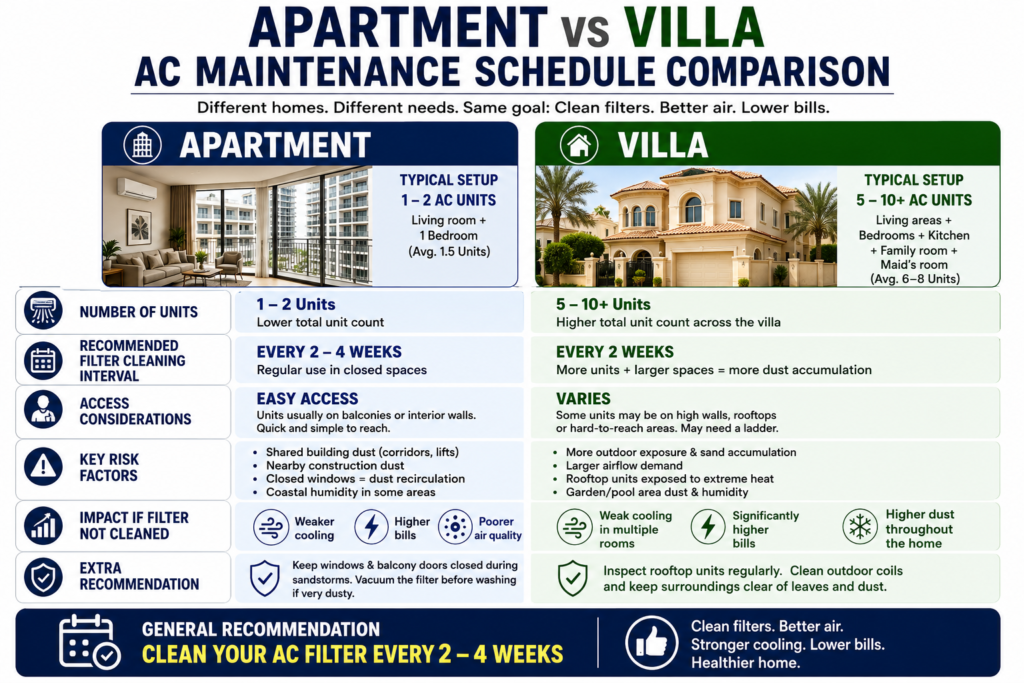
| Factor | Apartment | Villa |
|---|---|---|
| Typical number of AC units | 1-3 | 4-10 or more |
| External dust exposure | Moderate – balcony is usually the main entry point | High – garden areas and multiple entry points increase exposure |
| Cleaning workload per session | Low to moderate | High |
| Access difficulty | Generally straightforward | Variable – some units may require steps or a ladder |
| Risk of filter variability across units | Low | High – usage varies significantly by room |
| Recommended cleaning interval, summer | Every 2-4 weeks | Every 2-3 weeks |
| Recommended cleaning interval, winter | Every 4-6 weeks | Every 3-5 weeks |
One practical approach for villa owners is to rotate through units systematically – cleaning two or three filters each weekend rather than attempting to service all units at once. This distributes the workload while ensuring no unit falls significantly behind schedule.
For apartment residents, the lower unit count makes a fixed monthly cleaning routine straightforward to maintain. Labelling a calendar date once per month as an AC filter check day is a reliable method for staying on schedule.
Should Tenants or Landlords Clean AC Filters in UAE Rentals?
This is a commonly asked question among UAE renters, and the practical answer depends on the type of maintenance involved.
Routine filter cleaning – removing and washing the mesh filters in a split AC unit – is generally considered day-to-day tenant maintenance in most UAE rental arrangements. It requires no tools, causes no damage to the property, and is comparable to keeping the property clean. Most standard UAE tenancy agreements place responsibility for routine maintenance and cleanliness with the tenant.
Professional AC servicing – including coil cleaning, drain line clearing, refrigerant checks, and full unit deep cleaning – is typically the landlord’s or building management’s responsibility, particularly when it involves the structural or mechanical components of the property. In many Dubai residential buildings, annual AC servicing is arranged by the building management company and may be covered under service charges.
Tenants who are uncertain about their specific responsibilities should refer to their tenancy contract or contact their landlord or property management company directly. In cases where a unit is performing poorly despite clean filters, reporting the issue formally to the landlord in writing is advisable to ensure the appropriate professional service is arranged.
AC Filter Cleaning Mistakes Common in UAE Homes
Several recurring errors reduce the effectiveness of filter maintenance or introduce new problems.
Washing with Harsh Chemicals
Household cleaning sprays, bleach solutions, and dishwashing detergent applied to AC mesh filters are not recommended unless the manufacturer’s documentation explicitly permits specific cleaning agents. Chemical residues left on the filter can emit fumes when the AC resumes operation. Warm water alone is sufficient for most standard residential mesh filters.
Reinstalling Damp Filters
This is among the most commonly observed errors in residential AC maintenance. A filter that has been washed and not fully dried before reinstallation introduces moisture into the interior of the indoor unit. The combination of moisture and the cool environment inside the unit can accelerate biological accumulation on the filter and surrounding surfaces. Full drying before reinstallation is not optional.
Ignoring Bedroom Units
Living room AC units are typically cleaned more frequently because they are used most and the effects of poor performance are most noticeable in shared spaces. Bedroom units, particularly in villas with multiple bedrooms, are sometimes overlooked. As bedrooms are often where residents spend the longest continuous time, filter quality in these rooms directly affects overnight air quality and morning respiratory symptoms.
Cleaning Only the Visible Surface
Dust accumulation is heaviest on the air-intake side of the filter. When vacuuming filters without removing them, only the outer surface is cleaned. Removing filters completely and rinsing from the clean side outward removes embedded particulate that surface-only cleaning misses.
Forgetting Guest Rooms and Spare Rooms
Rooms that are used infrequently but where AC units are occasionally operated still accumulate dust on filters over time. These units are often the last to be checked and can contain heavily loaded filters that have been undisturbed for months. Including all units in a regular schedule regardless of room usage frequency prevents unpleasant surprises when a room is occupied by visitors.
Running the AC with Filters Removed
During or after cleaning, some residents run the AC briefly without filters reinstalled. This allows unfiltered air to pass directly over the evaporator coil, depositing dust on a surface that cannot be removed without professional service. Filters should always be fully reinstalled before the unit is operated.
Best Practices for Cleaner Indoor Air Between Filter Cleanings
Filter cleaning is one component of a broader indoor air quality routine. Several complementary practices reduce the dust load that reaches AC filters in the first place, which extends the effective interval between cleanings.
HEPA Vacuums
Regular vacuuming with a HEPA-filtered vacuum captures fine particles from floors and surfaces before they are resuspended and drawn into AC intakes. This is particularly relevant in homes with hard floors, which are standard across most UAE apartments and villas. For guidance on selecting appropriate equipment, see the related guide on Best HEPA Vacuums UAE.
Entryway Dust Control
A significant proportion of the dust that circulates through UAE homes enters on footwear. Placing effective entry mats at all external entrances and establishing a shoe-removal routine at entry points reduces the volume of outdoor sand and dust introduced to indoor surfaces.
Air Purifiers
A standalone air purifier with a suitable filter placed in primary living spaces or bedrooms reduces the concentration of airborne particles between AC filter cleaning sessions. For information on suitable options, see the guide on Best Air Purifiers for Dust UAE.
Balcony Management
Balconies are a primary route for outdoor sand and dust to enter UAE apartments. Keeping balcony doors closed during dusty conditions, wiping down balcony surfaces regularly, and avoiding bringing outdoor furniture or shoes directly into living areas reduces indoor dust load.
Humidity Control
In coastal areas, managing indoor humidity through appropriate AC settings reduces the moisture conditions that can interact with dust on filter surfaces. Most residential split AC systems include a dry mode that reduces humidity without lowering temperature significantly.
Regular Microfiber Cleaning
Wiping down horizontal surfaces – shelves, window ledges, countertops – with a damp microfiber cloth captures settled dust before it is resuspended. This reduces the overall airborne particle concentration that the AC filter must process.
When Professional AC Servicing Is Necessary
Filter cleaning is a routine homeowner task, but it addresses only one part of the AC system. Several circumstances indicate that professional servicing is needed regardless of how recently filters were cleaned.
Filter Cleaning vs Deep Servicing
Cleaning the mesh filter improves airflow and reduces the particle load entering the unit, but it does not address the evaporator coil, drain pan, fan blades, or refrigerant circuit. A standard residential split AC unit is commonly recommended for professional deep cleaning every twelve months in UAE conditions, with some high-use or high-dust-exposure homes benefiting from six-monthly servicing.
Coil Contamination
If AC cooling performance remains poor after filter cleaning, dust may have accumulated on the evaporator coil itself. Coil cleaning requires disassembly of the indoor unit housing and application of appropriate coil cleaner, which is a technician-level task.
Water Leakage
Water dripping or pooling from the indoor unit indicates a blocked drain line or overflowing drain pan. This is not resolved by filter cleaning and requires a technician to clear the blockage and inspect the drain system.
Persistent Musty Smell After Filter Cleaning
If an unusual smell continues after the filter has been cleaned and fully dried, the source may be biological growth on the coil or drain pan. This requires professional inspection and cleaning.
Poor Cooling After Filter Cleaning
If airflow and cooling performance do not improve following thorough filter cleaning, other causes such as refrigerant loss, compressor wear, or duct issues may be involved. A qualified AC technician can diagnose the root cause.
For guidance on dust entering through AC vents rather than the filter mesh, see the related article on AC Vent Cleaning Tools UAE.
Symptoms vs Likely Cause Reference
| Symptom | Likely Cause | First Action |
|---|---|---|
| Weak airflow from vents | Clogged filter | Check and clean the filter |
| Dust visible around vent edges | Saturated filter bypassing particles | Clean the filter immediately |
| Musty odour on startup | Biological accumulation on the filter or coil | Clean the filter; call a technician if the smell persists |
| Higher electricity bill at same usage | Increased compressor workload | Check and clean the filter |
| Increased sneezing or congestion | Filter redistributing particles | Clean the filter and review the schedule |
| Uneven cooling between rooms | Variable filter condition across units | Check all unit filters individually |
| Ice on indoor unit | Critical airflow restriction | Power off; clean the filter before restarting |
| Increased unit noise | Fan working harder against restriction | Clean the filter and check for obstructions |
| Water dripping from indoor unit | Blocked drain line or drain pan overflow | Contact a technician |
| Poor cooling after filter cleaning | Coil contamination or refrigerant issue | Contact a technician |
Recommended Tools for Cleaning AC Filters
Some product mentions may include affiliate links.
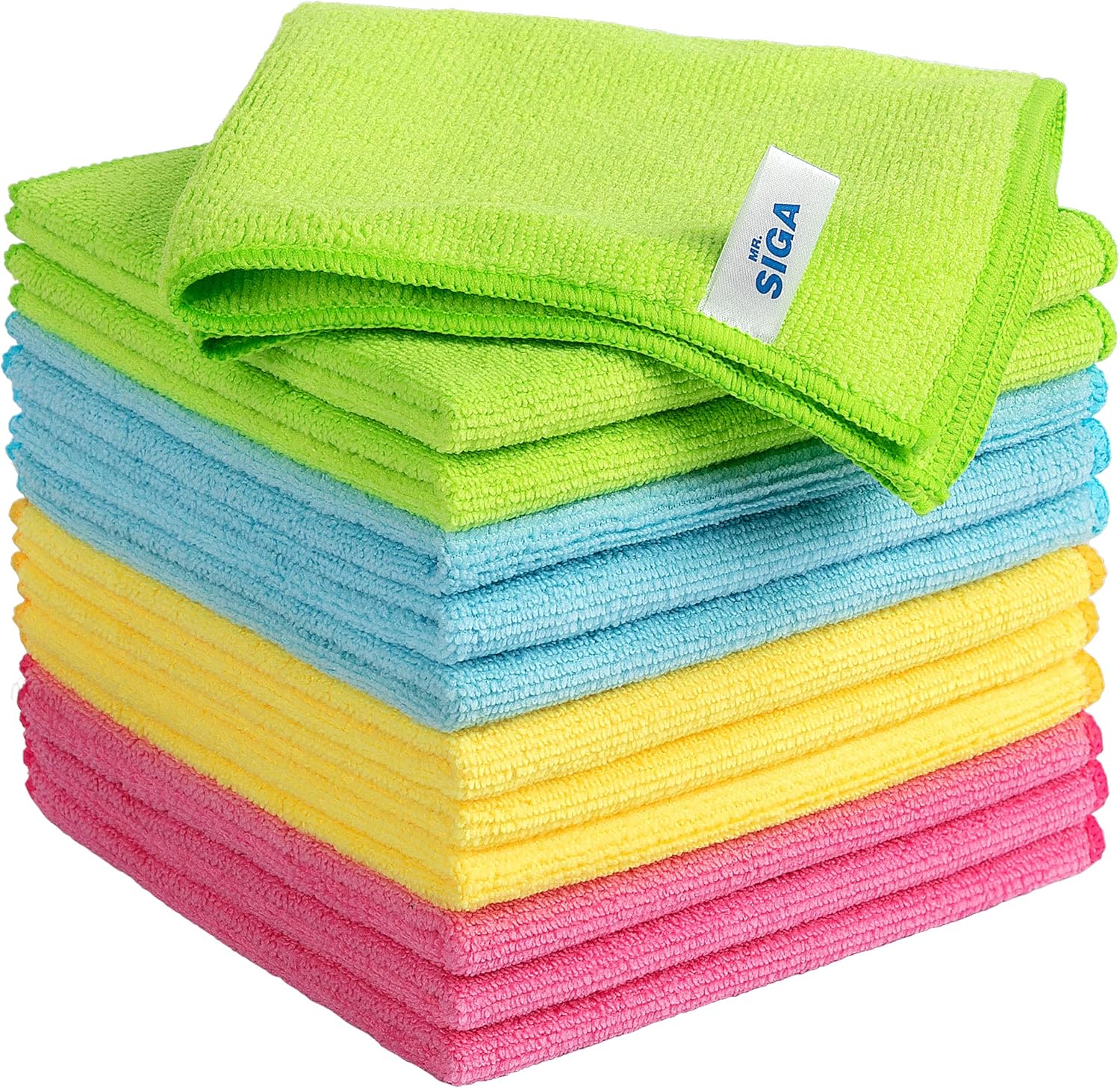
Microfiber Cloths for
Fine Dust Removal
Microfiber cloths help trap fine UAE dust instead of spreading it across surfaces. Separate cloths for dry dusting and wet cleaning improve cleaning efficiency.
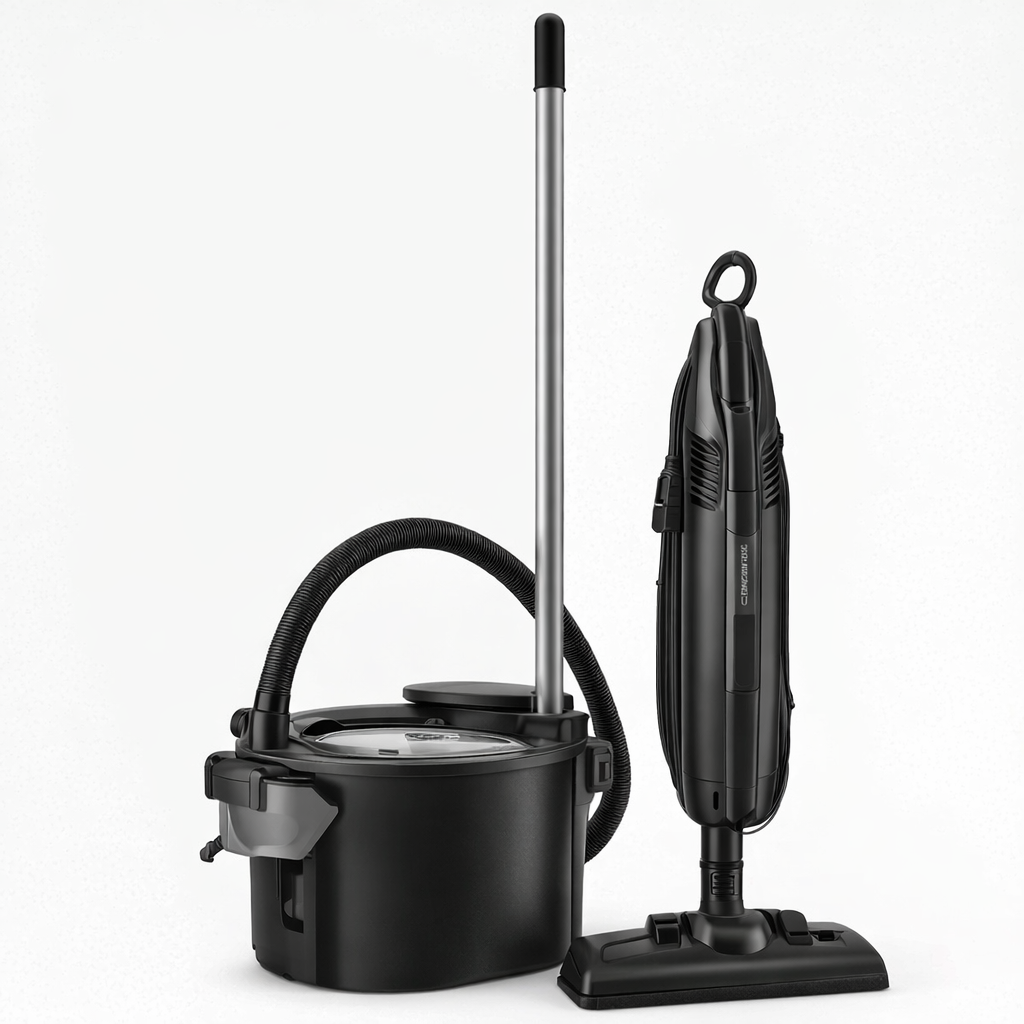
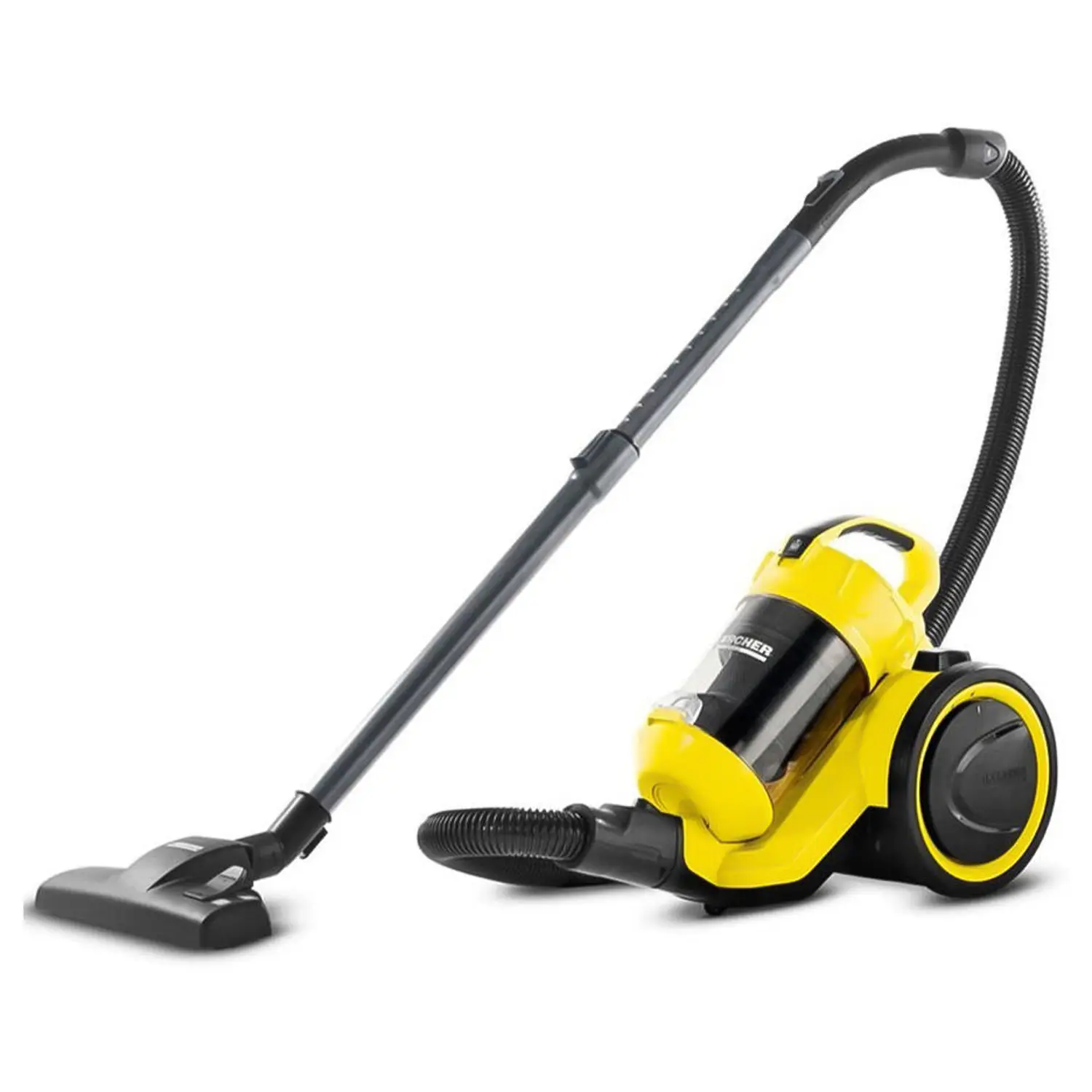
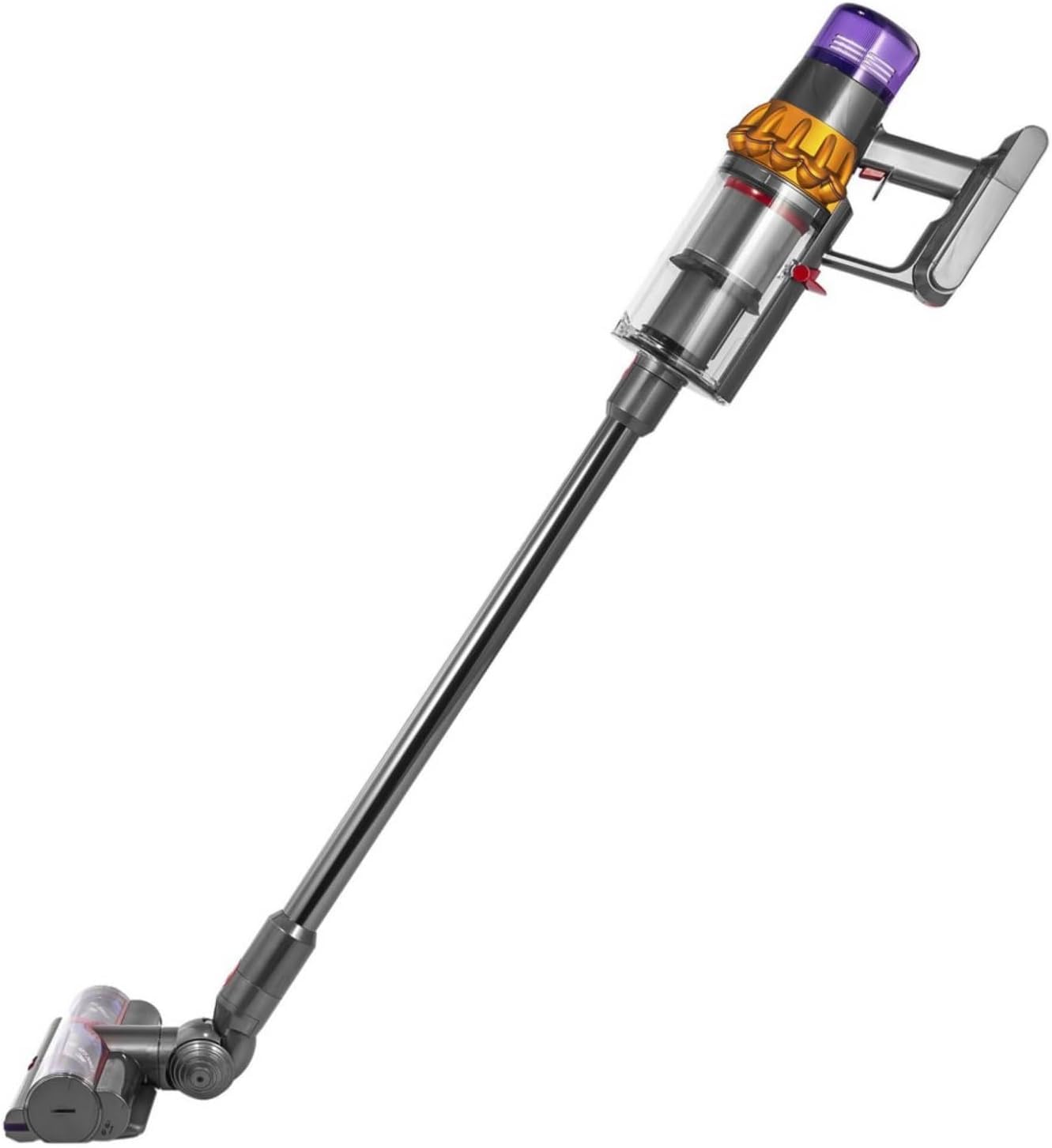
HEPA Vacuum Cleaners for
UAE Dust Control
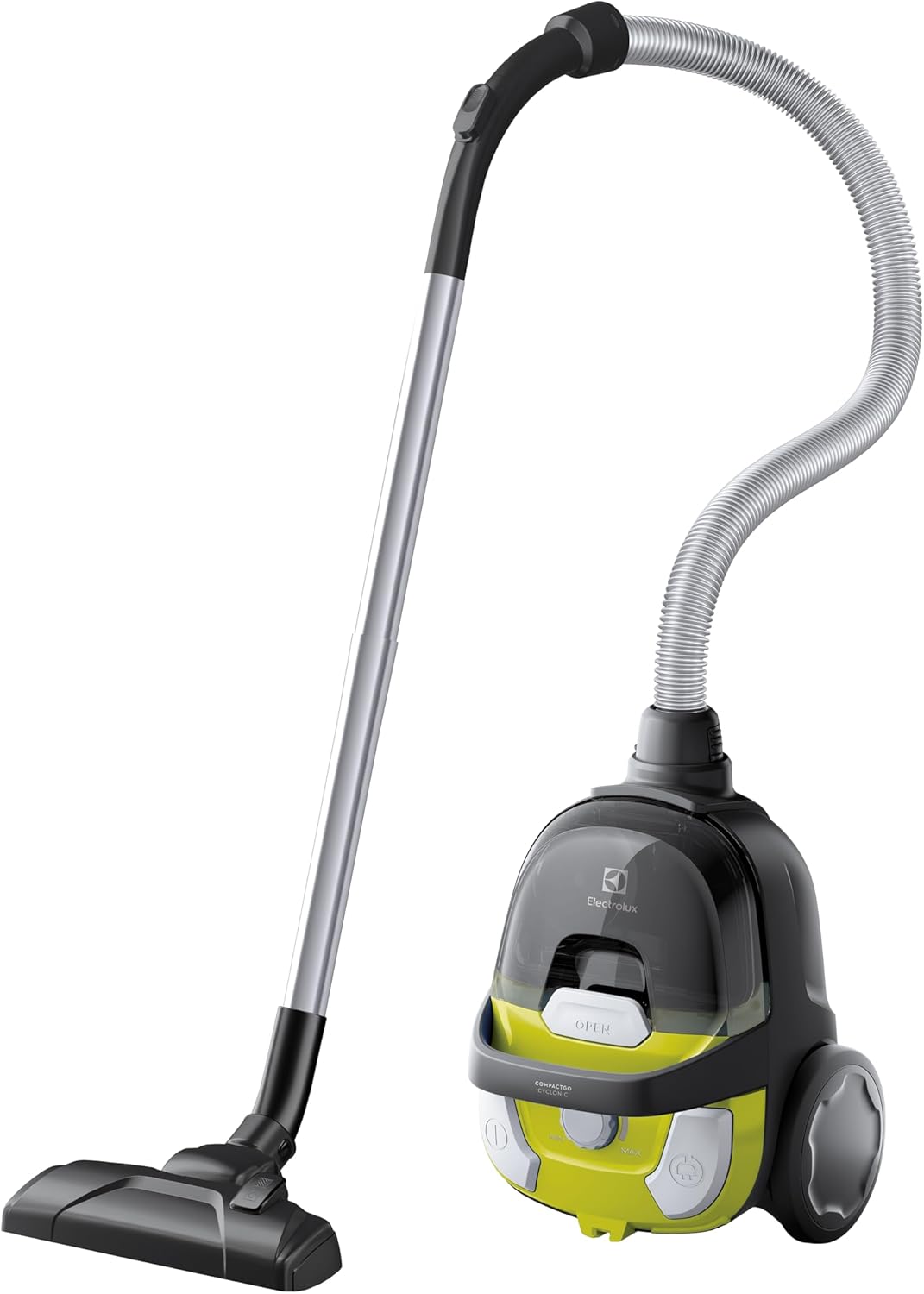
HEPA vacuum cleaners capture fine dust and sand particles commonly found in UAE homes. They are effective for tile, marble, rugs, and upholstery.
Dusting Tools for
Dust Removal
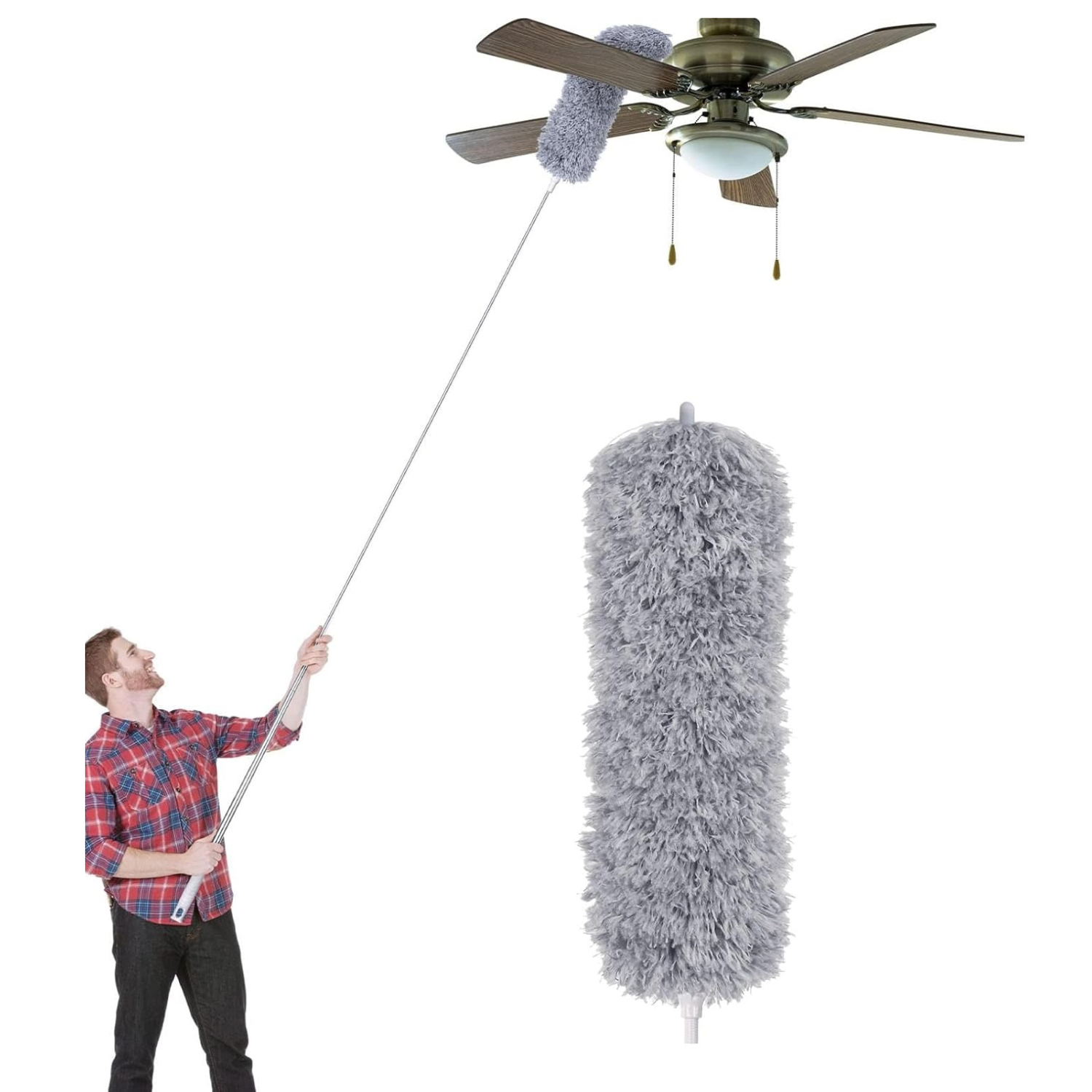
Electrostatic extendable dusters trap fine particles without spreading them, making them well suited to UAE homes with tall ceilings and hard-to-reach surfaces.
AC Vent Brushes for
Dust Accumulation
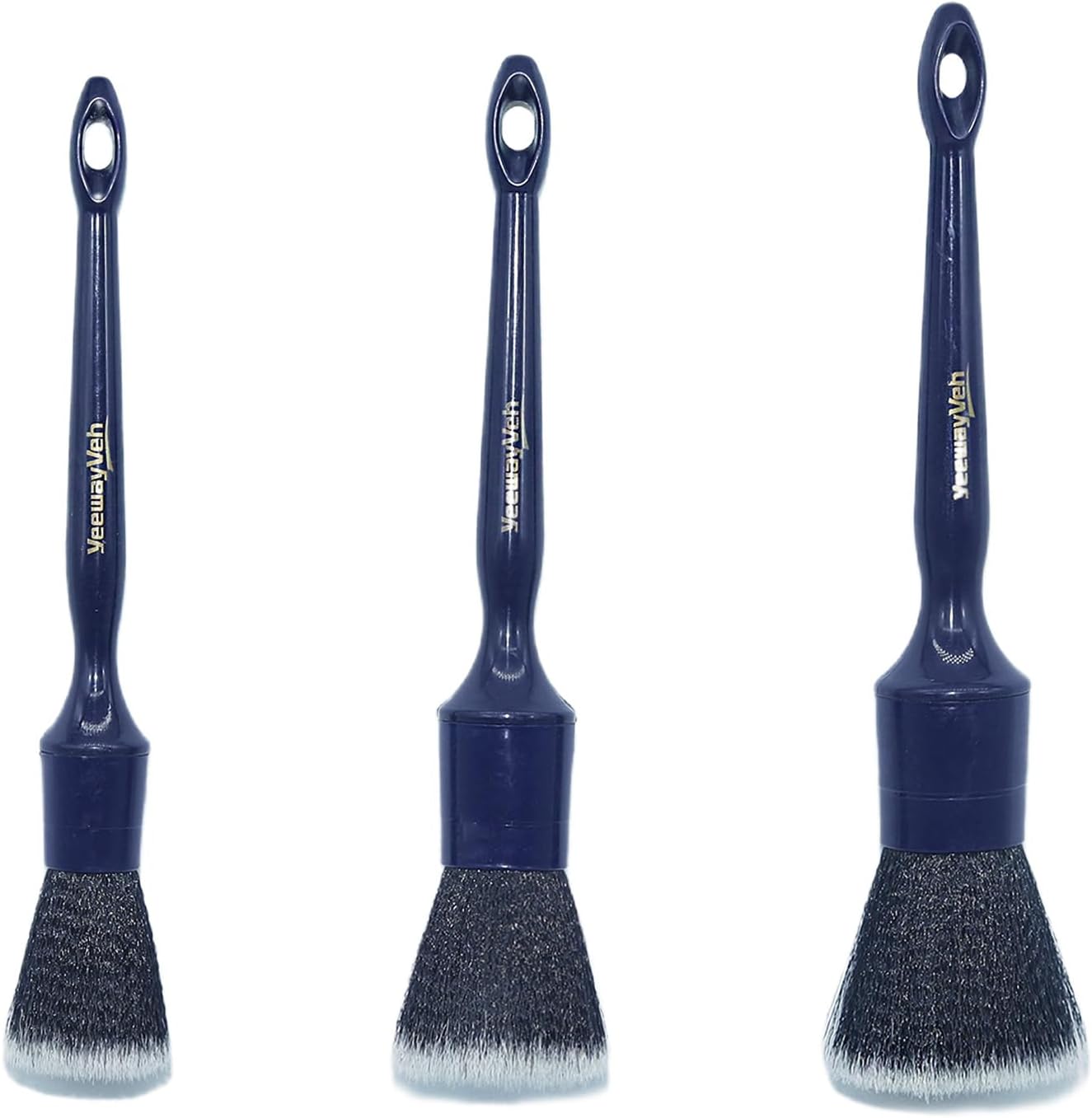
Narrow-profile brushes fit between AC louvre slats to remove dust buildup between professional filter services, without damaging the unit.
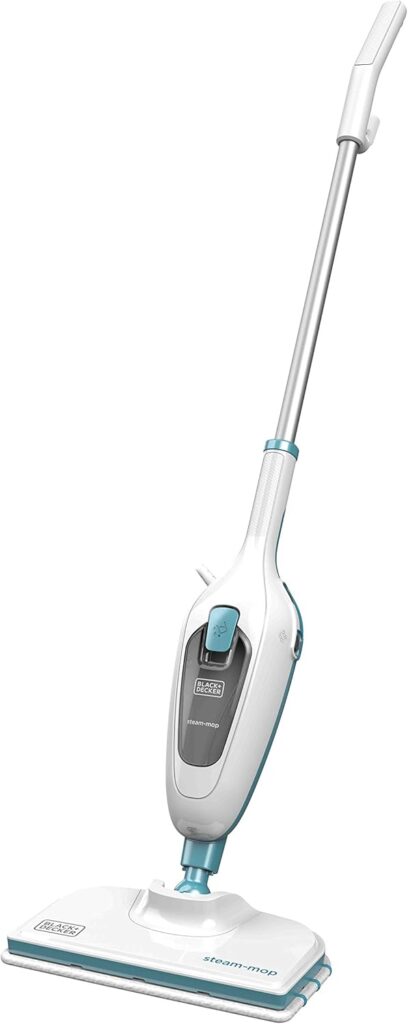
Spin Mops and Floor Mops
for post-cleaning
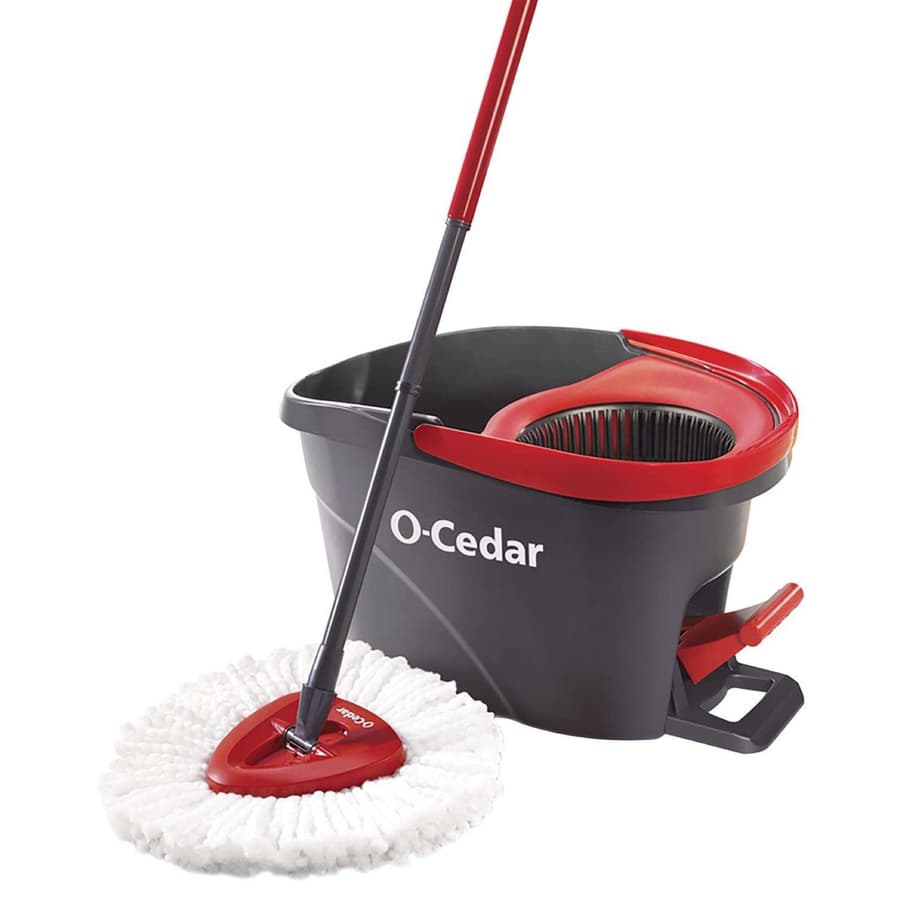
Spin mops with microfiber heads capture residual fine particles on hard floors when used after vacuuming that it may have missed.
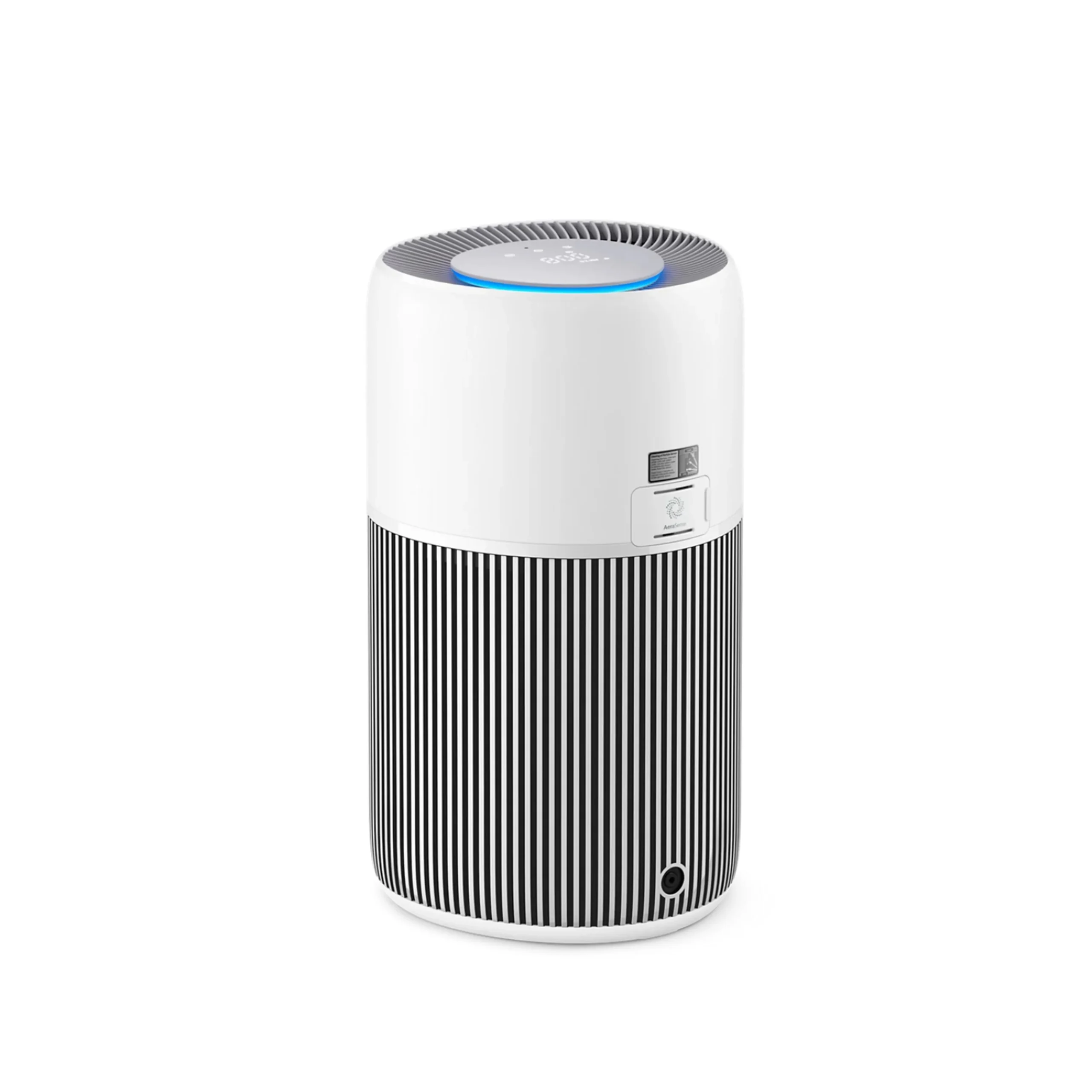
Air Purifiers for Managing
Fine Indoor Dust
HEPA air purifiers help reduce airborne dust and fine sand during dusty periods. Bedrooms and living rooms are the most common placement areas in UAE homes.