Key Takeaways
- Sand and dust should be removed by vacuuming before any surface wiping begins.
- Open parking requires interior cleaning every two to three weeks rather than monthly.
- Leather seats need conditioning every six to eight weeks during summer in high sun-exposure conditions.
- Seat rails are one of the most overlooked sand accumulation points in any vehicle.
- A quarterly deep clean prevents long-term material wear, odour build-up, and seat rail damage.
- AC odour requires a dedicated treatment product – surface cleaning does not resolve evaporator contamination.
Common Interior Car Cleaning Problems in the UAE: Quick Reference
Why Car Interiors Get Dirty Faster in the UAE
How Desert Dust Affects Vehicle Interiors
UAE desert dust is not the same as household dust found in cooler climates. The particulate matter is finer, abrasive, and highly penetrating. Fine silica particles – commonly present in UAE desert dust – pass through door seals and ventilation systems with minimal resistance. Once inside a vehicle, these particles settle into fabric fibres, carpet pile, dashboard crevices, AC vent channels, and seat stitching.
Over time, silica-based dust acts as a mild abrasive on soft interior surfaces. Leather stitching, fabric upholstery, and carpet fibres show accelerated wear in vehicles that are not cleaned regularly. Dashboard plastic and vinyl surfaces develop a dull appearance as fine particles accumulate across textured finishes.
How Sand Gets Trapped Inside Cars
Coarser sand particles enter through the most common access points: shoes and clothing carried in by passengers, open windows, and door gaps during sandstorm events. Sand behaves differently from dust once inside a vehicle. Rather than settling uniformly, it migrates under floor mats, into seat rails, between seat cushions, and into boot carpet. Standard vacuuming without moving floor mats or accessing seat rails leaves significant quantities of sand behind.
Vehicles parked in open carparks, basement carparks with inadequate sealing, or near construction sites accumulate sand more rapidly than those parked in covered villa garages. Apartment residents without covered parking commonly report faster interior contamination rates.
Impact of Heat on Interior Materials
Cabin temperatures in parked UAE vehicles routinely reach 70-80°C during summer months. This thermal environment accelerates the degradation of every interior material category. Leather dries and cracks without regular conditioning. Vinyl and plastic surfaces become brittle. Adhesives used in headliners, trim panels, and carpet edges soften and eventually fail. Fabric seat dyes fade unevenly under direct solar heat through glass.
Heat also amplifies odours. Food particles, spilled beverages, pet hair, and AC drain contamination produce noticeably stronger smells in a hot cabin than they would in cooler conditions. Effective odour management in UAE vehicles requires addressing the source rather than masking with fragrance products.
Humidity and Odour Problems
Coastal UAE locations – including Dubai Marina, Jumeirah Beach Residence, Abu Dhabi Corniche areas, and Sharjah – experience significant ambient humidity, particularly during summer. When a cooled AC system meets humid incoming air, condensation forms within the AC drain system. If the drain becomes partially blocked or contaminated, mould and bacterial growth in the AC evaporator creates the musty odour that many UAE drivers associate with their vehicles. This is a distinct problem from general interior odour and requires specific AC-focused treatment.
Humidity and Mold Prevention UAE Homes explains how coastal UAE humidity affects enclosed spaces, including vehicle cabins and apartment interiors.
Car Cleaning UAE covers the full vehicle cleaning hub, including exterior washing, detailing, and tools for UAE drivers.
How to Clean Dust and Sand UAE provides additional guidance on managing fine desert particulate across all home and vehicle surfaces.
Most Common Interior Car Cleaning Problems in the UAE
Dusty Dashboard
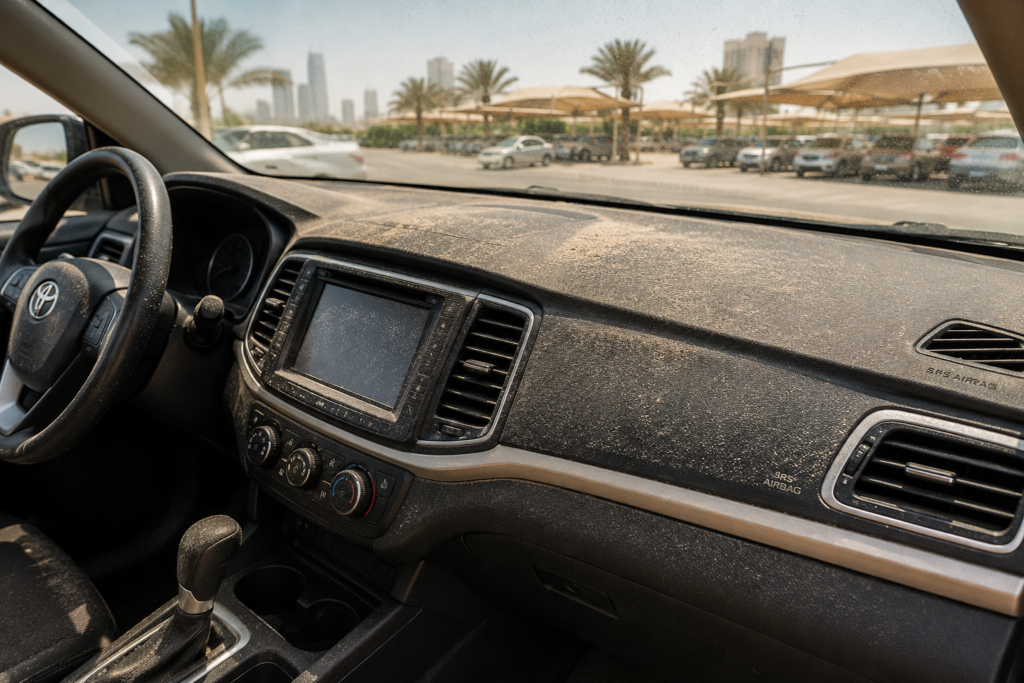
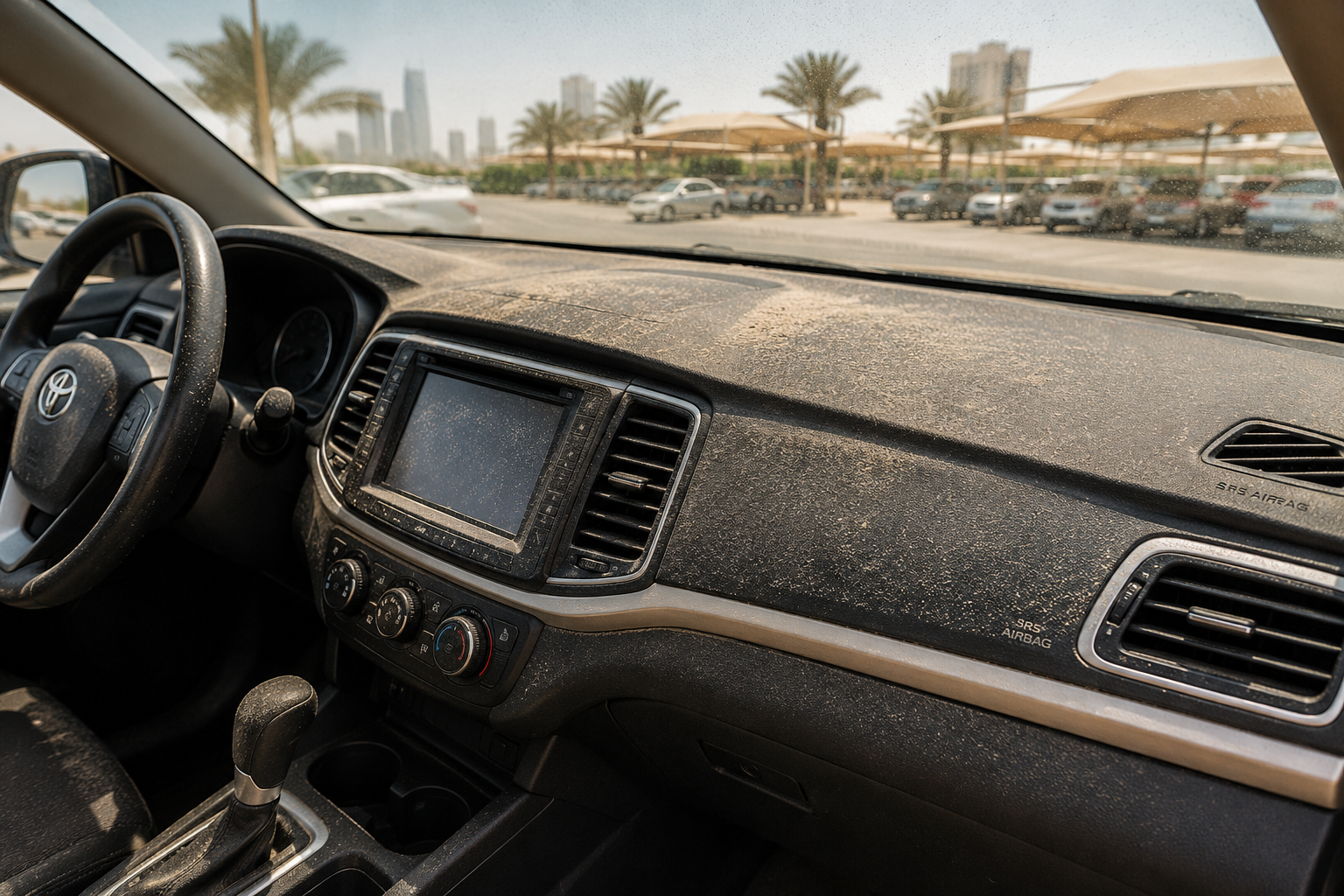
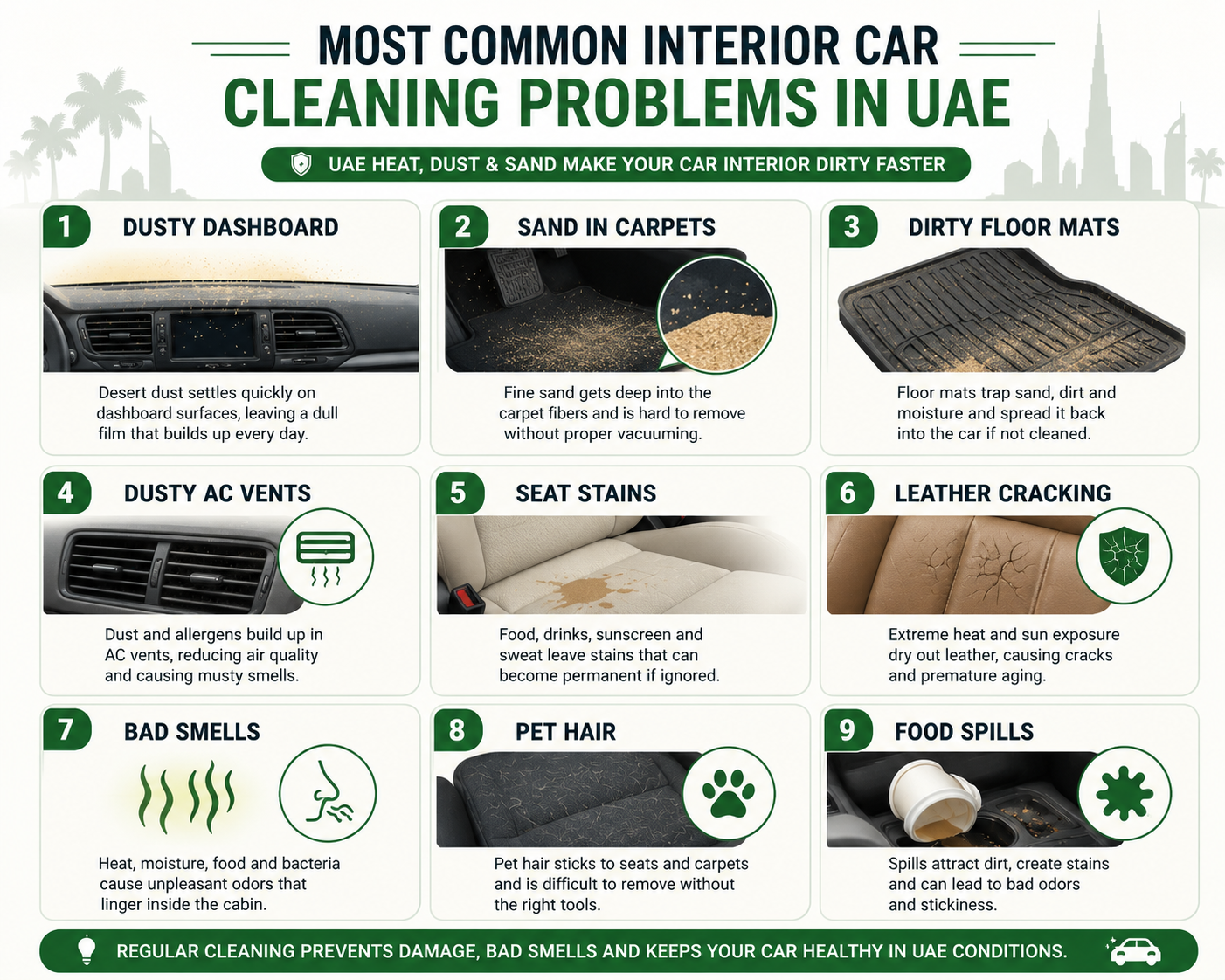
The dashboard accumulates a continuous layer of fine dust regardless of how frequently a vehicle is used. In UAE conditions, a parked vehicle can develop visible dust on the dashboard within 24 to 48 hours if windows are not fully sealed. Textured dashboard surfaces and air vent bezels trap dust in ways that simple wiping does not fully address.
Sand in Carpets
Sand in carpet fibres is one of the most persistent interior cleaning challenges for UAE drivers. Foot traffic grinds sand particles deeper into carpet pile with each entry and exit. Standard vacuum attachments without strong suction and a beater function retrieve only surface-level particles, leaving deeper contamination in place.
Dirty Floor Mats
Floor mats act as the primary barrier between shoe-carried sand and the carpet beneath. In UAE conditions, floor mats – particularly driver-side mats – accumulate sand and dust more rapidly than any other interior component. Rubber or all-weather mats are easier to clean than fabric mats and are more commonly used by UAE residents for this reason.
Dusty AC Vents
AC vents accumulate dust on the visible louvre fins and within the duct channels behind them. Dust entering the vent system coats the evaporator fins and, in humid conditions, creates a substrate for mould growth. The most visible sign is discolouration on vent surrounds and visible grey or brown deposits on louvre surfaces.
Seat Stains
Family vehicles, ride-share vehicles, and those used for long daily commutes accumulate seat stains from food, beverages, sunscreen, and general use. In hot conditions, oily substances from sunscreen and skin contact transfer onto seat surfaces more readily than in cooler climates.
Leather Drying and Cracking
Unprotected leather seats in UAE vehicles show accelerated drying and surface cracking, particularly on seat bolsters and areas exposed to direct sunlight through side windows. Conditioning at regular intervals is the primary preventive measure. Once cracking begins, repair becomes significantly more costly than prevention.
Regular leather conditioning remains the most effective way to prevent cracking and premature wear in UAE conditions.
Bad Smells
Interior odours in UAE vehicles commonly originate from AC system contamination, food residue in seat gaps and cup holders, moisture trapped under floor mats, and pet-related contamination. Heat intensifies all these sources. A vehicle that smells acceptable in winter may produce noticeable odour after summer parking.
Pet Hair
Pet hair embeds into fabric upholstery and carpet in ways that standard vacuuming does not fully address. In UAE conditions, pet hair also acts as a dust trap, accumulating fine particulate matter and amplifying both contamination and odour.
Food and Drink Spills
Sugary drink spills left untreated in hot conditions ferment and produce persistent odour. Food particles lodged between seat cushions and in door pockets attract insects and contribute to bacterial growth in the warm interior environment.
Interior Car Cleaning Supplies Checklist
Some product mentions may include affiliate links.
Best Car Cleaning Tools UAE provides a reviewed shortlist of vacuum cleaners, brushes, and microfiber cloths suitable for UAE vehicle interiors.
Best Microfiber Cloths UAE covers microfiber cloth selection for dust and sand conditions across UAE homes and vehicles.
Effective interior car cleaning in UAE conditions requires a specific set of tools and products. Generic household cleaning supplies are not well suited to automotive surfaces and may cause damage to sensitive materials such as touchscreens, leather, and piano black trim.
Microfiber Cloths
Microfiber cloths are the standard wiping medium for all automotive interior surfaces. They trap fine dust particles rather than redistributing them across surfaces. Multiple cloths are needed to avoid cross-contaminating surfaces – one set for dusty surfaces, one for product application, and one for glass. Washing cloths regularly prevents transferred contamination between sessions.
Vacuum Cleaner
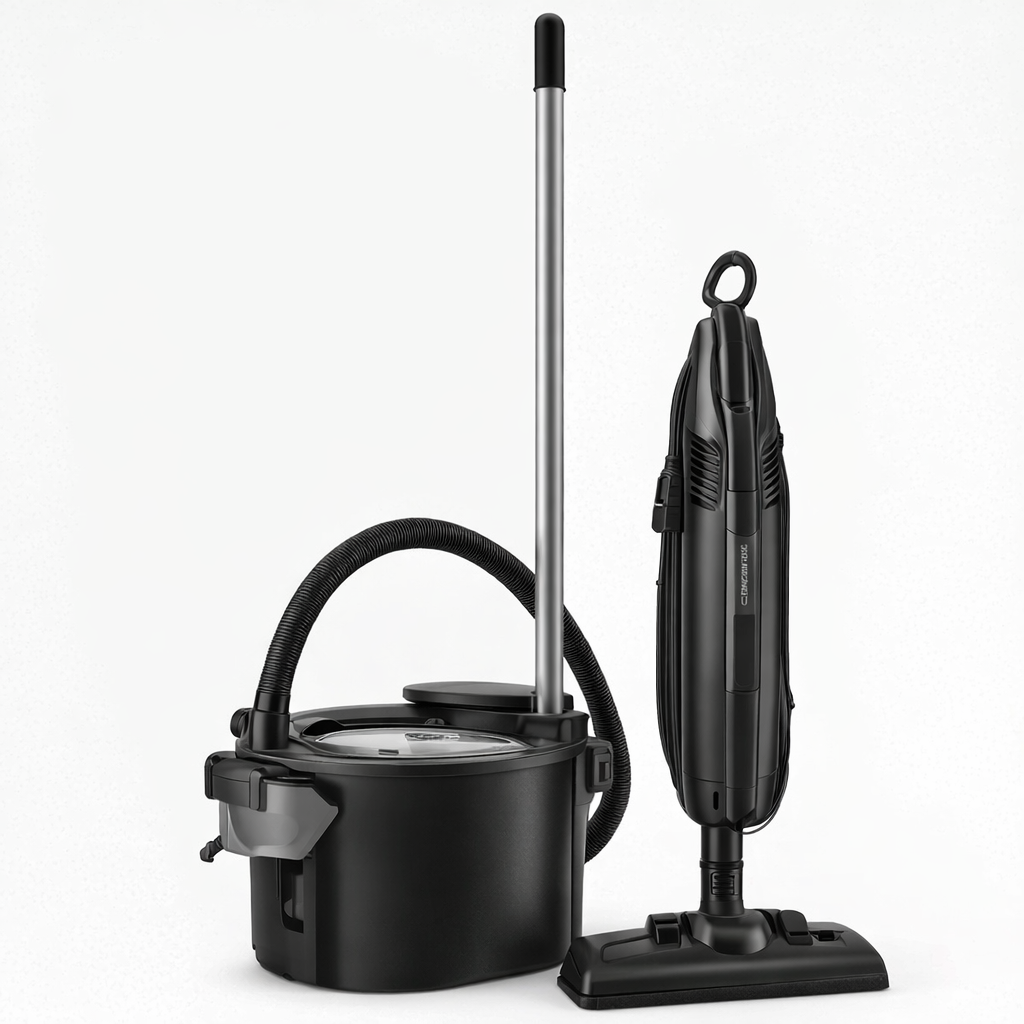
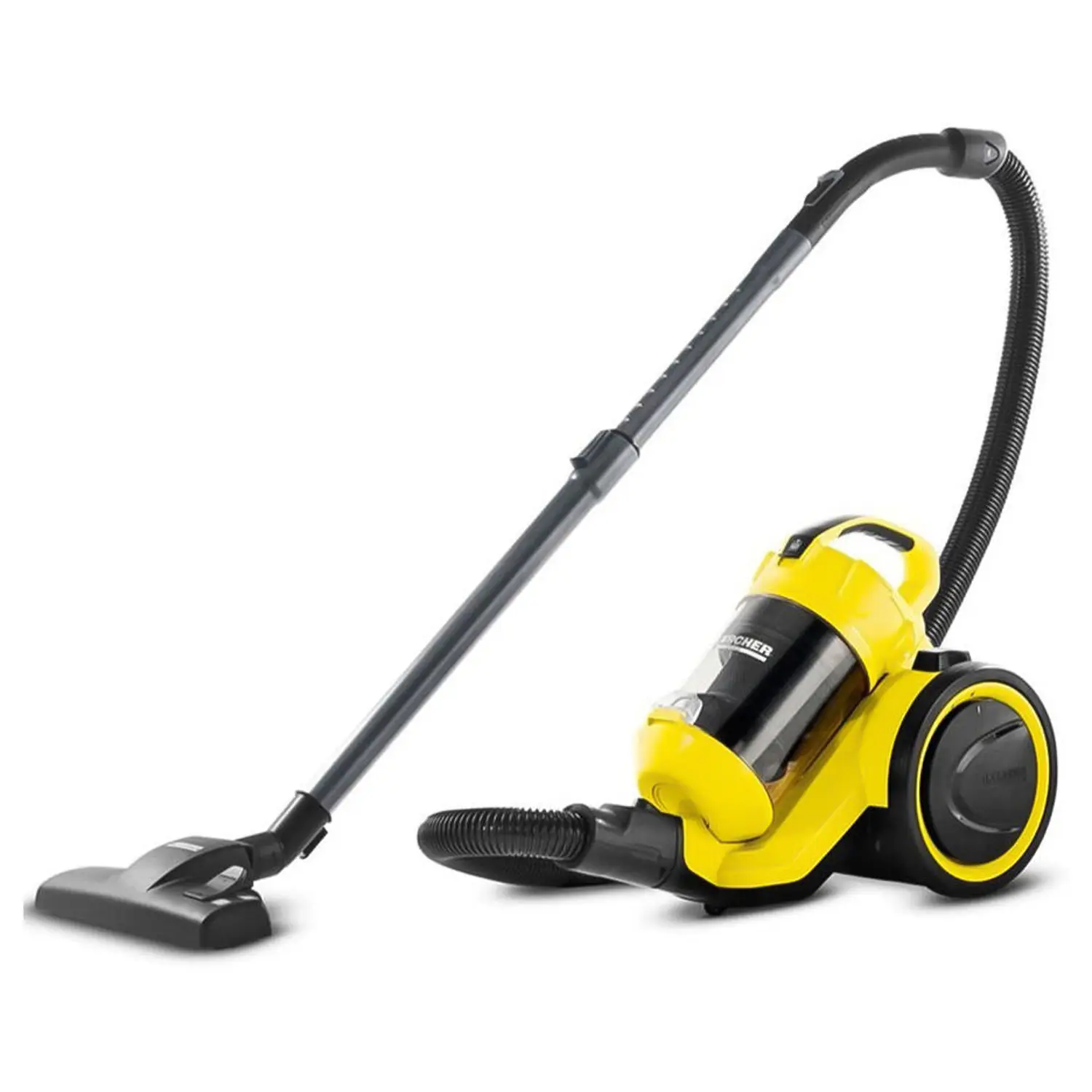
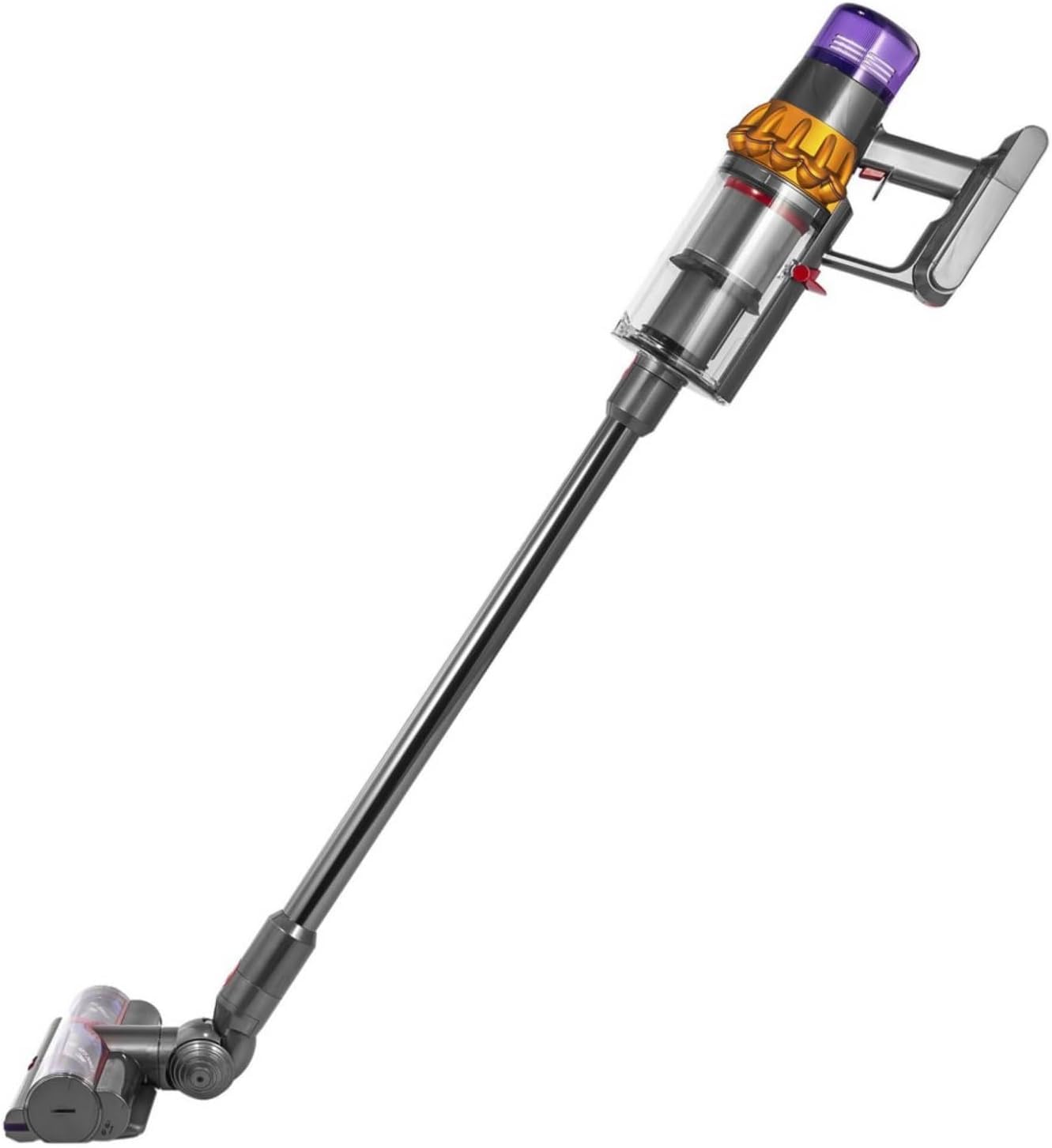
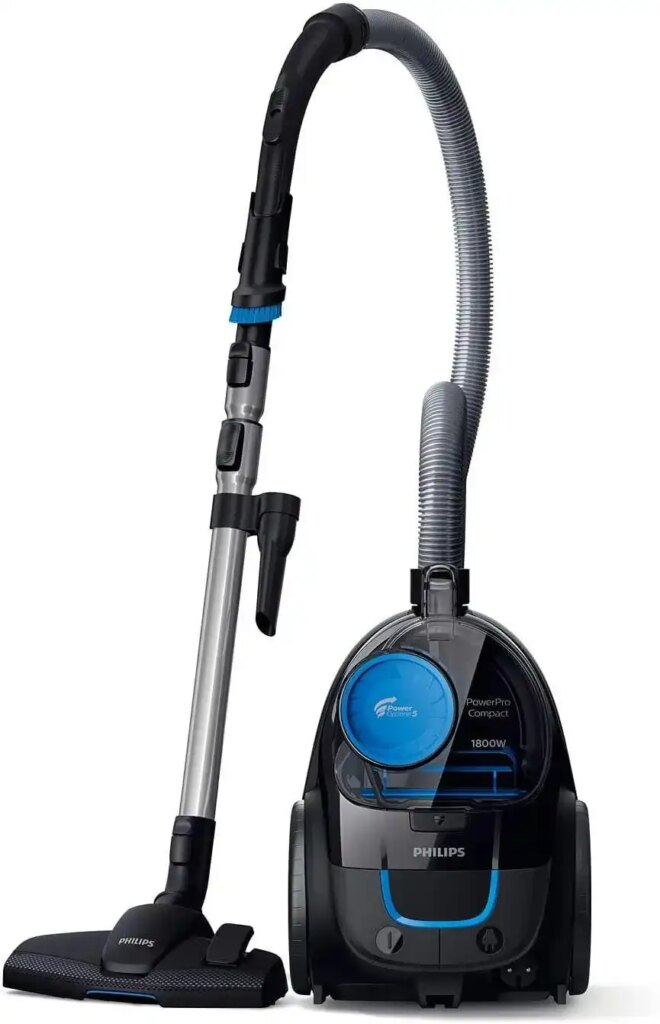
A vacuum cleaner with strong suction and a range of attachments is the most important tool for UAE interior car cleaning. A crevice tool, upholstery brush, and narrow nozzle are all required to access the full range of interior areas. Cordless models with HEPA filtration are practical for use in carparks without access to power points.
When selecting a vacuum cleaner for UAE vehicle interiors, the following features are particularly relevant to desert dust and sand conditions:
- HEPA filtration to capture fine silica particles without releasing them back into the cabin
- Strong suction output suitable for embedded carpet sand
- Crevice attachment included in the box or available separately
- Cordless operation for use in carparks without power access
- Washable or replaceable filter to maintain suction performance over time
Crevice Tool
A narrow crevice tool reaches into seat rails, door pocket edges, between seat cushions, and the gap between the centre console and seats. This is not optional for effective sand removal. Much of the sand accumulation in UAE vehicles concentrates in areas inaccessible without a dedicated narrow attachment.
Detailing Brushes
Soft detailing brushes dislodge dust from AC vent louvres, dashboard crevices, vent bezels, and textured trim surfaces before vacuuming. Use these before vacuuming to direct loosened particles toward the vacuum rather than across clean surfaces.
Interior Cleaner
An all-purpose automotive interior cleaner handles most plastic, vinyl, and fabric surfaces. A pH-neutral formula avoids damage to treated surfaces. Cleaners containing bleach or ammonia are not suitable for any interior surface.
Glass Cleaner
Automotive glass cleaner formulated without ammonia is suitable for interior windscreen, rear glass, and side window surfaces. Standard household glass cleaner containing ammonia can damage window tinting, which is near-universal on UAE vehicles due to heat management requirements.
Leather Conditioner
Leather conditioner applied at regular intervals maintains suppleness and prevents the surface cracking associated with UAE heat exposure. Conditioning works best applied before drying begins rather than as a remedial treatment after cracking has already occurred.
Fabric Cleaner
A dedicated automotive fabric cleaner is required for upholstered seats and carpet stains. Household fabric cleaners may over-saturate fibres and take excessively long to dry in AC-cooled interiors, creating conditions for mould growth.
Interior Surface Cleaning Quick Reference
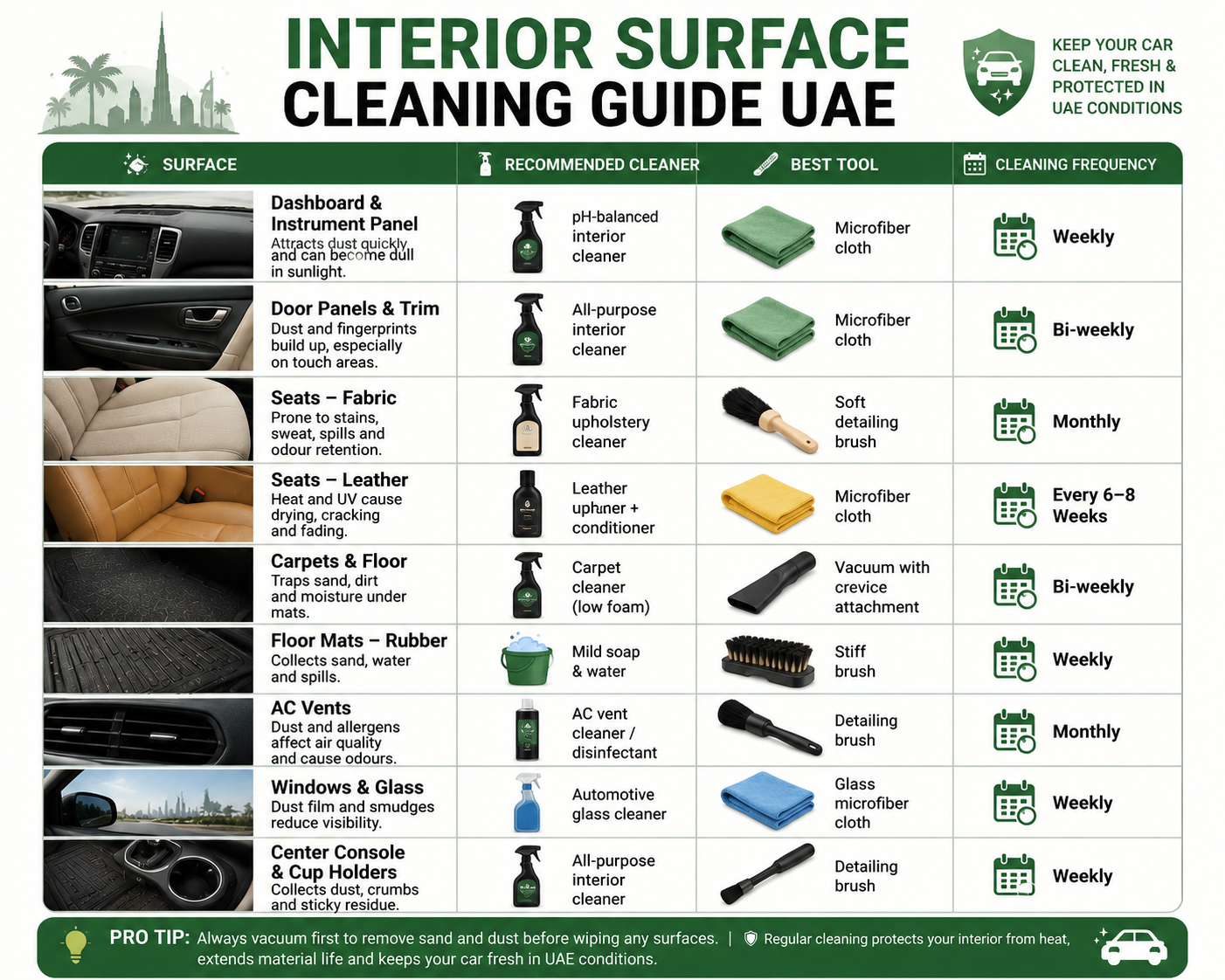
Cleaning Frequency by Vehicle Type
Step-by-Step Interior Car Cleaning Process
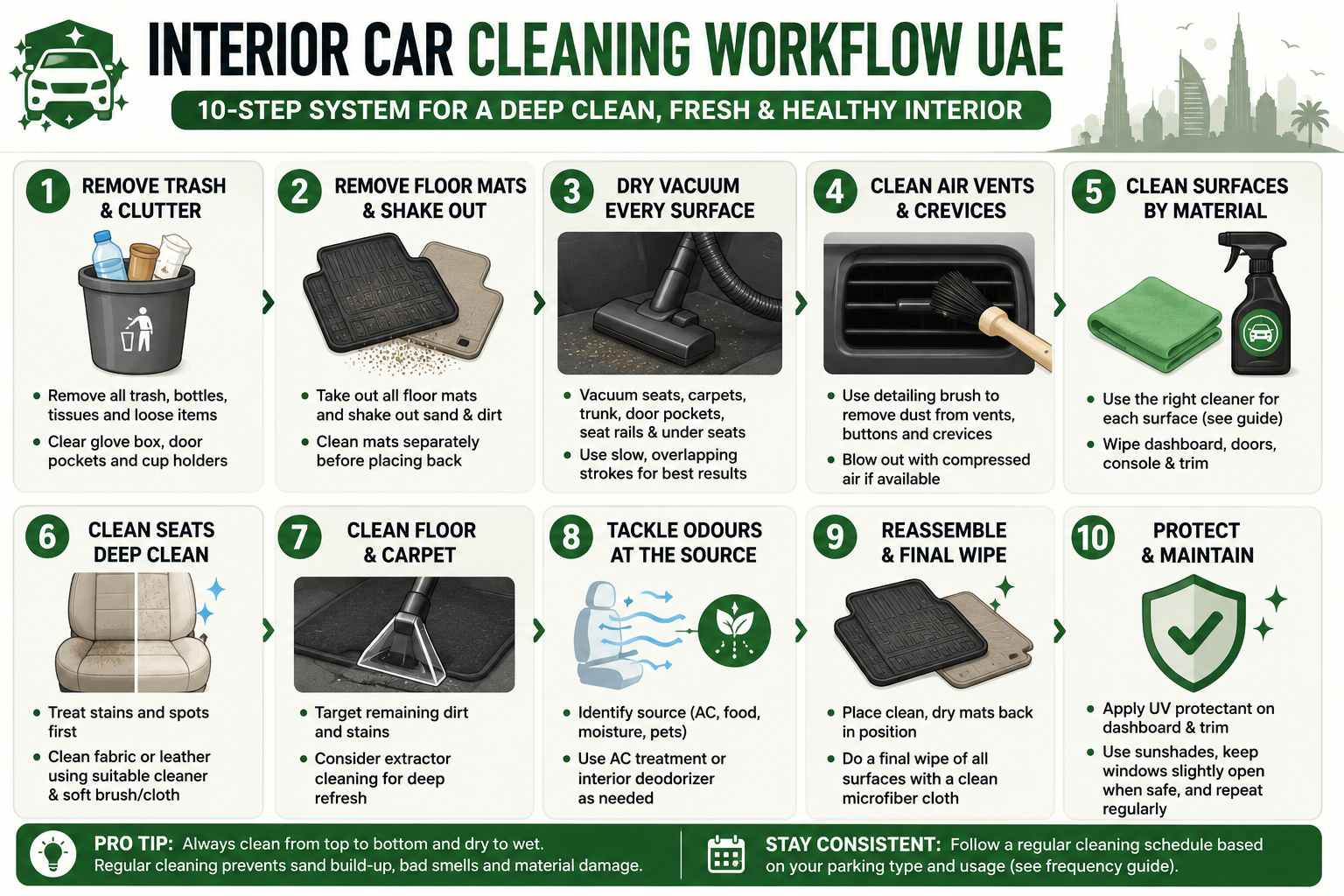
The following sequence minimises recontamination of already-cleaned surfaces by working systematically from loose debris removal through to surface treatment and protection.
Step 1: Remove Trash and Personal Items
Remove all loose items, rubbish, and personal belongings from every compartment, including the glove box, door pockets, centre console storage, and boot. This step reveals hidden contamination sources and provides unobstructed access to all surfaces during subsequent steps.
Step 2: Remove and Clean Floor Mats
Remove all floor mats and take them outside the vehicle. Shake rubber mats vigorously to dislodge sand and debris. Beat fabric mats against a hard surface to release embedded particles before vacuuming both sides. Leave mats outside the vehicle until the interior cleaning is complete.
Step 3: Vacuum Seats and Carpets
Vacuum all seat surfaces, including under cushion edges and the seat-to-back junction. Use the crevice tool along seat rails, between the seat and centre console, and between front and rear seat bases. Vacuum carpets with overlapping passes, moving the vacuum head slowly to allow suction to draw particles from deeper in the pile. Pay particular attention to the driver footwell, which accumulates the highest concentration of sand.
Step 4: Clean Dashboard and Centre Console
Use a detailing brush to dislodge dust from all crevices, button gaps, vent surrounds, and textured surfaces before wiping. Follow with a lightly dampened microfiber cloth and a small amount of interior cleaner. Work from the top of the dashboard downward. Avoid spraying product directly onto surfaces containing buttons, switches, or screen displays – apply product to the cloth first.
Step 5: Clean Door Panels
Door panels accumulate fingerprint marks, dust, and incidental contact staining. Clean the door pocket, armrest, window switch area, and inner panel surface with interior cleaner applied to a microfiber cloth. The door pocket base collects dust, sand, and small debris items and requires particular attention.
Step 6: Clean AC Vents
Use a detailing brush to dislodge dust from between louvre fins. Work the brush across the full width of each vent to cover the visible fin area. Vacuum immediately after brushing to capture loosened particles before they settle on other surfaces. Compressed air clears dust from deeper within vent channels where a compressor is available. For persistent odour, a dedicated automotive AC cleaner applied through the vent or fresh air intake provides more effective treatment than surface cleaning alone.
Best AC Vent Cleaning Tools UAE covers vent brushes and treatment products suitable for both home and vehicle AC systems.
Step 7: Clean Interior Glass
Clean interior glass last within the main cleaning sequence to avoid product spray contaminating previously cleaned surfaces. Use an ammonia-free automotive glass cleaner applied to a clean microfiber glass cloth. Wipe in overlapping passes, using a second dry cloth to remove streaks. The windscreen interior surface often carries a film of outgassed plasticiser from dashboard components, particularly in newer vehicles, and requires thorough cleaning to remove.
Step 8: Treat Leather or Fabric Seats
For leather seats, apply a small amount of leather cleaner to a microfiber cloth and wipe the full surface of each seat, paying attention to stitching lines, seat bolster edges, and contact areas. Follow with a leather conditioner product, applying in thin, even coats. Allow the conditioner to absorb before putting the vehicle back into use.
For fabric seats, apply automotive fabric cleaner to any stained areas according to the product instructions. Blot rather than rub to avoid spreading stains or working them deeper into the fibre. In humid conditions, allow additional drying time before using the vehicle with windows closed.
Step 9: Final Dust Inspection
After all surfaces have been cleaned, conduct a final inspection under good light – ideally natural daylight or a detail light held at a low angle across surfaces. This reveals remaining dust deposits, missed areas, and streaks on glass that are not visible under flat overhead lighting.
Step 10: Apply Interior Protection
An interior plastic protectant applied to dashboard, door panel, and centre console surfaces reduces the adhesion of subsequent dust deposits and provides UV protection against fading. Select a matte or satin finish product rather than a high-gloss formulation, which creates distracting reflections from the driver’s seat. Refit the cleaned floor mats as the final step.
How to Remove Sand from a Car Interior
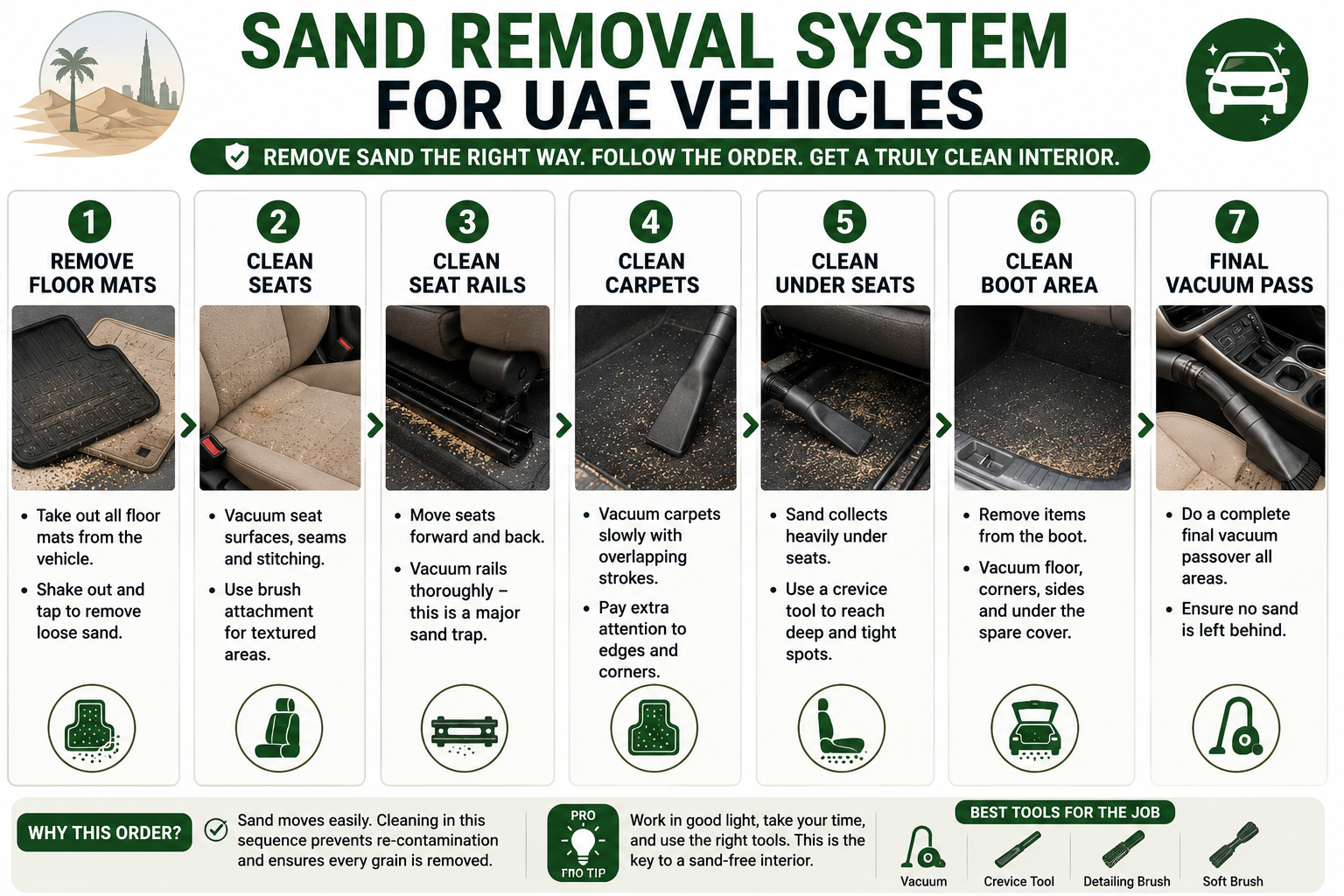
Sand removal is one of the most common and persistent interior car cleaning UAE challenges. The approach matters as much as the equipment.
Best Vacuum Cleaner for Sand UAE covers suction ratings, filter types, and attachment compatibility for UAE desert sand conditions.
Best Vacuuming Technique
For effective sand removal from carpet, use a slow, deliberate vacuum stroke with firm downward pressure on the vacuum head. A fast stroke recovers only surface particles. A slow stroke allows suction to draw particles from deeper within the carpet pile. Repeat each area in multiple directions to dislodge particles that have oriented themselves along individual carpet fibres.
How to Clean Seat Rails
Seat rails – the metal channels on which front seats slide – are one of the highest-concentration sand accumulation points in any vehicle. Slide each front seat fully rearward, then use the crevice tool to vacuum the full length of the exposed front rail section. Slide the seat fully forward and repeat for the rear section. A detailing brush used in the rail channel before vacuuming dislodges compacted sand that suction alone will not recover.
How to Clean Under Seats
The area directly beneath front seats accumulates fallen debris, sand migration, and items that slide under during driving. A flat vacuum nozzle attachment reaches this area more effectively than a standard round nozzle. In vehicles with seat rail covers or trim panels, check whether these can be temporarily removed for thorough access.
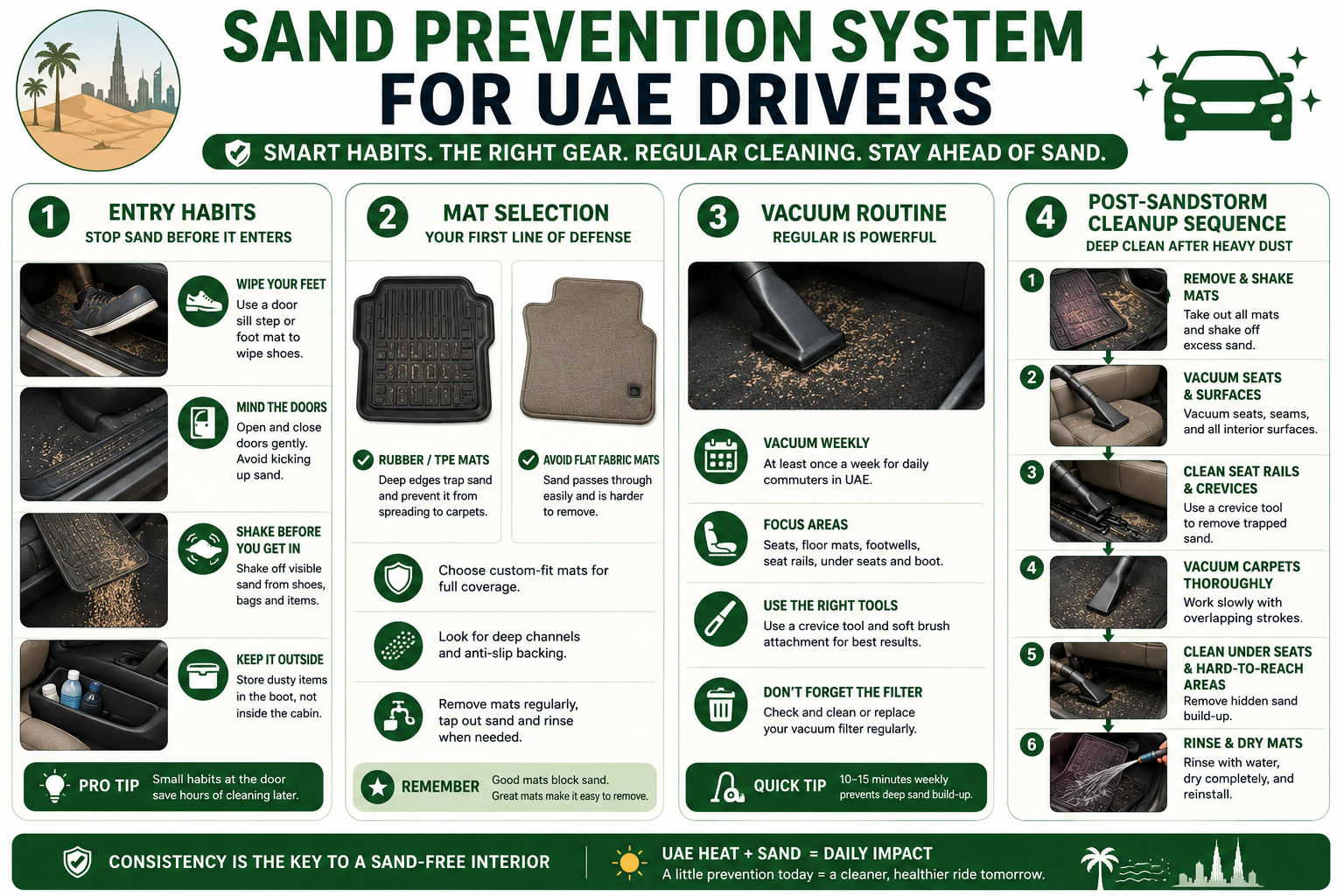
How to Prevent Sand Build-Up
Rubber or all-weather floor mats with raised edges and deep tread patterns contain sand carried in on footwear more effectively than fabric mats. Boot mats or cargo liners perform the same function in the boot area. Removing footwear before entering the vehicle – a practice common in some UAE households – dramatically reduces sand introduction through the driver and front passenger footwells.
How to Clean Different Interior Materials
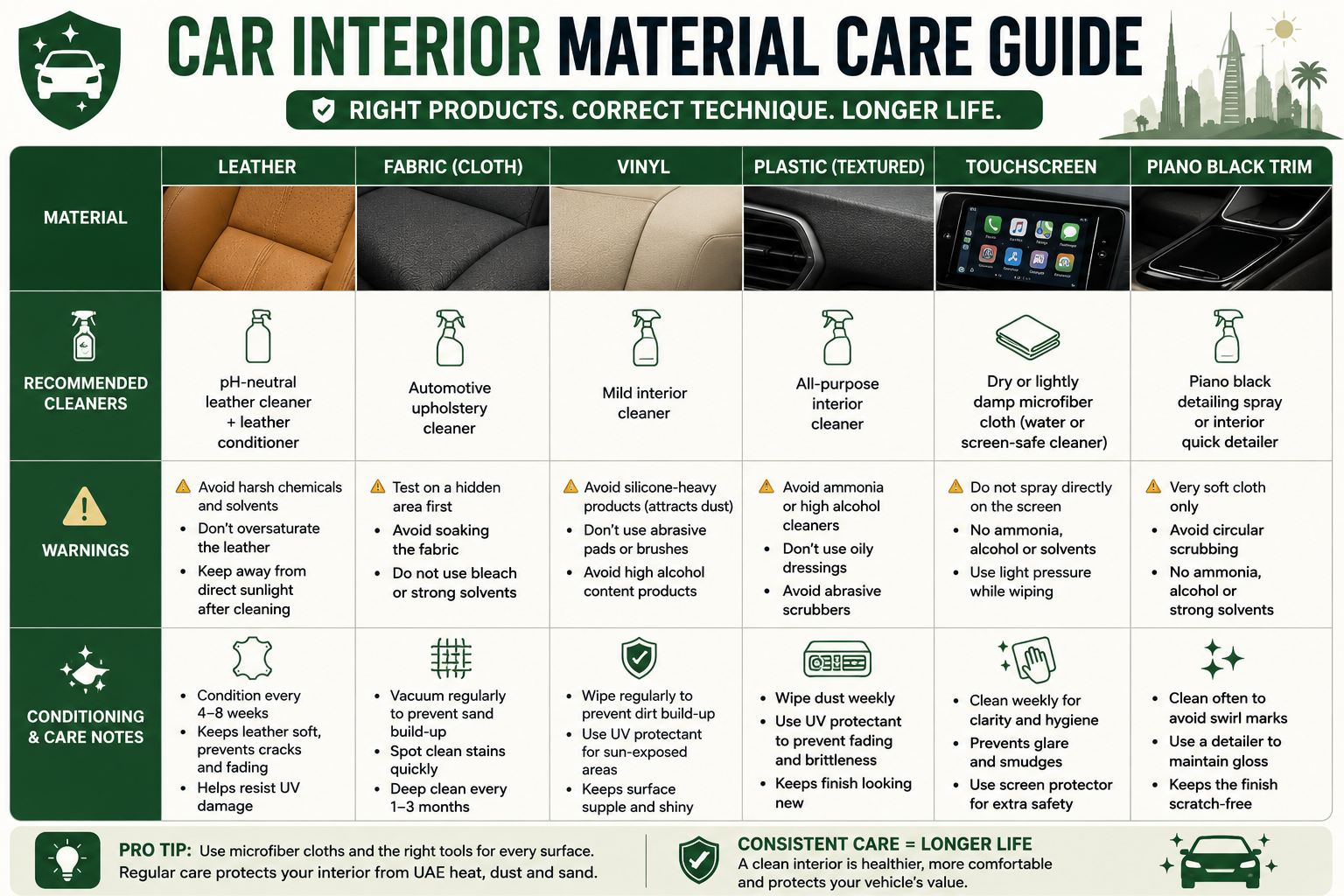
Leather
Genuine leather requires a pH-neutral leather cleaner and a dedicated leather conditioner. Avoid wet wiping with water alone, as repeated exposure without conditioning accelerates drying. Do not use household surface sprays, silicone-based products, or petroleum-based cleaners on leather, as these interfere with the leather’s natural moisture balance or leave residues that attract further dust.
Perforated leather – common on sports seats and premium trim levels – requires a soft detailing brush to clear dust from perforations before wiping. Liquid cleaner should be applied sparingly to avoid saturating the backing material through the perforations.
Fabric
Automotive fabric requires a purpose-made upholstery cleaner. Apply the product to the cloth rather than directly to the seat to control the quantity of moisture introduced to the fabric. In UAE conditions, where vehicles spend significant time with windows closed and AC running, wet fabric that does not dry promptly can develop odour from microbial activity.
Vinyl
Vinyl surfaces respond well to a general automotive interior cleaner. Vinyl is more water-tolerant than leather but benefits from UV protectant application given the solar heat levels in UAE conditions. Cracked or dried vinyl cannot be restored to original condition with cleaning products alone – a vinyl repair product is required for surface restoration.
Plastic
Dashboard plastic, door panels, and trim pieces accept general interior cleaner without risk of surface damage, provided the cleaner does not contain bleach or strong solvents. Textured plastic surfaces require a brush to work cleaner into the texture before wiping. Silicone-based dressings on any plastic in the driver’s direct line of sight should be avoided – the resulting gloss creates windscreen reflection that impairs visibility.
Touchscreens
Modern infotainment screens require a dry or very lightly dampened microfiber cloth only. Apply no product to the screen surface. Screen cleaning sprays not specifically formulated for automotive touchscreens may damage oleophobic coatings. Power off the screen before wiping to make dust and smears more visible.
Piano Black Trim
Piano black or high-gloss black trim is the most scratch-sensitive surface in any vehicle interior. Use only a clean, fresh microfiber cloth on these surfaces – never a cloth that has been used on other surfaces. Even fine dust particles trapped in a cloth will scratch piano black trim under wiping pressure. A dedicated piano black detailing spray applied before wiping provides lubrication that reduces scratch risk.
Car Interior Cleaning Schedule for UAE Drivers
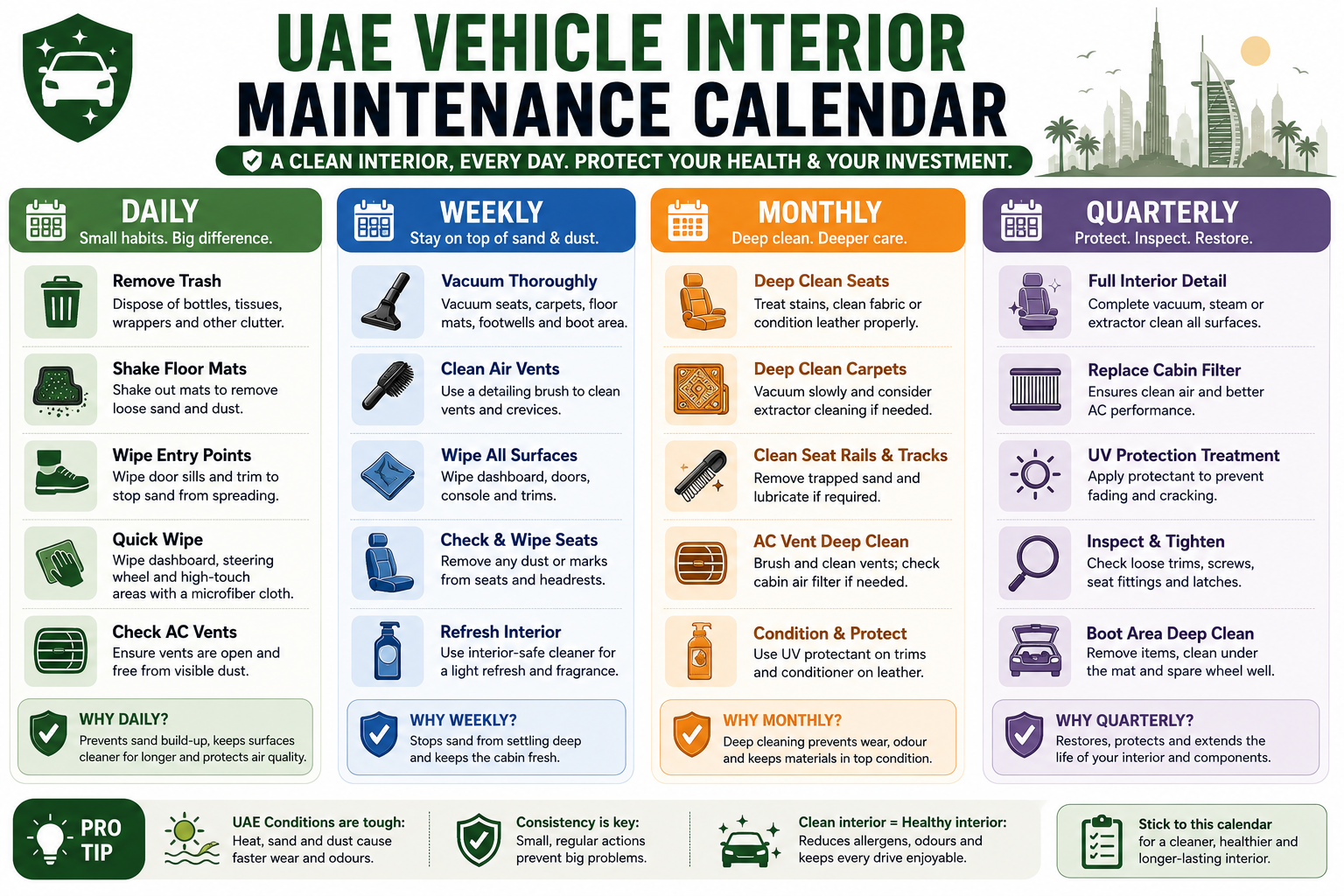
The following interior car cleaning UAE schedule is based on typical UAE parking and usage conditions. Adjust frequency upward for open parking, construction proximity, or pet and family use.
- Remove any visible rubbish and food packaging
- Shake out driver floor mat if sand accumulation is visible
- Wipe down dashboard with a dry microfiber cloth if a dust layer is present
Weekly
- Full vacuum of seats and carpets
- Wipe down all hard surfaces with interior cleaner
- Clean floor mats
- Check AC vent surfaces for visible dust accumulation
- Wipe interior glass if film or smearing is visible
Monthly
- Full cleaning sequence as outlined in the step-by-step section above
- AC vent brush and vacuum treatment
- Seat treatment – leather conditioning or fabric spot cleaning as required
- Boot and cargo area vacuum and wipe-down
- Interior glass full clean
Quarterly
- Complete deep clean of all interior surfaces
- Seat rail sand clearance
- Under-seat area access and cleaning
- Application of plastic protectant to all hard surfaces
- Leather conditioning with full two-coat application
- Floor mat replacement check – worn mats with compressed pile or damaged edges should be replaced
When to Deep Clean Your Vehicle
Outside of the regular interior car cleaning Dubai and UAE maintenance schedule, several conditions indicate that an unscheduled deep clean is warranted:
- Following any sandstorm event, which deposits significant quantities of fine particulate matter across all surfaces within hours
- After transporting pets for an extended period
- After any food or beverage spill involving sticky or sugary substances
- When AC odour becomes noticeable on startup
- Before or after extended periods of vehicle storage, such as overseas travel
- When children have used the vehicle for a long road trip
Apartment Parking vs Villa Parking Considerations
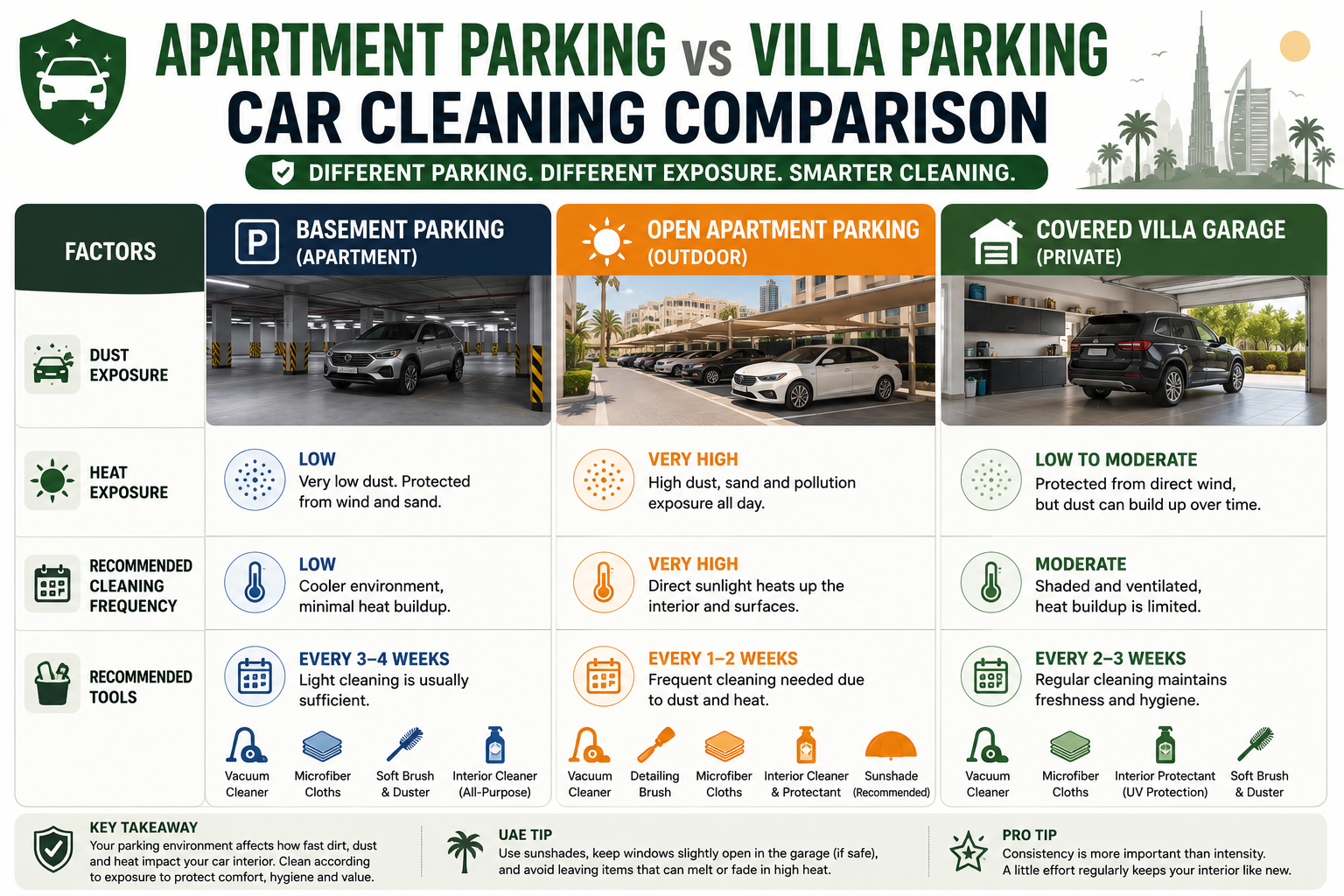
The parking environment significantly affects interior car cleaning UAE frequency and approach. Understanding which category applies helps set a realistic cleaning schedule.
Apartment Vehicle Owners
Apartment residents in the UAE face a wider range of parking scenarios than villa residents, and the conditions vary considerably between them.
Basement parking in well-maintained buildings provides meaningful protection from direct dust and sandstorm exposure. However, basement carparks with poor sealing around vehicle entry ramps, heavy traffic flow, or proximity to ground level allow more particulate matter to enter than fully enclosed underground structures. Vehicles in basement parking still require monthly interior cleaning, as dust migrates in through door gaps and is carried in on clothing and bags.
Open apartment parking – surface-level bays, rooftop decks, or open-sided podium levels – offers no meaningful protection from desert dust or sandstorm events. Vehicles parked in these environments accumulate interior contamination at the same rate as those with no shelter at all. A full interior clean every two to three weeks is appropriate for this scenario, with an immediate targeted clean following any sandstorm.
Construction dust exposure is a distinct factor for apartment residents in active development areas. Fine construction particulate – which includes concrete dust, silica, and gypsum particles – is finer and more adhesive than desert sand. Vehicles parked near active construction sites require more frequent cleaning and benefit from cabin air filter checks, as construction dust loads filters significantly faster than standard urban conditions.
Shared parking risks in apartment buildings include dust and debris tracked from adjacent vehicles during entry and exit, poorly maintained shared areas where sand accumulates between cleaning cycles, and limited space for in-bay cleaning tasks. Many apartment residents use professional mobile car cleaning services for this reason.
Dust After Sandstorms UAE covers the specific cleaning response for desert and construction dust events that affect both apartments and vehicles.
Villa Vehicle Owners
Villa residents with covered garages benefit from significantly reduced dust exposure, lower heat stress on interior materials, and the space and access required for thorough at-home cleaning.
Covered garage advantages include protection from direct sunlight, which reduces cabin temperature peaks and slows leather drying and plastic degradation. Dust accumulation on exterior surfaces and through door gaps is reduced, though not eliminated. Vehicles in covered villa garages typically require interior cleaning on a monthly schedule rather than fortnightly.
Reduced sand accumulation in covered garages means carpet and seat rail contamination builds more slowly. The quarterly deep-clean schedule outlined in this guide is appropriate for this parking scenario, though footwell mats still require weekly shaking due to sand carried in on shoes.
Garage cleaning importance is often overlooked by villa owners. Dust that settles on the garage floor, workbench surfaces, and stored items migrates into vehicle interiors whenever doors are opened. A clean, well-organised garage reduces the amount of particulate matter that enters vehicles during access. Sweeping or vacuuming the garage floor and keeping the entry area clear of sand significantly reduces vehicle interior contamination over time.
Drivers who park in open carparks adjacent to construction sites face the highest interior contamination rates and should treat the schedule above as a minimum rather than a guideline.
Balcony Dust Problems UAE covers construction-adjacent dust management in residential settings, which shares several characteristics with open-parking vehicle contamination.
Most Forgotten Areas Inside UAE Cars
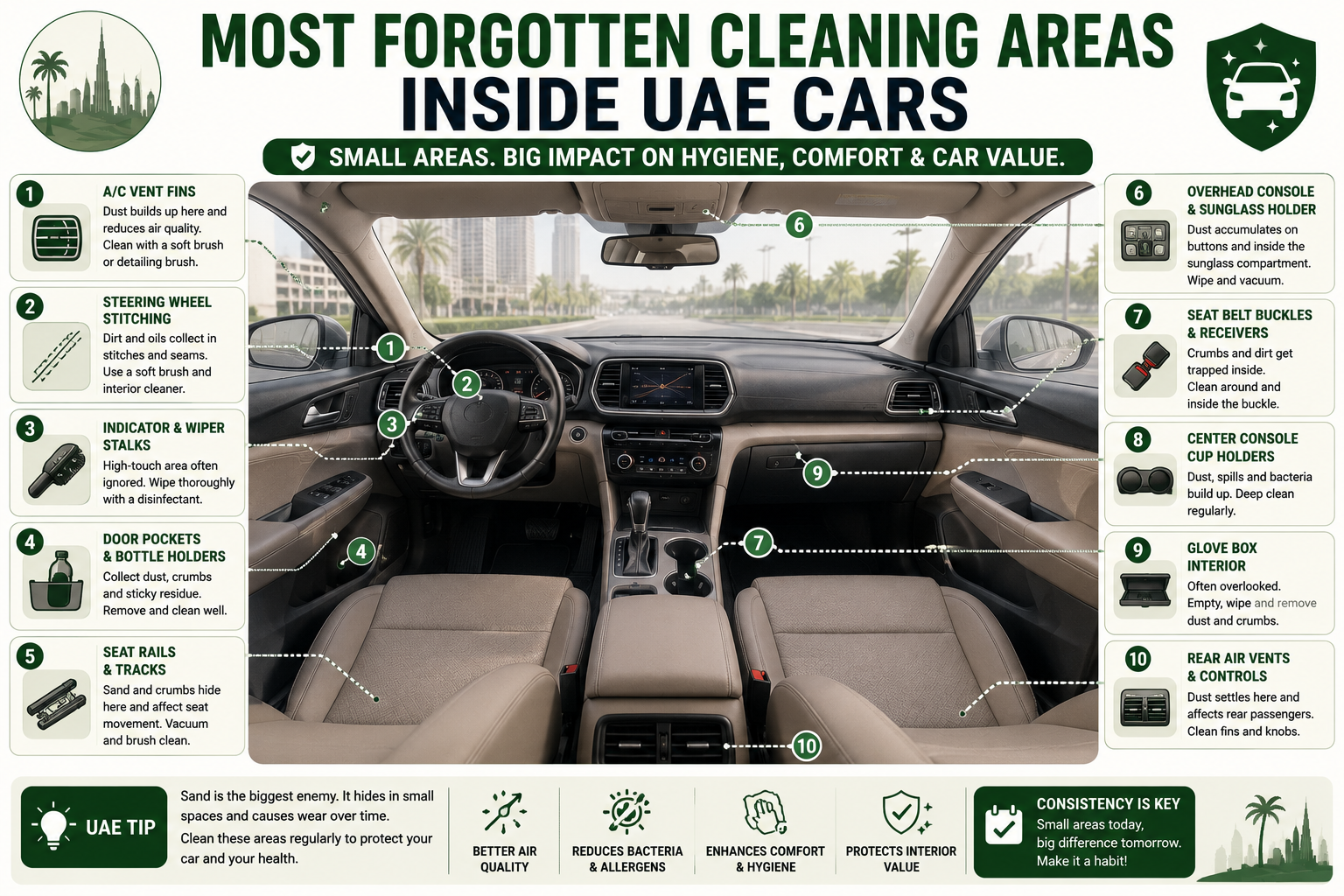
Most interior car cleaning UAE sessions address obvious surfaces – dashboard, seats, and carpets – while leaving the areas where contamination concentrates unaddressed. In UAE conditions, these overlooked areas become significant sources of ongoing odour, dust redistribution, and material wear.
Seat rails. The metal channels running beneath front seats are among the highest-concentration sand accumulation points in any vehicle. Sand compacts in the rail grooves with every seat adjustment and is difficult to clear without a crevice tool and detailing brush used in combination.
Under front seats. The zone directly beneath the front seats collects fallen items, sand migration from carpets, and debris that slides under during driving. Standard vacuum passes do not reach this area without a flat nozzle attachment and deliberate low-angle access.
Door pockets. The base of each door pocket accumulates sand, fine dust, crumbs, and small items. Many drivers empty door pockets but do not vacuum or wipe the pocket surface itself, leaving contamination in place.
Cup holders. Cup holders collect beverage residue, crumbs, and dust in a confined space that warms significantly in UAE conditions. Residue ferments in heat and contributes to interior odour. A small detailing brush or cotton swab is required to clean the base and edges of each cup holder recess.
Boot corners. The corners of the boot cargo area, particularly around the spare wheel access hatch and behind any storage organiser, accumulate sand, grit, and packaging debris. These areas are rarely addressed during standard cleaning.
Child seat anchor points. Vehicles used to transport children have ISOFIX anchor points and anchor strap hooks that collect fabric lint, dust, and food debris from the surrounding seat area. These recesses are not accessible without removing the child seat.
Spare wheel compartment. The compartment beneath the boot floor mat collects moisture, grit, and debris that enters when the mat is lifted. Mould growth in this sealed, warm space can contribute to interior odour without an obvious surface source.
Common Car Interior Cleaning Mistakes
The following mistakes are commonly made during interior car cleaning UAE sessions and reduce the effectiveness of the full process. Any moisture entering button gaps, screen edges, or switch panels can cause electrical damage. Always apply product to a cloth first.
Using household cleaning sprays on leather. Products containing alcohol, ammonia, or alkaline surfactants strip the protective coating from leather surfaces and accelerate drying.
Wiping glass with a cloth used on other surfaces. Residual interior cleaner or protectant on a glass cloth creates streaks that impair visibility, particularly at night against oncoming headlights.
Replacing floor mats before the carpets are dry. Sealing moisture under floor mats in a hot vehicle creates conditions for mould and odour development in the carpet fibres beneath.
Using compressed air on dust without vacuuming simultaneously. Blowing dust from one area without capturing the displaced particles redistributes contamination across already-cleaned surfaces.
Neglecting seat rails. Leaving sand accumulated in seat rails means that every time the seat is adjusted, grit is redistributed across the carpet and into the seat mechanism.
Ignoring the boot and cargo area. The boot accumulates sand, food packaging residue, and incidental contamination that contributes to overall vehicle odour if not cleaned regularly.
How Often Should You Professionally Detail a Car in the UAE
Professional interior car cleaning UAE – which involves deep extraction of carpet and upholstery fibres, steam cleaning of hard surfaces, and conditioning of all materials – is commonly recommended once or twice per year for vehicles in standard use conditions. Vehicles exposed to frequent sandstorm events, those used for pet transport, or those used in family contexts with children benefit from more frequent professional attention.
Professional detailing is distinct from the regular cleaning described in this guide. Home cleaning maintains the vehicle between professional sessions. Professional treatment addresses accumulated contamination that regular cleaning does not reach, including deep carpet extraction, steam sanitisation of AC-adjacent surfaces, and leather restoration.
When selecting a professional detailer, confirm that the service includes seat rail cleaning, under-seat vacuuming, AC vent treatment, and boot carpet extraction, as these are the areas most commonly excluded from lower-cost services.
Best Car Cleaning Tools UAE covers the tools used by professional detailers that are also suitable for home use by UAE drivers.
Contents include:
- Daily tasks: rubbish removal, floor mat shake-out, dashboard dust wipe
- Weekly tasks: full vacuum, hard surface wipe, floor mat clean, AC vent check, glass wipe
- Monthly tasks: full cleaning sequence, seat treatment, boot clean-out, glass deep clean
- Quarterly tasks: seat rail clearance, under-seat access, protectant application, leather conditioning
- Supplies checklist: vacuum, crevice tool, detailing brushes, microfiber cloths, interior cleaner, glass cleaner, leather conditioner, fabric cleaner
- Sandstorm recovery checklist: post-event surface check, targeted vacuum, vent inspection, floor mat clean
Available via Car Cleaning UAE.
Related Car Cleaning Guides
Car Cleaning UAE – full hub covering all vehicle cleaning topics for UAE drivers.
Best Car Cleaning Tools UAE – reviewed shortlist of vacuums, brushes, and microfiber cloths for UAE vehicle interiors.
Best Vacuum Cleaner for Sand UAE – suction ratings, filter types, and attachment compatibility for UAE desert sand conditions.
Best AC Vent Cleaning Tools UAE – vent brushes and treatment products for both home and vehicle AC systems.
Frequently Asked Questions
How often should a car interior be cleaned in the UAE?
For vehicles parked in open carparks or exposed to construction dust, a full interior clean every two to three weeks is practical. For covered parking, monthly cleaning typically maintains an acceptable standard. Following any sandstorm event, a targeted interior check and partial clean is recommended regardless of schedule.
What is the best way to remove sand from car carpet in the UAE?
Slow, deliberate vacuum strokes with firm downward pressure on the vacuum head are more effective than fast surface passes. Working in multiple directions across each area dislodges sand particles oriented along carpet fibres. Accessing seat rails and the under-seat area with a crevice tool is essential for thorough sand removal.
Can desert dust damage a car interior over time?
Based on the composition of UAE desert dust, which contains fine silica particles, repeated accumulation and light wiping without proper cleaning does act as a mild abrasive on soft interior surfaces. Regular thorough cleaning reduces surface abrasion and extends the service life of upholstery, carpeting, and dashboard finishes.
Why does my car smell bad when I turn on the AC in the UAE?
AC odour on startup is commonly associated with mould or bacterial growth on the evaporator fins inside the AC system. This is more prevalent in coastal UAE locations with higher ambient humidity. A dedicated automotive AC treatment product, applied through the fresh air intake or cabin filter housing, addresses the contamination source. Simple interior cleaning does not resolve AC system odour.
What type of floor mat is best for UAE vehicles?
Rubber or all-weather floor mats with raised perimeter edges and deep tread patterns perform better than fabric mats in UAE conditions. They contain sand and debris more effectively, are easier to shake clean, and dry quickly after any moisture exposure. Many UAE drivers use dedicated rubber mats over factory fabric mats as a permanent liner.
Is it safe to use a household vacuum on car interiors?
Household vacuum cleaners can be used on car interiors, though their large heads are typically less effective at accessing seat rails, under-seat areas, and narrow crevices than purpose-designed automotive vacuums or cordless models with dedicated crevice tools. Suction strength is generally adequate for surface particles but less effective for deeply embedded sand in carpet pile.
How should leather car seats be maintained in UAE heat conditions?
Leather seats benefit from conditioning with a dedicated automotive leather conditioner every six to eight weeks for vehicles with high sun exposure, and quarterly for those in covered parking. Conditioning before visible drying occurs is more effective than applying conditioner after cracking has begun. Perforated leather requires a detailing brush to clear dust from perforations before wiping.
What products should not be used on car interior surfaces in the UAE?
Household glass cleaners containing ammonia should be avoided on tinted windows, which are near-universal in UAE vehicles. Silicone-based products on plastic surfaces in the driver’s line of sight create reflective glare on the windscreen. Products containing bleach or strong alkaline surfactants should not be used on leather, fabric, or vinyl surfaces.
How do I clean AC vents in a car without causing damage?
Use a soft detailing brush to dislodge dust from louvre fins, then vacuum immediately to capture loosened particles. Avoid inserting hard instruments into the vent channel behind the fins, as the plastic components within are fragile. For persistent odour, a dedicated AC treatment product rather than physical vent cleaning is the appropriate approach.
Is professional car detailing worth it for UAE drivers?
Professional interior detailing provides a level of deep extraction and surface treatment that home cleaning does not replicate. For UAE drivers dealing with regular sandstorm exposure, pet use, or family vehicle demands, professional detailing once or twice per year maintains materials at a standard that extends their useful life and resale value. The specific value depends on vehicle age, parking conditions, and usage patterns.
Sources
Guidance in this article draws on vehicle maintenance standards and desert climate data published by Dubai Municipality, particulate matter and sandstorm frequency research from the UAE Ministry of Climate Change and Environment, heat and UV effects on automotive materials documented by the Society of Automotive Engineers, indoor and cabin air quality benchmarks from the World Health Organization, and leather care guidance from the Leather and Hide Council of America.