This Abu Dhabi home cleaning and maintenance guide shares 9 essential tips for easier home care and covers the tasks that matter most when moving into and looking after a home in the emirate: tenancy and utility checks, the first deep clean, bathroom deposits, and villa water tank care. Based on UAE conditions, Abu Dhabi homes deal with fine dust and sand that settle through window gaps and AC returns, long periods of sealed apartment living, and summer heat that dries water quickly on every wet surface. Villa residents have an extra responsibility: storage tanks that hold water before it reaches taps and showers.
Much of the cleaning advice online is written for Dubai. Abu Dhabi uses its own systems, including Tawtheeq for tenancy registration and TAQA Distribution (previously ADDC) for water and electricity. This guide explains how those systems connect to everyday cleaning and maintenance decisions.
Abu Dhabi Home Cleaning and Maintenance Guide: Local Priorities
Abu Dhabi homes share the dust and heat challenges found across the country, but tenancy and utility systems differ from Dubai, and many villas store water in their own tanks. These differences affect what needs checking at move-in and which maintenance problems appear afterwards.
Dust, Sand and Sealed Apartments
Fine dust enters through sliding door tracks, window seals and AC return grilles, even in newer towers. In apartments that stay closed for most of the summer, dust settles on AC vents, skirting boards and kitchen tops faster than many new residents expect. Many users report that a vacant unit handed over after weeks of closure needs a full deep clean, even when it looks tidy at first glance.
Heat and Wet Surfaces
High temperatures dry water quickly on glass, tiles and chrome. Whatever minerals the water contains are left behind as spots and film. Heat does not create those minerals, but it shortens the time between a wet surface and a visible deposit, which is why daily drying habits matter more in a hot climate.
The Abu Dhabi Tenancy Move-In Protocol

A practical move-in sequence has three stages: tenancy registration, utility activation and preparation cleaning. Handling them in order avoids delays, because the utility account for most tenants is linked to the registered contract.
Step 1: Confirm the Tawtheeq Registration
Tawtheeq is the tenancy contract registration system used in the Emirate of Abu Dhabi, run by the Department of Municipalities and Transport. Lease registration, renewal and cancellation services are available through the TAMM platform and municipal customer centres. Registration is usually completed by the landlord or an authorised property manager.
Tenants can take a few simple steps:
- Ask the landlord or agent for confirmation that the contract has been registered in Tawtheeq.
- Check that the name, unit number and dates on the registered contract match the signed lease.
- Keep a digital copy of the registered contract, as it is commonly requested for other government and utility services.
Fees, required documents and responsibilities can change, so current details should be confirmed on TAMM before signing.
Step 2: Check the TAQA Distribution Utility Account
Abu Dhabi Distribution Company (ADDC) and Al Ain Distribution Company (AADC) were combined under the TAQA Distribution brand, with the new name appearing on bills and at branches from January 2025. TAQA Distribution states that tenants in areas covered by Tawtheeq have their accounts set up once their details are received from the registration authority. Tenants outside Tawtheeq coverage, and owners moving into their own property, submit a separate move-in application.
Before moving in:
- Confirm the account number has been received.
- Activate the online account so bills and consumption can be tracked.
- Ask building management about flushing and water checks after prolonged vacancy. Flushing does not replace tank inspection.
- Note any discoloured water, low pressure or leaks and report them to the landlord in writing.
Step 3: Deep Clean Before Furniture Arrives
An empty unit is the easiest point at which to reach every surface. Based on UAE conditions, a pre-furniture deep clean should focus on dust traps and water-related surfaces:
- Remove and wash AC filters, then wipe supply vents and return grilles.
- Vacuum sliding door tracks, window channels and balcony drains where sand collects.
- Clean inside kitchen cabinets, wardrobes and drawers before anything is stored.
- Descale shower heads, taps and glass screens to establish a clean baseline.
- Check silicone around sinks and showers for black spots or gaps.
- Mop floors with a damp microfiber mop rather than sweeping, which tends to lift fine dust back into the air.
- Photograph the condition of walls, fixtures and appliances for the move-in record.
Move-In Sequence at a Glance
| Stage | Main task | Usually handled by | Timing |
|---|---|---|---|
| 1 | Tawtheeq contract registration | Landlord or property manager | Before keys are handed over |
| 2 | TAQA Distribution account setup | Linked to Tawtheeq for most tenants; move-in application otherwise | After registration |
| 3 | Deep clean and descaling | Tenant or hired cleaner | Before furniture arrives |
| 4 | Water checks and any testing | Tenant | First week |
| 5 | Villa tank inspection and cleaning records | Landlord or building owner | Before or at move-in |
Mineral Scale, Sediment and Tank Hygiene: Three Different Problems

Water complaints in Abu Dhabi homes are often grouped together as "hard water", but they usually involve three separate issues with different causes and different fixes. Identifying which one is present avoids buying equipment that does not address the actual problem.
Mineral Scale
Water hardness is the amount of dissolved calcium and magnesium in water. When water containing these minerals is heated, calcium carbonate scale can form inside water heaters, kettles, pipes and shower heads. When it evaporates on glass or tiles, the minerals are left behind as white spots. The amount of scale depends on how much calcium and magnesium the water actually contains, which can differ between areas and buildings. Heat and evaporation speed up how quickly deposits appear, but they are not a cause of hardness on their own. Hardness is generally described as a nuisance rather than a health concern.
Most drinking water in Abu Dhabi is produced by seawater desalination and distributed through a regulated network, and desalinated water may be blended or treated before distribution. Some homes therefore see very little scale while others see more. A visible deposit is not, by itself, proof that a home has hard water.
Sediment
Sediment is made up of fine particles such as sand, rust or debris from tanks and pipes. It shows up as grit in sinks, cloudy water, discoloured water after supply interruptions, or residue in tap aerators. Sediment is not hardness, and a water softener does not remove it. Cleaning aerators, flushing taps, using a sediment pre-filter and keeping storage tanks clean are the relevant responses.
Tank Hygiene
Water stored in building or villa tanks can be affected by poor maintenance, an uncovered opening or contamination around the tank. This is a hygiene issue, not a mineral issue. Signs include unusual odour, sudden discolouration and visible algae or debris in the tank. Neither a softener nor a shower filter solves it. The fix is inspection, cleaning and disinfection by a qualified company, covered in the villa tank section below.
How to Test Before Buying Equipment
- Use water hardness test strips or a laboratory test to measure calcium and magnesium. This is the test that indicates whether a softener is worth considering.
- Use a handheld TDS (total dissolved solids) meter mainly to check filter performance. A TDS reading does not measure hardness or bacteria specifically, and it cannot confirm whether water is safe to drink.
- Arrange an accredited laboratory test when odour, colour or health concerns are involved.
- Repeat tests after a few weeks, as results can vary with supply conditions and tank cleaning.
For removing existing deposits, see the CleanLivingUAE guide to hard water stains in the UAE.
Villa Water Tank Maintenance in Abu Dhabi

Many villas rely on rooftop or ground-level tanks that store water before it reaches taps. In Abu Dhabi, tank maintenance is a regulatory responsibility as well as a hygiene task.
What the Current Regulations Require
The Department of Energy’s Water Supply Regulations, effective from 1 January 2024, require the "Responsible Person" to ensure that ground storage tanks and roof tanks are inspected regularly and cleaned when necessary, following the procedures in the Guide to the Water Supply Regulations. The same regulations place responsibility for keeping water wholesome within the property’s plumbing on that Responsible Person, and require a working float valve and overflow arrangement to prevent overflow. The Responsible Person is generally the owner or the registered building manager.
Minimum Frequencies in the Code of Practice
The Code of Practice for the Inspection and Cleaning of Customer Water Storage Tanks, issued in 2015 by the then sector regulator, sets minimum cleaning and disinfection frequencies by tank material and location. The 2024 regulations state the duty without a fixed interval, so the code remains the most specific published schedule. Owners should confirm with the Department of Energy whether it still applies in full.
| Tank material | Tank location | Minimum cleaning and disinfection frequency (2015 Code of Practice) |
|---|---|---|
| Concrete | Underground or ground level | Bi-annually (twice a year) |
| Concrete | Roof | Annually |
| Plastic (polyethylene) | Ground or roof | Annually |
| FRP | Ground or roof | Annually |
| GRP sectional panel | Ground level | Bi-annually (twice a year) |
| GRP sectional panel | Roof | Annually |
| Galvanised iron or steel | Ground or roof | Annually |
Signs a Tank Needs Attention
The code lists common visual signs of contamination:
- Sediment or sludge at the bottom of the tank.
- Algae growth inside the tank or around the manhole.
- An oily film on the water surface.
- Dead insects or animals.
- Extensive corrosion, an uncovered opening, or dirt building up around the tank.
At tap level, sediment in sinks, an unusual smell and sudden discolouration are reasons to request an inspection.
What a Cleaning Visit Involves
Tank cleaning should be carried out by a qualified company, not as a do-it-yourself job, because entering a tank involves confined space, chemical and working-at-height risks. The procedure described in the code follows this order:
- Residents are notified at least 48 hours in advance.
- The inlet is closed ahead of time so stored water is used rather than wasted.
- The tank is drained, scrubbed or pressure washed, and rinsed.
- The contractor disinfects the tank following the applicable approved procedure.
- The tank is rinsed, refilled and, where required, sampled for laboratory testing.
- Residents are told when water is safe to use, often with advice to run taps for several minutes.
The code also states that the company that inspects and samples a tank should not be the same company that cleaned it, and that records should be kept for five years.
Tenant and Landlord Responsibilities
Tank maintenance sits with the owner or registered building manager. Lease terms vary, so villa tenants are encouraged to ask for the most recent cleaning record before moving in and to confirm in writing who arranges future cleaning. Tenants can help by keeping the area around the tank clear, checking that the cover stays closed, and reporting leaks or overflow quickly.
Tools and Products for Abu Dhabi Water Conditions
Some product mentions may include affiliate links.
The right equipment depends on which problem testing has identified. A filter that improves drinking water taste will not stop scale on shower glass, and a softener will not remove sediment or fix a poorly maintained tank.
Shower Filters
Shower filters typically use carbon, KDF or vitamin C media to reduce chlorine. Many users report water that feels softer on skin and hair, but most compact shower filters do not significantly reduce calcium and magnesium, so deposits on glass and tiles often continue. Cartridges need regular replacement, especially with warm water.
Tap and Under-Sink Filters, Including RO
Tap-mounted and pitcher filters are renter-friendly and mainly improve taste and odour. Under-sink reverse osmosis (RO)systems remove most dissolved solids and are commonly chosen for drinking and cooking water. RO systems produce wastewater, need periodic filter and membrane changes, and often include a remineralisation stage. Renters can compare options in the guide to tap and faucet water filters for UAE renters.
Water Softeners
Descalers and Bathroom Tools
For existing deposits, acidic descalers, a squeegee and a non-scratch scrub pad handle most bathroom surfaces. Natural stone such as marble should not be cleaned with acidic products. Options are covered in limescale removal solutions for the UAEand bathroom cleaning tools for the UAE.
Comparison: Water Treatment Options for Abu Dhabi Homes
| Option | Problem it addresses | Reduces mineral scale | Removes sediment | Improves drinking water | Renter-friendly | Ongoing maintenance |
|---|---|---|---|---|---|---|
| Shower filter | Chlorine at the shower | Limited | Limited | No | Yes | Cartridge changes |
| Tap or pitcher filter | Taste and odour | No | Some models | Taste and odour | Yes | Cartridge changes |
| Sediment pre-filter | Grit and particles | No | Yes | Indirectly | Sometimes, with permission | Cartridge changes |
| Under-sink RO system | Drinking and cooking water | At that tap only | Yes, with pre-filters | Yes | Sometimes, with permission | Filter and membrane changes |
| Whole-home water softener | Confirmed hard water | Yes | No | No | Usually needs approval | Salt top-ups and servicing |
| Tank inspection and cleaning | Storage hygiene | No | Yes, from the tank | Supports cleaner stored water | Landlord responsibility | Regular, per regulations |
Practical Tips for Abu Dhabi Residents
- Squeegee shower glass after each use; drying surfaces prevents most visible spotting regardless of water type.
- Clean tap aerators every few months to remove trapped sediment.
- Descale kettles and coffee machines regularly, as heated water deposits scale fastest.
- Test hardness before buying a softener or a whole-home system.
- Clean AC filters every two to four weeks in summer and after dusty days.
- Keep sliding door tracks and balcony drains free of sand to reduce dust tracked indoors.
- Ask for the latest villa tank cleaning record at renewal time, not only at move-in.
- Replace filter cartridges on schedule; an overdue cartridge can perform worse than no filter.
- Use a pH-neutral cleaner on marble and natural stone to avoid etching.
Related Guides on CleanLivingUAE
For the other regional guide, see the Sharjah home cleaning and maintenance guide for apartment humidity, condensation and mold-response checks.
Moving into an apartment: cleaning checklist
Deep cleaning UAE homes
Villa cleaning systems for the UAE
Bathroom cleaning in the UAE
AC filter cleaning guide
Dust and sand cleaning
Buying Guide Cards
Category comparisons linked to existing buying guides; these are not hands-on product reviews.
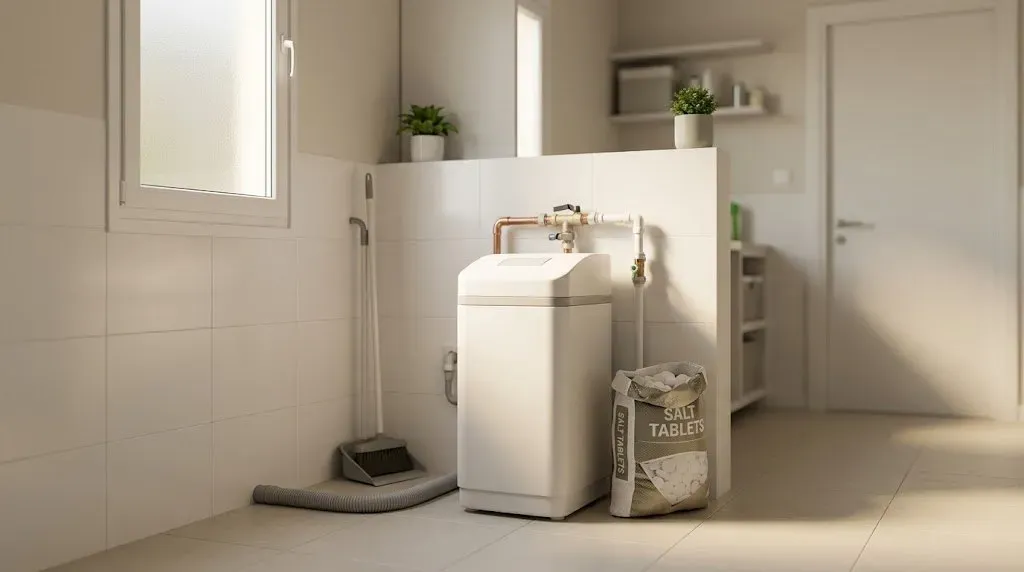
Water softeners
FOR CONFIRMED HARDNESS
Compare ion-exchange softening options when a hardness test confirms a recurring mineral-scale problem.
Key features
- Test hardness at the tap before choosing equipment
- Compare installation space and plumbing requirements
- Plan for salt, regeneration and maintenance
Homes with confirmed hardness and recurring scale
Measured hardness and installation approval
- Targets calcium and magnesium
- Options for different treatment locations
- Does not disinfect stored water
- Does not replace sediment investigation
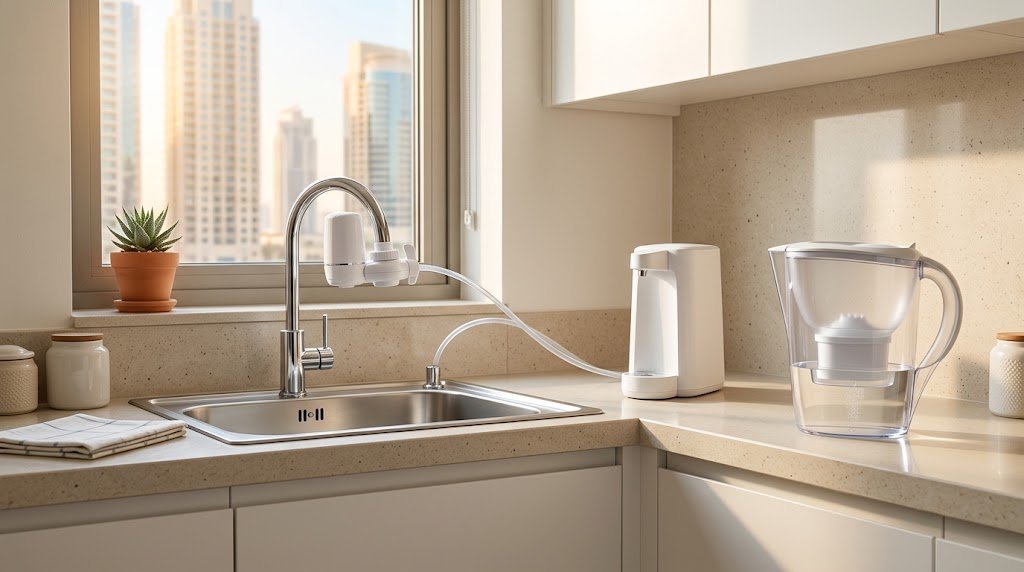
Tap and faucet filters
POINT-OF-USE WATER TREATMENT
Compare suitable point-of-use filters by tap compatibility, stated contaminant reduction and replacement requirements.
Key features
- Check compatibility with the existing tap
- Check the specific substances the filter reduces
- Compare cartridge availability and replacement intervals
Households comparing drinking-water filter options
Tap fit and specific filtration claims
- Treatment at a selected outlet
- Some options suit rented homes
- Performance varies by model
- Does not resolve tank hygiene concerns
Limescale removal tools
FOR EXISTING SURFACE DEPOSITS
Compare cleaning products and tools for deposits already present on compatible taps, glass and appliances.
Key features
- Identify the surface before choosing a cleaner
- Follow the label and appliance manual
- Dry wet fixtures to reduce visible spotting
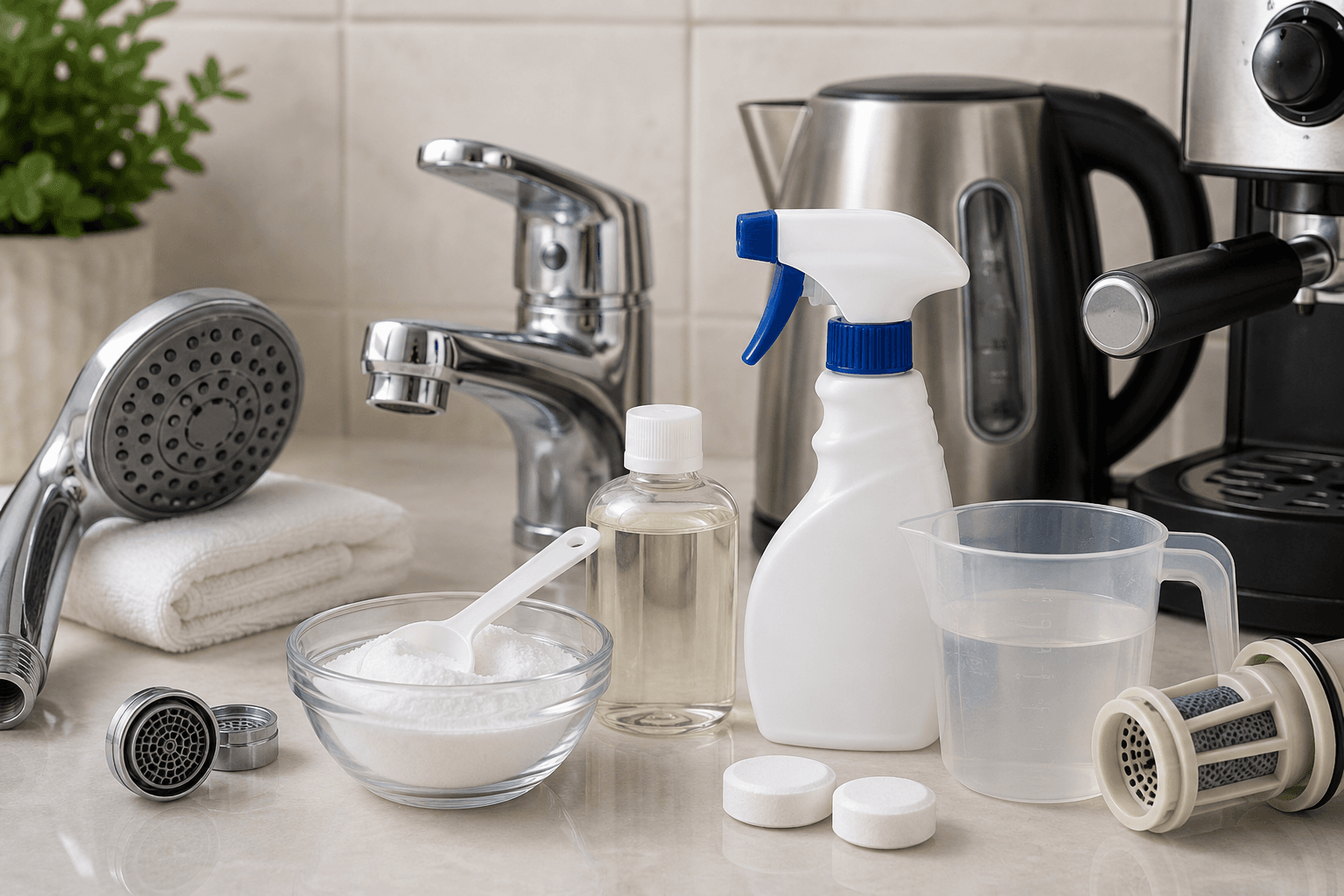
Existing deposits on compatible surfaces
Surface suitability and label instructions
- Addresses deposits already present
- Supports routine bathroom maintenance
- Acids can damage marble
- Does not change water hardness
Frequently Asked Questions
What is Tawtheeq in Abu Dhabi?
Tawtheeq is the tenancy contract registration system used in the Emirate of Abu Dhabi. It is run by the Department of Municipalities and Transport, with services available through TAMM.
Who registers the tenancy contract in Tawtheeq?
Registration is usually completed by the landlord or an authorised property manager. Tenants should request confirmation and a copy of the registered contract.
Is ADDC still the water and electricity provider in Abu Dhabi?
ADDC and AADC now operate as TAQA Distribution, with the new name used on bills and at branches from January 2025. Many residents and older documents still use the ADDC name.
Do tenants need to apply separately for water and electricity?
Tenants in areas covered by Tawtheeq have their accounts set up once their details are received from the registration authority. Tenants outside Tawtheeq coverage and property owners submit a move-in application.
Why do white deposits form on Abu Dhabi bathroom fixtures?
White deposits are minerals, mainly calcium and magnesium, left behind when water evaporates or is heated. How much forms depends on the water’s mineral content, while heat and fast drying make deposits appear sooner.
Does every Abu Dhabi home need a water softener?
No. A softener is only worth considering when a hardness test confirms hard water and scale is a recurring problem. It does not remove sediment or fix tank hygiene issues.
Does a shower filter stop limescale?
Most compact shower filters mainly reduce chlorine and do not significantly remove calcium and magnesium. Deposits on glass and tiles usually continue without regular drying or softening.
Can a TDS meter show whether water is hard?
Not reliably. A TDS meter measures total dissolved solids, not calcium and magnesium specifically. Hardness test strips or a laboratory test give a more accurate picture.
How often should villa water tanks be cleaned in Abu Dhabi?
The 2024 Water Supply Regulations require regular inspection and cleaning when necessary. The 2015 Code of Practice sets minimums of once a year for roof tanks and twice a year for concrete ground or underground tanks and ground-level GRP tanks.
Can a villa water tank be cleaned without a professional company?
Cleaning is expected to be carried out by a qualified company because of confined space, chemical and working-at-height risks. Residents can check covers, tank surroundings and tap water for warning signs.
Sources
Procedures and requirements in this guide were checked on 8 November 2026 against the Department of Energy’s Water Supply Regulations 2024, the Regulation and Supervision Bureau’s Code of Practice for the Inspection and Cleaning of Customer Water Storage Tanks, the Department of Municipalities and Transport’s Tawtheeq page, TAQA Distribution’s moving-in guide, the Abu Dhabi Media Office announcement on the TAQA Distribution brand, the U.S. Geological Survey’s explanation of water hardness, and a peer-reviewed study of UAE drinking water quality published in MDPI Water.