This Sharjah home cleaning and maintenance guide includes 9 essential tips to avoid damp problems and focuses on the moisture problems that many residents describe as the hardest part of apartment living in the emirate. Based on UAE conditions, Sharjah homes deal with fine dust and sand blown in from inland areas, while coastal and lagoon-side districts also carry high moisture in the air for much of the year. Combined with sealed apartments, constant air conditioning and summer heat, this creates the conditions for condensation, musty odours and mold on walls, grout and AC components.
Condensation depends on the air temperature, its moisture content and the surface temperature. In air-conditioned Sharjah homes, warm, moist outdoor air meets surfaces cooled by air conditioning. This guide explains why that happens and how to deal with it safely in a rented home.
Sharjah Home Cleaning and Maintenance Guide: Moisture Priorities
Several features of Sharjah’s climate and building stock work together. Understanding them helps residents target the cause rather than repeatedly cleaning the same marks.
Coastal and Lagoon-Side Air
Sharjah sits on the Arabian Gulf coast, and districts such as Al Majaz and Al Khan are close to the water. Coastal weather can bring moisture-laden outdoor air into contact with cooled surfaces. Indoor conditions still depend on the building, ventilation, moisture sources and AC operation.
Cold Surfaces and Condensation
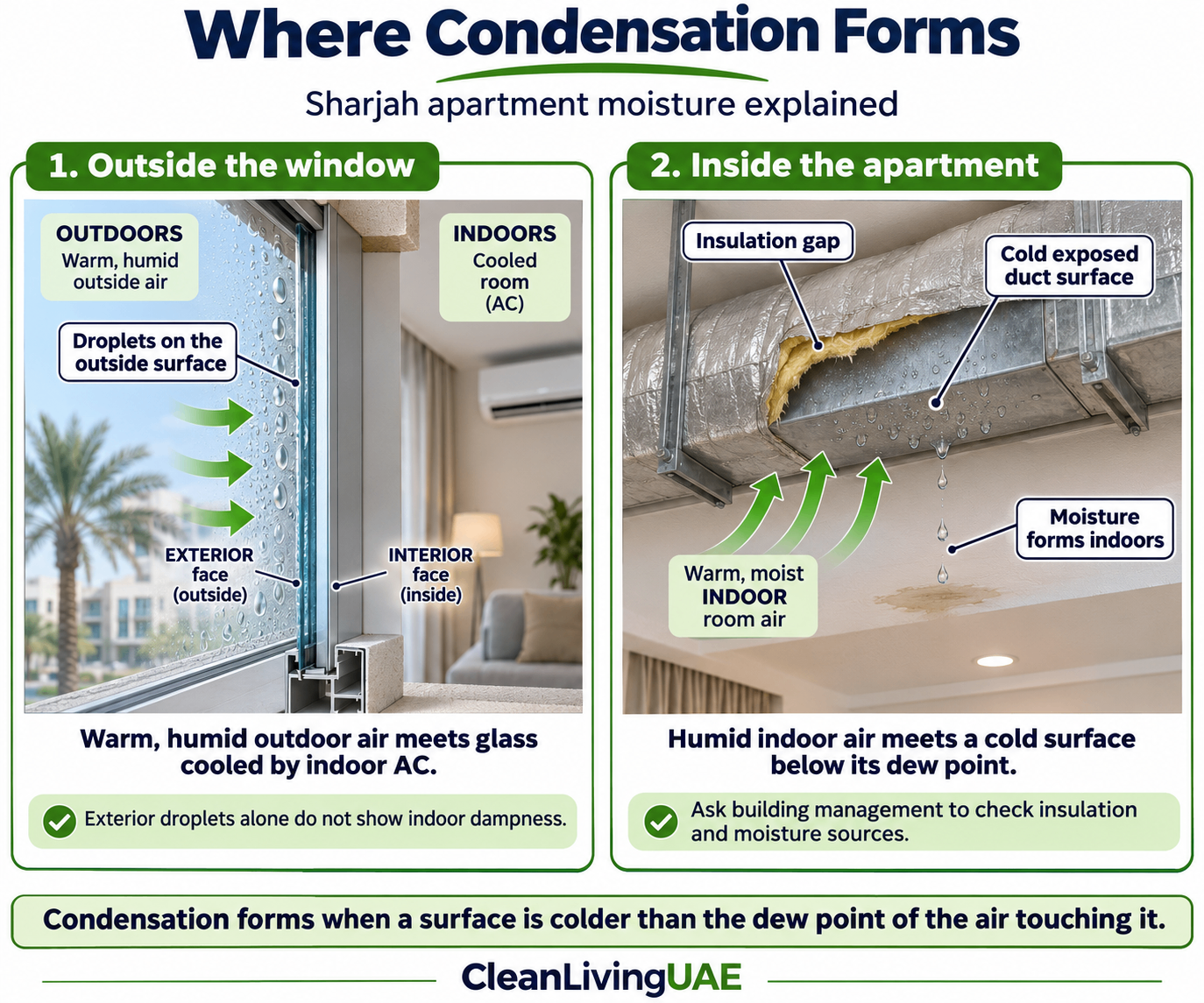
Air conditioning cools glass, walls and ductwork. When warm, moist air touches a surface cooler than its dew point, water condenses. Droplets on the exterior face of a window form outdoors and do not by themselves establish indoor dampness. Moisture on the room-facing glass, walls or duct surfaces forms indoors and needs a separate check for condensation, leaks and insulation faults.
Sealed Layouts and Indoor Moisture Sources
Some Sharjah apartments have internal bathrooms without windows, compact kitchens and limited cross-ventilation. Everyday activities add moisture indoors:
- Hot showers without an exhaust fan running.
- Cooking without a working extractor hood.
- Drying laundry indoors or in enclosed balconies.
- Leaving apartments sealed with the AC switched off during summer travel.
For an unoccupied home, arrange a humidity-control plan and periodic checks rather than relying on a thermostat setting alone.
Humidity Targets and How to Measure Them
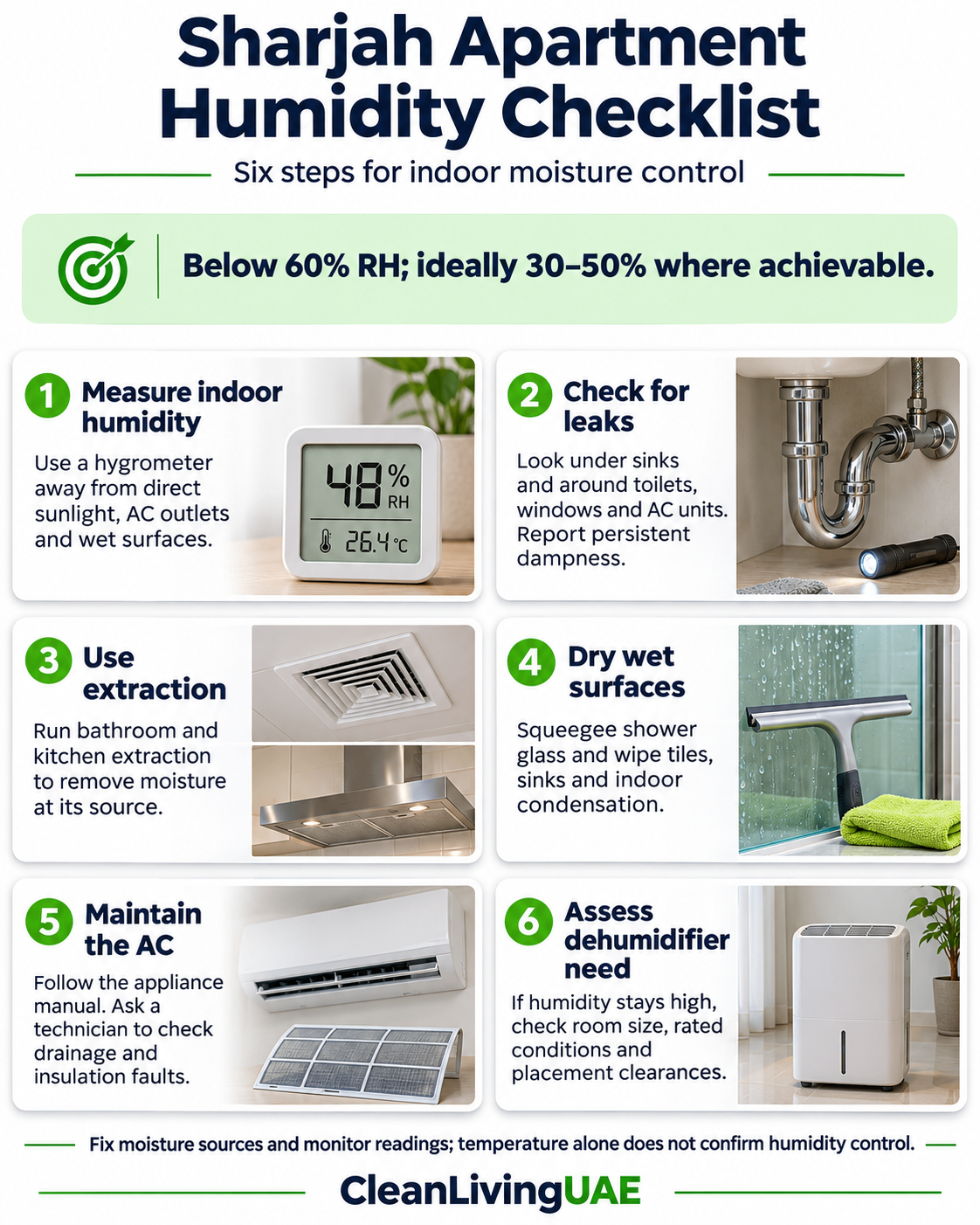
The US Environmental Protection Agency recommends keeping indoor relative humidity below 60 percent, and ideally between 30 and 50 percent. Above 60 percent for long periods, mold growth becomes much more likely on painted walls, grout, fabrics and unsealed wood.
A digital hygrometer is the simplest way to check. Practical steps:
- Place hygrometers in the bedroom and near the bathroom, away from direct AC airflow.
- Check readings in the morning and late evening, when condensation is most likely.
- Note readings before and after showers, cooking and laundry to find the main moisture sources.
- Track readings for one or two weeks before buying a dehumidifier.
Move-In Checks for Sharjah Tenants
Mold problems are easier to resolve when they are documented from the first day. SEWA (Sharjah Electricity, Water and Gas Authority) asks tenants to complete tenancy contract attestation with Sharjah City Municipality before applying for a SEWA move-in. The SEWA move-in application is made online using Emirates ID or UAE Pass, with the tenancy contract and meter photographs among the documents requested. Requirements can change, so current steps should be confirmed on the SEWA e-services portal before moving.
Before moving furniture in:
- Photograph walls, ceilings, window frames and bathroom grout, including any dark spots.
- Check under sinks and around the AC unit for leaks or water staining.
- Smell wardrobes and storage cupboards; a musty odour often signals hidden moisture.
- Run bathroom exhaust fans to confirm they work.
- Report existing mold in writing to the landlord before the tenancy begins.
Step-by-Step Mold Removal on Rental Walls and Grout
Small areas of surface mold can usually be handled by residents. The goal is to physically remove growth without damaging standard rental paint, which can be costly at move-out. Killing mold is not enough on its own, because dead mold can still cause allergic reactions.
Safety First
- Wear an N95 mask, gloves and eye protection.
- Ventilate the room by opening windows if outdoor air is drier, or by running exhaust fans.
- Keep children and anyone with asthma or allergies out of the area.
- Never mix cleaning products. Bleach must not be mixed with ammonia or acidic cleaners.
- Anyone with health concerns should consult a health professional before starting cleanup.
When Professional Help Is Appropriate
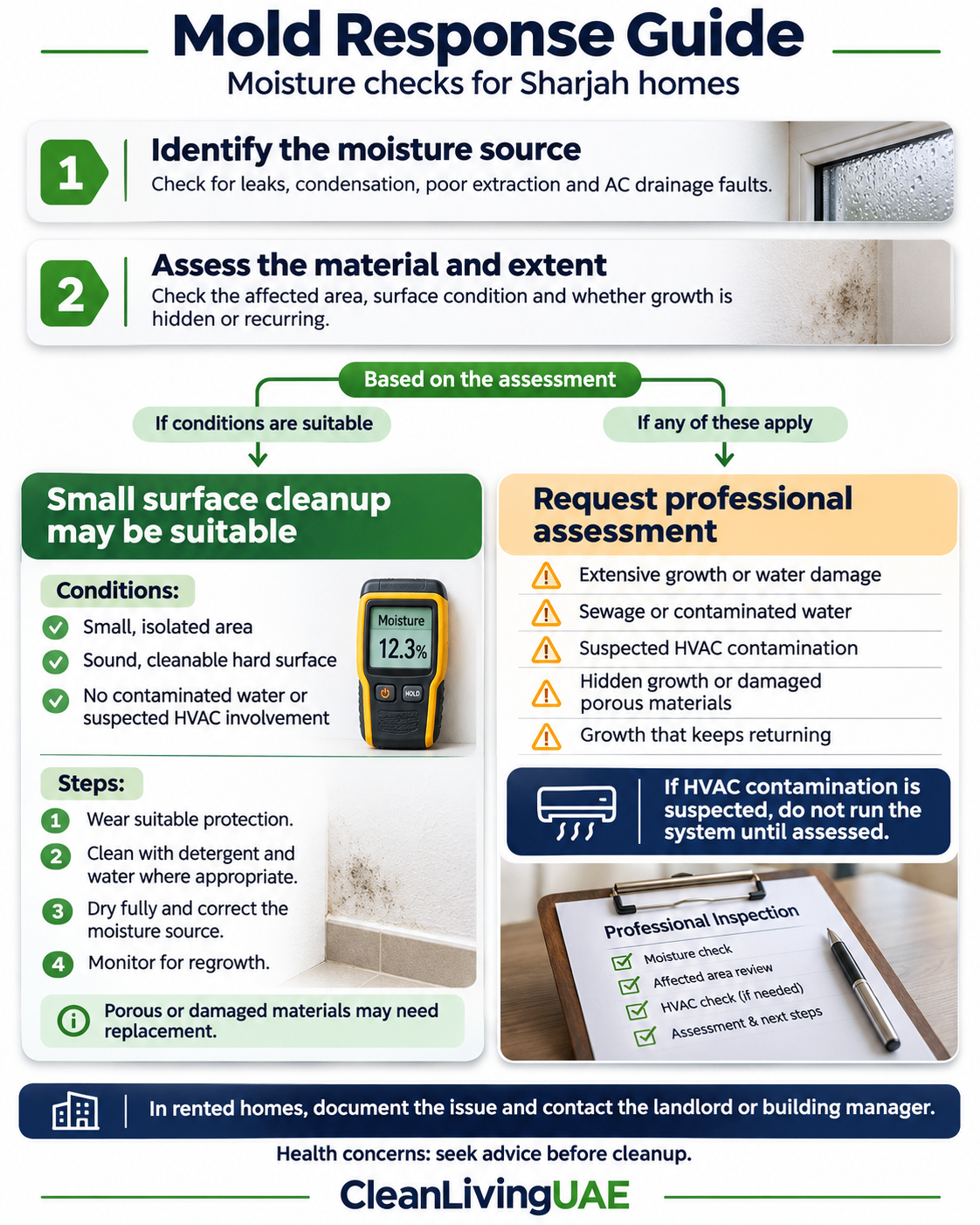
The EPA suggests that areas of about 10 square feet (roughly 1 square metre) or less can often be handled by residents. Professional assessment is appropriate when:
- Mold covers more than about 1 square metre.
- There has been extensive water damage, such as a major leak or flooding.
- HVAC or AC ducts are suspected to be contaminated; in that case the system should not be run until it is checked.
- Water damage involves sewage or other contaminated water.
- Growth keeps returning after cleaning, or appears inside walls or ceilings.
In rented homes, report these situations to the landlord or building management and confirm the repair arrangements under the tenancy agreement.
Painted Walls and Plasterboard
- Find and stop the moisture source first, such as a leak, condensation from an AC unit or a blocked drain line.
- Test any product on a small, hidden patch of paint and wait for it to dry.
- For a small patch on a sound, cleanable surface, use detergent and water or a suitable product according to its label. Avoid soaking porous materials.
- Wipe gently with a soft cloth or sponge, working from the outside of the patch inwards.
- Avoid hard scrubbing, which can lift paint and spread growth.
- Dry the cleaned area fully after removing growth. Do not direct a fan at mold or use an AC system suspected of contamination.
- Do not paint over mold. Paint applied over mold is likely to peel, and the growth can continue underneath.
- Monitor the spot for two to three weeks. If stains return or the plasterboard feels soft, the material may need repair or replacement by the landlord.
Tile Grout and Silicone
- Scrub grout with detergent and water or a bathroom mold cleaner, following the contact time on the label.
- Use a narrow grout brush to reach into the lines.
- For ordinary residue after mold cleanup, a steam cleaner may suit compatible grout where the appliance and surface instructions permit it; see steam cleaners in the UAE.
- Rinse and dry the area completely, then run the exhaust fan.
- Black staining deep inside silicone sealant usually does not clean out. Replacing the silicone is often the lasting fix, and in rentals this should be agreed with the landlord.
Bleach, Mold Cleaners and Detergent Compared
The EPA does not recommend routine use of biocides such as chlorine bleach for mold cleanup. Physical removal and fixing the moisture source matter more than the product used.
| Product type | Best suited for | Strengths | Limitations | Notes for rental walls |
|---|---|---|---|---|
| Mild detergent and water | Light surface growth on hard and painted surfaces | Gentle on paint; low cost; recommended as a first step | Does not prevent regrowth on its own | Often the safest starting point |
| Antifungal mold cleaner | Painted walls, grout, silicone | Formulated for mold; some leave a protective residue | Quality varies; follow label contact times | Test on hidden paint first |
| Hydrogen peroxide (3 percent) | Grout, tiles, some painted surfaces | Lower odour than bleach; breaks down into water and oxygen | Can lighten some colours | Test first; apply lightly |
| Chlorine bleach (diluted) | Non-porous surfaces such as tiles | Removes visible staining quickly | Not recommended for routine use; strong fumes; can discolour paint and fabrics | Avoid on painted walls unless the product label allows it |
| White vinegar | Light growth on tiles and glass | Widely available | Acidic; can etch natural stone and some grout | Not suitable for marble |
AC Maintenance and Dehumidifier Sizing
Air conditioning removes moisture as it cools, but only when it runs long enough and its parts are clean. In humid coastal areas, AC care and dehumidification work together.
Split Units and Central AC
The AC system may be split, central or a fan-coil arrangement, depending on the building. Tenants can usually clean filters and grilles themselves. Coil cleaning, duct cleaning and drain line work in central systems are normally handled by building management or the landlord.
Keeping Coils and Drain Lines Clear
- Inspect and clean washable AC filters according to the appliance manual and site conditions; see the AC filter cleaning guide.
- Watch for water dripping from indoor units, which often signals a blocked drain line.
- Report musty smells from vents, which can indicate growth on coils or inside ducts.
- Follow the building’s service plan and ask for drainage or coil checks when performance or moisture problems appear.
- Avoid setting the AC very low; a moderate setting that runs steadily often controls humidity better than short, cold bursts.
When a Dehumidifier Makes Sense
A dehumidifier is worth considering when hygrometer readings stay above 60 percent despite a working AC, or when specific rooms such as bedrooms, walk-in wardrobes or windowless bathrooms stay damp. Key points:
- Compressor dehumidifiers generally perform best in warm rooms and suit most Sharjah apartments.
- Desiccant models can suit cooler conditions. Noise and power use vary by model; compare rated wattage, noise data and test conditions.
- Capacity is rated in litres per day at the manufacturer’s test conditions, which differ between brands; real output in an air-conditioned room is usually lower.
- Size by room area and severity using the manufacturer’s guidance, and choose a model with a continuous drain option if the tank would otherwise need emptying several times a day.
Options suited to UAE conditions are reviewed in the guide to dehumidifiers in the UAE.
SEWA Bills and Running Costs
Running a dehumidifier alongside AC adds to electricity consumption. A device energy meter, used within its rating, can measure appliance consumption. Whole-home bill comparisons are affected by weather, AC use and occupancy. Agree a travel-time AC and humidity-control plan with building management. A fixed thermostat temperature does not guarantee suitable humidity; monitor readings and arrange checks during longer absences.
Tools for Sharjah Humidity and Mold Control
Some product mentions may include affiliate links.
- Digital hygrometer: measures indoor humidity; often included in air quality monitors.
- Dehumidifier: removes moisture where AC alone falls short; see dehumidifiers in the UAE.
- Steam cleaner with detail nozzle: for compatible grout and tile care according to the manual; see steam cleaners in the UAE.
- Mold cleaning products and brushes: covered in mold removal tools for the UAE.
- HEPA vacuum: captures settled dust after cleaning; see HEPA vacuums in the UAE.
- Squeegee and microfiber cloths: remove water from glass and tiles after showers.
Comparison: Moisture Control Options for Sharjah Apartments
| Option | How it works | Best for | Limitations | Typical running cost |
|---|---|---|---|---|
| AC on steady moderate setting | Removes moisture while cooling | Whole apartment | Less effective if oversized or set very low | Part of normal AC use |
| AC dry mode | Runs a model-specific drying cycle | Suitable conditions specified by the manual | Performance varies by model | Check manufacturer data |
| Compressor dehumidifier | Condenses moisture on a cold coil | Warm rooms, bedrooms, wardrobes | Noise; tank emptying | Moderate |
| Desiccant dehumidifier | Uses a drying material | Conditions matched to the model | Noise and power vary | Compare rated consumption |
| Exhaust fans | Removes moist air at the source | Bathrooms and kitchens | Needs to run during and after use | Low |
| Moisture absorber tubs | Passive chemical absorption | Small closed cupboards | Very limited capacity | Low, frequent replacement |
Practical Tips for Sharjah Residents
- Run extraction during moisture-producing activities and afterwards as needed, following the building’s guidance.
- Squeegee shower walls and glass after each use.
- Leave a small gap between furniture and exterior walls to allow airflow.
- Avoid drying laundry indoors on humid days.
- Wipe window condensation each morning during humid periods to protect frames and sills.
- Keep wardrobe doors slightly open, or use a small dehumidifier inside walk-in wardrobes.
- Clean AC filters regularly and report dripping units quickly.
- Keep the AC running at a moderate temperature during summer travel.
- Record hygrometer readings to show the landlord if moisture problems persist.
Related Guides on CleanLivingUAE
For the other regional guide, see the Abu Dhabi home cleaning and maintenance guide.
Humidity and mold prevention in UAE homes
Bathroom cleaning in the UAE
How often to clean AC filters in the UAE
Air and dust control in the UAE
Deep cleaning UAE homes
Buying Guide Cards
These cards link to category buying guides and do not represent hands-on product tests.
Dehumidifiers
FOR PERSISTENT INDOOR HUMIDITY
Compare room suitability, moisture-removal capacity at stated test conditions, drainage, noise and rated power.
Key features
- Check the rated test conditions
- Compare drainage and tank access
- Keep airflow clear according to the manual
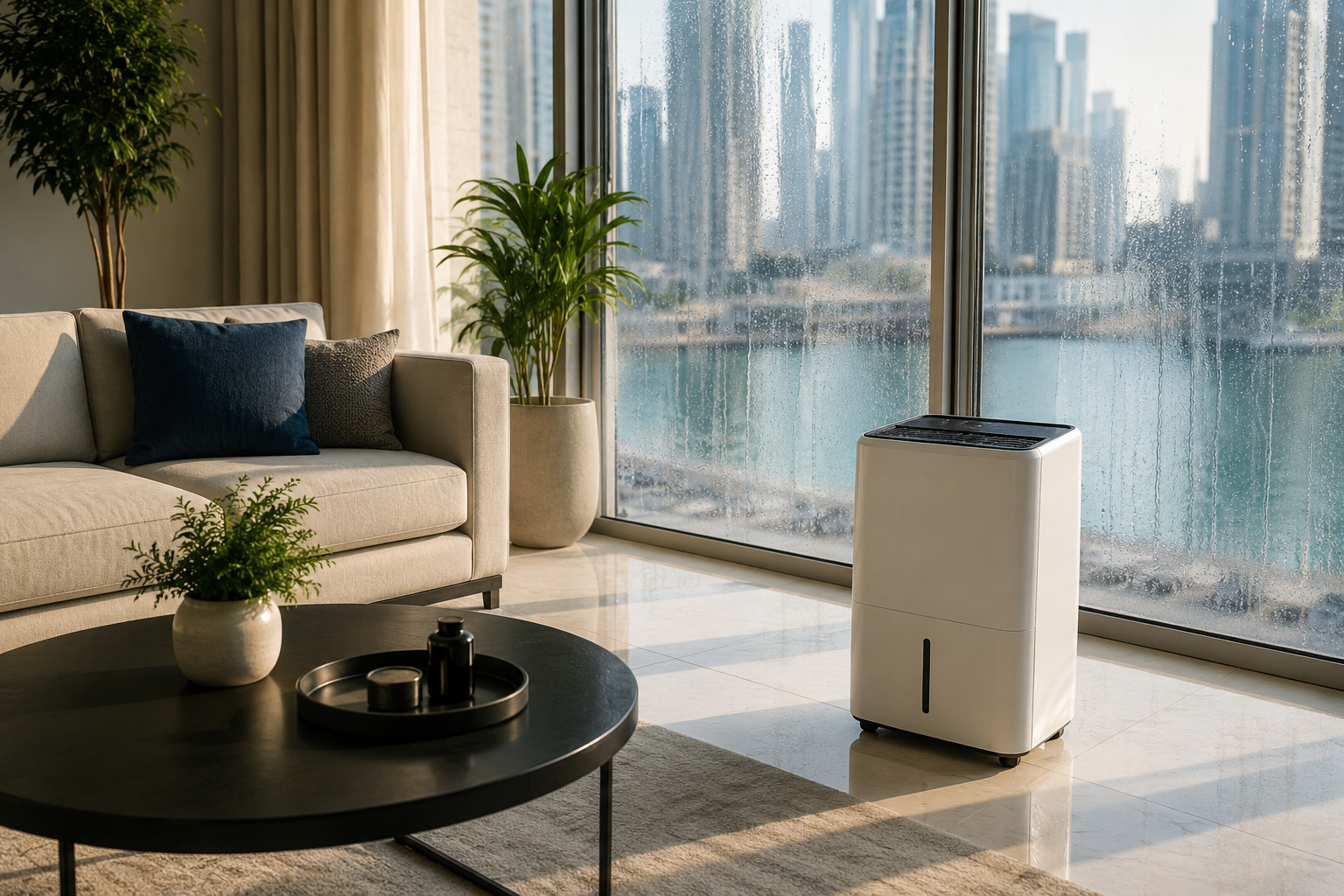
Rooms with persistent elevated humidity after moisture sources are addressed
Room conditions and placement clearances
- Active removal of airborne moisture
- Humidity controls on suitable models
- Adds electricity consumption
- Cannot repair leaks or insulation faults
Humidity and air-quality monitors
MEASURE BEFORE CHOOSING EQUIPMENT
Choose an instrument that actually measures relative humidity, and compare its sensor specifications and placement guidance.
Key features
- Confirm that relative humidity is measured
- Keep the sensor away from direct AC airflow
- Record trends alongside showers and cooking
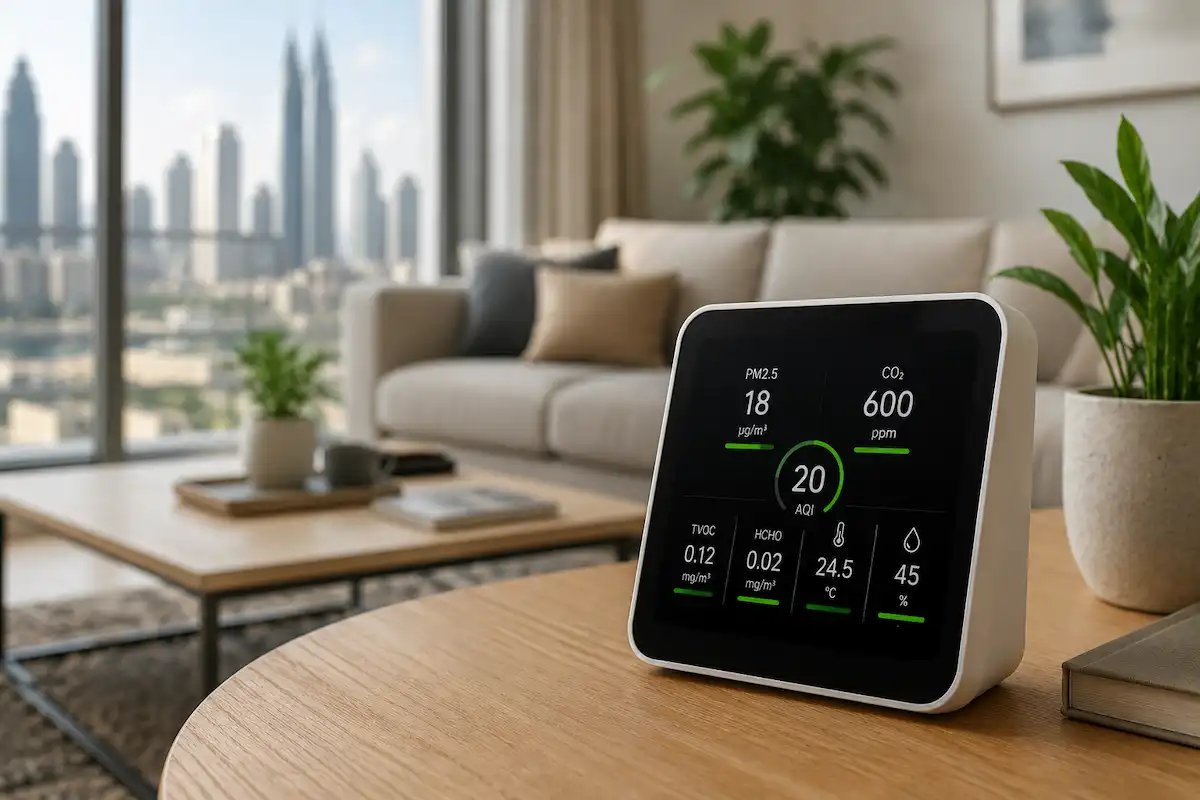
Tracking humidity patterns in occupied rooms
RH sensor specification and accuracy
- Shows room humidity trends
- Supports before-and-after checks
- Placement affects readings
- Does not diagnose hidden mold
Mold cleaning tools
FOR SUITABLE SMALL SURFACE CLEANUP
Compare protective equipment and surface-compatible tools for limited cleanup where the material, extent and water source make household cleaning appropriate.
Key features
- Use suitable protection
- Follow cleaner contact times and surface instructions
- Remove growth, dry fully and fix moisture
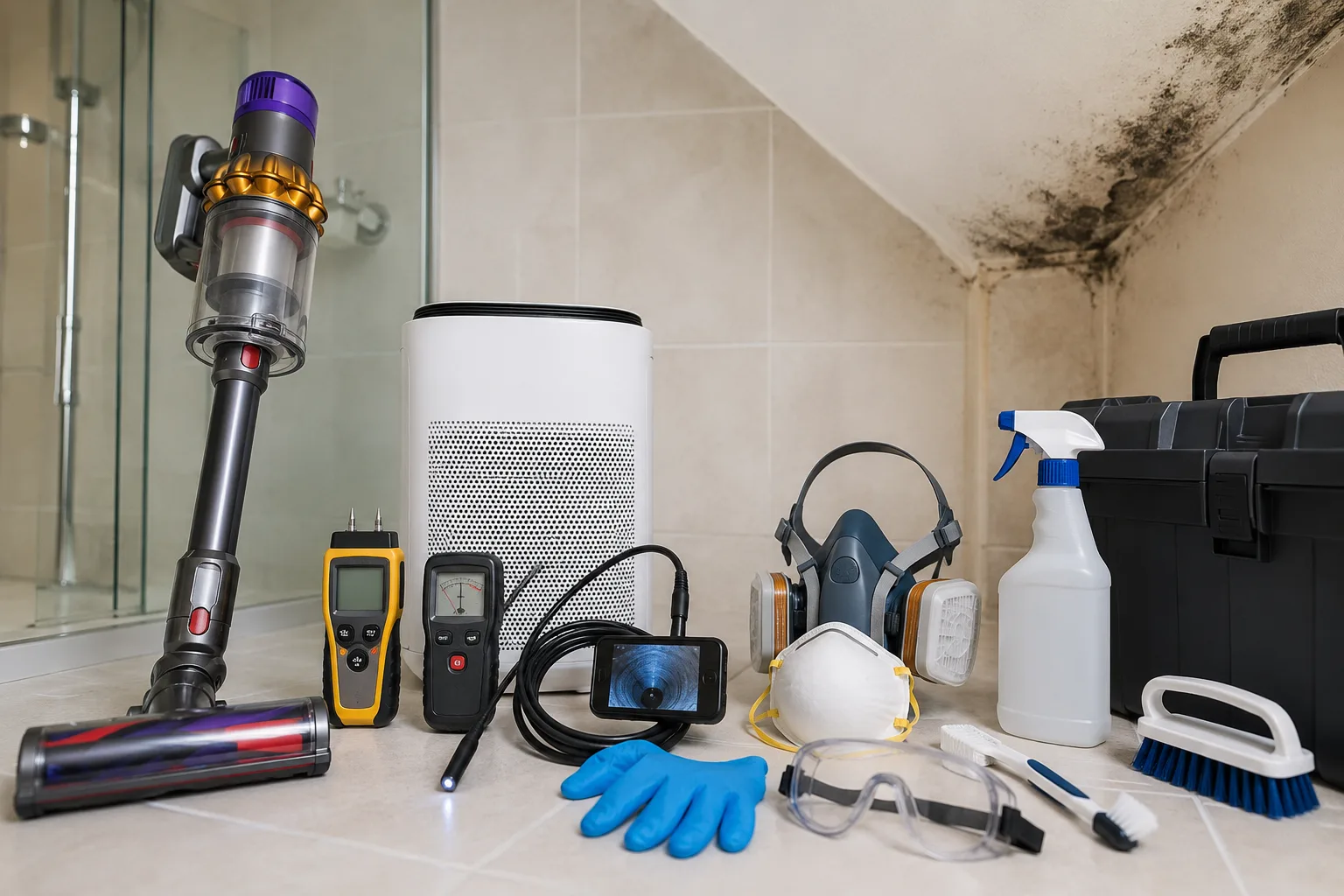
Small isolated areas on sound cleanable surfaces
Surface condition and professional-assessment flags
- Supports physical surface cleaning
- Helps organise suitable protection
- Does not resolve moisture sources
- Unsuitable for every material or situation
Frequently Asked Questions
Why is mold so common in Sharjah apartments?
Moist coastal air meets surfaces cooled by air conditioning, causing condensation. Sealed layouts and windowless bathrooms then keep that moisture indoors.
What indoor humidity level should Sharjah residents aim for?
The EPA recommends keeping indoor humidity below 60 percent, and ideally between 30 and 50 percent. A digital hygrometer shows whether a home is within that range.
Is bleach the best way to remove mold from walls?
The EPA does not recommend routine use of bleach for mold cleanup, and bleach can discolour paint. Detergent and water or a suitable mold cleaner, followed by thorough drying, is usually the better approach on painted walls.
Can mold be removed without damaging rental paint?
Light misting, gentle wiping and testing products on a hidden patch first reduce the risk. Hard scrubbing and soaking the wall are the most common causes of paint damage.
When should a professional deal with mold?
Professional help is appropriate when mold covers more than about 1 square metre, after extensive water damage, when AC ducts may be contaminated, or when sewage is involved. In rentals, the landlord should be informed first.
Can mold simply be painted over?
No. Paint applied over mold is likely to peel, and growth can continue underneath. The area needs to be cleaned and fully dried, and the moisture source fixed, before repainting.
How often should AC filters be cleaned in Sharjah?
Follow the AC manual and building guidance. Dust loading, pets and usage can affect how often filters need attention.
Which type of dehumidifier suits a Sharjah apartment?
Match the model to the room temperature, area and moisture load. Compare capacity at stated test conditions, rated power, noise and drainage options.
How do tenants activate SEWA services in Sharjah?
SEWA asks tenants to complete tenancy contract attestation with Sharjah City Municipality first, then apply for a move-in online. Current documents and steps should be checked on the SEWA e-services portal.
Should the AC be switched off during summer travel?
Arrange an AC and humidity-control plan with building management. A fixed temperature alone cannot guarantee humidity control; monitor readings and organise checks during longer absences.
Sources
EPA mold guidance and the SEWA online move-in portal were reviewed on 8 November 2026. Further reading includes the US Environmental Protection Agency’s Brief Guide to Mold, Moisture and Your Home, the SEWA move-in e-service, Sharjah climate analysis published by the American University of Sharjah, National Centre of Meteorology humidity figures reported by Gulf News, and UAE mold and AC guidance from maintenance specialists reported by Khaleej Times.