Spotting a mosquito in Dubai often surprises new residents, who commonly associate the city with dry desert air rather than biting insects. Mosquitoes are, however, present across the UAE, and many residents report more of them after rain, in villa communities with irrigated gardens and on apartment balconies where water collects.
Based on UAE conditions, the main driver is rarely the natural climate alone. Rainwater that drains slowly, landscape irrigation, water features, pools, AC condensate and ordinary household containers can all provide the small pockets of standing water mosquitoes need to breed, even in a hot, dusty and largely arid environment.
This guide explains why mosquitoes in Dubai persist, when activity tends to increase, where mosquitoes breed around apartments and villas, and how the main mosquito repellent options compare. The guidance applies across the Emirates, including Abu Dhabi, Al Ain, Sharjah, Ajman, Ras Al Khaimah, Fujairah and Umm Al Quwain.
Are There Mosquitoes in Dubai?
Yes. Mosquitoes are found in Dubai and in the other emirates, including species that health authorities monitor because they can transmit disease. UAE reporting in 2026 noted that both Aedes and Anopheles mosquitoes are present in the country, and a one-year survey published in 2026 collected Aedes aegypti mosquitoes in Dubai following the 2024 dengue outbreak.
Aedes aegypti is commonly associated with dengue and chikungunya, while Anopheles mosquitoes are associated with malaria. The presence of a species does not mean every bite carries a health risk. UAE authorities have described the risk of mosquito-borne disease as generally low, while still treating mosquito control as a public health priority and asking residents to remove breeding sites around their homes.
For most households, mosquitoes are a nuisance problem that can be reduced significantly through consistent water management, screening and sensible use of repellents.
Why Are There Mosquitoes in Dubai?
Mosquitoes need standing water to complete their life cycle. In an arid city, natural pools are limited, but man-made water sources fill the gap. Public-health researchers studying Dubai have noted that water-holding containers in arid urban areas likely help mosquitoes survive through dry periods.
Several features of mosquito biology make household water especially important:
- Some container-breeding mosquitoes attach their eggs to the inside walls of water-holding items, just above the waterline.
- According to US CDC guidance, these eggs stick to surfaces like glue, can survive drying for months, and hatch when water covers them again.
- Once hatched, mosquitoes can develop from egg to biting adult in about a week.
Seeing repeated mosquito activity around a Dubai home is a good reason to check for standing water nearby, including containers, drains, irrigation areas and neighbouring outdoor spaces.
Rain and Drainage
Heavy rain events create large amounts of standing water in a short time. After the April 2024 storms, Dubai Municipality reported treating more than 100 water collection sites and over 75,000 drainage outlets to control mosquito larvae. Slow-draining areas, blocked gullies and low points in gardens can hold water long enough for breeding to occur.
Household Water Sources
Common potential breeding sources around UAE homes include:
- Plant saucers and trays under pots
- Buckets, mop buckets and uncovered storage containers
- Balcony drains that clog with dust and sand
- Garden irrigation low points and overspray puddles
- Fountains, ponds and decorative water features
- Poorly maintained or unused swimming pools
- Pool covers, tarpaulins and outdoor furniture covers that collect water
- AC condensate trays and outdoor drip points
- Bottles, lids, toys and tyres left outdoors
- Water pooling on artificial turf
Not every one of these will become a breeding site. Water generally needs to remain undisturbed for several days, which is why weekly checks are more effective than occasional deep cleans.
Heat and Humidity
UAE health guidance describes mosquitoes as thriving where high temperatures, humidity and stagnant water combine. Coastal humidity, irrigated landscaping and shaded outdoor areas can create pockets of favourable conditions within an otherwise dry climate. Related moisture problems inside the home are covered in the CleanLivingUAE guide to humidity and mould prevention in UAE homes.
When Is Mosquito Season in Dubai and the UAE?
There is no single officially defined mosquito season in Dubai. UAE health authorities have stated that mosquito numbers increase after periods of rain, and news reporting in both 2024 and 2026 documented rises in mosquito activity following heavy rainfall.
Mosquito activity can increase after periods of rainfall because water may remain in drains, containers, gardens and other low-lying areas. Irrigation, pools, water features and other artificial water sources mean Dubai mosquito breeding conditions can also occur outside rainy periods.
Factors that commonly influence mosquito numbers include:
- Rainfall volume and how quickly water drains
- Temperature, with very high summer heat often associated with reduced outdoor activity
- Irrigation schedules and garden drainage
- Maintenance of pools and water features
- Community-level sources such as construction sites, drainage channels and parks
Time of Day
Aedes aegypti, the species associated with dengue, can bite during the day, with activity often higher during morning and late-afternoon periods. UAE reporting has also noted that mosquitoes tend to be more noticeable in the evening as temperatures drop. Protection may therefore be relevant during daylight hours as well as around dusk.
Where Mosquitoes Can Breed Around UAE Homes
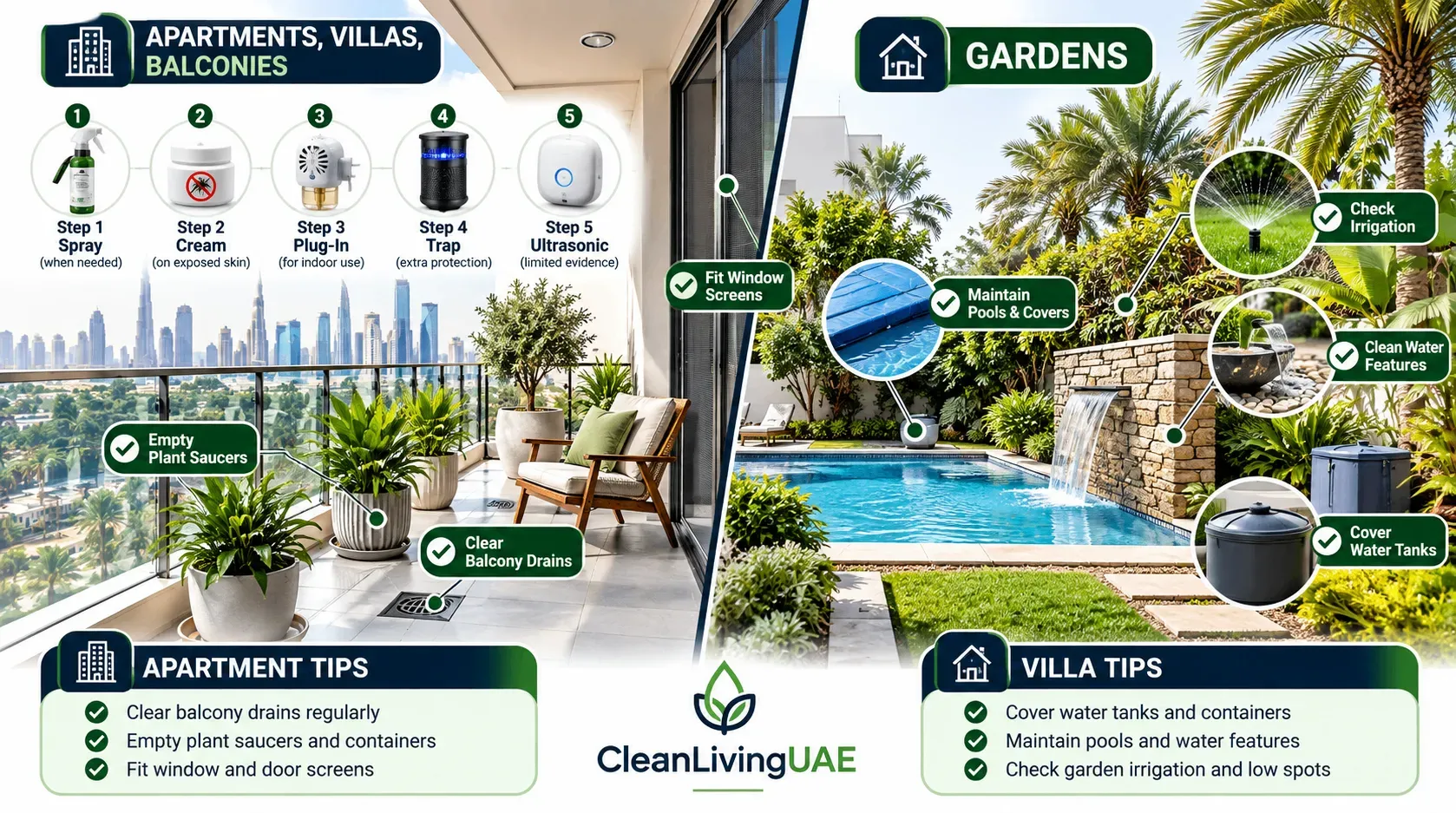
A short weekly inspection is one of the most practical ways to reduce mosquitoes. The checklists below separate the most common inspection points by property type.
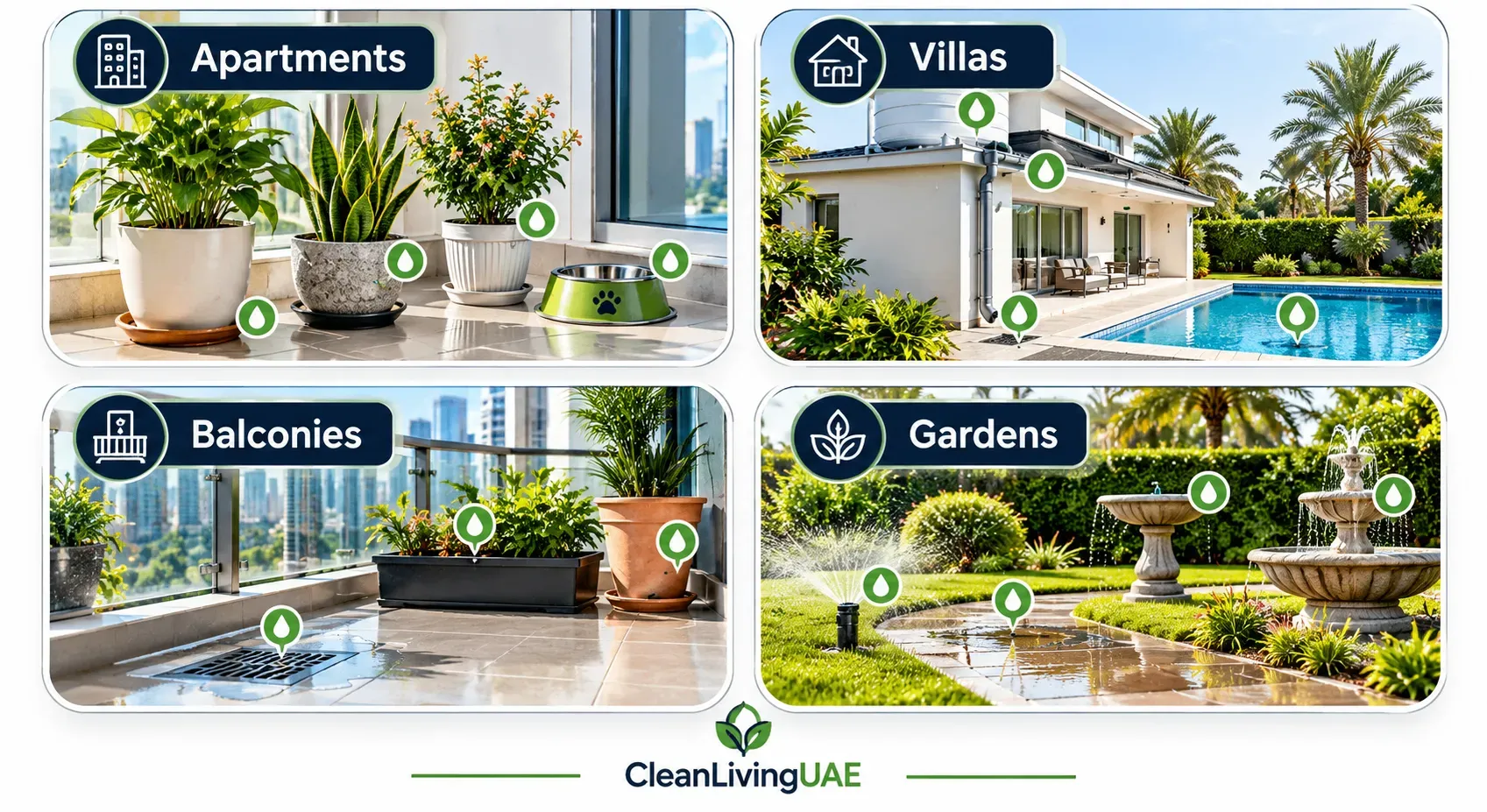
Apartments
- Indoor plant saucers and decorative pots without drainage
- Cut flowers and plants grown in water, such as lucky bamboo or pothos cuttings
- Pet water bowls that are topped up rather than emptied and cleaned
- Buckets and containers in laundry areas or maid’s rooms
- Rarely used floor drains in bathrooms or utility areas, checked for standing water
- Accessible AC condensate trays, where fitted
- Bottles and containers stored on balconies
Villas
- Water storage tanks and containers without tight-fitting lids
- Swimming pools that are unused, uncovered or poorly circulated
- Fountains, ponds and water features that are switched off
- Roof drains, gutters and downpipes blocked by debris
- Tyres, toys, wheelbarrows and garden equipment stored outdoors
- Bins and green waste containers that collect rainwater
Balconies
- Blocked balcony drains, which often fill with dust and sand
- Planter trays and self-watering pots
- Stored buckets, cool boxes and furniture covers
- Condensate outlets from outdoor AC units
Balcony drains in UAE apartments commonly collect fine sand, which slows drainage after washing or rain. The CleanLivingUAE guide to balcony dust problems in the UAE covers practical cleaning methods for these areas.
Gardens and Outdoor Areas
- Low points in lawns and paving where irrigation water pools
- Artificial turf areas with poor drainage
- Bird baths and decorative bowls
- Dense, shaded vegetation, where adult mosquitoes commonly rest
- Covered outdoor seating areas close to water features
Building Common Areas
Some sources are outside a resident’s control, such as basement car park drains, podium landscaping, communal pools and nearby construction sites. These are usually the responsibility of building management, the community owner or the relevant municipality.
11 Ways to Prevent Mosquitoes in UAE Homes
Public-health guidance consistently prioritises source reduction, meaning the removal of breeding sites, before products. The steps below follow that order.
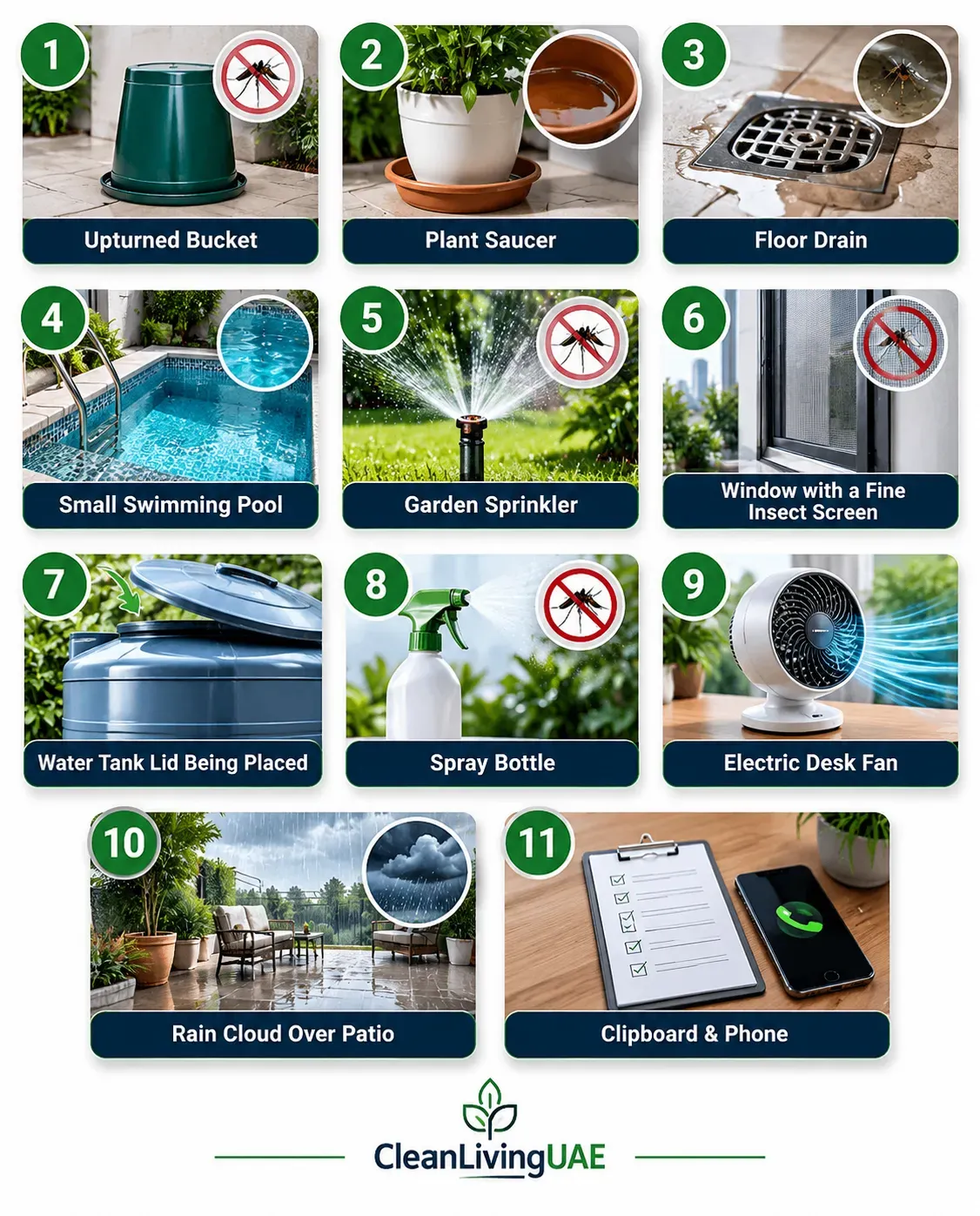
1. Remove Standing Water Weekly
Once a week, empty, scrub, turn over, cover or discard items that hold water, both indoors and outdoors.
Why it helps: mosquitoes can develop from egg to adult in about a week, so a weekly routine interrupts the cycle before new adults emerge. Scrubbing matters because container-breeding mosquito eggs can remain attached to container walls after the water has been poured out.
2. Check Plant Saucers and Water-Grown Plants
Empty saucers after watering, or fill them with sand or gravel. Where practical, grow plants in soil rather than water, and change vase water and scrub the vase regularly.
Why it helps: plant saucers and vases are among the most common indoor water sources and are easily overlooked.
3. Inspect Balcony and Floor Drainage
Keep balcony and outdoor drains clear of sand, leaves and debris so water can drain freely. Check rarely used drains for standing water or maintenance problems, particularly after rain or cleaning.
Why it helps: blocked drains can hold shallow water for days, particularly after balcony washing or rain.
4. Maintain Pools and Water Features
Keep pools filtered, circulated and treated according to the manufacturer’s or service provider’s guidance. Drain or cover pools and water features that are not in use, and check pool covers for pooled rainwater.
Why it helps: still water in an unused pool, fountain or pond can support mosquito breeding, while moving and properly treated water is far less suitable.
5. Check Irrigation Areas
Walk the garden after irrigation cycles and look for puddles that remain for more than a day. Adjust sprinkler heads, reduce overspray onto paving and improve drainage in persistent low spots.
Why it helps: villa gardens and landscaped communities receive water regularly, even in months without rain, which can sustain mosquito breeding year-round.
6. Use Suitable Window and Door Screens
Fit insect screens to windows and balcony doors that are opened regularly, and repair any tears or gaps promptly.
Why it helps: screens are a physical barrier that reduce the number of mosquitoes entering the home without relying on chemicals. UAE and US public-health guidance both recommend them.
7. Cover Water Storage and Reduce Entry Points
Fit tight lids to water tanks and storage containers. Where a container cannot be sealed, fine mesh with holes smaller than a mosquito can be used. Indoors, check gaps around balcony doors, AC pipework and window frames.
Why it helps: covering water prevents egg-laying, and sealing gaps reduces the routes mosquitoes use to enter.
8. Use Appropriate Repellents When Needed
When sitting outdoors, walking in parks or spending time near water, apply a registered skin repellent to exposed skin and follow the label. Light-coloured, loose-fitting long sleeves and trousers add further protection.
Why it helps: repellents reduce bites on the individual but do not reduce the mosquito population, so they work best alongside source reduction.
9. Consider Air Movement
Ceiling fans indoors and pedestal fans on balconies or terraces may reduce mosquito landings in the immediate area. Air conditioning with closed windows is also recommended in US public-health guidance as a way to keep mosquitoes outside.
Why it helps: mosquitoes are weak fliers, and some field research suggests that moving air disrupts their flight and their ability to track people. The effect is limited to the area covered by the airflow.
10. Inspect Outdoor Containers After Rain or Irrigation
After any rainfall, check the garden, balcony and roof areas within a day or two, and empty or sweep away collected water.
Why it helps: UAE authorities link post-rain standing water directly to increases in mosquito numbers, so prompt checks after rain are one of the highest-value actions a household can take.
11. Seek Professional Help for Persistent Problems
If mosquito activity continues after obvious sources have been removed, contact building management, the relevant municipality or a licensed pest control provider.
Why it helps: persistent problems often originate from sources that are hidden or outside the property, such as drainage systems, neighbouring gardens or communal areas.
Mosquito Repellent in Dubai – What Are the Options?
Mosquito repellent products fall into categories that work in different ways. Skin-applied repellents protect a person, while devices and barriers aim to protect a space. None replaces the removal of breeding sites.
Some product mentions may include affiliate links.
Scroll sideways to see the full table.
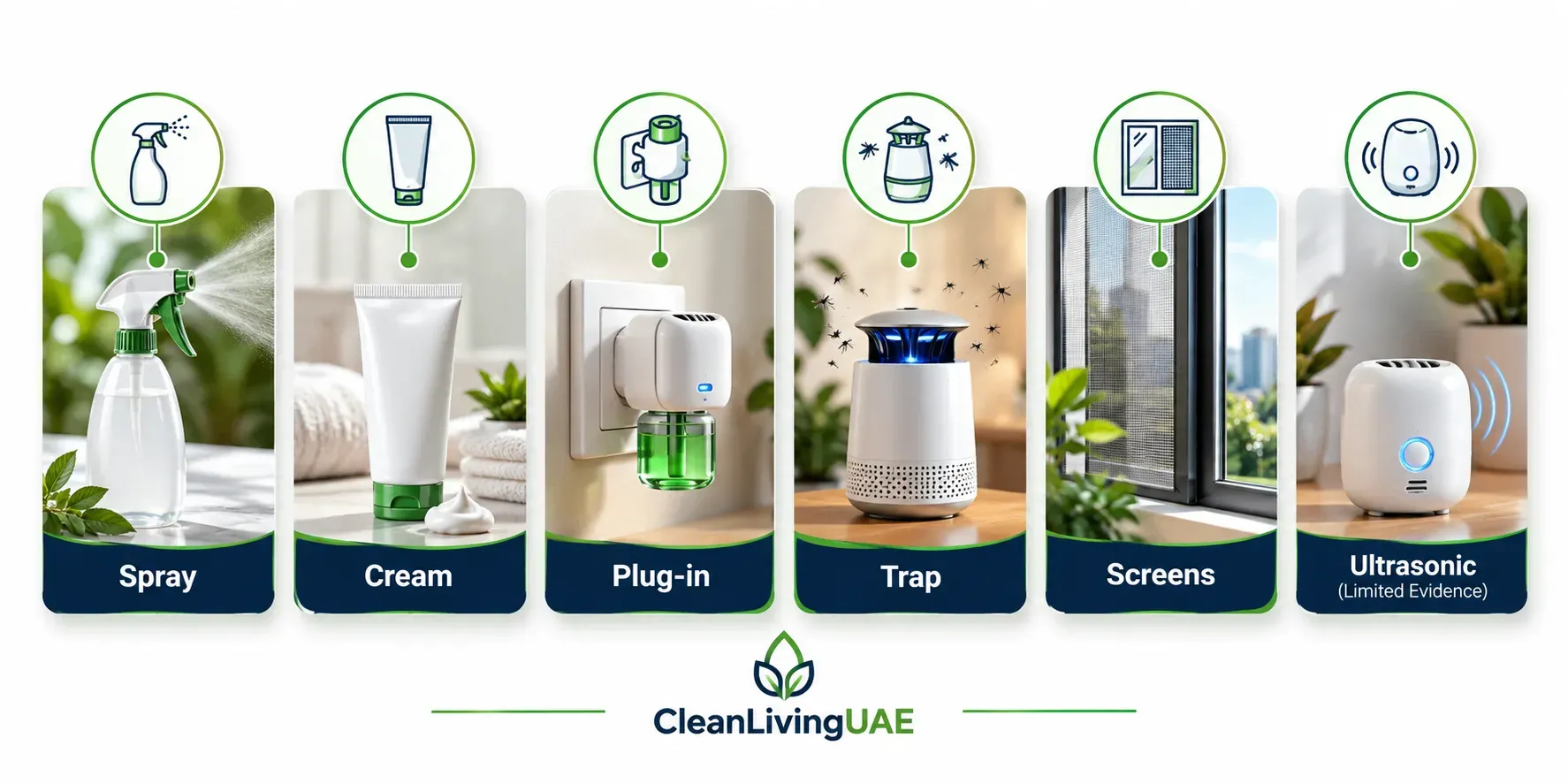
| Type | Best Use | Advantages | Limitations | Important Considerations |
|---|---|---|---|---|
| Topical repellent spray | Outdoors, parks, balconies | Quick to apply over large areas | Needs reapplication | Check the active ingredient and label |
| Repellent cream or lotion | Children, face and neck | Precise application, no mist | Slower over large areas | Adults apply to children, avoiding hands, eyes and mouth |
| Plug-in vaporiser | Bedrooms and closed rooms | Continuous, no skin application | One room only, affected by airflow | Follow ventilation instructions, keep away from children |
| Mosquito machine or trap | Areas with ongoing activity | Captures some adult mosquitoes | Does not stop breeding | Designs vary, so check how each works |
| Ultrasonic device | Not recommended | No chemicals | No evidence of bite prevention | Should not be relied on |
| Physical barriers | Windows, doors, prams, cots | Chemical-free, long-lasting | Needs fitting and repairs | Key option for infants |
| Outdoor approaches | Terraces, balconies, gardens | Fans and source reduction lower exposure | Limited to specific zones | Combine with skin repellent |
Mosquito Repellent Spray
A mosquito repellent spray is the most common outdoor option. US CDC guidance lists DEET, picaridin, IR3535, oil of lemon eucalyptus (OLE), para-menthane-diol (PMD) and 2-undecanone as active ingredients in registered repellents. Dubai Municipality advice has referred specifically to repellents containing DEET or picaridin.
Apply to exposed skin only in a ventilated area, avoid the eyes and mouth, and reapply as the label directs. For the face, spraying onto the hands first is commonly recommended.
Mosquito Repellent Cream and Lotion
A mosquito repellent cream or lotion contains similar active ingredients in a rub-on format. Many users report that creams are easier to apply to children and to the face and neck, as there is no airborne mist. Effectiveness depends on the active ingredient and its concentration rather than the format, so checking the label is more useful than relying on product descriptions.
DEET Mosquito Repellent
DEET is one of the most widely studied repellent ingredients and is recommended by US public-health authorities for use on skin. A DEET mosquito repellent can be used by adults and, according to the CDC, on children older than two months. The American Academy of Pediatrics advises that products used on children should not contain more than 30 percent DEET.
For infants and young children, US public-health guidance states:
- Do not use insect repellent on babies younger than two months. Use physical protection instead, such as mosquito netting over prams and cots, and clothing that covers arms and legs.
- Do not use products containing oil of lemon eucalyptus or PMD on children under three years old.
- Do not apply repellent to a child’s hands, eyes, mouth or to cut or irritated skin.
Parents looking for a mosquito repellent for a newborn should speak to a paediatrician or pharmacist first. Labelling may differ on products sold in the UAE, so check the active ingredient and age guidance on the pack.
Electric and Plug-In Mosquito Repellents
The terms “electric mosquito repellent”, “mosquito repellent plug in” and “mosquito repellent machine” are often used interchangeably, but they describe different products:
- Plug-in vaporisers heat a liquid refill or mat to release an active ingredient into a room. Effectiveness depends on room size, airflow and whether windows are open.
- Electric traps and mosquito machines attract mosquitoes using light, heat, carbon dioxide or scent lures, then capture them with a fan, sticky surface or electric grid.
- Ultrasonic repellers claim to repel mosquitoes with sound, but a Cochrane review found no evidence that they prevent bites.
Traps can reduce adult numbers in a specific area but do not address the water sources producing new mosquitoes.
Outdoor Mosquito Repellent
Outdoor mosquito repellent options matter most on UAE balconies, terraces and villa gardens. A combined approach is commonly described as the most practical:
- Apply skin repellent before sitting outside for extended periods
- Use a fan directed across seating areas
- Keep water features running or treated, and remove standing water nearby
- Use outdoor-rated devices only as directed, with attention to ventilation on enclosed balconies
Readers looking for specific devices rather than prevention advice can refer to the CleanLivingUAE guide to the best mosquito killers in the UAE, which compares mosquito traps, electric devices and other home-control options.
Mosquito Repellent vs Mosquito Killer – What’s the Difference?
The three approaches solve different parts of the problem, which is why many households use more than one.
Scroll sideways to see the full table.
| Approach | What It Does | Examples | Where It Fits |
|---|---|---|---|
| Repellent | Discourages mosquitoes from approaching or biting | Skin sprays, creams, some vaporisers | Personal protection during exposure |
| Killer or control product | Kills or captures mosquitoes | Traps, electric grids, insecticide sprays | Reducing adults in a specific space |
| Prevention and source reduction | Removes breeding sites and entry points | Emptying containers, screens, drainage, covers | Long-term reduction of mosquito numbers |
A repellent can prevent bites without reducing mosquito numbers. A killer product can reduce adults temporarily, while breeding continues nearby. Source reduction addresses the cause and is the approach UAE and international health authorities place first. The same prevention-first principle applies to other household pests, as covered in the CleanLivingUAE guide to cockroaches in UAE apartments.
What Doesn’t Work Well for Mosquito Prevention?
Some common approaches are less effective than many users expect:
- Ultrasonic devices and apps: a Cochrane systematic review found no evidence that electronic mosquito repellers prevent bites.
- Emptying without scrubbing: pouring water out of a container may leave eggs attached to its walls, which can hatch when the container refills.
- Relying on one product: a plug-in device or trap cannot compensate for an uncovered water tank or a blocked drain nearby.
- Unregistered repellents with unclear ingredients: the CDC states that the effectiveness of repellents outside its recognised registration system is not known.
- Occasional deep cleaning only: because mosquitoes can develop in about a week, infrequent cleaning allows several breeding cycles between checks.
Mosquito Prevention for Apartments vs Villas
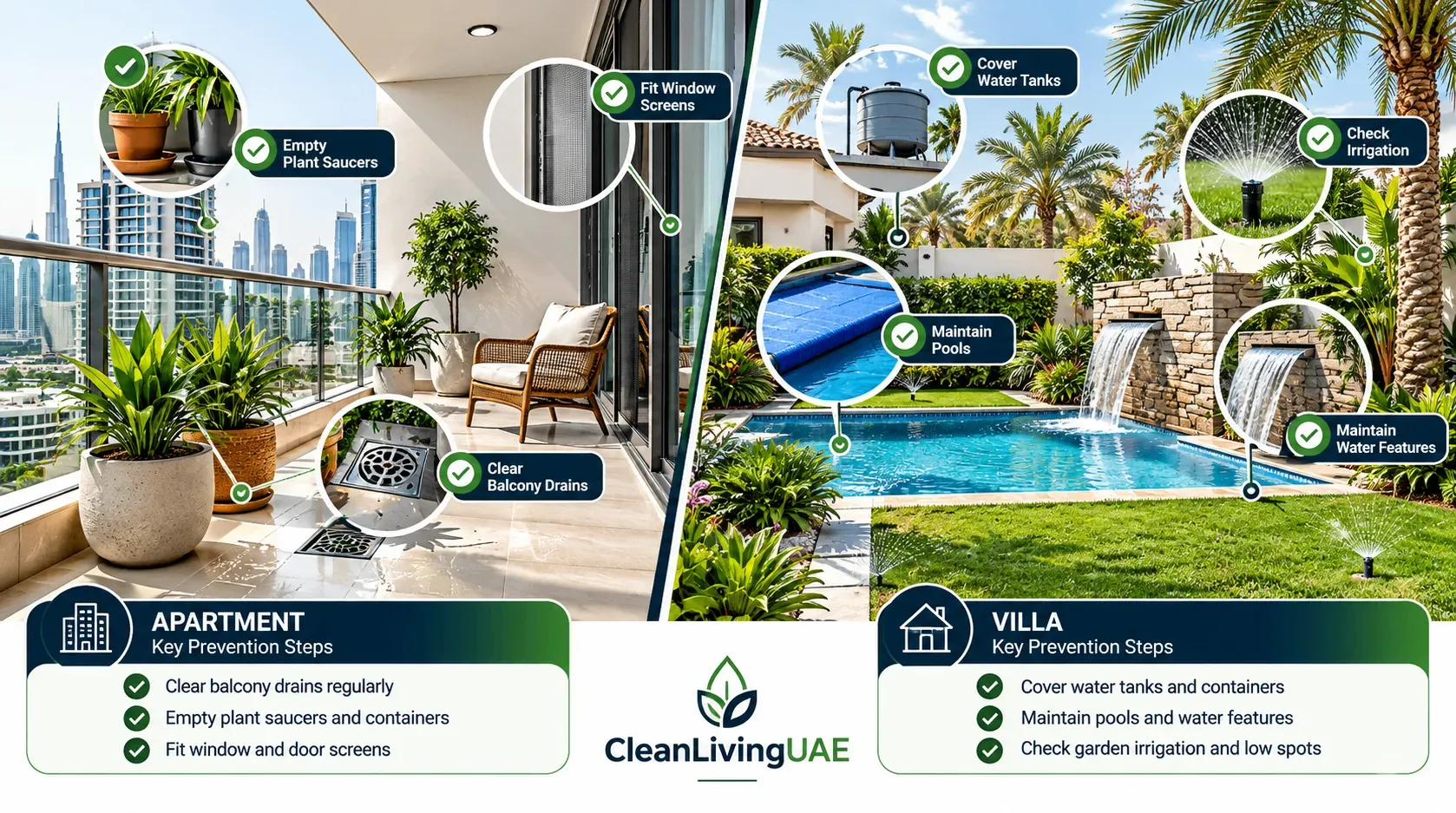
Apartments and villas share the same principles, but the main risk areas differ.
Scroll sideways to see the full table.
| Issue | Apartment | Villa | Recommended Action |
|---|---|---|---|
| Main water sources | Plant saucers, vases, balcony drains | Pools, irrigation, water features, tanks | Weekly inspection of all water-holding items |
| Entry points | Balcony doors, windows on lower floors | Multiple doors, windows and garden access | Fit and repair screens, close doors at peak times |
| Outdoor exposure | Balconies and communal podiums | Gardens, terraces, majlis and pool areas | Skin repellent and fans during outdoor time |
| Control over sources | Limited, common areas managed by building | Greater control within the plot | Report communal sources to building management |
| Post-rain risk | Balcony pooling, blocked drains | Garden flooding, low points, covers | Check and clear water within a day or two |
Villa owners managing larger outdoor areas may find a structured routine useful, as outlined in the guide to villa cleaning systems in the UAE.
What to Do After a Mosquito Bite
Most mosquito bites cause mild swelling, redness and itching. UAE Ministry of Health and Prevention guidance for easing symptoms includes:
- Avoid scratching the bite
- Apply an ice pack for around 10 minutes to reduce itching and redness
- Use an antihistamine or anti-itch cream according to the product instructions
Medical advice should be sought if unusual or concerning symptoms develop after a bite, such as fever, severe headache or persistent body aches. Emirates Health Services also lists symptoms including nausea, abdominal pain, tongue swelling, difficulty swallowing and shortness of breath as severe symptoms. Difficulty breathing or swallowing requires urgent medical attention.
This information is general and does not replace advice from a doctor or pharmacist.
When to Call Professional Pest Control
An occasional mosquito in Dubai apartments is common and usually manageable through the steps above. Professional help is more appropriate in the following situations:
- Mosquito activity continues after obvious breeding sources have been removed
- A suspected breeding area is inaccessible, such as a sealed drain, roof void or neighbouring property
- Outdoor areas experience recurring infestations, particularly after rain
- The problem appears to affect the whole building or community
In apartment buildings, communal areas such as basements, car park drains, podium gardens and shared pools are typically the responsibility of building management or the community owner, so reporting the issue there is often the first step. Residents can also report persistent mosquito problems in public or communal areas to the relevant local municipality. When hiring a private company, checking that the provider holds the relevant municipal pest control licence is advisable.
Regular household routines also help reduce pest problems generally. The guide to seasonal cleaning in the UAE includes post-rain and seasonal checks.
UAE Mosquito Prevention Checklist
- Empty and scrub all water-holding containers once a week
- Empty plant saucers and change vase water
- Clear balcony drains of sand and debris
- Check rarely used drains for standing water
- Cover water tanks and storage containers tightly
- Check pools, covers and water features for still water
- Inspect the garden for irrigation puddles
- Check outdoor areas within a day or two after rain
- Repair window and door screens
- Use skin repellent during outdoor time, following the label
- Report communal breeding sites to building management or the municipality
Frequently Asked Questions
Are there mosquitoes in Dubai?
Yes. Mosquitoes are present in Dubai and across the UAE, including Aedes and Anopheles species. Numbers commonly increase after rain, when standing water collects around homes, gardens and drainage areas.
Why are there mosquitoes in Dubai?
Mosquitoes breed in standing water. In Dubai, man-made sources such as irrigation, water features, pools, drains, AC condensate and household containers provide water even when natural water is scarce.
When are mosquitoes most common in Dubai?
There is no single officially defined season. Mosquito numbers tend to increase after rainfall, when water collects in drains, containers and gardens, but irrigation and other artificial water sources can support mosquitoes outside rainy periods.
What attracts mosquitoes to UAE homes?
Standing water for breeding is the main factor. Female mosquitoes also locate people using carbon dioxide, body heat and skin odours, so occupied balconies and gardens near water are commonly affected.
How can mosquitoes be prevented in a Dubai apartment?
Empty plant saucers and containers weekly, keep balcony drains clear, check rarely used drains for standing water, keep screens in good repair and report communal breeding sites to building management.
What mosquito repellent can be used in Dubai?
US public-health guidance recommends registered repellents containing DEET, picaridin, IR3535, oil of lemon eucalyptus, PMD or 2-undecanone. Dubai Municipality advice has referred to DEET or picaridin. Always follow the label and age guidance.
Do mosquito repellent machines work?
It depends on the type. Traps can capture some adult mosquitoes, and plug-in vaporisers are commonly used indoors, but ultrasonic devices have shown no evidence of preventing bites. No device replaces removing breeding sites.
Can mosquitoes breed on balconies?
Yes. Blocked balcony drains, planter trays, buckets and furniture covers can hold water long enough for mosquitoes to breed, particularly after rain or balcony washing.
How can mosquitoes be reduced in a villa garden?
Check for irrigation puddles, keep water features circulating or drained, maintain pools, cover water tanks, clear gutters and trim dense vegetation. Inspect the garden within a day or two after rain.
When should pest control be contacted for mosquitoes?
Professional help is appropriate when mosquitoes persist after obvious sources are removed, when breeding areas are inaccessible, or when the problem affects a building or community. Building management or the local municipality may also need to be involved.
Sources
This guide draws on public-health and news sources including the Emirates Health Services mosquito bites awareness page, UAE Ministry of Health and Prevention bite-care guidance reported by Gulf News and The National, Ministry of Climate Change and Environment prevention advice reported by Gulf News, Dubai Municipality’s post-storm control update via the Dubai Media Office, 2026 reporting on mosquito species and control programmes from The National, the Dubai mosquito survey published in the US CDC journal Emerging Infectious Diseases, the US Centers for Disease Control and Prevention guidance on preventing mosquito bites and avoiding bug bites, the National Pesticide Information Center insect repellents fact sheet, and the Cochrane review on electronic mosquito repellents.