What Is Fine Dust in Apartments?
Fine dust in apartments refers to microscopic particulate matter that remains suspended in indoor air rather than settling quickly on surfaces.
The two size classifications used across environmental monitoring standards are:
- PM10 – particles with a diameter of 10 micrometres or smaller
- PM2.5 – particles 2.5 micrometres or smaller
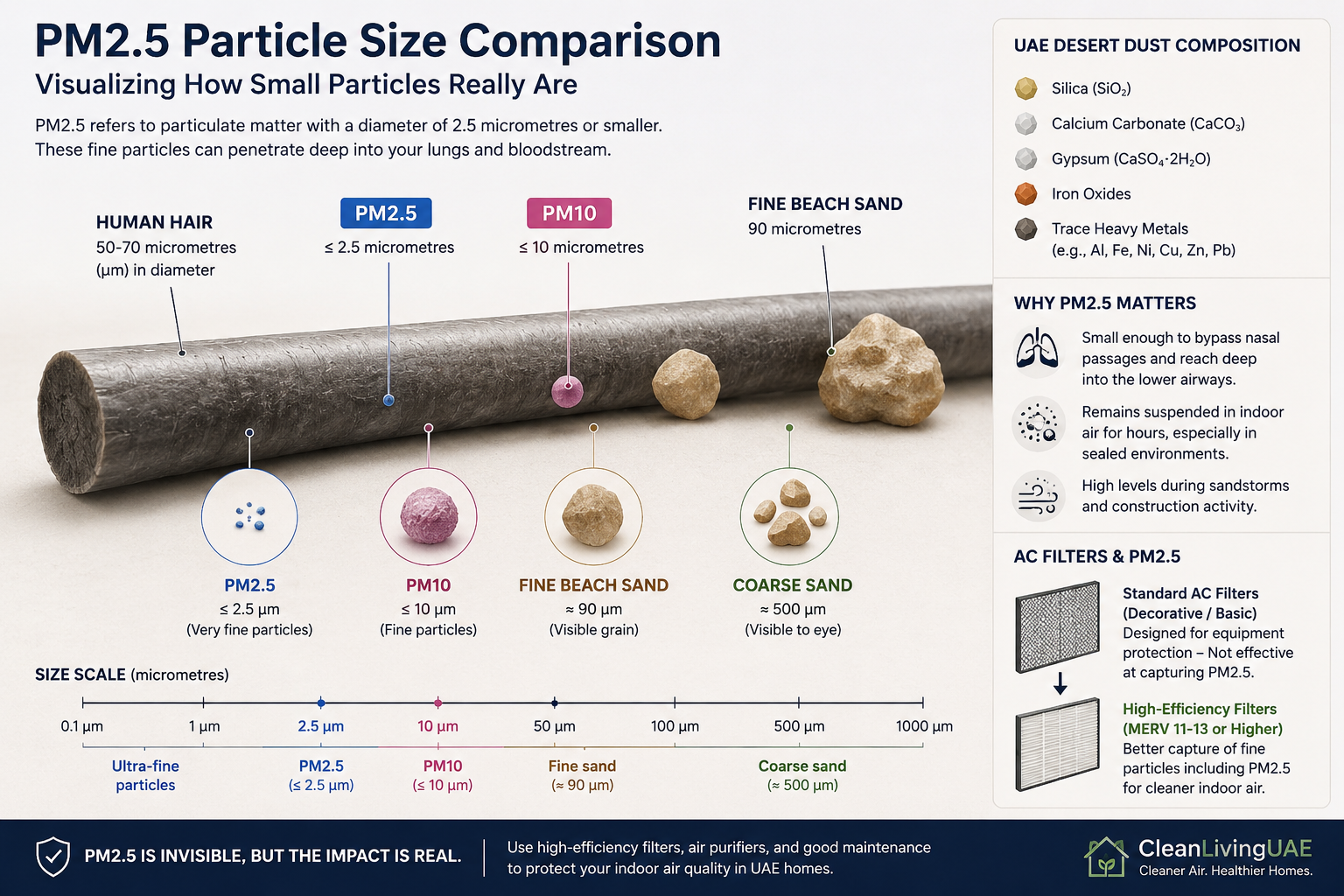
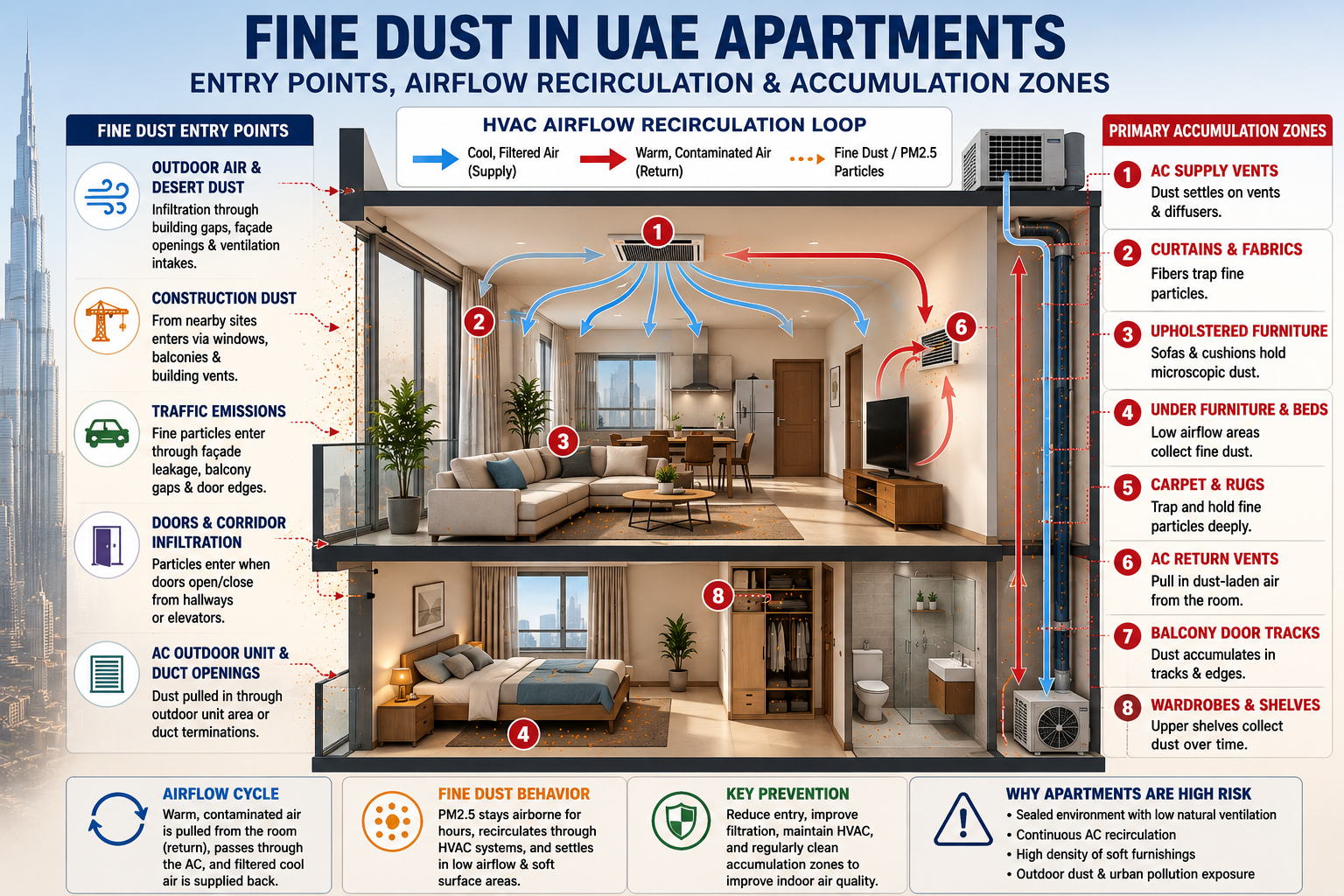
At the PM2.5 range, particles can remain airborne for hours before settling. Within UAE apartments, which operate as sealed indoor environments for most of the year, these aerosol particles circulate continuously through split AC systems without leaving the indoor space.
Fine particles most responsible for indoor air quality deterioration are precisely those that standard cleaning tools and methods are least equipped to address.
| Particle Type | Visibility | Common Source | Indoor Impact |
|---|---|---|---|
| PM10 | Partially visible in direct sunlight | Desert sand, construction dust, road traffic | Settles on surfaces within hours; contributes to AC filter clogging |
| PM2.5 | Invisible under normal conditions | Combustion, fine desert aerosols, textile fibres | Remains suspended for hours; recirculates through HVAC airflow |
| Ultrafine particles | Completely invisible | Traffic emissions, cooking, cleaning product aerosols | Penetrates deep into fabrics and mattresses |
| Textile fibres | Visible in strong light | Curtains, bedding, upholstery, clothing | Carry finer particles; accumulate in AC vents |
| AC filter debris | Visible when filter is removed | Accumulated PM10 and PM2.5 on dirty filters | Can re-enter airflow when filters are disturbed or left uncleaned |
Key Takeaway: PM2.5 and ultrafine particles are the most problematic category for UAE apartment residents because standard AC filters and household cleaning tools are not designed to capture them.
Signs Your Apartment Has Excessive Fine Dust
Many UAE residents do not connect visible symptoms with elevated indoor fine particle levels. The following signs are commonly associated with high invisible dust concentrations in sealed apartments.
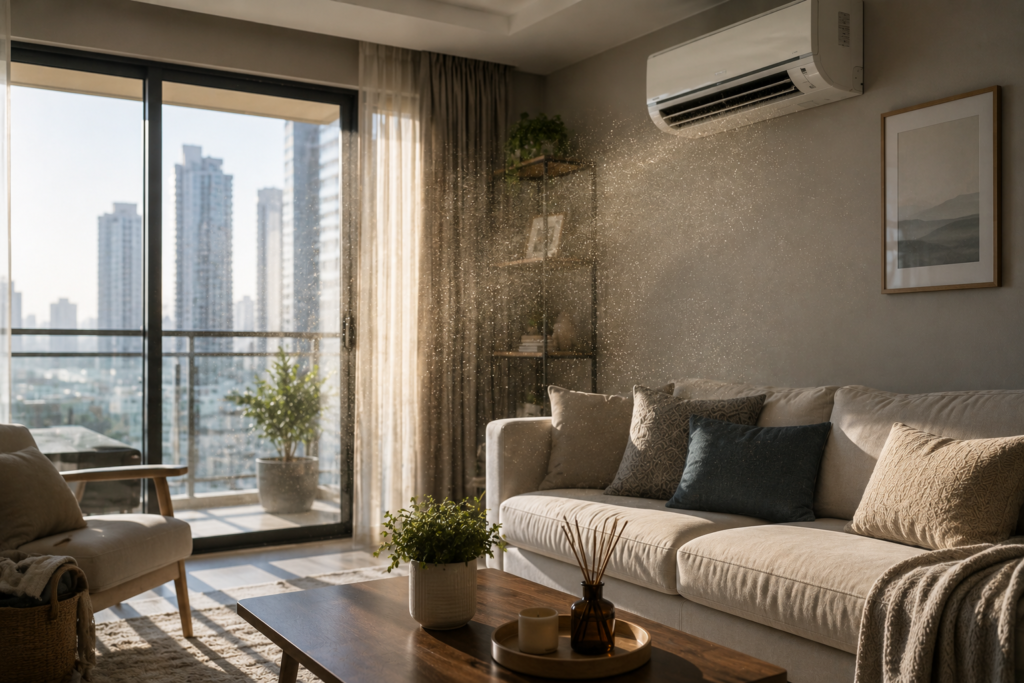
Visible particle movement in sunlight A beam of morning or afternoon light entering through a window or balcony door reveals a dense cloud of floating particles. This is often the first visual indicator that airborne fine dust levels are elevated beyond what surface cleanliness suggests.
Dusty smell from AC supply vents A stale or dusty odour when the AC unit first activates – or during continuous operation – is commonly associated with particle accumulation on the evaporator coil, fan blades, or filter mesh. The system is circulating a particle-laden airstream.
Fast surface buildup after cleaning Shelves, TV units, and bedside tables developing a visible grey film within 24 to 48 hours of cleaning indicate that suspended fine dust is actively settling from the air column rather than being introduced only by physical contact.
Overnight surface dust near vents Grey deposits appearing on furniture positioned directly below or adjacent to AC supply louvres suggest that the unit is actively distributing fine particles into the room during operation.
Grey buildup at AC vent edges Fine grey or brown residue accumulating along the edges of AC supply and return louvres is a visible indicator of filter loading and particle recirculation within the split AC system.
Throat dryness or nasal dryness on waking This pattern is frequently noted in residential indoor air quality discussions in the context of low relative humidity and elevated suspended particle levels in sealed, mechanically cooled environments. This article does not make medical claims but notes that the condition is widely reported by UAE apartment residents.
Key Takeaway: If two or more of these signs are present consistently, the apartment’s fine dust management system – filtration, AC maintenance, and cleaning routine – warrants review.
Why UAE Apartments Accumulate Fine Dust Quickly
Split AC systems constantly recirculate particles
UAE apartments operate in a closed-loop cooling environment for the majority of the year.
Windows remain shut to exclude heat, humidity, and exterior dust. The same indoor air is drawn into the split AC unit’s return intake, passed over the evaporator coil, and pushed back into the room repeatedly.
Any fine particles present – whether from outdoor infiltration, human activity, or textile shedding – are continuously recirculated through this HVAC airflow loop.
Over time, particles accumulate on AC fan blades, coil surfaces, and filter mesh. Portions of that accumulated matter re-enter the airflow each time the system operates, contributing to a self-sustaining indoor particle cycle. Keeping AC filters clean is one of the most direct ways to interrupt this cycle.
Fine dust can also collect on filters and internal surfaces where condensation is present. If a stale odour appears when the cooling starts, see the guide to musty smells from AC.
Sealed apartments reduce natural ventilation
Natural ventilation, even brief window opening, allows indoor air to exchange with outdoor air and dilutes particle concentrations temporarily.
In UAE apartments, this exchange is limited to periods of moderate outdoor conditions – typically cooler winter mornings or calm evenings. For most of the year, particularly from May through September, windows remain closed for extended periods.
Without air exchange, fine particles generated or introduced indoors have nowhere to go. They settle, get disturbed by movement, re-suspend, circulate through the AC, and settle again in a continuous cycle.
Construction and roadside exposure
Dubai, Abu Dhabi, Sharjah, and other UAE cities have sustained construction activity across major residential corridors.
Apartment towers in Business Bay, Al Reem Island, Yas Island, Jumeirah Village Circle, and Silicon Oasis sit adjacent to ongoing development sites. Construction activity generates fine silica-based particles that infiltrate buildings through door gaps, window seals, ventilation intake points, and building corridors.
Roadside apartments facing high-traffic arterials in areas such as Al Nahda and Sheikh Zayed Road corridors are similarly exposed to vehicle-generated PM2.5, including fine particulates from braking systems and exhaust.
Soft furnishings trap airborne particles
Curtains, upholstered sofas, fabric rugs, and mattresses function as particle reservoirs in UAE apartments.
Fine dust that settles into these materials is not removed by standard surface cleaning. Each time a person sits on an upholstered surface, adjusts curtains, or moves bedding, a burst of previously settled fine particles re-enters the air.
In apartments where soft furnishings are concentrated in a compact floor plan, this re-suspension occurs many times throughout the day, driven in part by static charge between synthetic fabrics and fine particle surfaces.
High-rise airflow and balcony contamination
High-rise apartment towers are not isolated from outdoor particulate matter.
Balcony doors and sliding glass systems in towers across Dubai Marina, JBR, JVC, and Downtown frequently show fine dust infiltration along track channels, door gasket edges, and glass-to-frame contact points.
In towers above the twentieth floor, wind-driven aerosols carry fine desert particles at altitude. Pressure differentials around building envelopes can draw outdoor air through imperfect seals even when windows and doors appear closed.
Compact apartment layouts increase particle concentration
Studio apartments and one-bedroom units common across UAE developments have smaller total indoor air volumes than villas.
The same quantity of introduced fine particles produces a higher particle-per-cubic-metre concentration in a compact space. In a studio of 40 to 50 square metres, one cleaning event, one open-door corridor exchange, or one hour of cooking activity can measurably increase airborne particulate matter levels.
This concentration effect does not occur in the same way in a 200-square-metre villa with multiple separate zones and higher ceiling volumes.
| Apartment Type | Fine Dust Risk | Main Contributing Factor |
|---|---|---|
| Studio | High | Compact air volume concentrates particles rapidly |
| High-rise tower | High | AC recirculation with limited fresh air exchange |
| Road-facing apartment | Very High | Continuous traffic-sourced PM2.5 infiltration |
| Coastal apartment | Moderate to High | Humidity increases particle adhesion to surfaces and AC components |
| Construction-adjacent | Very High | Silica-based fine particles entering through gaps and building openings |
| Desert-margin community | High | Seasonal Shamal and Khamsin winds can mobilise fine particles |
Fine Dust vs Visible Dust vs Sand
Many UAE residents conflate three distinct indoor particle categories. Methods effective for visible surface dust or sand removal are often unsuitable or counterproductive for fine airborne particles.
| Category | Size Range | Visibility | Primary Source | Cleaning Response |
|---|---|---|---|---|
| Fine dust, PM2.5 | Under 2.5 micrometres | Invisible | Desert aerosols, combustion, textiles | HEPA-grade filtration, air purification, damp wiping |
| Visible dust, PM10 | 2.5 to 10 micrometres | Visible on surfaces | Desert particles, skin cells, building materials | Microfiber wiping, vacuuming, AC filter cleaning |
| Sand particles | Usually over 100 micrometres | Fully visible | Desert surface sand, sandstorms, balcony entry | Sweeping, vacuuming with suitable attachments |
| Textile fibres | Variable, often visible | Visible in light | Curtains, upholstery, bedding | Regular fabric washing, upholstery vacuuming |
| AC filter debris | Mixed, PM10 to PM2.5 | Visible when accumulated | Filter surface accumulation | Filter cleaning or replacement, vent brush maintenance |
For residents focused specifically on fine dust apartments UAE conditions produce, the key distinction is this: an apartment can appear clean on all visible surfaces while carrying elevated PM2.5 concentrations in the air.
Visible sand removal and surface dust cleaning address a different problem. The CleanLivingUAE guide on how to remove sand from floors covers the coarser particle challenge separately. Both are necessary, but neither solves the invisible particle management challenge on its own.
Common Hidden Fine Dust Zones in Apartments
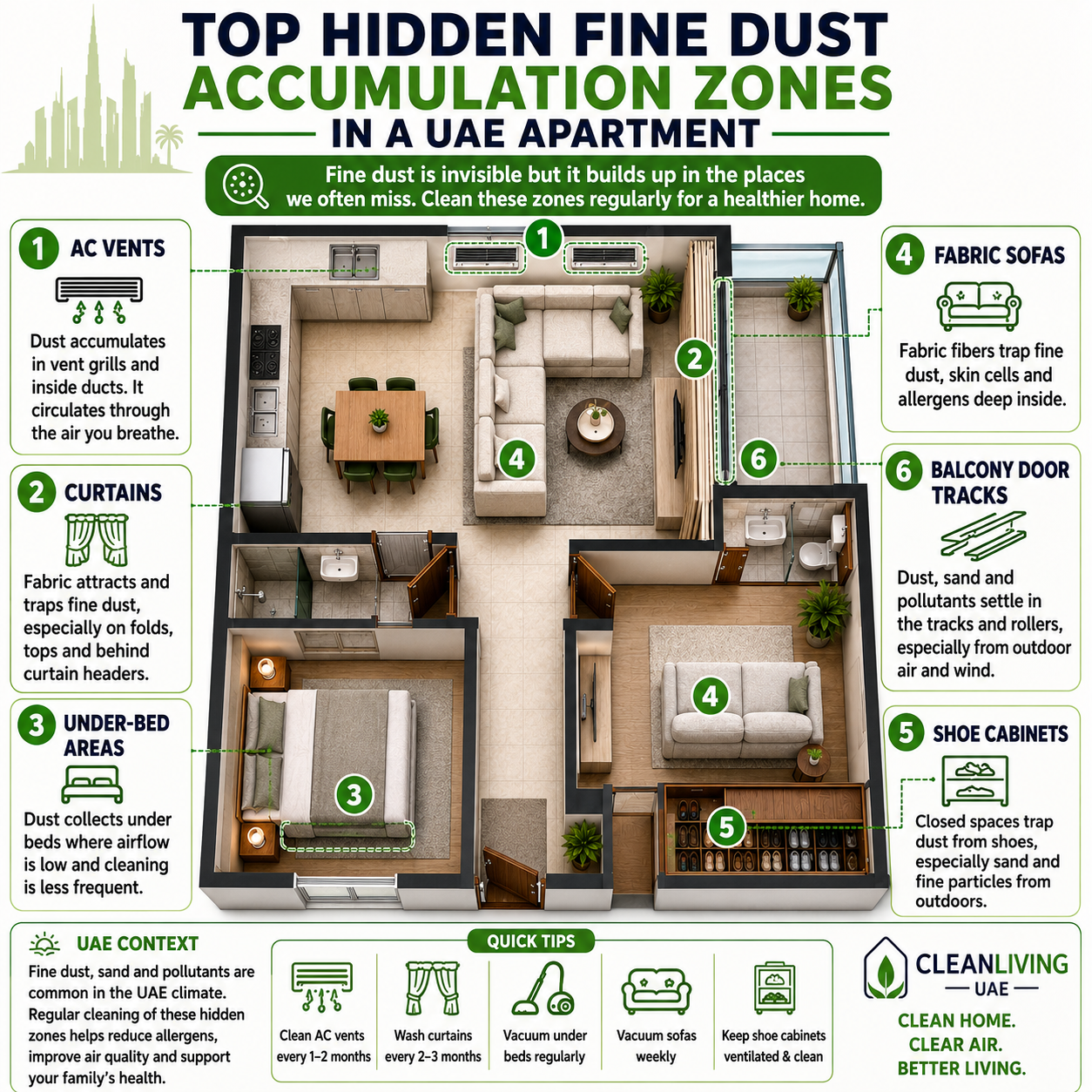
Fine particle accumulation in UAE apartments is not evenly distributed. Certain zones act as collection points where particles settle preferentially or where fabric and static charge attract and hold particles over time.
Curtains and window dressings are among the highest-accumulation surfaces in UAE apartments. Floor-length fabric curtains common in furnished units develop substantial fine particle loading within weeks under normal AC operation. Each time curtains are moved, particles re-enter the airstream in concentrated bursts.
Under-bed zones accumulate layers of fine dust and textile fibre with each passing week. Mattress bases and storage boxes placed under beds trap and concentrate particles in low-airflow zones that are rarely cleaned.
Wardrobes and closed cabinets are not dust-free environments. Fine particles enter through gap edges and accumulate on folded clothing, shelves, and cabinet bases. Clothing removed from wardrobes can carry fine particles into the main living areas.
Fabric sofas and upholstered chairs hold fine dust deep within seat cushions and armrest padding. Sitting down compresses the material and releases suspended particles into the immediate airspace.
Rugs and area carpets on tile or marble floors trap particles between fibres and release them progressively throughout the day with foot traffic and air movement.
Electronics and media units attract fine particles through static charge. The rear vents and fan intakes of televisions, routers, and desktop computers accumulate particle loading simultaneously with standard surface dust.
Mattresses develop fine particle loading over months of use. Body heat and movement draw particles deeper into mattress layers where surface vacuuming provides limited penetration.
Split AC vents, both supply and return, collect visible and fine dust on louvre surfaces, filter mesh, and fan blade edges. These are primary sources of circulated fine particles when maintenance is deferred.
Shoe cabinets near apartment entrances contain particles tracked in from corridors, car parks, and outdoor surfaces. Each time the cabinet door opens, these particles enter the entryway air column.
Balcony door tracks and window frame channels accumulate fine particles that migrate inward when doors are operated.
How Split AC Systems Spread Fine Dust
Return air circulation
A split AC unit draws room air through a return intake, typically located along the bottom edge or top face of the indoor unit.
This intake air carries all suspended fine particles – including PM2.5 and aerosol particles – present in the room at the time of drawing. Those particles pass over the evaporator coil and through or around the filter mesh before the cooled air is distributed back into the room via the supply louvres.
Standard AC filter mesh is designed primarily to protect the unit’s internal components from coarse debris. PM2.5 particles pass through standard mesh apertures without capture and re-enter the room air continuously with each circulation cycle.
Dirty filters
When an AC filter mesh becomes loaded with accumulated dust, its filtration behaviour changes.
At moderate loading, a clogged filter temporarily improves particle capture by creating a denser barrier through accumulated debris. However, as loading increases further, airflow resistance rises and cooling efficiency drops.
At advanced loading stages, sections of the filter begin to shed particles back into the airstream, particularly during startup cycles or sudden fan speed changes. The brief burst of dusty air many residents notice when first activating a unit that has not been cleaned recently is associated with this shedding behaviour. The AC filter cleaning guide covers how to rinse and maintain residential split AC filters between professional service visits.
Fan blade contamination
Split AC fan blades accumulate a layer of fine particles on their leading edges over time.
This contamination is not addressed by filter cleaning alone. Fan blade buildup affects airflow pattern distribution and can shed fragments of accumulated material during high-speed operation.
In UAE apartments where AC systems run for 16 to 20 hours per day during summer months, fan blade contamination develops more rapidly than in more temperate climates. Annual professional cleaning including fan and coil components addresses this layer directly.
Humidity and dust adhesion
UAE coastal cities including Dubai and Abu Dhabi experience relative humidity levels above 80 per cent during June through September.
Elevated indoor humidity increases the adhesive behaviour of fine particles, causing them to bind more readily to AC coil surfaces, filter media, and duct interior surfaces. This can result in compacted fine dust deposits that standard filter rinsing does not fully remove, reducing filtration efficiency over successive cycles.
Duct leakage in ducted apartment systems
Some UAE apartment developments, particularly older builds and serviced residences, use ducted central air systems rather than individual split units.
Ducted systems with aging duct connections or poorly sealed distribution points can draw ceiling void particles into the supply airstream. These particles – fine dust and fibre accumulated in unoccupied ceiling spaces – enter living areas through supply registers without passing through any filter stage.
| AC Issue | Fine Dust Effect | Recommended Action |
|---|---|---|
| Clogged filter mesh | Reduced filtration efficiency; particle shedding at startup | Rinse filter every 2-4 weeks during heavy-use periods |
| Fan blade buildup | Particle shedding at high speed; uneven airflow distribution | Schedule annual professional unit cleaning, including fan and coil |
| Evaporator coil contamination | Particle adhesion; reduced cooling and HVAC airflow | Arrange annual coil cleaning with a qualified technician |
| No secondary filtration | PM2.5 passes through standard mesh unrestricted | Add a standalone air purifier with true HEPA filtration in main rooms |
| Duct leakage in ducted systems | Ceiling void particles enter supply air unfiltered | Request duct inspection through building management |
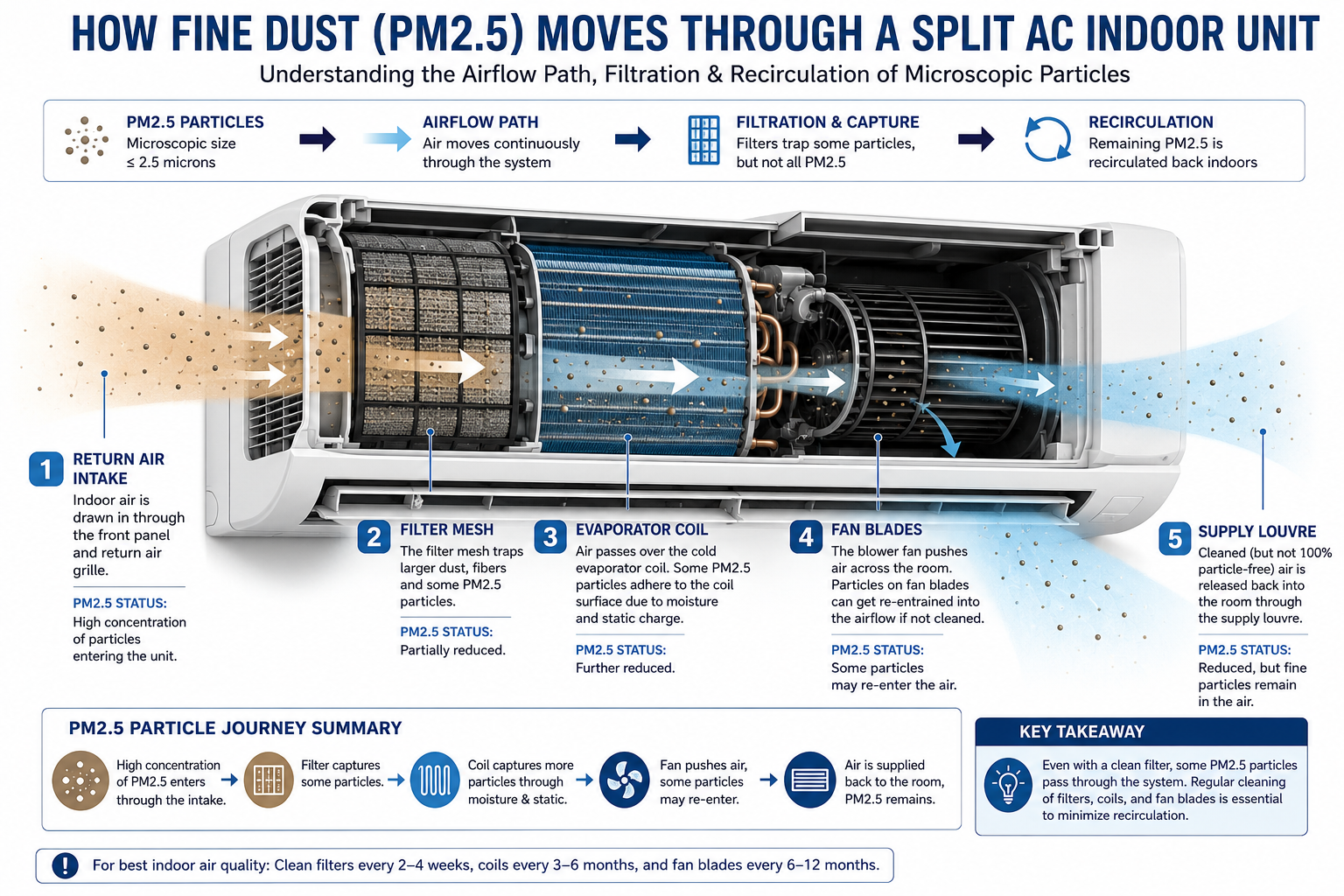
Key Takeaway: Standard split AC filter mesh is not designed to capture PM2.5. Without a secondary HEPA-grade air purifier, fine particles pass through the AC system and return to room air on every cycle.
Why Your Apartment Feels Dusty Even After Cleaning
Standard household cleaning methods are designed to address visible soiling. When applied to fine dust management in UAE apartments, they often produce incomplete results or actively worsen particle distribution.
Dry dusting with feather dusters or dry cloths displaces fine particles from surfaces into the air column. In sealed UAE apartments, the suspended particles immediately re-enter AC circulation. The visible surface appears clean immediately after dry dusting, but airborne particle concentration increases transiently following the activity.
Sweeping tile and marble floors generates turbulence that lifts fine particles from the floor surface into suspension. In the absence of natural ventilation, these aerosol particles have nowhere to disperse and remain airborne for extended periods before resettling.
Vacuum cleaners without HEPA-grade filtration exhaust fine particles through their motor exhaust stage. Standard vacuum systems capture larger debris effectively but release PM2.5 and ultrafine particles back into the room through the exhaust stream. Airborne fine particle levels can be elevated for a period following the activity even though the floor appears cleaner. The CleanLivingUAE best HEPA vacuums for UAE apartments guide covers which filtration standards to look for when selecting a vacuum for fine dust environments.
Dry microfiber use relies on electrostatic attraction to hold particles. This is effective for moderate dust loads but becomes less consistent with heavier fine particle accumulation. A lightly dampened microfiber cloth captures particles mechanically and does not rely on static charge alone. Cloth selection for UAE dust conditions is covered in the best microfiber cloths UAE guide.
Fragrance sprays and air freshener aerosols add ultrafine droplets to the indoor air and may partially mask stale air quality without addressing particulate loading. In a sealed UAE apartment, aerosolised fragrance products can themselves contribute to overall particle burden.
Quick Tip: Running a HEPA air purifier overnight in the bedroom often produces more noticeable air quality improvement than occasional deep-cleaning sessions alone. Continuous filtration removes suspended PM2.5 progressively, while cleaning events address only the surface-level particle reservoir.
Fine Dust and Apartment Indoor Air Quality
Indoor air quality in UAE apartments is directly affected by fine particle concentration.
Unlike outdoor air quality, which benefits from atmospheric dilution and wind dispersal, indoor air in sealed apartments recirculates continuously with limited dilution. Fine particles introduced or generated indoors accumulate progressively unless actively removed through HEPA-grade air filtration or ventilation exchange.
Many residents associate indoor dustiness only with a visible grey film on furniture or a gritty feel on tile floors. The more significant aspect of fine dust apartments UAE residents deal with is the suspended particle load that cannot be seen at all.
In conditions where a sunlight beam enters through a window at a low angle, the density of visible floating particles gives some indication of what is normally invisible – but fine PM2.5 particles remain invisible even in direct light.
Stale indoor air conditions commonly described by UAE apartment residents include a dusty smell when entering after the apartment has been closed and unoccupied, and an odour from AC supply vents during operation. These conditions are commonly associated with elevated suspended particle concentrations combined with reduced fresh air exchange, low relative humidity, and accumulated coil or filter contamination.
Children and elderly residents, as well as individuals with pre-existing sensitivities, are commonly noted in residential indoor air quality guidance as more affected by prolonged exposure to elevated fine particle concentrations. Many UAE families cite indoor dust management as a priority consideration when reviewing apartment condition before signing tenancy agreements.
Pet ownership in UAE apartments adds an additional fine particle layer. Dander shed by cats and dogs is predominantly sub-10-micrometre material that becomes part of the apartment’s airborne particulate matter inventory. In compact apartments with a single AC unit, pet dander circulates throughout the space continuously through the HVAC airflow path.
Do apartments need air purifiers in UAE?
This is a common question among UAE apartment residents and one that is particularly relevant to fine dust management in sealed indoor environments.
Split AC systems circulate indoor air but do not filter PM2.5 or ultrafine particles effectively through standard mesh filters. They do not introduce fresh outdoor air in most residential installations. The indoor air volume is recirculated repeatedly without particle removal at the sub-PM2.5 level.
An air purifier with true HEPA-grade air filtration and an appropriate CADR (Clean Air Delivery Rate) rating for the room size provides active fine particle removal that the AC system alone cannot deliver. In UAE apartments where windows remain closed for months at a time, an air purifier running continuously in the bedroom or main living area is the primary mechanism for reducing suspended fine particle concentration between cleaning events. The CleanLivingUAE best air purifiers UAE article covers how to match CADR ratings and filtration grades to UAE apartment room sizes.
Based on the sealed environment and desert aerosol exposure conditions specific to UAE apartments, air purifiers address a genuine gap that AC filtration does not cover.
An air purifier may reduce fine particles that remain airborne, but a humidifier addresses low humidity instead. The air purifier and humidifier comparison explains which problem each appliance is designed to manage.
Best Methods for Controlling Fine Dust Re-Suspension in Apartments
The methods most effective for fine dust management in UAE apartments share a common principle: capturing particles on contact or removing them from the indoor air volume, rather than displacing them into suspension.
Damp microfiber wiping traps particles on contact through mechanical capture rather than electrostatic attraction alone. When used on furniture, shelving, window sills, AC vent louvres, and electronic surfaces, damp microfiber prevents the re-suspension that dry methods cause. This is the single most consistently effective surface method for fine particle removal without generating secondary airborne contamination. The best microfiber cloths UAE guide covers cloth grades and maintenance for UAE dust conditions.
HEPA-grade vacuuming captures fine particles in the filtration stage rather than recirculating them through the exhaust. For UAE apartments with rugs, fabric sofas, curtains, mattresses, and under-bed zones, a vacuum with a confirmed HEPA filter stage addresses particle removal at the surface reservoir level. Equipment options are covered in the best HEPA vacuums UAE guide on CleanLivingUAE.
Top-to-bottom cleaning sequence prevents re-contamination of already-cleaned surfaces. Starting with elevated surfaces – ceiling fans, top shelves, AC louvres – and working progressively down to floors ensures that particles dislodged from upper surfaces are captured in the final floor cleaning pass.
Mattress vacuuming with an upholstery attachment on a HEPA-equipped vacuum reduces the accessible surface reservoir that re-enters room air with each night’s sleep activity.
Curtain cleaning through regular machine washing or steam treatment reduces the particle load held in fabric. In UAE apartments where curtains are not washed for extended periods, their contribution to room air fine particle concentration through daily movement can be substantial.
Air purifier operation with a confirmed HEPA-grade filtration stage and appropriate CADR for the room size actively removes suspended particulate matter from room air between cleaning events. Full guidance on purifier selection is available in the best air purifiers UAE article.
AC filter rinsing every two to four weeks during peak operation periods prevents filter loading from advancing to the stage where particle shedding or severe HVAC airflow restriction begins. Step-by-step filter maintenance instructions are available in the AC filter cleaning guide UAE.
Balcony containment methods reduce the volume of particles tracked or blown from balcony surfaces into living areas. Rinsing balcony surfaces before using the space, keeping balcony doors closed during dust event conditions, and using a damp cloth on balcony door tracks reduces inward particle migration.
| Cleaning Method | Effectiveness for Fine Dust | Suggested Frequency |
|---|---|---|
| Damp microfiber wiping | High – captures particles on contact without re-suspension | 2-3 times per week on key surfaces |
| HEPA-grade vacuuming | High – removes particles without re-exhausting them | Weekly minimum |
| Curtain washing or steam treatment | High – reduces fabric-based particle reservoirs | Monthly to bimonthly |
| Mattress vacuuming | Moderate – mainly removes surface-layer particles | Monthly |
| AC filter rinsing | High – helps prevent filter-based recirculation | Every 2-4 weeks during heavy-use periods |
| Air purifier continuous operation | High – targets airborne PM2.5 and aerosol particles | Continuous in priority rooms |
| Dry sweeping | Low – can suspend fine particles into the air | Replace with damp mopping where possible |
| Dry dusting | Very low – redistributes particles into the airstream | Avoid; replace with damp microfiber wiping |
Best Tools for Managing Fine Dust in UAE Apartments
Some product mentions may include affiliate links.
The following tool categories are relevant to fine dust management in UAE apartments. This section provides an informational overview only.
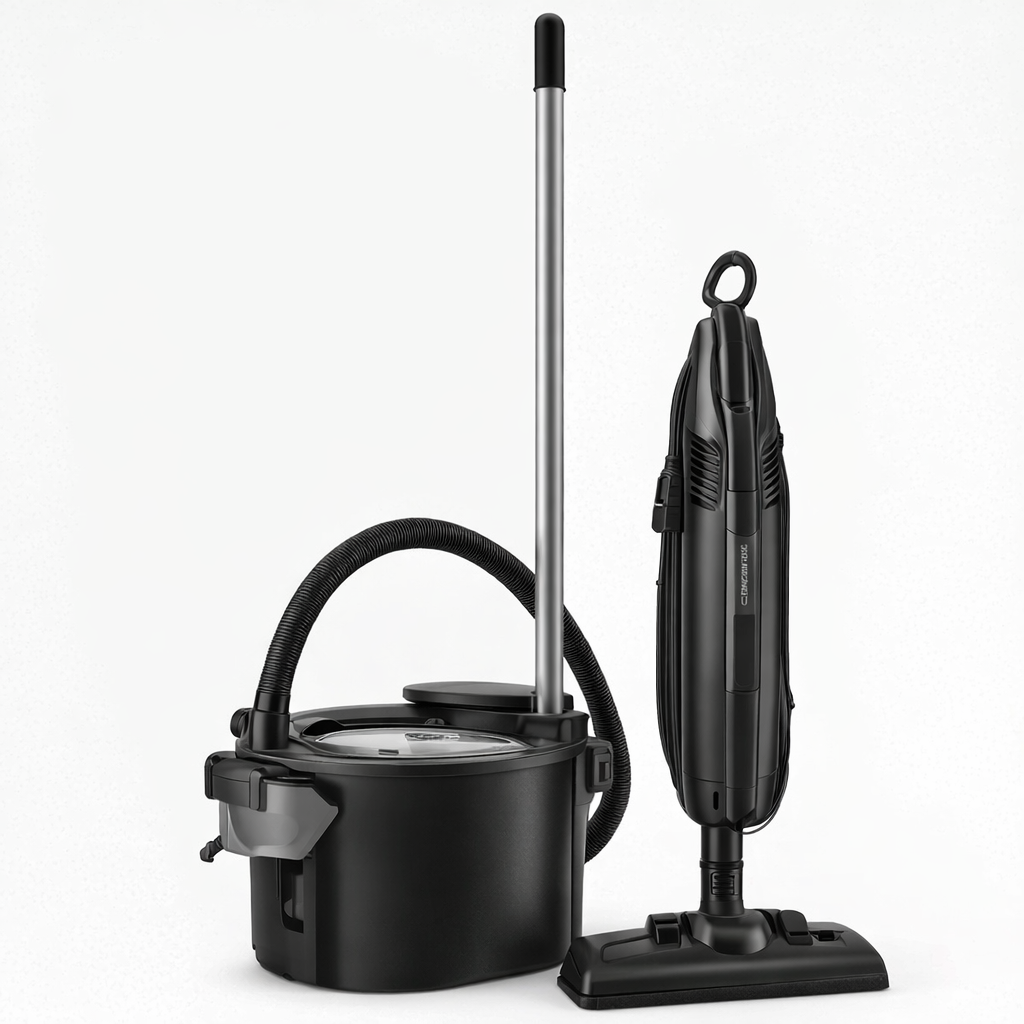
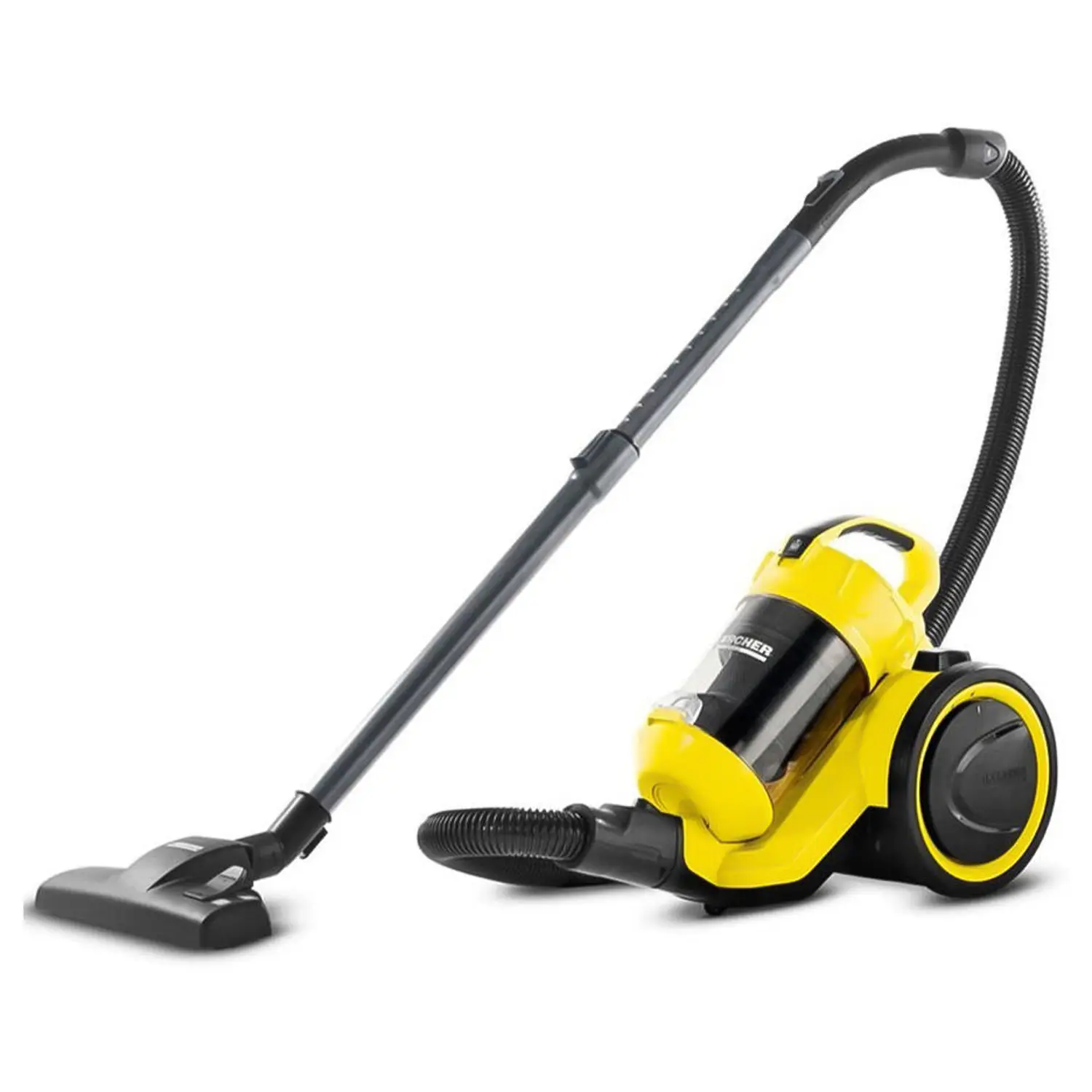
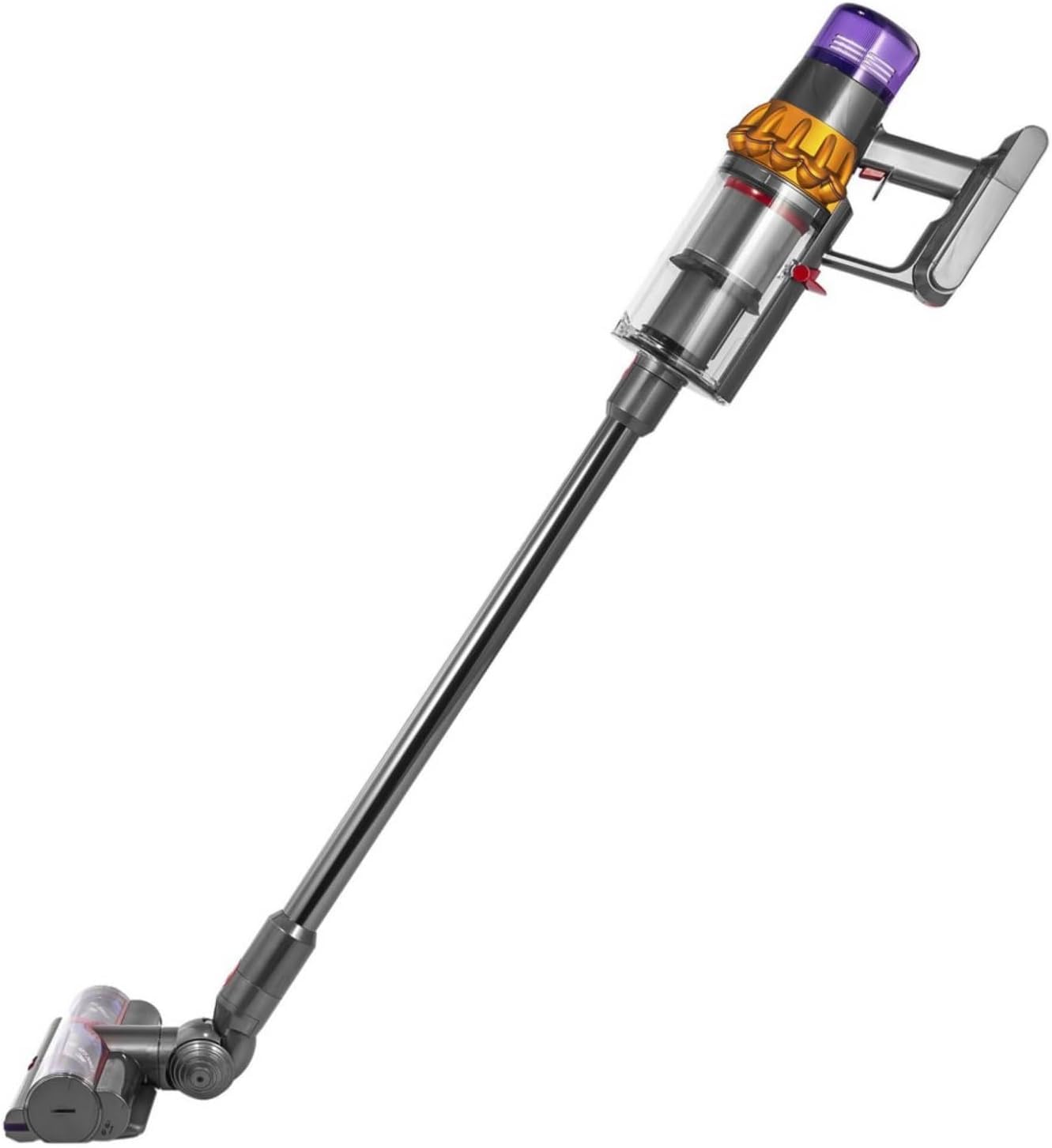
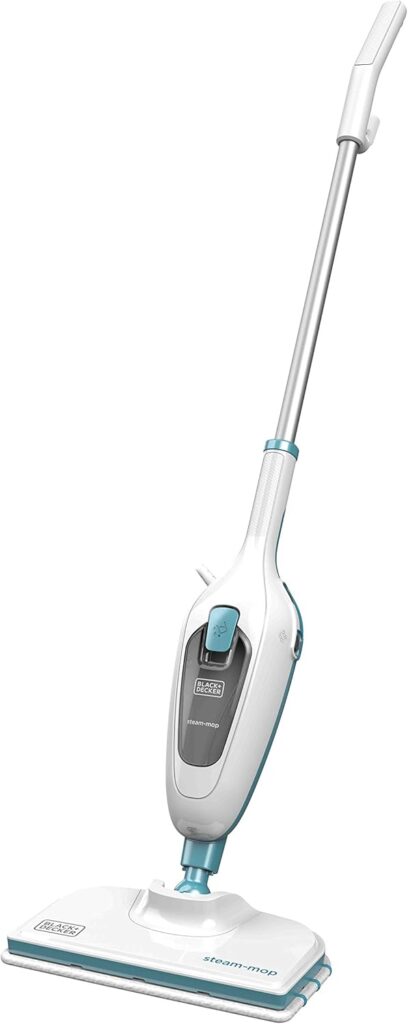
HEPA vacuums are distinguished from standard vacuum cleaners by a tested HEPA-grade filter stage in the exhaust path. This stage captures PM2.5 and finer particles that pass through the primary cyclone or bag separator, preventing their return to room air. For UAE apartments with rugs, upholstered furniture, and fabric curtains, HEPA vacuuming addresses the surface-layer particle reservoir that contributes to daily re-suspension. Full guidance on models suited to UAE conditions is available in the best HEPA vacuums UAE article.
Microfiber cloths, used in a lightly damp condition, are the most cost-effective surface tool for fine particle capture. The microfibre structure traps particles mechanically in the cloth matrix. For selection guidance relevant to UAE apartment conditions, see the best microfiber cloths UAE article on CleanLivingUAE.
Air purifiers with HEPA air filtration and an appropriate CADR rating actively remove PM2.5 and finer particles from room air during operation. In UAE apartments without mechanical fresh air supply, a correctly sized unit running continuously in a bedroom or main living area provides meaningful reduction in suspended particle concentration. Full selection guidance is available in the best air purifiers UAE article.
Dehumidifiers are relevant during high relative humidity periods from June to September. Maintaining indoor humidity below 60 per cent reduces the adhesion behaviour of fine particles to AC coils and surface materials. A hygrometer – a low-cost indoor humidity monitor – allows residents to identify periods where dehumidifier operation is warranted.
AC vent brushes with long flexible handles allow residents to clean split AC louvre surfaces and accessible vent edges between professional service intervals. Filter maintenance scheduling is covered in the AC filter cleaning guide UAE.
Apartment-Specific Fine Dust Prevention Systems
Entryway contamination control
The apartment entryway is the primary controlled particle entry point. Corridor floors, shared lifts, and car park levels all carry fine particle loads from outdoor and construction sources.
An entryway containment system using a quality entry mat at the door, a dedicated shoe storage zone, and a no-outdoor-shoes policy inside the apartment can measurably reduce the volume of particles introduced on foot traffic. Mat types and placement guidance for UAE dust conditions are covered in the best entry mats for dust UAE article on CleanLivingUAE.
Shoe-free apartment systems
UAE apartments where outdoor footwear is worn throughout the unit track particles from outdoor surfaces across every floor zone. Establishing a clear shoe-change zone at the entrance, with indoor-only footwear worn inside, removes a continuous particle introduction pathway.
Balcony cleaning strategy
Balcony surfaces accumulate fine and coarse desert particles between cleaning events. Rather than sweeping, which redistributes fine particles indoors, using a damp mop or cloth to clean balcony tiles, tracks, and ledge surfaces captures particles in place.
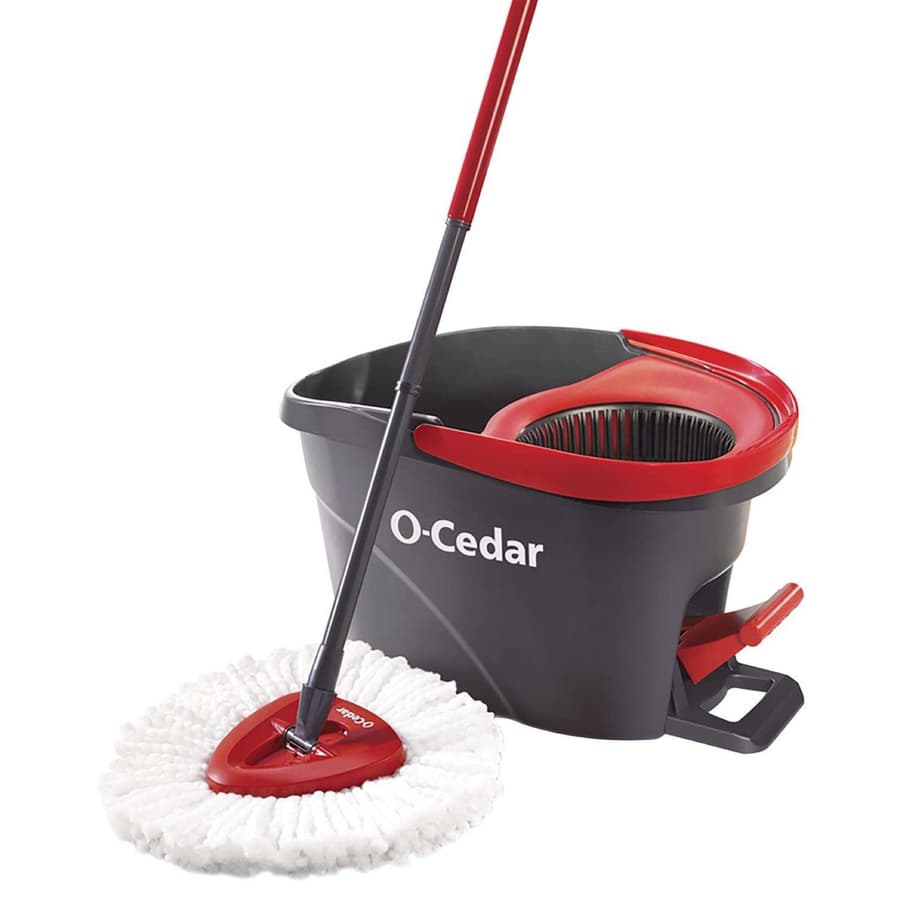
Cleaning the balcony before opening the sliding door – rather than after – prevents tracking fine surface particles indoors. The CleanLivingUAE spin mops UAE guide covers mop options suited to balcony tile and floor cleaning in UAE apartments.
Air purifier placement
In UAE apartments where a single air purifier is used, bedroom placement provides the greatest benefit. Residents spend the longest continuous time in that space, and nighttime breathing in an elevated-particle environment is a common concern.
In a two-room configuration, a second unit in the main living area addresses daytime exposure where AC operation and daily activity generate the most particle turbulence. Placement away from direct AC supply airflow and at floor level or mid-room height produces better CADR performance than placement directly against a wall. Full placement and sizing guidance is available in the best air purifiers UAE article.
Fabric reduction methods
Each fabric surface in a UAE apartment represents a particle reservoir. Minimising fabric surfaces – replacing heavy floor-length curtains with fitted roller blinds, limiting decorative cushions on sofas, removing non-essential rugs from low-traffic areas – reduces the total particle reservoir capacity of the apartment and lowers the ongoing cleaning burden.
Routine AC maintenance
Based on UAE climate conditions and AC operating hours, standard residential maintenance practice involves:
- Filter rinsing every 2 to 4 weeks during summer operation
- Full unit internal cleaning including coil and fan annually, before the summer cooling season begins
- AC inspection for duct leakage in ducted systems coordinated with building management on lease renewal or following any noticeable change in HVAC airflow quality
The AC filter cleaning guide UAE provides step-by-step instructions for resident-level filter maintenance between professional service visits.
Quick Tip: Scheduling the annual professional AC internal clean in March or April – before the summer cooling season begins – reduces the risk of operating a contaminated unit through the highest-demand period of the year.
| Prevention Area | Studio Apartment | Family Apartment, 2-3 BR | Large Apartment, 4+ BR |
|---|---|---|---|
| Air purifier units needed | 1 unit in main zone | 1 per bedroom plus 1 in living area | 1 per bedroom, 1 main living zone, plus 1 home office if present |
| AC units to maintain | Typically 1-2 units | 3-4 units | 4-6 or more units |
| Fabric surface risk | High – concentrated in small air volume | Moderate – distributed across rooms | Lower per room but higher total surface area |
| Balcony entry risk | Typically 1 balcony door | 1-2 balcony doors | Multiple balcony and terrace access points |
| Entryway control priority | Critical – single entry affects entire unit | High | High – service entrances may add secondary entry points |
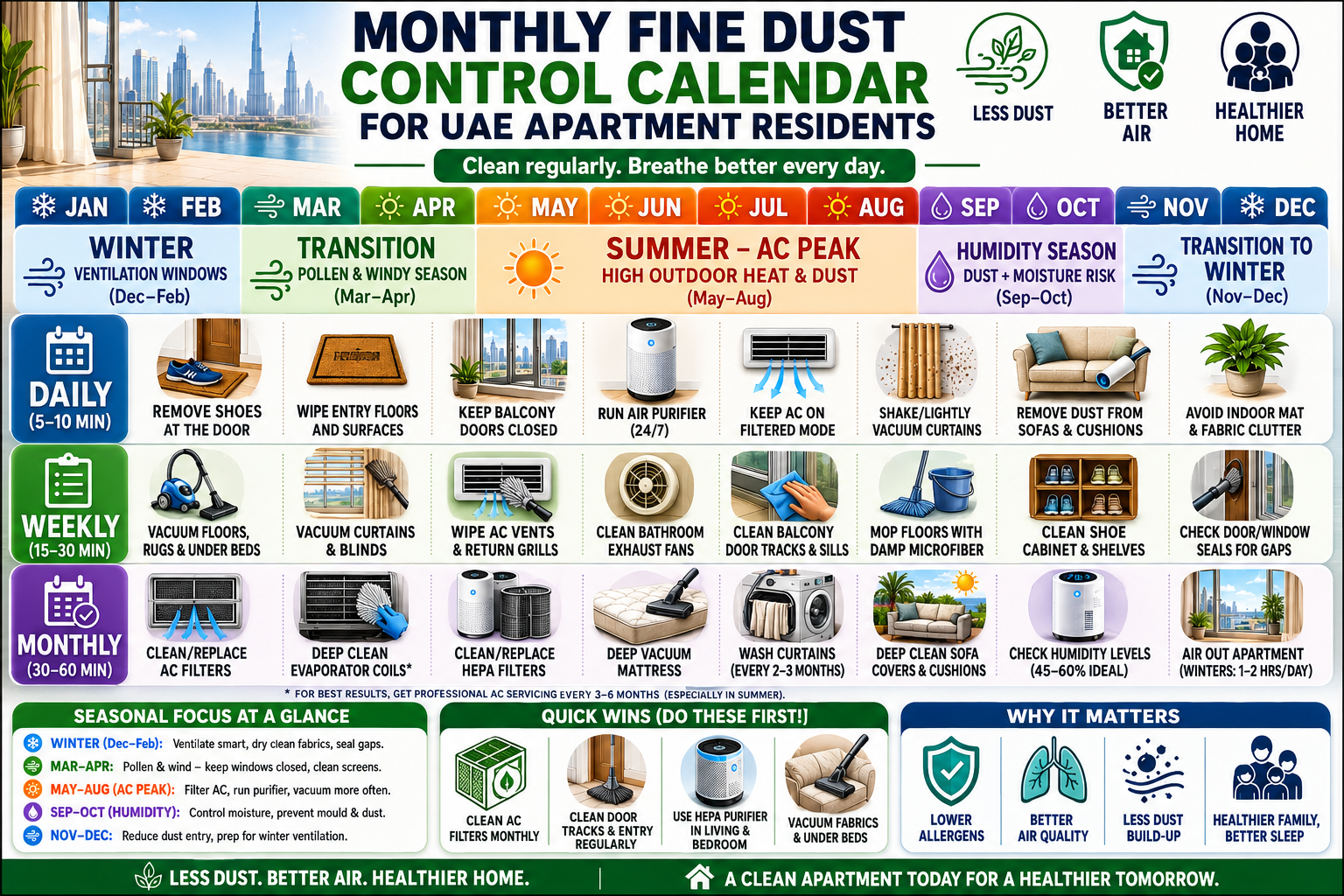
Daily, Weekly, and Monthly Fine Dust Control Schedule
| Task | Frequency | Priority Level |
|---|---|---|
| Run air purifier in bedroom and living area | Daily – continuous | High |
| Damp wipe high-touch surfaces | Daily to every 2 days | High |
| Damp mop tile and marble floors | 3 times per week | High |
| HEPA-grade vacuum rugs and fabric upholstery | Weekly | High |
| Wipe AC louvre surfaces with damp cloth | Weekly | High |
| Clean balcony door track and threshold | Weekly | Moderate |
| Rinse AC filter | Every 2-4 weeks | High |
| Replace or wash air purifier pre-filter | Monthly – check manufacturer guidance | High |
| HEPA vacuum mattress surface | Monthly | Moderate |
| Wash curtains or treat with steam | Monthly to bimonthly | Moderate |
| HEPA vacuum inside wardrobe base and shelves | Monthly | Moderate |
| Professional AC internal cleaning, coil and fan | Annually – before summer season | High |
| Check and replace air purifier HEPA filter | Typically every 6-12 months, or per manufacturer guidance | High |
For a broader household routine framework that integrates fine dust tasks with general apartment maintenance, see the weekly cleaning checklist UAE on CleanLivingUAE.
Common Mistakes That Make Fine Dust Worse
Opening windows during dusty conditions introduces concentrated outdoor fine particles directly into the indoor environment. In UAE urban areas near construction sites or during haboob conditions, outdoor PM2.5 levels can be significantly elevated. Many residents attempt to air out the apartment during perceived calm periods without checking outdoor particulate matter conditions. Understanding why dust builds up in UAE homes helps residents identify the outdoor conditions that most rapidly increase indoor particle loads.
Skipping AC maintenance creates progressive accumulation of fine particles on filter, coil, and fan components that continuously re-enter the indoor airstream. Even a short deferral of filter cleaning during peak summer operation – where the AC runs for 18 to 20 hours daily – results in rapid filter loading and reduced filtration efficiency.
Overusing dry dusters and dry cloths provides a brief appearance of cleanliness while elevating airborne particle concentrations and allowing particles to resettle on adjacent surfaces. This is one of the most common sources of the rapid dust return residents observe after cleaning.
Overcrowded soft furnishings in compact apartments increase the total particle reservoir surface area. Multiple layered cushions, decorative throws, and area rugs in small floor plan apartments concentrate particle holding capacity in a limited air volume.
Ignoring curtains and mattresses for extended periods allows these surfaces to accumulate particle loads large enough to make a material contribution to room air quality with each daily disturbance.
Vacuuming without HEPA-grade filtration returns PM2.5 and finer particles to room air through the exhaust stream while cleaning floor-level deposits. The net effect on airborne particulate matter concentration can be negative overall.
Indoor clothes drying without ventilation adds humidity and textile-generated fine fibres to the indoor air. Running the bathroom extractor fan during drying periods reduces the impact on both relative humidity and airborne fibre concentration.
Apartment vs Villa Fine Dust Problems in UAE
UAE residents who move between apartment and villa living commonly note differences in perceived indoor dustiness. These differences are attributable to structural and environmental factors rather than personal cleaning habits.
| Factor | Apartment | Villa |
|---|---|---|
| Natural ventilation opportunity | Very limited – windows are often sealed for most of the year | Greater opportunity during cooler months through multiple openings |
| HVAC airflow volume ratio | High – one or few units recirculate a smaller air volume | Multiple units manage a larger total air volume |
| Particle concentration per cubic metre | Higher due to compact floor plan | Lower – particles are diluted across a larger volume |
| Dust entry points | Mainly balcony door and building corridor | Multiple doors, garden entries, and garage transitions |
| Construction exposure risk | High in urban high-rise zones, including Business Bay, JVC, and Al Nahda | Variable – often lower in established villa communities |
| Cleaning difficulty | Manageable space, but higher concentration effect per square metre | Larger surface area, but lower particle density per room |
The primary advantage of villa living from a fine dust perspective is air volume. A larger indoor volume means the same particle input produces lower initial concentration.
However, villas with extensive garden access, multiple entry points, and larger fabric surface areas can accumulate significant total particle inventories that apartments with consistent filtration systems may outperform on air quality metrics.
Seasonal Fine Dust Patterns in UAE Apartments
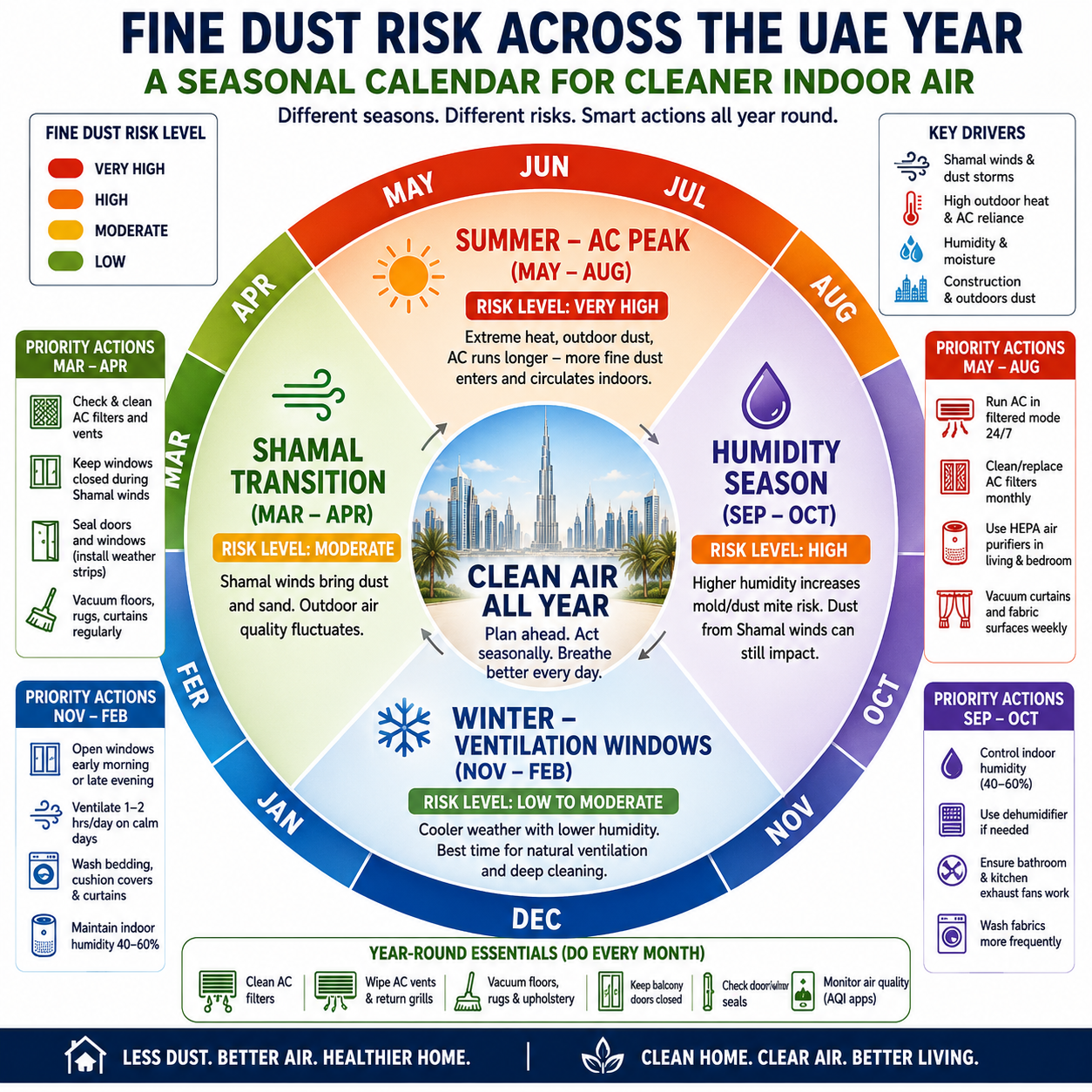
Summer AC dependence from May through September creates the highest fine particle recirculation risk of the year. AC systems operate at maximum daily hours, windows remain permanently closed, and there is no opportunity for natural air exchange. This is the most critical period for filter maintenance, HEPA-grade air purifier operation, and HVAC airflow monitoring.
The humidity season from June to September adds the complication of increased particle adhesion to AC components and elevated relative humidity above 70 to 80 per cent in coastal areas. Monitoring indoor humidity and managing it below 60 per cent reduces both AC contamination rates and conditions that favour mould spore activity in damp apartment zones. A dehumidifier may be warranted in ground-floor apartments or those with known condensation issues.
Dusty transition periods in March through May and September through October correspond to the Shamal and Khamsin wind seasons across the Arabian Peninsula. These periods bring elevated outdoor PM10 and PM2.5 concentrations as desert surface particles are mobilised by seasonal wind patterns. Residents in areas such as Al Nahda, Silicon Oasis, and JVC – further from the coast and closer to desert margins – commonly report faster indoor surface dust accumulation during these periods even with windows closed. The CleanLivingUAE article on dust after sandstorms UAE covers how to manage the higher particle loads that follow major dust events.
Winter ventilation opportunities from November through February provide the best conditions for periodic brief natural ventilation. Opening windows on calm, clear mornings allows some degree of indoor air exchange and dilution of accumulated fine particles. However, even in winter, urban UAE outdoor particulate matter levels can be elevated on construction-active days or during early morning traffic peaks. Selecting ventilation windows based on outdoor conditions rather than a fixed schedule produces better outcomes.
Final Thoughts
Fine dust apartments UAE residents encounter is a persistent indoor air quality challenge that operates almost entirely below the threshold of visible cleaning. The particles most relevant to indoor air quality – PM2.5, aerosol particles, and ultrafine particulate matter – cannot be seen, cannot be swept, and are not removed by standard vacuum systems or AC filters.
They circulate continuously through split AC HVAC airflow, accumulate in fabric surfaces, and re-enter room air with each daily disturbance.
Effective management relies on prevention systems rather than reactive cleaning. AC maintenance addresses the recirculation pathway. HEPA-grade air filtration removes particles at the surface and in the airstream. Damp cleaning methods capture rather than displace. Fabric management reduces the particle reservoir capacity of the apartment.
For UAE apartment residents in high-density urban developments, seasonal planning is as important as weekly routine. Summer demands maximum filtration vigilance. Transition seasons require awareness of elevated outdoor particle conditions. Winter provides the only meaningful opportunity for natural air exchange.
Consistency in these practices produces measurable improvements in indoor air quality over time. Single deep-cleaning events followed by long maintenance gaps produce less durable results than lower-intensity routines applied consistently.
Residents looking to improve their filtration and cleaning systems can continue with the CleanLivingUAE guides on best HEPA vacuums UAE, best air purifiers UAE, best microfiber cloths UAE, and the AC filter cleaning guide UAE for step-by-step equipment and maintenance guidance.
FAQs
What causes fine dust in UAE apartments?
Fine dust in UAE apartments originates from multiple simultaneous sources. Desert aerosols infiltrate through building gaps and balcony door seals. Construction activity at adjacent sites generates silica-based fine particles that enter through shared building ventilation and corridor air exchanges. Indoors, textile shedding from curtains, bedding, and upholstery continuously adds fine fibres to the airborne inventory. Human occupation generates skin cell particles. Split AC systems recirculate all of these sources continuously through the sealed indoor environment via the HVAC airflow loop, creating a self-sustaining fine particle cycle. The CleanLivingUAE article on why dust builds up in UAE homes covers the primary dust sources in more detail.
Is PM2.5 common indoors in UAE apartments?
PM2.5 is present in all indoor environments and is particularly relevant in UAE apartments due to desert aerosol exposure and sealed indoor conditions. Because UAE apartments operate without regular natural ventilation for most of the year, PM2.5 introduced or generated indoors accumulates progressively. Outdoor PM2.5 levels in UAE urban areas are commonly elevated compared to more temperate regions due to desert dust, construction activity, and traffic density. Indoor concentrations reflect outdoor conditions, modified by AC filtration efficiency and air purifier operation.
Why does dust return quickly after cleaning?
Fine dust returns quickly after cleaning in UAE apartments primarily because cleaning activity itself re-suspends particles that then resettle within hours, and because AC operation continuously recirculates the particle inventory present in the apartment. The root cause is not ineffective cleaning technique alone but the closed-loop nature of apartment air and the continuous fine particle input from HVAC airflow recirculation. Addressing this recirculation pathway through regular AC filter maintenance and air purifier operation reduces the rate of re-accumulation between cleaning events.
Do air purifiers help with fine dust?
Air purifiers with confirmed HEPA-grade air filtration stages and appropriate CADR ratings are designed to remove PM2.5 and finer aerosol particles from room air during operation. In UAE apartments where natural air exchange is limited and AC systems recirculate fine particles, continuous air purifier operation in priority rooms provides active particulate matter removal that AC filtration alone cannot deliver. Purifier effectiveness depends on the unit being appropriately sized for the room volume and positioned to draw room air efficiently. Full guidance is available in the best air purifiers UAE article.
Can split AC systems spread dust?
Split AC systems do not generate fine dust but do distribute and recirculate existing indoor particles through the HVAC airflow loop. The return air intake draws room air and its particle load through or around the filter stage and pushes it back into the room via the supply louvres. PM2.5 particles, being smaller than standard AC filter mesh apertures, pass through the filter without capture and re-enter the room air continuously. A dirty filter that begins to shed accumulated particles adds a direct particle injection component to this recirculation, worsening indoor air quality beyond the baseline recirculation effect.
Are apartments dustier than villas in UAE?
UAE apartments typically produce higher fine particle concentrations per cubic metre than villas due to smaller air volumes, limited natural ventilation, fewer AC units relative to the concentration of particle sources, and the proximity of shared building corridors as particle transfer pathways. However, total particle inventory in a large villa with extensive fabric surfaces, garden access, and multiple entry points can exceed that of a compact apartment with a consistent filtration system in place. The relevant measure for indoor air quality is particle concentration per cubic metre, and compact sealed apartments perform less favourably on this metric without active filtration management.
Does humidity worsen fine dust buildup?
Elevated indoor humidity, common in UAE apartments during June through September, changes the behaviour of fine particles and AC components. Fine particles become more adhesive at higher relative humidity, binding more readily to AC coil surfaces, fan blades, and filter media. This accelerates the rate of AC component contamination and can result in particle shedding when the system cycles through startup and shutdown. High humidity also creates conditions that favour biological particle activity, including mould spore generation in damp zones. Maintaining indoor humidity below 60 per cent is commonly recommended in residential indoor air quality guidance for UAE conditions.
How often should AC filters be cleaned in UAE apartments?
Based on UAE climate conditions and typical summer AC operation hours of 16 to 20 hours per day, filter rinsing every two to four weeks during peak operation periods is commonly recommended. During milder months with reduced AC use, monthly filter checks are appropriate. These frequencies are higher than those suggested for more temperate climates because desert particulate matter loading on UAE AC filters advances more rapidly. Annual professional cleaning of AC unit internals including coil and fan components is also standard practice. Step-by-step guidance is available in the AC filter cleaning guide UAE.
Can HEPA vacuums reduce invisible dust?
HEPA-rated vacuum systems capture particles at the exhaust filtration stage, preventing PM2.5 and finer particles from being returned to room air during vacuuming. For surface-level fine particle removal from rugs, upholstered furniture, mattresses, and fabric curtains, a HEPA vacuum is more effective than a standard vacuum, which re-exhausts fine particles back into the room through the exhaust stream. HEPA vacuuming does not address particles already suspended in room air – that function requires air purifier operation. The combination of HEPA surface vacuuming and continuous air purifier operation addresses both the surface reservoir and the airborne inventory simultaneously. Equipment options are covered in the best HEPA vacuums UAE guide.
What is the best fine dust prevention routine for a UAE apartment?
The most effective fine dust prevention approach for UAE apartments combines consistent AC filter maintenance every two to four weeks, continuous HEPA-grade air purifier operation in the bedroom and main living area, damp microfiber wiping of key surfaces two to three times per week, weekly HEPA vacuuming of rugs and upholstery, and entryway contamination control through mat use and a no-outdoor-shoes policy. Reducing fabric surface area where practical, washing curtains monthly, and scheduling annual professional AC cleaning form the structural foundation. This prevention-oriented approach produces more durable indoor air quality improvements than periodic intensive cleaning events followed by long maintenance gaps. A full household maintenance schedule is available in the weekly cleaning checklist UAE.
Sources
Information in this article draws on indoor air quality guidance and UAE environmental context from the following sources: the UAE Ministry of Climate Change and Environment for regional air quality context and environmental monitoring frameworks applicable to UAE residential conditions; the World Health Organization for PM2.5 and PM10 classification standards and indoor particulate matter guidance; Saniservice UAE for AC maintenance frequency norms relevant to UAE residential split AC systems; Bayut and Property Finder for UAE apartment living context and tenant guidance relevant to indoor air management; and Dubai Municipality for construction dust standards and urban environmental guidelines applicable to UAE residential zones.